8 things people who type a long, honest comment on someone's social media post, read it over twice, and then delete the entire thing before posting do, according to psychology - because a child who shared what she really thought at the dinner table and watched the room go quiet learned that the safest opinion is the one that never leaves your hands, and the woman at forty-nine who erases her comment and scrolls on is not indifferent but still protecting herself from the specific silence that follows when you say something real and the room does not respond
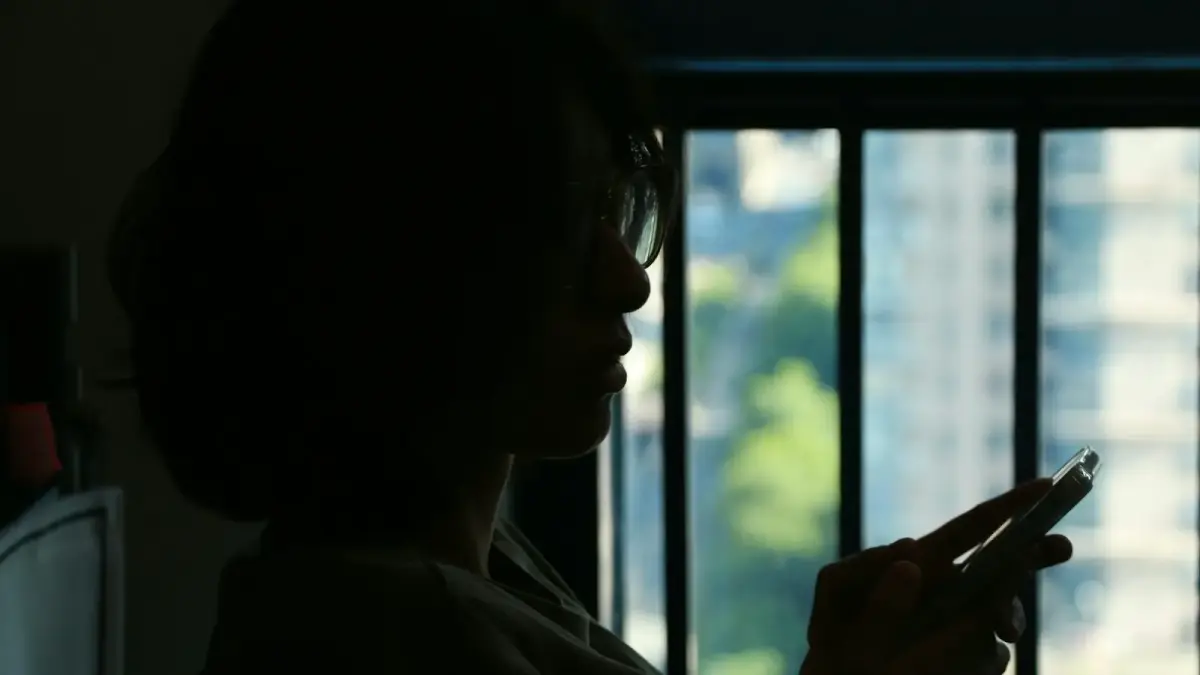
I did it again last night.
A friend posted something about feeling invisible in her own marriage - raw, honest, clearly written at midnight when the walls get thin. I read it three times. I felt it in my chest. I opened the comment box and typed four sentences about how I recognized that invisibility, how I’d carried it through my thirties, how her words made me feel less alone in it.
Then I read what I’d written. Twice.
Then I highlighted the whole thing, pressed delete, and tapped a heart emoji instead.
I scrolled on and told myself it wasn’t that important. But the truth is, I’d been sitting with my phone for six minutes composing something that mattered - and the part of me that still remembers what happens when you say something real in a room full of people decided it was safer to say nothing at all.
If you do this - if you write and erase, write and erase, treating every comment like a risk assessment - you’re not being dramatic. You learned something very specific a long time ago about what happens when you share an honest thought in public and nobody responds. And you’ve been protecting yourself from that silence ever since.
Here are 8 things psychology says people who do this tend to carry with them.
1. You perform the full ritual - type, reread, delete, scroll on - and you’ve done it so many times it barely registers as a choice anymore
It starts as a genuine impulse. Someone posts something that moves you, and you want to respond with the same honesty they offered. So you type. You choose your words carefully. You read it back to yourself, maybe adjust a phrase.
And then somewhere between the second read and the moment your thumb hovers over the post button, something shifts. A quiet alarm goes off. Not loud enough to name, but loud enough to obey.
You delete. You scroll. You move on as if nothing happened. But something did happen - you had a thought worth sharing, and you decided the world didn’t need to hear it. A 2016 study published in the Journal of Computer-Mediated Communication found that over 70 percent of social media users had composed a post or comment and then abandoned it before publishing. The researchers called these “last-minute self-censorship” events and found they were driven less by apathy and more by anticipated social consequences.
2. You dismiss your own response before anyone else gets the chance to - “it’s not important enough” is the line you tell yourself, but what you mean is “I’m not important enough to take up space here”
The self-dismissal sounds so reasonable. “Nobody asked for my opinion.” “This isn’t about me.” “They probably won’t even see it.”
But notice the pattern. You never dismiss other people’s comments this way. When someone else leaves a thoughtful response, you think, “That was kind of them.” You don’t think they overstepped.
The standard you’re applying is only for yourself. And it’s not about the comment being unimportant. It’s about you believing, somewhere deep in the wiring, that your honest reaction is the one that doesn’t need to exist. That if you can talk yourself out of sharing it, that’s proof it wasn’t worth sharing.
3. You watch other people post effortlessly - their quick opinions, their half-formed thoughts, their confident takes - and you genuinely cannot understand how they do it without rehearsing every word first
This is one of the loneliest parts. You see someone dash off a comment in twelve seconds - something funny, something blunt, something casually vulnerable - and they just post it. No editing. No second-guessing. No deleting and retyping three times.
And you think: how? How do they press “post” without running every possible response through their head first? How do they not imagine someone reading it wrong, or nobody reading it at all?
The answer, usually, is that they grew up in rooms where their voice didn’t require permission. Where offering an opinion at the dinner table didn’t create a silence that lasted through dessert. They’re not braver than you. They just never had to learn that speaking up in front of others could cost something.
4. You feel a wave of relief after deleting - not disappointment, but the specific calm of a danger averted, a bullet dodged
This is the part that confuses people who don’t do this. They’d expect you to feel frustrated after erasing something heartfelt. They’d expect regret.
But you feel safe. Lighter, even. The comment is gone and nobody will ever know you almost said something real, and that feels like a small victory.
A 2013 study in Psychological Science demonstrated that social rejection activates the same neural pathways as physical pain. Your nervous system doesn’t distinguish between a hand on a hot stove and the sting of saying something publicly and being met with silence. When you delete the comment, you’re not being cowardly. Your body is literally avoiding anticipated pain, and the relief you feel is your nervous system confirming: threat neutralized.
5. You replace a long, honest reply with a heart emoji or a “love this” - and you tell yourself it communicates the same thing, but you know it doesn’t
Your friend posts about her mother’s death. You type three sentences about your own mother, about the specific grief of losing someone who never quite saw you, about how some losses don’t start with a funeral.
You read it back. It’s too much. Too personal. Too visible.
So you delete it and tap the heart. Maybe you add “thinking of you.” It’s warm enough. It’s appropriate. But you know - and this is the part that sits with you - that what you deleted was the real thing, and what you posted was the safe translation.
The heart emoji is not your voice. It’s the version of your voice that has been sanded down to fit inside a space where nobody can hear it crack.
6. You go through a careful editing process - softening the language, adding qualifiers, hedging every sentence - until you realize that even the softest version still feels too exposed
This is the part that takes time and energy nobody sees. You don’t just type and delete. You revise.
First draft: honest. Second draft: same content but with “I think” and “maybe” added to every sentence. Third draft: the opinion is now so qualified it barely means anything. Fourth attempt: you realize that even this watered-down version still has your name attached to it, and your name attached to a real thought in a public space is the thing you’ve been trying to avoid all along.
The problem was never the phrasing. The problem was being seen thinking something, feeling something, caring about something - in front of people who might not care back. Research by psychologist Mark Leary on sociometer theory suggests that people with a history of social evaluation learn to monitor their public expressions with extraordinary precision, treating every act of self-disclosure as a cost-benefit analysis where the costs consistently feel higher than the benefits.
7. You treat every comment like a speech to a crowded room - even when it’s just a reply to a friend’s Tuesday afternoon post about her dog
Your friend shares a photo of her golden retriever sleeping on the couch. Fourteen people have already commented things like “angel baby” and “I would die for him.” You want to write something. You like the photo. You have something to say.
But the comment box opens and suddenly it feels like standing at a podium. Everyone can see this. Your name is attached. People you forgot you were connected to might read it. Your ex-coworker from 2011 might see it. Your cousin’s wife might see it.
It’s a photo of a dog. And somehow your body is responding as though you’ve been asked to deliver a keynote.
This is what happens when you learned as a child that public speech - any speech in front of others - is a performance that will be evaluated. The dinner table was your first stage. Social media is just the one you carry in your pocket now.
8. The fear that drives all of it is not disagreement - it’s the specific silence of posting something real and getting zero response, the digital version of saying something at the table and watching nobody look up
This is the root. This is the thing underneath all the deleting.
You’re not afraid someone will argue with you. You could handle a debate. You could even handle someone telling you you’re wrong.
What you cannot handle - what your body physically braces against - is the nothing. The comment sitting there with zero likes, zero replies, zero acknowledgment. Your honest thought, visible to everyone, met with the same silence you knew as a child.
Because that silence has a very specific message, and you heard it early: what you said did not matter enough for anyone to respond. Not wrong enough to correct. Not interesting enough to engage with. Just - not enough.
A 2018 study published in the Journal of Experimental Social Psychology found that being ignored - receiving no response at all - was experienced as more distressing than receiving a negative response. Ostracism, even in its mildest digital forms, triggers a threat to four fundamental human needs: belonging, self-esteem, control, and meaningful existence.
Every time you delete that comment, you’re choosing the pain you know - silence by your own hand - over the pain you can’t control, which is silence from everyone else.
I want to say something to you, if you’re the person who does this.
You are not bad at social media. You are not overthinking for no reason. You are not “too sensitive” or “too in your head.”
You are someone who learned, probably before you had the words for it, that sharing your real thoughts in a room full of people is not free. That it costs something. That sometimes it costs everything - the warmth in the room, the ease at the table, the feeling that you belong here and your voice is welcome.
And you’ve been managing that cost ever since. Quietly. Invisibly. In the three seconds between reading your own words and pressing delete.
The comment you erased last night was probably beautiful. The thought you swallowed was probably the truest thing anyone would have read all day.
You don’t have to post it. That’s not what this is about. But I hope you stop telling yourself it wasn’t worth saying. Because a person who writes something honest and then protects it by keeping it close - that’s not someone with nothing to offer. That’s someone who knows exactly what they have, and exactly what it costs to give it away in a room that might not hold it gently.
Your silence is not emptiness. It’s a decision you’ve been making since you were small. And you’ve been making it with more care, more thought, and more quiet courage than most people will ever know.