8 things that quietly happen to people who always clean the house before anyone comes over - not the normal tidying that adults do but the urgent rearranging of every surface that begins the moment a visit is confirmed - because a child whose home was something to apologize for learned that the only way to let someone inside was to first make the house pretend to be something it was not, according to psychology
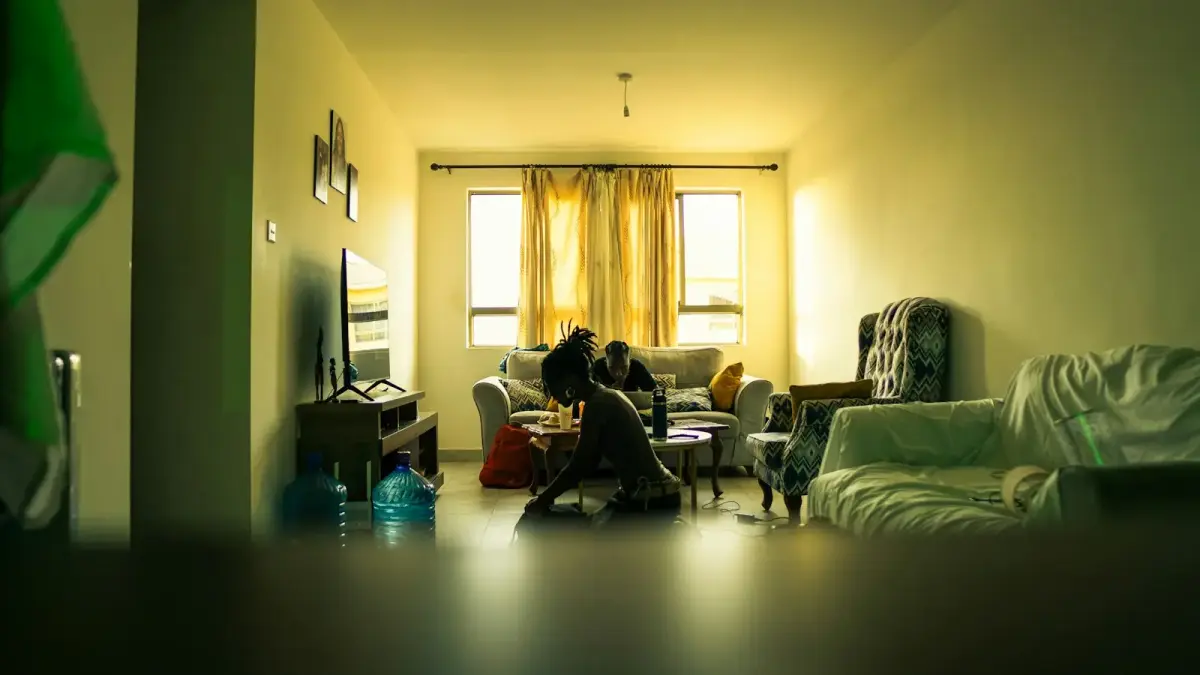
My sister called on a Saturday morning to say she’d be stopping by in about an hour. She wasn’t coming to inspect anything. She was dropping off a jacket I’d left at her place. A two-minute errand at most.
And I spent the next fifty-five minutes in a state of motion that an outsider would have mistaken for preparing for a dinner party. I wiped the kitchen counters, even though they were already clean. I hid the laundry basket in the bedroom closet. I repositioned the throw pillows on the couch, adjusted the books on the coffee table so their spines were even, and replaced the bathroom hand towel with a nicer one from the linen closet.
For my sister. Who was coming to hand me a jacket through the doorway.
I sat down afterward and tried to name what had just happened. It wasn’t tidying. Tidying is calm. Tidying is adult maintenance. What I’d done was something faster and more desperate - a kind of controlled panic where every surface in the house became evidence that needed managing before a witness arrived.
If you’ve ever watched yourself do this - watched your hands move with an urgency your brain knows is irrational but your body refuses to override - then you already know that this has very little to do with cleanliness. And everything to do with a much older story about what it meant to let someone see where you lived.
1. The cleaning starts the moment a visit is confirmed, not the moment it makes sense
You get a text on Tuesday that someone is coming over on Friday. And by Tuesday evening, you’re already mentally inventorying the house. You’re thinking about the bathroom. You’re calculating whether the grout between the kitchen tiles will bother you enough to scrub it on your hands and knees Thursday night.
The actual cleaning may not begin until the day of, but the planning begins immediately. Your brain starts running a silent assessment that scans every room for what a visitor might notice, might judge, might mention to someone else later.
A 2018 study published in the Journal of Personality and Social Psychology found that shame-prone individuals exhibit what researchers called “anticipatory environmental monitoring” - a persistent mental rehearsal of how their surroundings will be perceived by others. The pattern was most pronounced in participants who reported childhood experiences of having their home environment evaluated or criticized by people outside the family.
You’re not planning a cleaning schedule. You’re building a defense. And the defense starts assembling the moment the threat - which is just a person who wants to see you - is confirmed.
2. You hide personal items that reveal how the house actually looks when no one is watching
The laundry basket goes into the closet. The stack of mail on the counter gets shoved into a drawer. The medications on the bathroom shelf go into the cabinet. The book you were reading in bed, with its spine cracked and a receipt for a bookmark, gets tucked into a nightstand.
You’re not cleaning. You’re curating. You’re removing every artifact of real, daily, lived-in life so that what remains is a version of the house that looks like nobody quite lives there. A model home. A display.
Because the house someone walks into cannot be the house you actually inhabit. The house you actually inhabit has dishes in the sink and a blanket bunched on the couch and a half-finished puzzle on the dining table. That house is true. But true was never safe.
A child whose home was a source of embarrassment learned to divide the house into two versions - the real one and the presentable one. And the distance between those two versions became a measure of how exposed you were. The wider the gap, the more danger. The narrower the gap, the more control.
At fifty, you’re still narrowing that gap every time the doorbell rings.
3. You keep “company towels” and “company dishes” that your family is not allowed to use
There are towels in your house that have never dried a single hand that lives there. They sit folded in the linen closet, softer and more coordinated than the ones your family uses daily, and they come out only when someone is visiting.
The same is true for candles that get lit only for guests. Soap that replaces the everyday soap in the bathroom. A tablecloth that appears over the scratched dining table the morning of a dinner party and disappears back into the drawer the moment the last car pulls out of the driveway.
This is not hospitality. Hospitality is wanting your guest to feel comfortable. This is performance. This is ensuring your guest sees a version of your home that doesn’t exist on any ordinary Wednesday, because the ordinary Wednesday version is the real one, and the real one carries the fingerprints of a life you were taught to be embarrassed by.
Brene Brown’s research on shame resilience describes how shame doesn’t just affect how we see ourselves - it reorganizes how we manage what other people see. The “company towels” are a perfect physical expression of this. They’re not for your guest’s comfort. They’re for your protection.
4. You apologize for the house before anyone has said a word about it
The door opens. Your friend walks in. And before they’ve taken off their shoes, before they’ve even looked around, you say it.
“Sorry, it’s kind of a mess.”
It’s not a mess. You just spent two hours making sure it wasn’t. But the apology comes out anyway, automatic and rehearsed, like a greeting you didn’t choose but can’t unlearn.
This is what Brene Brown calls “foreboding joy” applied to physical space. You cannot allow someone to form a positive impression without preemptively undermining it, because a positive impression that later proves wrong is more dangerous than a managed negative one.
A child who grew up in a home that other families could see through - the thin walls, the appliances that didn’t quite work, the yard that never looked like the neighbors’ - learned that the safest posture was preemptive apology. If you named the problem first, you controlled the narrative. If someone else named it, you were exposed.
So you apologize. Not because the house deserves an apology. Because your body still believes that every room you stand in is a room that might betray you.
5. You feel physically unable to relax while guests are present because you’re scanning the room through their eyes
Your friends are sitting on your couch, talking, laughing, having the kind of easy evening that should feel like a gift. And you are there but not there. Your body is in the living room but your attention is three feet to the left, noticing the dust on the bookshelf. It’s across the room, registering that the curtain is hanging slightly uneven. It’s in the kitchen, remembering that the inside of the microwave has a splatter mark you forgot to clean.
You are seeing your home through their eyes. Not your eyes - theirs. And through their eyes, every flaw is magnified and every clean surface is invisible, because your brain filters for threat and threat looks like a crumb on the counter that someone might notice.
A 2020 study in Psychological Science examined what researchers called “reflected appraisal anxiety” - the tendency to evaluate your environment not as you see it but as you believe others see it. The study found the pattern was significantly more common in adults who described their childhood homes as places of social comparison or economic insecurity.
You can’t relax because you’re not experiencing the visit. You’re monitoring it. And the monitoring is so constant and so deeply wired that you’ve probably forgotten what it feels like to sit in your own living room and just be a person in it while someone else is there.
6. You feel a wave of relief the moment guests leave that is wildly disproportionate to the visit
The door closes. The last car pulls away. And something in your body releases - something that feels less like the end of a social evening and more like the end of an exam you weren’t sure you passed.
You exhale. Your shoulders drop. You might stand at the window for a moment and feel your body come back to you in a way that makes you realize it had been somewhere else for the last three hours.
This relief is not introversion. Introverts feel drained after socializing. What you feel is closer to the relief of a performance ending. The stage lights go off. The audience leaves. And you can finally stop holding the house - and yourself - in the shape you needed it to hold while someone was watching.
The visit wasn’t a visit. It was an exposure event. And the relief you feel afterward is your body confirming that you survived it.
7. You judge other people’s messy homes with envy, not contempt
You walk into a friend’s house and there are toys on the floor, dishes in the sink, shoes piled by the door. And they don’t apologize. They don’t even seem to notice. They just wave you in and keep talking.
And you feel something complicated. Not judgment. Something closer to hunger.
Because their mess is evidence of something you don’t have - the ability to let someone into an imperfect space without flinching. The belief that the relationship matters more than the baseboard. The deep, quiet confidence that who they are is not defined by the state of their kitchen counter.
You want that. You’ve wanted it for years. You just don’t know how to get it, because your childhood wrote a different equation. In your equation, mess equals shame equals rejection. And in their equation, mess just equals life. You can see the difference. You just can’t cross over to it.
Adam Grant has written about how the environments we grow up in create what he calls “invisible scripts” - beliefs so foundational that we don’t experience them as beliefs at all. We experience them as facts. Your invisible script says: a messy house is a vulnerable house. Their invisible script says: a messy house is a lived-in house. Neither of you chose your script. But yours costs more to run.
8. The cleaning ritual is not about the house - it is about controlling what gets seen
This is the one that sits underneath all the others.
You’re not cleaning because the house is dirty. You’re cleaning because someone is coming, and someone coming means someone seeing, and someone seeing means you are no longer in control of the story.
When you’re alone, the house can be whatever it is. The blanket stays on the floor. The dishes sit in the sink until you feel like washing them. The stack of bills stays on the counter. None of it means anything because no one is there to interpret it.
But the moment a visit is confirmed, interpretation becomes possible. And interpretation is what you’ve been defending against since you were a child who learned that the house you lived in said something about who your family was - about how much money you had, about how together your parents were, about whether you belonged in the same category as the kids whose houses had guest rooms and matching furniture.
The thirty-minute panic before the doorbell is not about the doorbell. It is about a child standing in a living room, looking at it through the eyes of someone who is about to walk in, and feeling - in their entire body - that what this person is about to see will prove something that the child already suspects about themselves.
That they are not enough. That the house is not enough. That both need to be something other than what they are.
If you’ve read this far and recognized yourself in more of these than feels comfortable, I want to say something very plainly.
The cleaning was never the problem. The cleaning was the solution. It was the best strategy a child could build with the tools they had - a way to manage an environment that felt like it could betray them at any moment. And it worked. It got you through.
But you are not that child anymore. The house you live in now is yours. You chose the furniture. You pay the mortgage or the rent. You hung the pictures on the walls. And no one who walks through your front door is there to inspect it.
They’re there because they wanted to be near you. And the you they wanted to be near is the one who lives in the house as it actually is - the one with the laundry basket in the hallway and the books stacked unevenly and the kitchen that smells like last night’s dinner.
That version of the house is not something to apologize for. It is something to come home to.
You always were.