8 things that quietly happen to people who always save the best bite on their plate for last - because a child who grew up where the good things could disappear before they reached them learned to postpone every pleasure as quiet proof they could survive without it, according to psychology
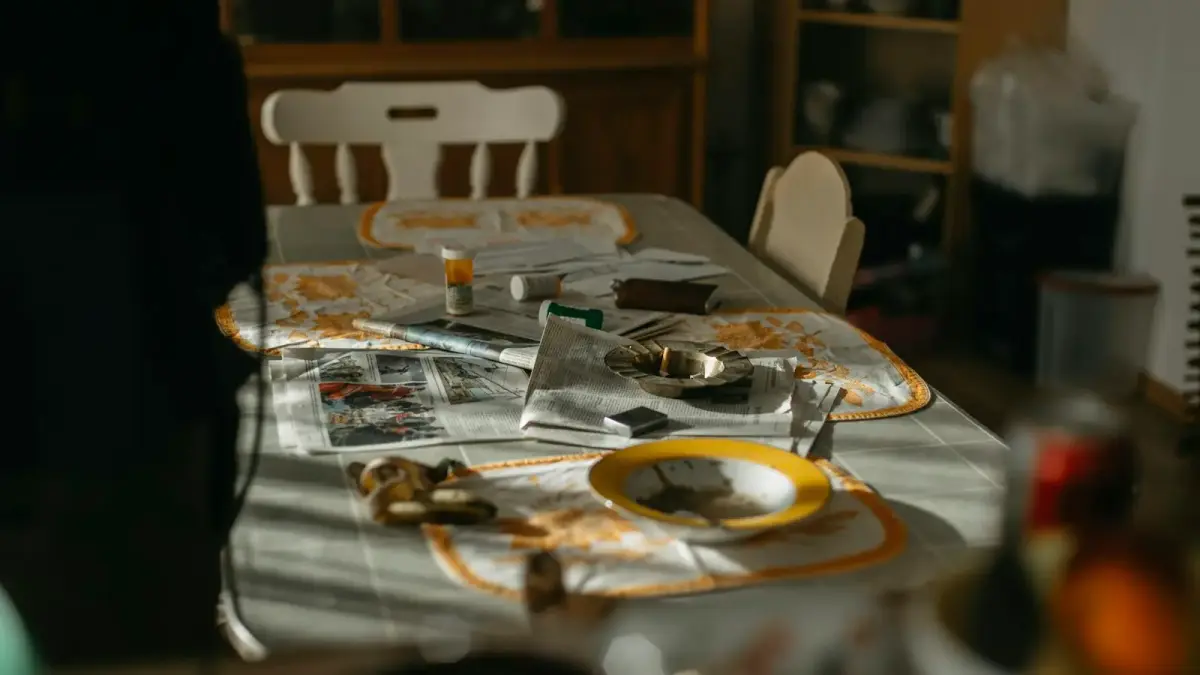
I noticed it last Thanksgiving. Everyone had finished eating. Plates scraped clean, second helpings demolished, someone already reaching for the pie. And there I was, sitting in front of a single piece of my grandmother’s cornbread - the best thing on the table - perched at the edge of my plate like a small golden monument I wasn’t ready to touch yet.
My partner leaned over and whispered, “You always do that.”
I do. I always do that. The crispiest piece of bacon gets moved to nine o’clock on the plate and guarded like evidence. The last strawberry sits untouched until the yogurt is gone. The best sip of coffee - the one that’s cooled to exactly the right temperature - I’ll hold the mug and wait, even when I want it now. Especially when I want it now.
For years I thought this was discipline. Willpower. Maybe even sophistication - the kind of person who savors things. But somewhere around age thirty-seven, I started to wonder whether I was savoring anything at all, or whether I was testing myself. Proving, again and again, that I could sit next to the thing I wanted most and not reach for it. That I could survive the distance between wanting and having.
If you do this too - if you’ve built an entire invisible architecture around postponing the good part - I want to tell you what I’ve learned about where that impulse actually comes from.
1. They treat pleasure as something that needs to be earned first
You don’t just eat dessert. You eat the vegetables first. You finish the hard part of the day before you let yourself rest. You answer every email before you open the book. There is a sequence, and the sequence is non-negotiable, and the good thing always goes last.
This isn’t preference. This is arithmetic. Somewhere very early, your brain learned that pleasure without prior suffering was suspicious. Unearned. Maybe even dangerous. A 2012 study published in the Journal of Personality and Social Psychology found that people who grew up in resource-scarce environments developed a persistent cognitive pattern of “pleasure deferral” - not because they valued discipline, but because immediate enjoyment triggered anxiety rather than satisfaction.
The best bite sits on the plate because you haven’t yet done enough to deserve it. And the threshold for “enough” keeps moving.
2. They can’t enjoy something if they know it’s the last one
The final episode of the show you love. The last chapter of the book. The last scoop of that ice cream you drove twenty minutes to buy. When something good is about to end, your body does something strange - it refuses to let you enjoy it in real time.
You slow down. You pause. You put the spoon back in the bowl and stare at the wall for a second, as if bracing.
This isn’t about the ice cream. This is about a child who learned that endings were not gradual. They were sudden. The good thing was there and then it wasn’t, and nobody warned you it was going. Your nervous system learned to stretch the last moment as far as it would go - not to savor it, but to delay the grief of its absence.
3. They mentally rehearse losing things they haven’t lost yet
Your relationship is going well. Genuinely well. No fights, no tension, no distance. And yet, lying in bed on a Tuesday night, your brain runs a simulation of it ending. Not because you want it to. Because your body needs to know you could survive it.
Psychologist Daniel Goleman has written extensively about how early emotional experiences shape what he calls our “emotional brain” - the part that reacts before the thinking brain can intervene. When you grew up in a home where good things disappeared without warning - where a parent’s mood could shift, where financial stability could evaporate, where affection could be withdrawn between breakfast and lunch - your emotional brain learned to pre-grieve. To practice the loss before it arrives so you’re not caught unguarded.
Saving the best bite is the same mechanism at dinner scale. You rehearse not having it while it’s still right there on your plate.
4. They struggle to stay in a good moment without scanning for what’s about to go wrong
You’re at a party. You’re laughing. The conversation is good, the evening is warm, and for a few minutes you are entirely inside the experience. Then something pulls you out - a thought, a sensation, a quiet voice that says, “This won’t last.”
And just like that, you’re outside the moment again, watching it from a slight distance, cataloging it instead of living it.
A 2019 study in Frontiers in Psychology found that individuals with early experiences of unpredictable reward - environments where good things arrived inconsistently and disappeared without warning - developed a heightened vigilance response during positive experiences. Their nervous systems essentially treated joy as a signal to prepare for loss. The better the moment, the louder the alarm.
You’re not ungrateful. You’re not broken. You’re a person whose body learned that the space right after something good was where the danger lived.
5. They are extraordinarily generous - and uncomfortable receiving the same generosity back
You will give someone your last dollar. Your last hour. The shirt you’re wearing. Generosity feels natural, even necessary, like something flowing in the direction it was always meant to go.
But when someone offers you the same - when they hand you the bigger portion, insist on paying, give you the better seat - your skin crawls. You refuse. You negotiate. You try to take the smaller thing, the lesser thing, the version that leaves more for everyone else.
This is the same impulse that saves the best bite. A child who grew up where resources were thin learned that taking the good thing meant someone else went without. And the guilt of having more than your share became louder than the pleasure of having it at all. So you learned to want less. Or at least to perform wanting less so convincingly that you forgot you were performing.
6. They delay rewards until the delay itself becomes the point
You finished the project. You could celebrate. You could take the evening off, open something nice, sit on the porch and let yourself feel proud for ten minutes. Instead, you start the next task. You’ll celebrate later. Maybe this weekend. Maybe when the next thing is also done.
Later comes and you’ve already moved the finish line.
Researcher Walter Mischel - known for the famous marshmallow experiment on delayed gratification - noted in his later work that the ability to delay reward, while often celebrated, can become compulsive. For some people, postponing pleasure stops being a strategy and becomes an identity. You are the person who doesn’t need things right now. You are the person who can wait. And if the waiting never ends, well, at least nobody can accuse you of being indulgent.
The best bite never gets eaten. It gets moved to the side, then wrapped in foil, then forgotten in the back of the fridge. And you tell yourself you’re saving it, when really you’re proving you don’t need it.
7. They feel a flash of guilt when something good happens without effort
You get the promotion without the brutal interview. The flight gets upgraded without asking. Someone brings you flowers on a day you didn’t do anything to earn them. And instead of feeling happy, you feel something closer to suspicion. A tightness in your chest that whispers, “This doesn’t add up.”
In developmental psychology, this pattern is sometimes called “low-cost reward anxiety.” A 2015 study in the Journal of Research in Personality found that adults who grew up in households where resources were scarce or inconsistently available developed a deep discomfort with effortless reward. Their brains had been wired to associate cost with value - if it didn’t cost something, it couldn’t be real.
So the best bite has to wait. Because eating it first - before you’ve finished the rest - would mean you got the good thing too easily. And your body doesn’t trust easy.
8. They are quietly terrified that wanting something fully will make it disappear
This is the one underneath all the others. The deepest layer.
You don’t save the best bite because you’re patient. You save it because some part of you believes that wanting it too visibly, too hungrily, too soon, will cause it to vanish. That desire itself is dangerous. That the universe is watching, and the moment you reach for the thing you want most, it gets pulled away.
This is not superstition. This is the logic of a child who learned - through dozens, maybe hundreds of small experiences - that the things you loved most were the things most likely to be taken. The favorite toy that got sold at a yard sale. The friend who moved away. The parent whose warmth was available on some days and locked behind a closed door on others.
You learned to want quietly. To hold desire at arm’s length. To keep the best thing on the plate as long as possible, because as long as it’s there, it hasn’t been taken yet.
If you recognized yourself in any of this, I want you to sit with something for a moment.
The best bite is still on your plate. It has been there this whole time. Nobody is going to take it. The table is yours. The meal is yours. The pleasure of tasting something wonderful - without earning it, without waiting for it, without proving you could survive without it - is yours.
You learned to postpone joy because postponing it was the safest thing a small person could do in an unpredictable world. That lesson kept you intact. It helped you survive rooms that didn’t have enough for everyone, seasons that shifted without warning, love that arrived on a schedule you couldn’t predict.
But you’re not in that room anymore. And the bite - the best one, the one you’ve been protecting all evening - is getting cold.
You’re allowed to eat it first next time. Not because you earned it. Because you’re hungry, and it’s yours, and wanting something doesn’t make it disappear.
It just makes it taste like it was always meant to.