9 things people who always step outside to take a phone call - who excuse themselves from the dinner table, close the back door behind them, and stand on the porch in the dark speaking in a voice their family has never heard - do without realizing it, according to psychology
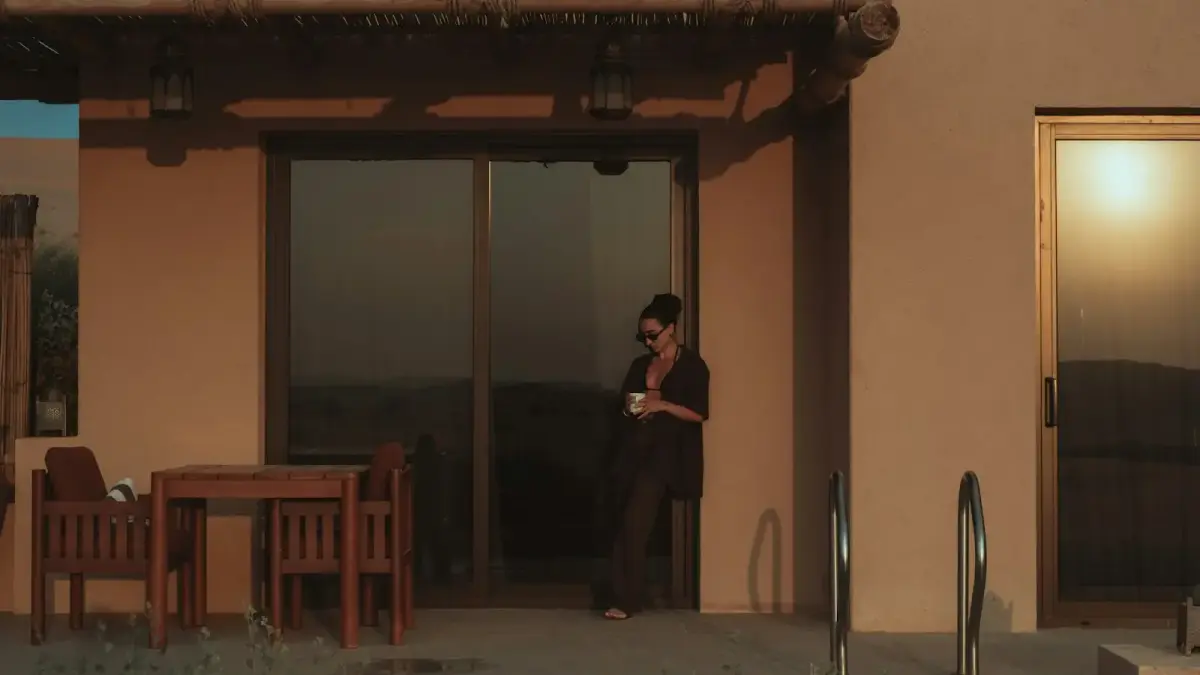
I watched my father do it my entire childhood. The phone would ring during dinner, and he’d glance at the screen, push his chair back without a word, and disappear through the sliding glass door. We’d hear the latch click. Then nothing. Just the muffled shape of his voice through the window, too quiet to make out, speaking to someone in a tone I’d never once heard him use at our kitchen table.
I thought he was hiding something. For years, I genuinely believed there was a second life happening on that porch. A secret. Something he didn’t want us to know.
It took me until my mid-thirties - standing on my own back porch in the dark, phone pressed to my ear, finally saying what I actually felt to a friend I trusted - to understand what he’d been doing. He wasn’t hiding from us. He was finding the only place where he could stop performing long enough to be honest.
If you’re someone who does this - who slips out the back door to take a call, who sits in the parked car in the driveway long after you’ve pulled in, who can only say what you mean when the room has emptied - you’re not being secretive. You’re doing something far more interesting than that.
Here are 9 things you do without realizing it, according to psychology.
1. You modulate your voice based on proximity to other people
You probably don’t notice it, but there’s a volume knob inside you that turns itself down the moment someone walks into the room. Your voice gets flatter. More measured. The emotional texture drains out of it like water through a sieve.
A 2019 study published in the Journal of Personality and Social Psychology found that individuals high in self-monitoring - the tendency to adjust behavior based on social context - exhibit measurable vocal changes depending on audience composition. Pitch, pacing, and emotional expressiveness all shift when the perceived audience changes.
You’re not being fake. You’re regulating. The voice you use around people is the one that keeps you safe. The voice you use alone on the porch is the one that tells the truth. You’ve been doing it so long you don’t even hear the difference anymore. But the person on the other end of the phone does.
2. You have a “house voice” and a “real voice” and the switch happens at the back door
There’s a version of you that exists inside your home. That version is competent, measured, in control. That version answers questions about dinner plans and schedules and whether the dishwasher has been run. That version is not dishonest. But that version is edited.
Then there’s the version that shows up when you step outside and close the door behind you. That version laughs differently. Pauses longer. Says “I don’t know” without immediately following it with a solution.
The back door is your threshold. Not between inside and outside, but between performance and presence. You cross it the way some people cross into a therapist’s office - not because the space is special, but because the absence of your usual audience changes what you’re able to say. You need the cold air and the dark yard and the sound of crickets to remember what your actual voice sounds like.
3. You process emotions better without witnesses
This isn’t avoidance. This is architecture. You’ve built an internal system that requires solitude the way an engine requires fuel. Emotions don’t move through you properly when someone is watching. They stall. They get self-conscious. They flatten into something presentable instead of something real.
Psychologist Mihaly Csikszentmihalyi’s research on flow states showed that self-consciousness is one of the primary barriers to deep psychological engagement. When you feel observed, a monitoring part of your brain activates - checking how you look, how you sound, whether your feelings are appropriate. That monitoring consumes the very bandwidth you need to actually feel.
So you step outside. Not to avoid people. To give your emotions the room they need to arrive fully formed. The porch isn’t an escape. It’s a processing center.
4. You learned early that feelings expressed in front of others became group property
Somewhere in your childhood, you said something honest at the dinner table. Maybe you admitted you were scared. Maybe you said you didn’t like something everyone else seemed to love. Maybe you cried.
And then it became a discussion. Your mother turned to your father. Your father weighed in. Your sibling made a joke. Your honest feeling - which had been yours, private, still tender - was suddenly in the middle of the table being passed around like a dish everyone had opinions about.
You learned the lesson instantly. Honesty in a group setting means losing ownership of your own experience. It means your sadness becomes your mother’s worry, which becomes your father’s frustration, which becomes a whole family event that you never asked for. So you stopped. You didn’t stop feeling. You stopped feeling out loud. And the porch became the one place where your words belonged only to you and the person you chose to share them with.
5. You associate honesty with physical distance from the people you love
This is the paradox that confuses everyone around you. The people you’re closest to are the people you’re least honest with - not because you don’t trust them, but because the stakes are too high. Being honest with someone who lives in your house means the aftermath also lives in your house. It sits at breakfast. It follows you to the couch. It sleeps in the same bed.
A 2021 study in Frontiers in Psychology found that emotional disclosure is significantly affected by what researchers call “relational proximity.” The closer we are to someone in daily life, the more we filter what we share - not from lack of trust, but from an unconscious desire to protect the emotional ecosystem we share with them.
You call your college friend from the driveway because honesty with your spouse has consequences that honesty with a friend who lives three states away does not. This isn’t betrayal. It’s emotional triage. You’re protecting the very relationships you value most by processing your messiest feelings somewhere they won’t land like grenades.
6. You don’t keep secrets - you keep conversations sacred
Everyone assumes the person who steps outside to take a call is hiding something. That the closed door is a red flag. That the lowered voice means deception.
But you know the truth, and it’s almost the opposite. You step outside because this conversation matters too much to have it with an audience. The same way you wouldn’t read someone’s journal entries out loud at a party, you don’t let an intimate phone conversation leak into a room full of people who weren’t invited into it.
You treat conversations the way some people treat letters - as private exchanges between two people that deserve the dignity of not being overheard. The person on the other end of the call told you something real. You owe it to them to receive it without your spouse glancing up from the couch, without your kid wandering through the kitchen, without the television narrating over someone’s vulnerability. The closed door isn’t about what you’re hiding. It’s about what you’re honoring.
7. You feel most connected to people when nobody else is watching
The deepest conversations of your life have happened in borrowed spaces. On porches. In parked cars. On walks where you didn’t look at the other person’s face. During late-night phone calls where the silence between sentences was long enough to matter.
Susan Cain’s research on introversion, outlined in her work on quiet temperaments, emphasizes that introverts tend to prefer deep, one-on-one connections over group interactions. But it goes further than preference. For many introverted people, the presence of a third party - even a beloved one - fundamentally changes the texture of a conversation. It adds a layer of performance. Of translation. Of explaining not just what you feel but why you feel it to someone who wasn’t part of the original exchange.
Your most connected moments have one thing in common - they happened when nobody was watching. Not because you’re secretive. Because connection, for you, is a two-person language. Add a third and it becomes something else entirely.
8. You chose solitude not as withdrawal but as the only environment where your real self shows up
People worry about you. They think stepping outside means you’re pulling away. They read your need for privacy as distance, or worse, as rejection. They take it personally.
But you know something they don’t. You’re not leaving the room to get away from them. You’re leaving the room to get back to yourself. The version of you that exists in the kitchen during family dinner is real - but it’s a managed version. An edited cut. The director’s version requires an empty room.
This is what Brene Brown’s work on vulnerability has tried to explain for years - that vulnerability requires safety, and safety is not always about who is present. Sometimes it’s about who is absent. For you, the safest audience for your most honest self is no audience at all. The porch in the dark. The car in the driveway. The backyard with the dog and the sky and nobody asking you how you feel. That’s where you finally feel it.
9. You are often the most emotionally articulate person in the room - but only when the room is empty
Here’s what nobody tells you about yourself. You’re not bad at expressing emotions. You’re extraordinarily good at it. You just can’t do it with an audience.
Give you a quiet room and a phone and a person you trust, and you will say things so precise and vulnerable that they stop the other person mid-breath. You will name feelings most people don’t even know they have. You will articulate the exact shape of a sadness that’s been sitting in your chest for months. You will be so emotionally clear that the person listening will feel understood by proxy, recognized in your words even though you were describing yourself.
Research published in the Journal of Research in Personality in 2022 found that individuals who score high in introversion often demonstrate superior emotional granularity - the ability to make fine-grained distinctions between similar emotional states. You don’t just feel sad. You feel the specific kind of sad that comes from being in a room full of people you love and knowing that none of them have heard your real voice in years.
That’s not a deficit. That’s depth.
The porch isn’t where you go to hide. It’s where you go to exist. The phone isn’t a wall between you and your family. It’s a bridge between you and the version of yourself you can only reach in silence.
If you recognized yourself in any of this, I want you to know something. The people who love you may not understand why you step outside. They may take it personally. They may wonder what you’re saying out there that you can’t say in here.
But you and I both know. You’re not saying anything you can’t say in front of them. You’re saying it the only way you know how to mean it. Alone. In the dark. In your real voice. And that’s not a flaw. That’s the most honest thing about you.

