Children who always carried a book everywhere they went - to the grocery store, to the dentist's office, to family gatherings where the cousins ran wild in the yard - not because they intended to read at every moment but because a book was a socially acceptable reason to be alone without anyone asking why, and a child who learned that stillness without visible occupation made people ask questions she could not answer never gave her body permission to simply exist in a room without something in her hands to justify being there
I was maybe eight or nine when I started tucking a paperback into the waistband of my jeans before we left the house. Not consciously at first. It was just something my hands did while my mother called from the kitchen that we were leaving in five minutes.
The book went to the grocery store. It went to my aunt’s house on Sundays. It went to the dentist, the DMV waiting room, the back seat of the car for every errand that lasted longer than ten minutes.
My cousins would scatter across the yard the moment we arrived somewhere, climbing fences and inventing games I could never quite find the entry point to. I would find a chair, open the book, and feel something in my chest loosen. Not because the story was so captivating. Sometimes I barely read a page. But because a child holding a book is a child who is doing something, and a child who is doing something doesn’t have to explain why she is sitting alone.
That was the real function of the book. It was never really about reading. It was a shield - a small, portable, socially acceptable answer to the question nobody had to ask because the book answered it before they could. What are you doing? I’m reading. Why are you sitting here by yourself? Because I’m reading. The conversation ended before it started, and that was the whole point.
If you were that child, I want you to know that what you were doing was extraordinarily intelligent. And I also want you to look at what your hands are doing right now.
The book was never about the book
Here is the thing nobody talks about when they romanticize the kid who always had her nose in a book. That child wasn’t necessarily a born reader. She was a child who discovered, probably before she had language for it, that existing in a room without a visible task made people uncomfortable.
Not her. Them.
A child sitting alone and staring at nothing attracts concern. Adults approach. They kneel down and ask if you’re okay. They suggest you go play with the other kids. They tell your parents you seem shy, or sad, or maybe something is wrong. But a child sitting alone with a book attracts admiration. Oh, she’s such a reader. She’s so mature. She’s in her own little world.
The book transformed the exact same behavior - sitting apart, choosing solitude, declining to participate - from a problem into a virtue. Same child. Same chair. Same distance from the group. The only difference was whether her hands were empty or holding 200 pages of something she may or may not have been absorbing.
A 2014 study published in the Journal of Research in Personality found that introverted children who developed what the researchers called “legitimate withdrawal strategies” - socially accepted ways to separate from group activity - showed lower anxiety levels than introverted children who simply retreated without a visible reason. The book wasn’t avoidance. It was a sophisticated social negotiation performed by a child who hadn’t yet learned the word “introvert.”
1. The grocery store book
You brought the book to the grocery store not because you expected to read between the cereal aisle and the deli counter. You brought it because the grocery store was forty-five unpredictable minutes where your mother might run into someone she knew, and then you’d be standing there with nothing to do and nowhere to look while two adults had a conversation you weren’t part of.
The book was insurance. It was a plan for the gap - for the moment when you were neither needed nor occupied, which was the moment that felt most dangerous.
Not physically dangerous. Socially dangerous. Because a child standing next to her mother doing nothing is a child who might be spoken to. Might be asked a question. Might be drawn into a conversation she didn’t choose and doesn’t know how to exit.
The book said: I am here, but I am busy. I am present, but I have a reason not to engage. It was the earliest version of a skill you still use today.
2. The dentist’s office book
Waiting rooms were where the book performed its most essential function. Because a waiting room is a place designed entirely around the discomfort of having nothing to do.
Everyone in a waiting room is performing occupation. Magazines. Phones. Staring at the television mounted in the corner playing something nobody chose. The unspoken agreement is that we will all pretend to be busy so that nobody has to acknowledge the strangeness of sitting in a room with strangers, doing nothing, waiting.
You understood this contract before you understood long division. You brought the book because you had already learned that a person without something in their hands is a person who is available, and being available meant being vulnerable to interaction you hadn’t consented to.
3. The family gathering book
This is where it mattered most. Because the family gathering was where your solitude was most visible and most likely to be interpreted.
Your cousins ran. They played tag, climbed things, formed alliances and broke them. You sat on the porch with your book and felt the particular peace of having found your position - not in the game, not in the kitchen with the adults, but in the in-between space that the book created around you like a small, portable room.
And yet. Someone always came. An uncle, an aunt, a well-meaning grandmother. Honey, don’t you want to go play? You felt the question land in your stomach like a stone. Because the real question underneath it was: what’s wrong with you?
The book was the answer that kept that second question from ever being spoken aloud.
4. The car book
The back seat of the car was actually the safest place. Nobody questioned a child reading in the car. There was nothing else to do. No cousins to join, no adults to navigate.
But you brought the book anyway, because by then the habit had become something deeper than strategy. It had become identity. You were the kid who reads. The quiet one. The bookworm.
These labels felt like protection. If people had a category for you, they stopped trying to reclassify you. They stopped asking why you were sitting alone because they already had an answer: that’s just how she is. She reads.
What nobody understood - what maybe you didn’t understand yet either - was that the reading was secondary to the holding. The book in your hands was a physical object that communicated a social message: I am occupied. I am fine. Please do not approach unless necessary.
5. What the book became
Here is where I need you to look at your hands.
Because if you were the child with the book, you are almost certainly the adult with the phone. Or the headphones. Or the laptop open at the coffee shop, the podcast playing while you walk, the to-do list you pull up the moment you sit down anywhere.
The object changed. The function didn’t.
A 2019 study in Psychological Science examined what researchers called “need for justification of inactivity” and found that adults who reported difficulty sitting still without a task showed strong correlations with childhood environments where idle behavior was questioned or corrected. The study suggested that for many people, the inability to simply sit without doing something isn’t restlessness. It’s a deeply learned belief that existing without producing is not allowed.
You are not restless. You are not addicted to your phone. You are not failing at mindfulness.
You are a person who learned, very young, that your body in a room was not enough. That you needed to be doing something to earn your right to be there. And you have carried that lesson so deep into your bones that sitting on a park bench without a phone in your hand feels like standing naked in public.
6. The terror of being caught simply existing
There’s a specific feeling I want to name here, because I think you know it. It’s the feeling you get when someone catches you staring out a window. When a coworker walks by your desk and you’re not typing. When your partner comes into the room and you’re just sitting on the couch - not watching anything, not reading anything, not scrolling.
The impulse is immediate. Reach for something. Look busy. Produce evidence that you are a person who is doing a thing.
This isn’t laziness anxiety, though it can look like it. It’s something older and stranger. It’s the child on the porch at the family gathering, learning that her stillness was an invitation for questions she didn’t want to answer. It’s the child who realized that if she didn’t provide her own reason for sitting there, someone else would assign one - and their reason would always be that something was wrong.
Research from a 2021 paper in Frontiers in Psychology found that adults who struggle with unoccupied stillness often trace it back to childhood experiences where solitary inactivity was treated as a signal of distress rather than a preference. The researchers noted that these individuals develop what they called “occupation compulsion” - not a clinical disorder, but a persistent need to have a visible task at all times in social or semi-social spaces.
You developed this skill because you needed it. You were a child navigating a world that hadn’t yet learned to respect introversion as a legitimate way of being. The book was brilliant. It worked.
7. The permission you never received
What the book couldn’t give you - what no object in your hands can give you - is the permission to put it down.
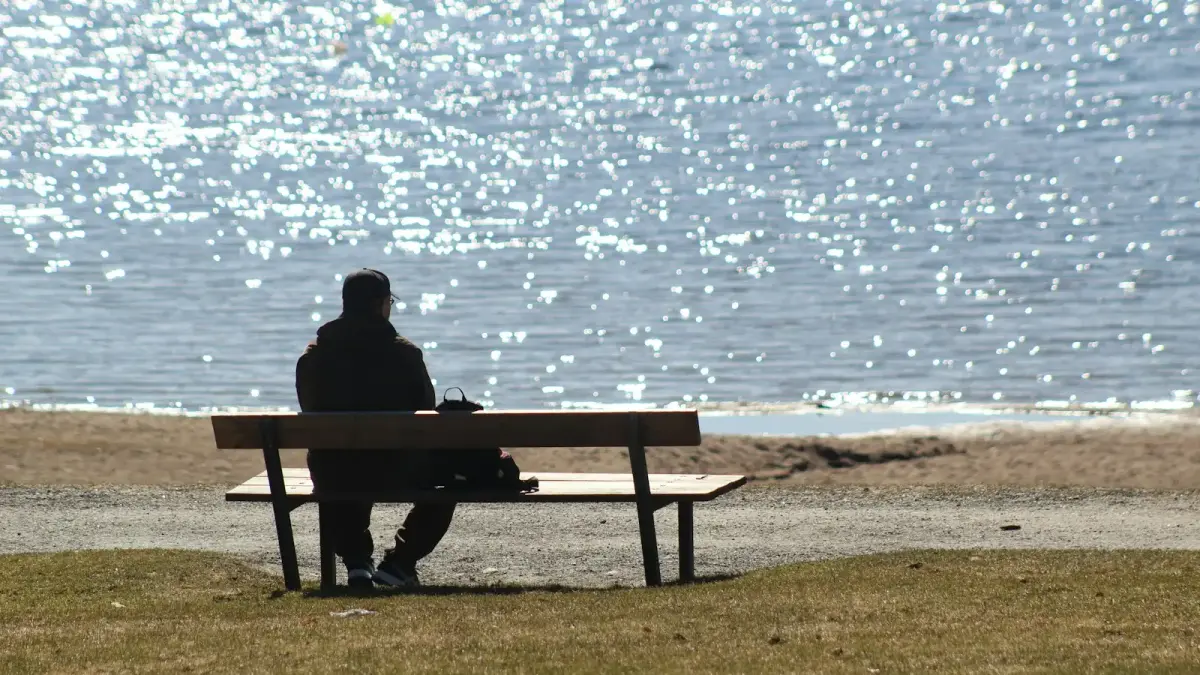
To sit in a waiting room with your hands in your lap. To ride the train looking out the window. To be at a party standing by the wall, holding nothing, doing nothing, simply being a person in a room.
The child needed the book because the world wasn’t safe enough to exist in without armor. But you are not that child anymore. The world may still be uncomfortable, and people may still ask questions, but you now have something the child didn’t have.
You have the ability to answer.
Why are you just sitting there? Because I wanted to. What are you doing? Nothing. Are you okay? Yes. I’m just here.
These answers were too dangerous for a child who didn’t yet trust her own legitimacy. They are available to you now. You might find them terrifying to use. That’s okay. The book taught you to protect yourself. Nobody is asking you to throw it away.
But maybe, just once this week, you could try setting it down. Sitting somewhere public with nothing in your hands. Letting your body exist in a room without a justification.
You might notice the old panic rise - the urge to reach for your phone, to look busy, to produce some evidence that you belong there. Let it rise. Let it pass.
You belong there because you are there. That was always true. The book just made it easier to believe.

