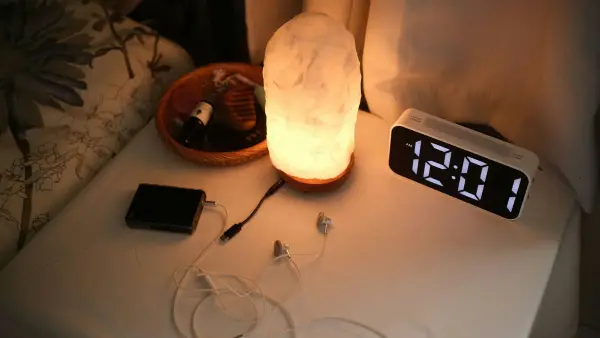
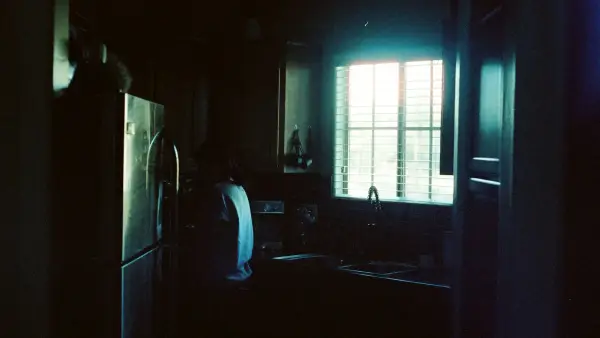
Children who always checked whether the front door was locked before bed - who got up in the dark to test the handle, who lay awake running through a checklist of windows and stove burners and entry points before they could close their eyes - often become adults whose bedtime routine is a quiet circuit of the house that everyone else calls habit but they know is something closer to a perimeter check, because a child who appointed herself the last line of defense in a household where no one else seemed concerned about what might come through the door never found the moment when vigilance became optional
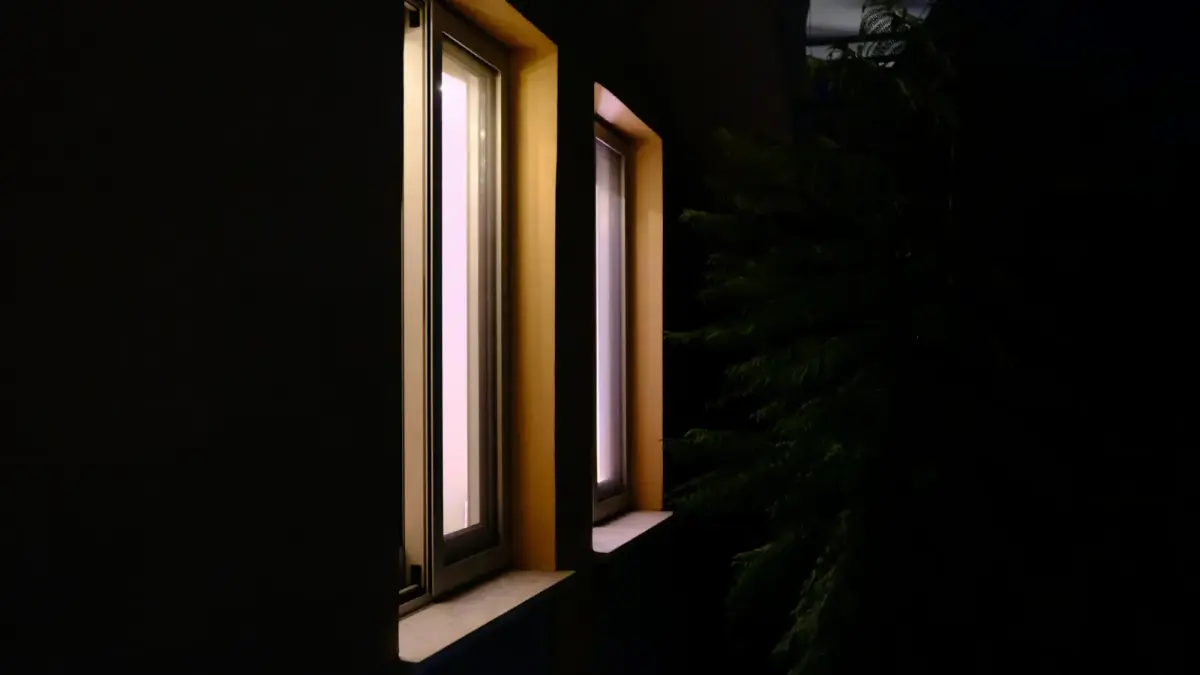
I was nine the first time I realized no one else in the house was going to check.
My mother had fallen asleep on the couch with the television still on. My stepfather was working nights. My younger brother was in bed with a stuffed dog he believed could protect him from anything. And I was standing in the hallway in bare feet, staring at the front door, feeling something I wouldn’t have words for until decades later - the weight of being the only person between my family and whatever was out there.
I checked the deadbolt. I checked the chain. I walked to the back door and pressed my palm flat against it, as if I could feel whether it was secure through my skin. I turned every stove knob to make sure each one clicked into the off position. Then I went back to the front door and checked it again.
I was not a child with a disorder. I was a child with a job nobody assigned me.
If you recognize this - if your bedtime still involves a quiet walk through every room, a specific sequence of locks and latches and handles that you run through the way a pilot runs through a preflight checklist - then you already know what I’m about to say. You never stopped being that child. You just got taller.
1. The sequence that became a ritual
You probably have a route. Maybe you don’t think of it that way, but if someone asked you to describe what you do between deciding to go to bed and actually lying down, you could map it like a floor plan.
Back door first. Then the sliding glass door, if there is one. Windows in the kitchen. Stove knobs - you touch each one, even though you haven’t cooked since noon. Then the living room windows. Then the front door. Then the front door again, because the first check doesn’t count somehow. It never did.
This is not a quirk. This is an architecture your nervous system built when you were too young to understand why you were building it. A 2019 study published in the Journal of Anxiety Disorders found that repetitive checking behaviors in adults are significantly more common among those who reported unpredictable or under-supervised home environments in childhood. The researchers noted that these behaviors often function not as compulsions but as remnants of adaptive coping strategies - things that once made genuine sense.
Your sequence made sense. It still does, to the part of you that remembers what it felt like to be the only one listening.
2. The difference between this and OCD
People will tell you this sounds like OCD. Your partner might joke about it. A well-meaning friend might suggest you talk to someone about your “checking thing.”
But here is what they don’t understand: obsessive-compulsive disorder involves intrusive thoughts that feel foreign, irrational, ego-dystonic - meaning the person experiencing them knows the fear doesn’t match reality. What you’re doing is different. Your checking was born from a context where the fear was perfectly rational.
You grew up in a house where the door really might not have been locked. Where the stove really might have been left on. Where no one really was coming to make sure everything was secure. Your vigilance wasn’t a malfunction. It was a correct reading of your environment.
The distinction matters. Not because OCD isn’t real or valid, but because misidentifying what you carry changes how you relate to it. You don’t need to treat yourself as broken for doing something that once kept your family safe.
3. The child who heard noises and didn’t wake anyone
There’s a specific memory that many people who grew up this way share, and it sounds almost identical every time.
You heard something at night. A sound outside the window. A creak. A car door. And you lay completely still, eyes open in the dark, listening with your entire body. Your heart was loud in your ears. Your hands gripped the blanket.
And you didn’t call out. You didn’t go to your parents’ room. You didn’t wake anyone.
Because you already knew. You knew that calling out would either go unanswered or would be met with irritation. You knew that the adults in your house were either gone, or asleep in a way that felt like gone, or overwhelmed in a way that made them unavailable for this particular kind of rescue.
So you lay there and you handled it yourself. You listened until the sound stopped. You got up and checked the door. You went back to bed and stared at the ceiling until your body finally gave in.
You were seven. Or eight. Or five. And you were already running your own security detail.
4. How this shows up in the people you love
Your partner knows about the circuit. They’ve watched you do it a thousand times. They might find it endearing, or mildly annoying, or something they’ve learned not to comment on.
But here’s what they might not see: you can’t fall asleep until you hear the garage door close. You can’t relax on vacation until you’ve mapped every exit in the hotel room. You can’t leave your children at a sleepover without a small, private wave of dread that you push down and smile through.
Dr. Gabor Mate has written extensively about how childhood stress responses become embedded in the body’s automatic systems - not as choices, but as wiring. The child who learned that safety was her responsibility doesn’t unlearn that when she gets married or buys her own house or installs a security system with cameras and an app on her phone. The app tells her the door is locked. She checks anyway. Because the app wasn’t there when she was nine, and the part of her that runs this protocol doesn’t entirely trust anything she didn’t verify with her own hands.
A 2021 study in Frontiers in Psychology found that adults who assumed caretaking roles in childhood - a pattern researchers call parentification - showed heightened threat-monitoring behaviors even in objectively safe environments. Their nervous systems had calibrated to a world where danger was always possible, and recalibrating requires more than simply knowing you’re safe now.
It requires the body believing it too. And bodies are slower learners than minds.
5. The body that cannot release into sleep
This is the part that’s hardest to explain to someone who didn’t grow up this way.
It’s not that you’re afraid something will happen. It’s that your body won’t let go until it has confirmed that nothing will. There’s a difference. Fear is emotional. What you experience is more mechanical than that - a system that needs to complete its protocol before it powers down.
You know the door is locked. You locked it yourself twenty minutes ago. But your body is holding a low hum of activation that says not yet. And so you get up. You walk the house. You touch the lock. And something in your chest releases, just slightly. Just enough.
This is your nervous system completing a cycle it learned to run before you had any say in the matter. It’s not irrational. It’s deeply rational - it’s just operating on old intelligence.
6. The parents who couldn’t do this
This is not about blame. But it is about seeing clearly.
Somewhere in your childhood, there was a gap. Maybe your parents were working three jobs and were simply too exhausted. Maybe they were struggling with depression or substance use or their own unprocessed trauma. Maybe they were physically present but emotionally somewhere else entirely - in the room but not in the house, if you know what I mean.
They weren’t bad people. Most of them were doing everything they could with what they had. But what they had wasn’t enough to include checking the door. And so that job fell to whoever was still awake, still watching, still listening.
It fell to you.
And you did it beautifully. You did it without being asked, without being thanked, without even fully understanding what you were doing or why it felt so necessary. You just knew that someone had to make sure, and no one else was going to.
A 2017 study published in the Journal of Child and Family Studies found that children in households with inconsistent adult supervision often develop what the researchers described as “premature autonomy” - a self-sufficiency that looks like maturity but is actually a stress response. These children become hypercompetent not because they were nurtured into confidence, but because the alternative was unacceptable to them.
You weren’t precocious. You were unprotected. And you protected yourself.
7. The reframe you deserve
Here is what I want you to sit with tonight, when you get up to check the door for the second time.
What you are doing is not a disorder. It is not a dysfunction. It is not something that needs to be medicated or therapied away, though therapy can absolutely help you soften its edges if it’s stealing your sleep or straining your relationships.
What you are doing is devotion.
You were a child who loved her family enough to guard the door. You were a child who took on a role no child should have to carry, and you carried it with a seriousness and consistency that most adults can’t manage. You didn’t do it because you were anxious. You did it because you were loyal. Because you were paying attention when no one else was. Because some part of you decided, very early, that if anything was going to come through that door, it would have to get through you first.
That is not weakness. That is not pathology. That is a child’s version of love, expressed in the only language she had available - action.
What to sit with tonight
You don’t have to stop checking. You don’t have to force yourself to stay in bed when your body says get up. Fighting the ritual often makes it louder.
But you can do something small. The next time you stand at the front door with your hand on the lock, take a breath. And instead of telling yourself you’re being ridiculous, try saying this: I know why I do this. I know where this started. And I’m grateful for the child who kept watch.
Because she is still in there, that little girl in bare feet in the hallway. She is still listening for sounds in the dark. She is still making sure everyone is safe.
The least you can do is thank her. She’s been on duty for a very long time. And she has never, not once, fallen asleep at her post.