Children who always finished their food even when they didn't like it - who chewed through servings of things they hated because leaving food on the plate meant something in their house, who learned that the distance between 'I don't want this' and 'I'm ungrateful' was exactly one unfinished dinner - often become adults who have trouble saying no to anything they have been given, because a child who learned that refusing a plate was the same as refusing the person who prepared it never developed a framework for wanting something different without meaning something cruel
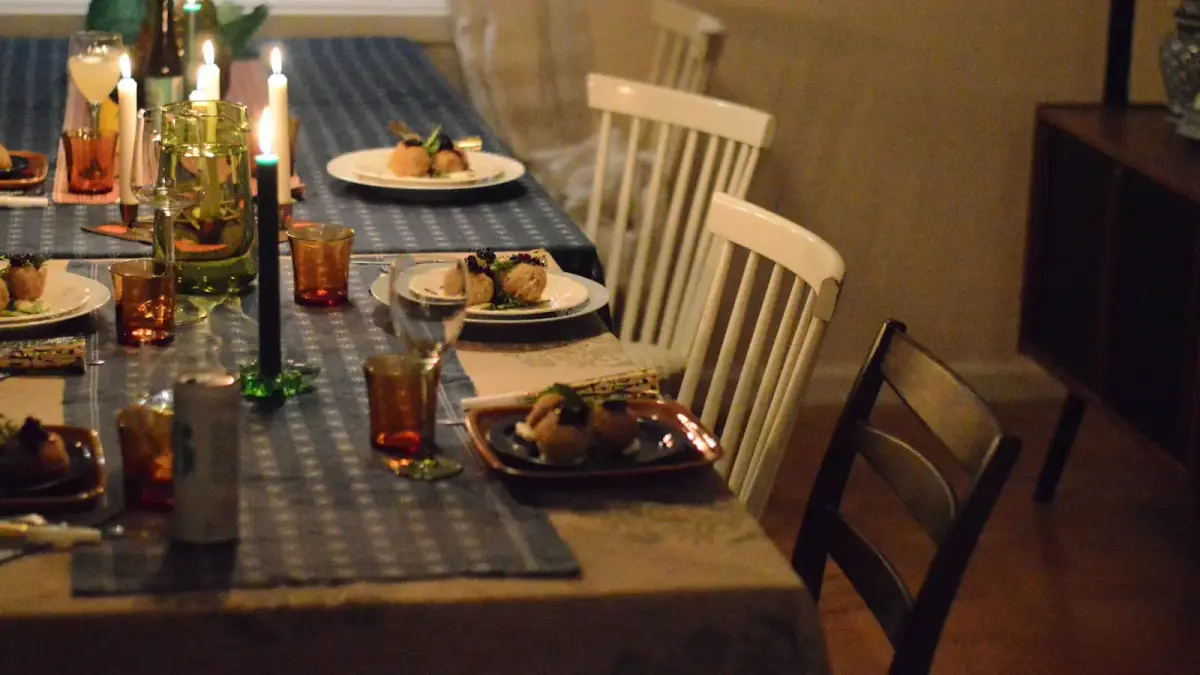
I was nine years old and sitting in front of a plate of liver and onions when I first understood that my mouth was not entirely my own.
I remember the texture - dense and metallic, like chewing on a wet penny wrapped in something that had once been alive. I remember my throat closing against it. And I remember my mother’s face, not angry exactly, but something worse. Hurt. As if my grimace at the food on my plate was a grimace at her.
So I swallowed. Not because I wanted to. Because I understood, in the wordless way children understand the most important things, that what was on my plate and what was in her heart were somehow the same thing. That refusing one meant wounding the other.
I cleared that plate. And the next one. And the one after that. I got very good at swallowing things I didn’t want, and I carried that skill with me long after I left that kitchen table.
If you grew up in a house where finishing your food wasn’t optional - where “clean your plate” wasn’t a suggestion but a moral position - then you already know this isn’t really about food. It never was.
The plate was the first classroom
Every family has its unspoken curriculum. There are lessons taught with words and lessons taught with silences, with facial expressions, with the particular weight of disappointment that settles over a dinner table when a child pushes something to the edge of their plate.
In many homes - especially those shaped by scarcity, by war-era parents, by the particular brand of love that expresses itself through feeding - the dinner table was the first place a child learned what their preferences were worth.
And the answer, delivered night after night, was: not much.
A 2019 study published in the journal Appetite found that children who were consistently pressured to eat foods they disliked didn’t just develop negative associations with those specific foods. They developed a broader pattern of suppressing internal cues - hunger, fullness, preference - in favor of external expectations. The researchers called it “eating compliance.” But what they were really measuring was the early architecture of people-pleasing.
The child didn’t learn to like liver. The child learned to stop trusting the part of themselves that said no.
What “clean your plate” actually taught
On the surface, the rule was about nutrition, or frugality, or respect. And most parents who enforced it weren’t trying to cause harm. They were passing along what they’d been given - a belief that wasting food was wasteful, that children needed to eat what was prepared, that gratitude looked like an empty plate.
But underneath the practical logic, a deeper lesson was being absorbed.
The child learned that their discomfort was less important than someone else’s effort. That the correct response to receiving something you didn’t want was to accept it quietly and completely. That the distance between “I don’t like this” and “I’m ungrateful” was vanishingly small.
That lesson didn’t stay at the dinner table.
It followed them to school, where they agreed to projects they didn’t want. It followed them into friendships, where they said yes to plans that drained them. It followed them into marriages, where they swallowed grievances the same way they once swallowed overcooked peas - with their eyes closed and their jaw tight and the quiet hope that it would be over soon.
The plate was never just a plate. It was a training ground for a life of compliance dressed up as kindness.
The body keeps the recipe
Here is something developmental psychologists have been studying for decades, and it still catches people off guard: the patterns we develop around food in childhood don’t just shape our relationship with eating. They shape our relationship with desire itself.
Dr. Ellyn Satter, whose work on feeding dynamics has influenced pediatric nutrition for over thirty years, described a concept she called the “division of responsibility” - the idea that parents are responsible for what food is offered, and children are responsible for whether and how much they eat. When that boundary gets crossed - when children are forced to eat things they don’t want - the child doesn’t just lose autonomy over their plate. They lose practice with the most fundamental human skill: knowing what they want and believing it matters.
This is the part that breaks my heart every time I sit with it.
Because the adults who grew up this way - the ones who can’t send food back at a restaurant, who eat the wrong order rather than flag down the waiter, who say “it’s fine” when it isn’t - they aren’t weak. They aren’t spineless. They are people who were taught, meal by meal, that asserting a preference was the same as committing an act of cruelty against someone who loved them.
They learned that wanting something different was a form of betrayal.
How swallowing dinner became swallowing everything
You can watch this pattern play out in the smallest moments of an adult life, so ordinary that most people never connect them back to anything.
The person who stays two hours longer at a party because they can’t figure out how to leave without making the host feel bad. The person who takes on extra work because their manager asked with that particular tone - hopeful, slightly pressured - that sounds exactly like their mother’s voice at the dinner table. The person who has been in a relationship that stopped working years ago but can’t articulate why leaving wouldn’t make them a terrible person.
A 2021 study in the Journal of Personality and Social Psychology found that individuals with high “rejection sensitivity” - an acute fear that asserting their needs will result in being rejected or abandoned - were significantly more likely to report childhood environments where compliance was tied to emotional acceptance. The researchers traced a clear developmental line: children who learned that their acceptance in the family was conditional on their agreeableness became adults who experienced every “no” as a potential severing of connection.
This isn’t a personality flaw. It’s a survival strategy that outlived the environment that required it.
The child who cleaned their plate to keep the peace at dinner grew into the adult who cleans their emotional plate every day - absorbing other people’s moods, anticipating other people’s needs, metabolizing other people’s discomfort - because somewhere deep in their nervous system, the equation still holds: if I refuse what’s been given to me, I will lose the person who gave it.
The restaurant test
I sometimes describe this to people as the restaurant test, and most of them recognize it immediately.
You order something at a restaurant. It arrives wrong - not what you asked for, or overcooked, or missing something essential. Do you send it back? Or do you eat it anyway, telling yourself it’s fine, it’s not that bad, you don’t want to make a scene, the server is busy, it’s not worth the trouble?
If you eat it anyway - if you always eat it anyway - I want you to sit with that for a moment.
Because “it’s not worth the trouble” is what you say now, as an adult. But the original programming is much older and much more tender. The original programming says: if I send this back, I am saying that what someone gave me wasn’t good enough. And that makes me a difficult person. And difficult people don’t get loved.
This is what psychologist Harriet Braiker identified in her work on the “disease to please” - the way people-pleasing isn’t really about wanting to make others happy. It’s about a deeply internalized belief that your own needs are an imposition. That the safest version of you is the one who wants nothing, needs nothing, and accepts everything with a grateful smile.
She traced this pattern to early relational dynamics, and she was right. But I think it starts even earlier than most people realize. I think for many of us, it started with a plate.
The word no and where it went
Children are born knowing how to refuse. Watch any two-year-old at a dinner table and you’ll see it - the head turning away, the lips pressed shut, the full-body commitment to not this. It’s not defiance. It’s self-knowledge. The child knows what they want and don’t want, and they express it with their entire being.
Then something happens.
The refusal is met not with curiosity but with correction. Not “you don’t like that?” but “eat it anyway.” Not “what would you prefer?” but “this is what we’re having.” Over hundreds of these small interactions, the child’s no gets quieter. Not because it disappears, but because the child learns to redirect it inward.
The no becomes a whisper. Then a feeling they can’t name. Then a vague discomfort they’ve learned to override.
A 2018 study in Frontiers in Psychology examined what researchers called “self-silencing” - the habitual suppression of one’s own needs in order to maintain relationships. They found that self-silencing didn’t typically begin in adulthood. It was a pattern that developed in childhood, reinforced through repeated experiences where expressing needs led to relational consequences. The dinner table, the researchers noted, was one of the earliest and most consistent environments where this dynamic played out.
By the time these children reach adulthood, they don’t just have trouble saying no. They have trouble knowing that no is an option. The refusal muscle has atrophied so completely that when someone asks them what they want - genuinely asks, with space for a real answer - they often can’t find the words. Not because they’re indecisive. Because they were trained out of the habit of wanting.
What your plate was really saying
If you recognize yourself in any of this, I want you to know something that might take a while to land, but I’ll say it anyway.
You weren’t being good. You were being safe.
The child who cleaned their plate wasn’t demonstrating gratitude or discipline or respect. They were reading the room with the precision that only a small person in a big person’s world can manage, and they were making the calculation that every child in that position makes: the cost of refusal is higher than the cost of compliance.
That was a smart calculation. It probably was the right one, given what you had to work with at five or seven or nine. The adults around you weren’t equipped to hear your no without hearing it as an attack, and you figured that out, and you adapted.
But you’re not at that table anymore.
The plate in front of you now - the commitments, the relationships, the roles you’ve taken on, the version of yourself you perform every day - is yours to send back. Yours to push aside. Yours to leave half-finished without it meaning anything about your character.
Your preferences are not an insult to the people around you. Your boundaries are not acts of cruelty. And the word no - that first word you learned and the first word you were taught to unlearn - is still in there, underneath all the years of swallowing things you didn’t want.
It might come out quietly at first. It might feel dangerous in ways you can’t fully explain. It might taste, strangely, like that metallic bite of something your body always knew wasn’t right for you.
But it’s yours. It always was.
And learning to say it again - at restaurants, in meetings, in relationships, to yourself - isn’t selfish. It’s the long-delayed act of picking up the fork and choosing, for the first time, what actually goes on your plate.