Children who always knew which floorboard creaked and which door could be closed without a sound - who learned to walk down a hallway in the dark by memory, who could open the refrigerator at midnight without waking anyone in the house - often become adults who still move through their own homes as though someone is sleeping even when no one is, because a child who learned that sound in a house was a warning system never stopped treating silence as the safest way to exist in a room
I still close every cabinet with two hands. One on the handle to pull it shut, the other flat against the frame to catch it before it clicks. I’ve lived alone for six years. There is no one to wake. There is no one whose mood will shift because a piece of wood touched another piece of wood too loudly. But my hands don’t know that.
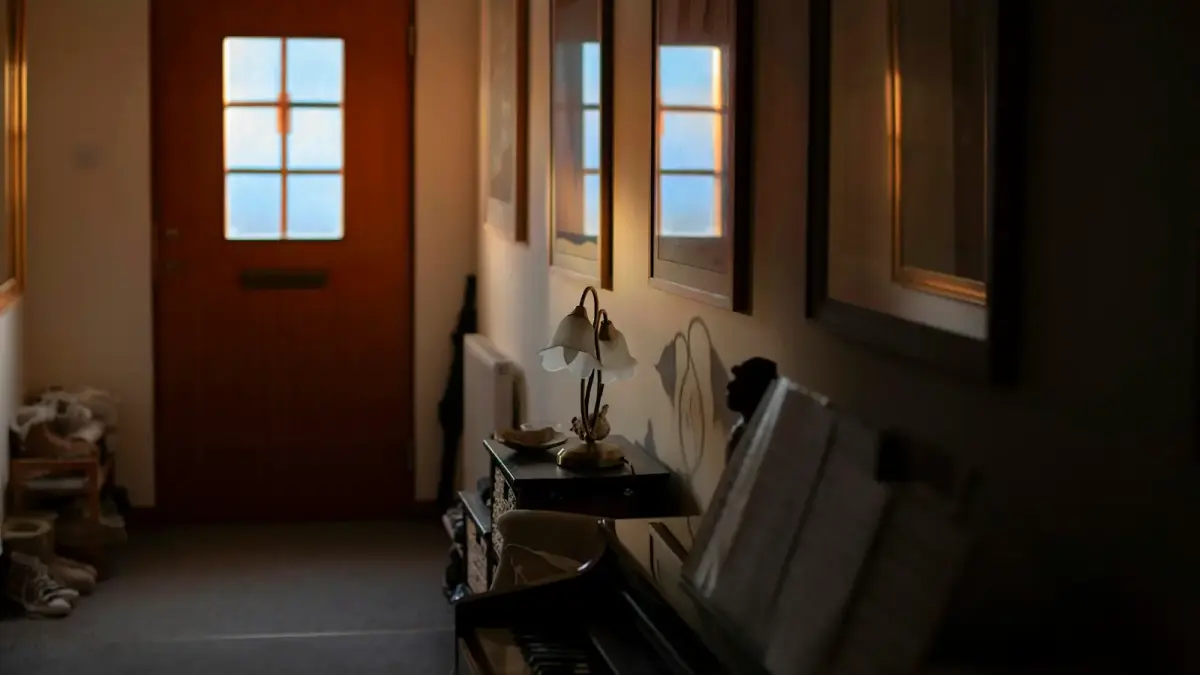
They remember a different house. A house where the kitchen was a minefield after 9 PM and the hallway had three boards you could never step on and the bathroom door needed to be lifted slightly on its hinges if you wanted it to close without announcing your existence to the rest of the floor.
I mapped that house the way other kids mapped their neighborhoods on bikes. Except I wasn’t exploring. I was surviving.
If you grew up in a home where sound was a warning system - where footsteps, cabinet doors, even the volume of your breathing could change the atmosphere of an entire evening - then you probably recognize yourself in what I’m about to describe. Not because someone taught you these habits. Because the house did.
1. You still close cabinets with two hands
One hand pulls. The other cushions. You’ve done it so many times you don’t even register the motion anymore - it’s just how you close things. Drawers, too. You ease them in the last inch, guiding the track with your fingertips so the wood doesn’t bump the frame.
Your partner might have pointed it out once. “You know you can just close it, right?” And you laughed, because of course you can. But your body has a different opinion. Your body remembers that a cabinet slammed shut at the wrong moment could change the temperature of the whole house. Not the thermostat. The emotional temperature. The kind that made you want to disappear.
A 2017 study in the journal Development and Psychopathology found that children raised in unpredictable home environments develop heightened sensory processing - their brains literally become more attuned to environmental stimuli, particularly sound, as an adaptive survival mechanism. Your two-handed cabinet technique isn’t a quirk. It’s neurology.
2. You walk on the outer edges of stairs
You know the center of each step is where the creak lives. So you hug the wall side, or the railing side, where the wood is supported and silent. You do this in hotels. You do this in friends’ houses. You do this in your own home where the stairs don’t even creak, because your feet learned a long time ago that the safest path is the quietest one.
Other people walk downstairs like it’s nothing. They let their heels land. They hold a conversation on the way down. You move like you’re trying not to set off a motion sensor.
This isn’t caution. This is choreography you learned before you were tall enough to reach the banister without stretching.
3. You never set a glass down - you place it
There’s a difference, and you know it in your bones. Setting a glass down means letting gravity do the work. Placing a glass down means your hand stays in contact with it the entire way to the surface, lowering it like you’re defusing something.
You do this with plates. With mugs. With your keys on the counter. Everything gets placed, not dropped. Not set. Placed. As though every surface in your home is a sleeping person’s nightstand and you are trying very hard not to be the reason they open their eyes.
People who didn’t grow up this way don’t even notice themselves putting things down. You notice every single time. Because in your childhood home, the sound of a glass hitting a countertop could start a chain reaction that ended with a door slamming three rooms away.
4. You flinch when you drop something in your own home
It’s not the sound that startles you. It’s what the sound used to mean.
A dropped fork. A plate that slips. A bottle that rolls off the edge of the counter and hits the floor. For most people, it’s a small inconvenience. For you, the half-second after the crash is the loudest silence you know. Your whole body tenses. You hold still. You listen.
You’re listening for the response. The footsteps. The voice. The shift in pressure that told you the sound had been heard and now someone was reacting.
You’re forty-three years old in a house you own and you still freeze for two seconds after you drop a spoon. Not because you’re afraid. Because your nervous system hasn’t gotten the memo that the listening is over.
Bessel van der Kolk’s research on trauma and the body describes exactly this - the way the body continues to respond to stimuli long after the original threat has passed. Your flinch isn’t fear. It’s a reflex that was once the smartest thing your body could do.
5. You apologize when you make noise, even when you’re alone
You’ve caught yourself saying “sorry” after bumping into a table in an empty room. You’ve whispered “oops” after a drawer closed louder than you intended at 2 AM with no one else in the apartment.
This isn’t politeness. It’s appeasement behavior that got baked into your operating system before you had the language to understand what you were doing. In your childhood home, noise was a transgression. And transgressions required immediate apology - not because someone demanded it, but because apologizing first was how you kept the situation from escalating.
Now you apologize to furniture. To empty kitchens. To the air itself. Because somewhere in your wiring, sound still equals mistake, and mistake still equals danger, and danger still requires you to make yourself small as fast as possible.
6. You keep the TV volume at the same low number, always
Fourteen. Or eleven. Or eight. Whatever the number is, you know it. It’s the exact volume where you can hear every word but no one outside the room would know the TV was on. You’ve tested it. Not consciously - your thumb just knows where to stop.
When someone else holds the remote and pushes the volume to 25 or 30, something in your chest tightens. It’s too loud. Not for your ears. For your sense of safety. Because in the house you grew up in, volume was directly correlated with visibility, and visibility was directly correlated with risk.
A 2020 study published in Psychological Science found that individuals with histories of childhood environmental unpredictability show altered auditory processing thresholds - essentially, their brains flag “normal” household volumes as potential threats. Your low-volume preference isn’t about taste. It’s about a nervous system that still equates quiet rooms with safe rooms.
7. You’re the one who cleans up quietly while everyone else is talking
At dinner parties. After holiday meals. During gatherings where the conversation gets loud and warm and everyone is laughing. You’re the one who stands up without announcement and starts collecting plates. Running water just above a whisper. Loading the dishwasher with the careful precision of someone disarming a device.
People say you’re thoughtful. Considerate. A great guest. And maybe you are. But the deeper truth is that you learned very early how to be useful without being noticed. How to contribute without drawing attention. How to exist in a room full of people while making as little impact on the room as possible.
You’re not cleaning up because you want to help. You’re cleaning up because the background is where you were trained to live.
8. You feel guilty when you make noise in an empty house
This is the one that gets you. The moment you catch yourself feeling bad - genuinely, physically guilty - for making a sound in your own home when no one is there.
You drop a pan and your chest floods with something hot and sharp. You shut a door too quickly and your stomach drops. You laugh too loud at something on your phone and then immediately go quiet, as though the walls heard you and are deciding how to respond.
The house is yours. You pay the mortgage or the rent. No one is sleeping. No one is angry. No one is listening. And still your body treats sound like a violation, like you’ve broken some rule so old you can’t remember when it was written but you can feel it in your teeth.
This is what Gabor Mate describes when he talks about the way children internalize their environment’s emotional rules - not as thoughts, but as physical sensations. The guilt you feel isn’t rational. It’s somatic. Your body learned that silence was the price of peace, and now it charges you that price even when peace is already free.
What the silence was really about
Here’s what I need you to hear, if any of this sounds like your life.
You were not a quiet child. You were a careful one. There is an enormous difference.
Quiet children are born with soft temperaments. Careful children are built by loud consequences. You didn’t prefer silence. You required it. Because silence meant safety, and safety meant survival, and survival meant learning the acoustic architecture of your home the way a pilot learns a cockpit - not out of interest, but because the cost of getting it wrong was too high.
A 2021 study in the Journal of Research in Personality found that adults who scored high on hypervigilance traits frequently traced those patterns back to childhood environments where emotional unpredictability was the norm - not necessarily abuse, but inconsistency. The not-knowing. The walking into a room and reading the air before you read the faces. The understanding, at seven or eight years old, that your footsteps had consequences.
You weren’t sneaking around. You were navigating.
And the adult you became - the one who places every glass like it’s made of something more fragile than glass, who flinches at a dropped fork, who apologizes to empty rooms - that adult is not broken. That adult is the finished product of a child who did something remarkable: they learned to keep themselves safe in a home that didn’t always feel safe.
The creaking floorboard didn’t ruin you. It taught you to listen. The problem is that you never got permission to stop.
You can set the glass down now. You can close the cabinet with one hand. You can let your heels hit the stairs.
The house isn’t listening anymore.
But if you need to keep placing things gently for a while longer, that’s okay too. You learned that softness for a reason. And the fact that you carried it with you - into your own home, your own life, your own quiet kitchen at midnight - doesn’t mean you’re haunted.
It means you survived. And you brought your gentleness with you.