Children who always had to be the one pressing the elevator button - stretching on tiptoe, racing to the panel, insisting it had to be their finger - often become adults who need to drive, book the reservation, and handle every detail, not because they're controlling but because they learned early that the only safe way to move through the world was to be the one choosing the direction
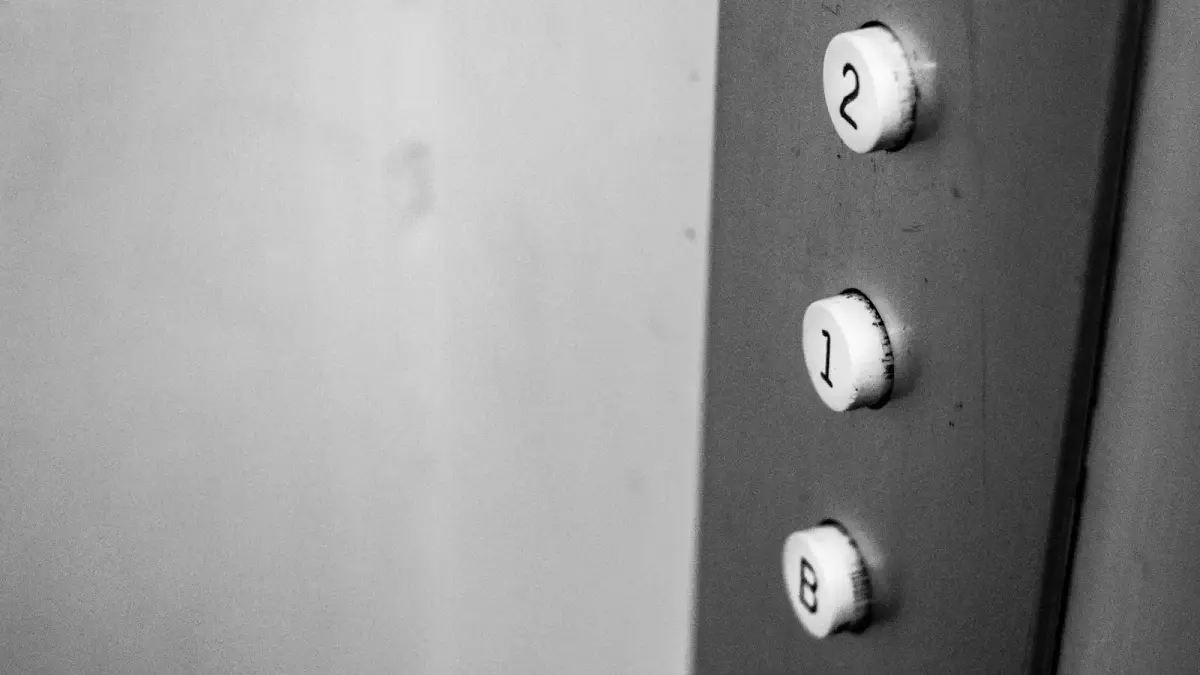
I was maybe four years old, standing in the lobby of my grandmother’s apartment building, and my father reached for the elevator panel before I could get there.
I remember the feeling more than the scene. Something close to panic. Not anger exactly - something more desperate than that. Like the floor had shifted under me and the only way to steady it was to press that button myself. My father laughed and pressed 7 again so I could press it too, but it wasn’t the same. The light was already on. The choice had already been made without me.
I didn’t have language for what I was feeling then. I do now. What I was protecting wasn’t a preference. It was the only moment in my entire small day where I got to make something happen.
The button was never about the button
If you were the child who raced to the elevator panel every single time - who needed to be the one pressing the number, who melted down when someone else got there first - you probably heard the same things I did. “Let someone else have a turn.” “It’s just a button.” “Don’t be bossy.”
But it was never just a button.
For a small child, almost nothing in daily life is within their control. Someone else decides when you wake up, what you eat, where you go, when you leave. Someone else picks your clothes, your school, your bedtime. The architecture of your entire existence is designed and managed by people who are taller than you.
And then there’s the elevator panel. A row of numbers. A clear action with an immediate, visible result. You press 7, the building moves, and a light confirms that you did that. You made that happen.
A 2019 study published in Developmental Psychology found that children’s sense of personal agency - the belief that their actions can influence outcomes - begins forming as early as age two, and that early experiences of successful cause-and-effect interactions significantly shape how children approach autonomy later in life.
That elevator button was a cause-and-effect interaction. Maybe one of the only ones a four-year-old could fully own.
What the insistence was actually saying
When a child insists on pressing the button themselves, they’re not being difficult. They’re conducting an experiment.
The experiment goes like this: If I do this one small thing, does the world respond? Does my action matter? Can I make something move?
And every time the answer was yes - every time the light turned on and the elevator hummed to life - that child was building a tiny internal model of themselves as someone who could make things happen. Someone whose choices registered somewhere.
This matters more than most adults realize. Because for many children, especially children growing up in chaotic, unpredictable, or emotionally inconsistent homes, the elevator button might have been one of the only reliable feedback loops available to them. Everything else - a parent’s mood, the household tension, whether tonight would be a calm night or a loud one - was beyond their influence.
But the elevator? The elevator always responded.
Dr. Edward Deci and Dr. Richard Ryan’s self-determination theory, one of the most widely studied frameworks in motivational psychology, identifies autonomy as one of three fundamental human needs. Not autonomy as in independence - autonomy as in the experience of being the origin of your own actions. The child at the elevator panel wasn’t asking for independence. They were asking for something much more basic. They were asking to feel real.
The adult version looks different but feels the same
Here’s what’s interesting. That child grew up. And the elevator button turned into other things.
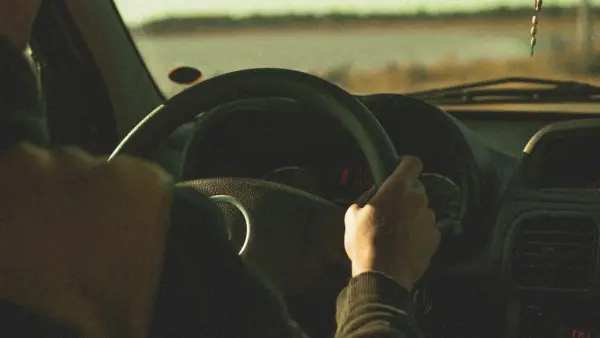
It turned into needing to be the one driving. Not because you think the other person is a bad driver, but because something in your chest tightens when you’re in the passenger seat with no control over the route.
It turned into booking the restaurant yourself. Making the travel arrangements. Handling the logistics for every group trip, every holiday, every family event. Not because you enjoy planning - honestly, it exhausts you - but because letting someone else handle it feels like standing in a building that’s moving without your permission.
It turned into being the person at work who tracks every detail. The one who builds the spreadsheet, manages the timeline, follows up on every email. Your colleagues might call you “type A” or “a control freak” or “the organized one.” And you’ve probably accepted that label, maybe even leaned into it.
But that label misses the origin story entirely.
You’re not controlling. You’re a person who learned, very early, that when you’re the one pressing the button, you know where you’re going. And when you’re not, anything could happen.
The difference between control and safety
There’s a distinction that took me years of studying developmental psychology to articulate, and it’s this: what looks like a need for control is often a need for safety that learned to dress itself in competence.
A 2021 study in Frontiers in Psychology examined the relationship between childhood unpredictability and adult planning behaviors. The researchers found that adults who reported higher levels of childhood environmental unpredictability showed significantly greater tendencies toward hypervigilant planning and logistical management - not as pathology, but as an adaptive strategy their nervous system developed to manage uncertainty.
Read that again. An adaptive strategy.
The child who needed to press the elevator button was adapting. They were learning that in a world full of variables they couldn’t influence, here was one variable they could. And they held onto it.
The adult who needs to drive, needs to plan, needs to manage the details - that person isn’t broken. They’re running an old program that once made perfect sense. A program that says: if I’m the one handling this, I know what’s coming next. And knowing what’s coming next is how I survive.
Why “just let go” doesn’t work
People love to tell the logistics person to relax. To delegate. To “let someone else take the wheel for once.”
And if you’re the person hearing that advice, you’ve probably tried. You’ve probably sat in the passenger seat and practiced breathing. You’ve probably let someone else make the dinner reservation and spent the entire evening wondering if the restaurant would be too loud, too far, too crowded.
The discomfort you feel in those moments isn’t stubbornness. It’s your nervous system responding to a very old equation: when I’m not the one choosing the direction, I am not safe.
You can’t logic your way out of something your body learned before you had language for it. Gabor Mate has written extensively about how early adaptive patterns become wired into our physiological responses - they live in the body, not just the mind. The child who pressed the elevator button wasn’t making a cognitive decision. They were following a felt sense of what safety required.
So “just let go” isn’t helpful. Not because you can’t grow past this pattern, but because growing past it requires understanding it first. And understanding it means going back to the elevator.
What the button really gave you
Here’s what I want you to sit with for a moment.
The child who needed to press the elevator button was a child who had figured something out. They had figured out that their small body, in a world built for larger people, could still make something happen. One finger. One press. One building in motion.
That’s not a flaw. That’s intelligence. That’s a child solving the problem of powerlessness with the only tool available to them.
And the adult you became - the one who drives, who plans, who manages, who tracks, who handles - that person is still solving the same problem with more sophisticated tools. You’re not difficult. You’re resourceful. You found a way to feel safe in a world that didn’t always offer you that, and you’ve been running that strategy ever since because it worked.
The question isn’t whether to stop pressing the button. The question is whether you can start to notice the moments when you’re pressing it out of old fear rather than present need. Whether you can begin to distinguish between “I want to handle this because I enjoy it” and “I need to handle this because something in me is afraid of what happens if I don’t.”
The tenderness of the pattern
I still prefer to drive. I still make the reservations. I still build the spreadsheets and track the details and feel a quiet unease when someone else is managing logistics I care about.
But I understand it now. And understanding it has changed everything - not the pattern itself, but my relationship to it.
I can feel the tightening in my chest when someone else reaches for the panel, and I can say to myself: there she is. The four-year-old who needed to press the button. She’s not being difficult. She’s trying to keep us safe.
And sometimes I let her press it. And sometimes I gently take her hand and say: we’re okay. We can ride this one without choosing the floor. The building will still take us where we need to go.
If you were the elevator button child, I want you to know something. That urgency you felt - that insistence that it had to be your finger, your choice, your press - was never a behavior problem. It was a small person’s first experience of genuine agency in a world that gave them very little of it.
And the adult you became, the one everyone calls “the planner” or “the organized one” or sometimes, less kindly, “the control freak” - that adult is still just a person who discovered, standing on tiptoe in a lobby somewhere, that the only safe way to travel through life was to be the one choosing the direction.
That discovery kept you steady through a lot of uncertain years. You’re allowed to honor it, even as you learn that safety can come from other places too.