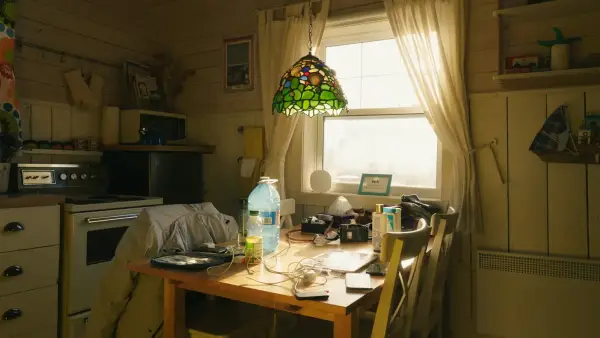
Children who always made sure everyone else had enough before they served themselves - who counted the pieces of chicken at dinner and divided by the number of people at the table before reaching for their own - often become adults who cannot enjoy abundance without first scanning the room to confirm that everyone around them has been served
I still remember the casserole dishes.
Not because they were special - they were the opposite of special. They were the same three Pyrex dishes my mother rotated through the week, filled with whatever could stretch. Rice with vegetables on Monday. A soup that was mostly broth by Thursday. And on the nights when there was meat, I watched my mother’s eyes do something I didn’t have a name for until decades later.
She counted.
Not obviously. Not with her finger pointing at each piece. But I could see it in the way her gaze moved around the table before she sat down - four people, six pieces, okay. Her shoulders would drop half an inch. There was enough. She would serve herself last, and she would take the smallest portion, and nobody ever asked her to do this. Nobody had to.
I learned that arithmetic before I learned long division.
If you grew up in a household where meals required quiet calculation - where you instinctively knew how many servings existed before you reached for your own - then you learned something about yourself that had nothing to do with food. You learned that your hunger was negotiable. That wanting your full share was a risk. That the safest version of you was the one who needed the least.
And you may still be running those numbers at tables that have more than enough.
The mathematics nobody taught you
There is a particular kind of intelligence that children develop in households where resources are tight. It is not the kind that gets rewarded on report cards. It is the kind that lets a nine-year-old glance at a plate of food and instantly calculate whether everyone can eat.
You learned to read the room before you learned to read novels. How much is left. Who has not eaten yet. Whether your father had a long day, which meant he would need more. Whether your younger sibling was growing again and needed the extra serving more than you did.
A 2019 study published in the journal Developmental Psychology found that children who grow up in resource-scarce environments develop heightened vigilance around distribution and fairness - not because they are taught to, but because their survival depends on reading the social math of their household. These children become remarkably attuned to the needs of others, often at the expense of recognizing their own.
You were not being generous. You were being strategic. And the strategy worked so well that it became invisible to you.
The girl who took the smaller half
Here is a scene that might feel familiar.
Someone breaks a sandwich in two. The halves are not quite even - they never are. And without thinking, without anyone asking, you reach for the smaller piece. You do it quickly, almost protectively, as if grabbing the larger half might reveal something ugly about you.
This is not politeness. This is a reflex built in a kitchen where taking too much meant someone else went without.
The girl who always took the smaller half was solving a problem that the adults around her could not solve. She was making the math work. She was ensuring that the people she loved would have enough, and the cost of that insurance policy was her own appetite.
She learned to eat slowly, too. Not because anyone told her to savor her food - but because eating slowly meant she could monitor the table. If someone wanted seconds, she could quietly slide her uneaten portion in their direction. If there was enough for everyone, she might finish. If there was not, nobody would notice she had stopped.
This is extraordinary emotional labor for a child. And the hardest part is that nobody ever called it labor. They called it being good.
When “I’m not that hungry” becomes a life sentence
Dr. Gabor Mate has written extensively about how childhood adaptations - the strategies we develop to maintain attachment and survive our environment - become the invisible architecture of our adult lives. The child who suppressed her appetite to keep the household peace does not simply outgrow that suppression when the refrigerator is full.
She carries it into restaurants where she orders the least expensive thing on the menu, not because she cannot afford more, but because something in her still flinches at the idea of wanting the thing that costs the most.
She carries it into relationships where she gives endlessly and cannot understand why receiving feels like a debt she will eventually have to repay.
She carries it into her own kitchen at forty-seven, where she says “I’m not that hungry” to her husband while making sure his plate is full, and she believes it. She genuinely believes she is not hungry. She has been telling herself this for so long that the lie has become the truth.
But her body remembers. Her body has always kept a more honest record than her mind.
The scan that never stops
You know the scan. You may not have realized it had a name, but you know the feeling.
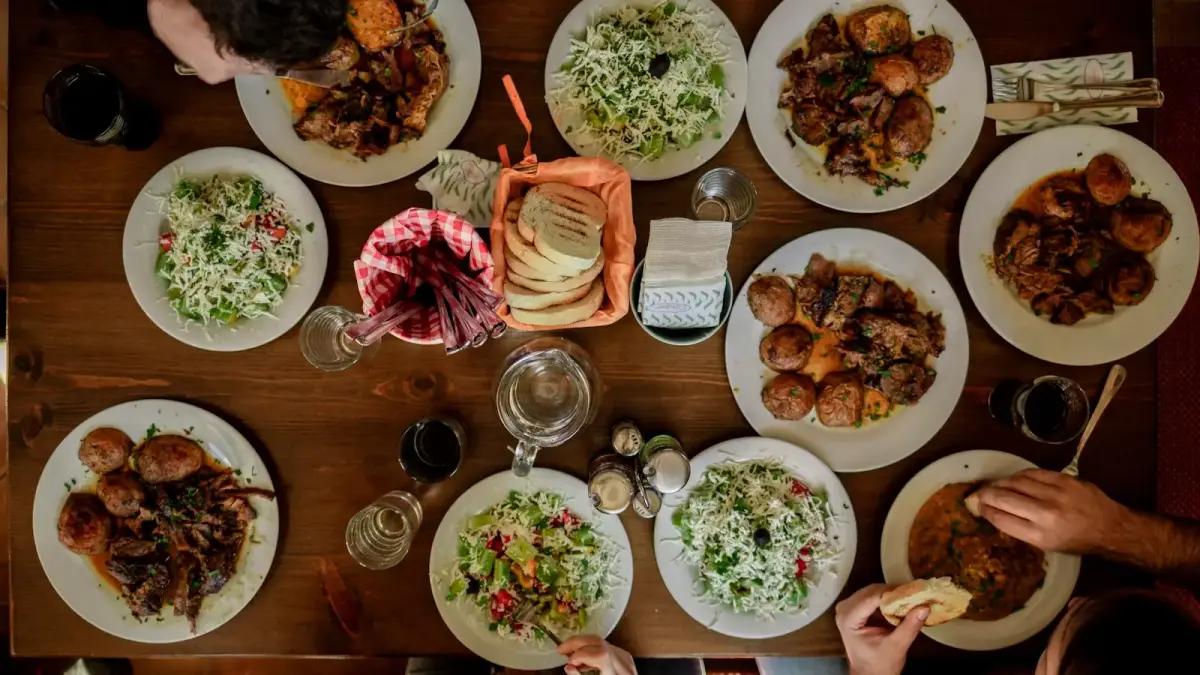
You sit down at a holiday table - Thanksgiving, a birthday, a dinner party where the host has clearly made too much food - and before you can enjoy any of it, your eyes move. Around the table. Across the dishes. Through the quick, unconscious arithmetic of portions and people.
Is there enough? Has everyone been served? Is anyone holding back?
Only when the answers come back safe do you allow yourself to eat. And even then, you eat carefully. Watchfully. Ready to stop if the equation changes.
A 2022 study in Frontiers in Psychology found that adults who experienced food insecurity in childhood often maintain hypervigilant monitoring behaviors around meals even decades after achieving food security. The researchers called it “phantom scarcity” - the brain continuing to solve a problem that the environment no longer presents.
You are not scanning because there is not enough. You are scanning because there once was not enough, and your nervous system never received the memo that things changed.
The guilt of abundance
Here is what nobody warns you about: when you finally have enough, it does not feel like relief. It feels like suspicion.
The full refrigerator makes you uneasy. The second helping feels dangerous. The idea of buying the thing you want - not the thing on sale, not the practical choice, but the thing you actually want - produces a low hum of guilt that you cannot quite explain to people who did not grow up counting.
Because somewhere in your body, abundance still feels like someone else’s scarcity. If you have more, someone must have less. The math does not allow for everyone to have enough. It never did in your house, so why would the world work any differently?
This is the cruelest inheritance of a childhood spent dividing. You do not just learn to manage scarcity. You learn to distrust plenty.
Susan Cain, in her work on the quieter dimensions of personality, has described how certain children develop an internal world so rich and watchful that they become the emotional thermostat of their families - always reading, always adjusting, always making sure the temperature stays safe. The child who counted the chicken was not just managing food. She was managing the emotional climate of the table. She was making sure nobody felt the sharp edge of not enough.
What you actually learned about yourself
Here is the lesson that scarcity taught you, the one buried so deep you might not recognize it as a lesson at all.
You learned that you are the kind of person who should need less.
Not that resources were limited. Not that times were hard. Not that your parents were doing their best with what they had. Those are the rational conclusions, and you may have reached them as an adult. But the lesson your body absorbed - the one that lives in your muscles and your gut and the way you hold a fork - is that your needs are the ones that should flex.
Everyone else’s hunger is real. Yours is negotiable.
Everyone else deserves their full portion. You deserve whatever is left.
This is not a belief you chose. It is a belief that was installed by thousands of meals where you practiced shrinking. And it has expanded far beyond the dinner table.
You shrink at work, letting others take credit because the applause feels like the bigger half of the sandwich and you should not reach for it. You shrink in relationships, tolerating less than you deserve because asking for more feels like the kind of greed that could cost someone else their dinner. You shrink in your own private moments of wanting, telling yourself that you do not really need that much, that you are fine, that you have always been fine with less.
The arithmetic the table no longer requires
I want to say something to the part of you that is still counting.
You can stop now.
Not because the world has suddenly become fair or because scarcity has been solved or because your vigilance was unnecessary. It was necessary. It was brilliant, actually. You kept people fed. You kept the peace. You made an impossible equation work by subtracting yourself, and that is not a small thing.
But the table has changed. Maybe not every table - but this one. The one you are sitting at right now, in your own life, with a full refrigerator and enough money for groceries and no younger sibling who needs your portion more than you do.
A 2021 study published in the Journal of Personality and Social Psychology found that people who grew up in scarcity often need explicit permission to take their full share - not because they cannot afford to, but because the emotional architecture of their childhood requires a signal that it is safe. That the math allows it. That taking will not cause someone else to go without.
So here is your signal.
You are allowed to be hungry. You are allowed to take the bigger piece. You are allowed to order what you actually want, to fill your plate without scanning the room first, to sit down before everyone else has been served.
The woman at forty-seven who says she is not very hungry deserves to feel her own appetite again. Not because the counting was wrong - it was the most loving thing a child could do. But because the girl who made the math work has earned the right to stop calculating.
You were never selfish. You were a child who loved her family so much that she made herself smaller to make sure they had enough.
That is not a flaw. That is a kind of devotion that most people will never understand.
And you have permission - right now, today - to take your full share.