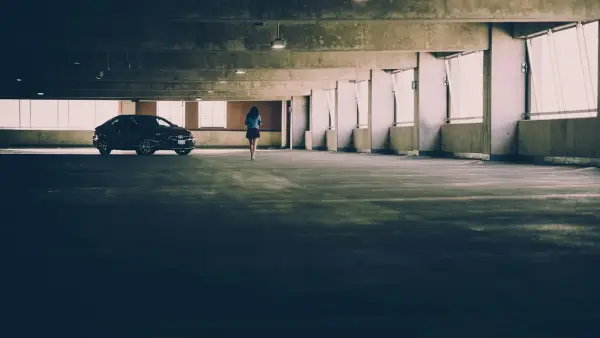
Children who always memorized the route home from everywhere they were taken - who watched out the car window and counted every turn, tracked every landmark, noted every street sign - not because they loved geography but because a child who was never entirely certain the ride home was guaranteed needed to know she could find her way back on her own if the car never came
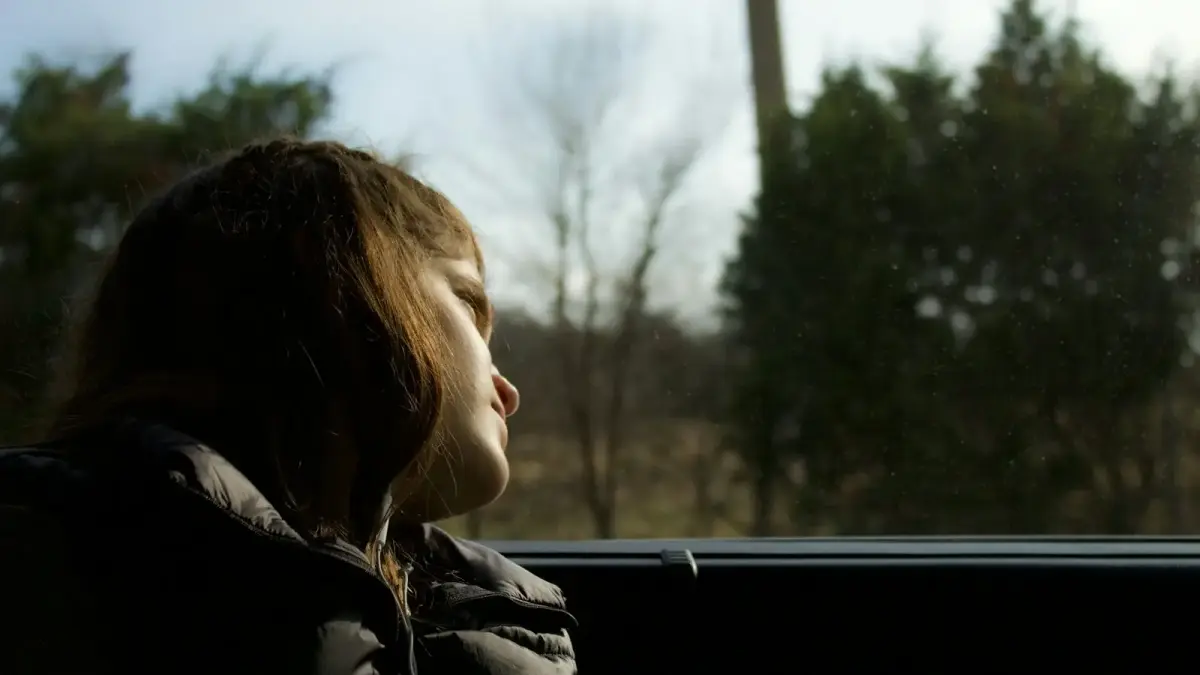
I was seven the first time I realized I was doing it. We were driving to my aunt’s house - a place we’d been a dozen times - and I was in the back seat whispering landmarks to myself like a prayer. Gas station on the left. Big oak tree with the split trunk. Blue house with the broken mailbox. Right turn after the church with the tall steeple.
My mother glanced back at me in the rearview mirror and said something like, “You’ve got a great sense of direction.” She sounded proud, like this was a talent. Like I was a little cartographer in the making.
I wasn’t. I was a child who had learned, through a series of small betrayals I couldn’t yet name, that the ride home was not always guaranteed. And if the car didn’t come back for me, I needed to know the way myself.
If you were that child - the one pressing your forehead against the window glass, eyes tracking every turn, silently building a map inside your skull - I want you to know something. That wasn’t a quirk. That wasn’t a hobby. That was a child’s nervous system solving a problem no child should have had to solve.
The window as classroom
Some children look out car windows and see scenery. They watch the world blur by in that soft, unfocused way that comes from feeling safe enough to let your attention wander.
Other children look out car windows and see data.
The gas station means we’re three minutes from the highway. The highway means twenty minutes to home. The water tower means we’re in the right county. Every visual detail gets filed, categorized, stored in a mental system that operates with the quiet efficiency of something built under pressure.
These children weren’t daydreaming. They were studying. They were running an internal program that converted the passing landscape into a survival map - one they could walk if they had to, one they could recite from memory if everything fell apart.
A 2017 study published in Hippocampus found that individuals who experienced unpredictable caregiving environments showed heightened activity in hippocampal regions associated with spatial memory and place-cell formation. The researchers described it as “environmental encoding under threat” - the brain’s way of prioritizing navigational information when the social environment feels unreliable.
In plain language: when a child can’t count on the adults to bring them home, their brain starts memorizing the route itself.
It’s not a gift. It’s not a knack for maps. It’s the architecture of a nervous system that decided - long before the child had the words for it - that knowing where you are might be the only safety available.
What the route home actually represented
Here’s the thing most people miss about this pattern. It was never about geography.
The child memorizing the route wasn’t concerned with roads or landmarks in any intellectual sense. She was concerned with one question, the only question that mattered: Can I get back to where I feel safe if nobody comes for me?
That question - can I get home on my own - is really a question about attachment. John Bowlby, the British psychiatrist who first described attachment theory in the 1950s, talked about the concept of a “secure base.” A securely attached child uses their caregiver as a home base from which to explore the world. The child ventures out, looks back, sees the parent is still there, and ventures further.
But what happens when that base is unreliable? When the parent is sometimes there and sometimes not? When the pickup time is uncertain, when the mood in the house shifts without warning, when the child learns that “I’ll be right back” doesn’t always mean what it says?
The child builds her own base. She makes the map the base. She turns the knowledge of every route, every turn, every landmark into a portable version of the security she can’t find in a person.
Mary Ainsworth’s research on attachment styles showed that children with anxious attachment patterns develop heightened monitoring behaviors - they track their caregiver’s movements, read micro-expressions, stay alert to shifts in emotional weather. The child memorizing the route home is doing the same thing, but with streets instead of faces.
She’s monitoring the physical world because the emotional world proved too unpredictable to rely on.
The adult who always knows exactly where they are
If you were that child, I don’t need to tell you what you became. You already know.
You’re the adult who walks into a restaurant and clocks every exit before you sit down. You’re the one who, when visiting a new city, spends the first hour tracing the route back to your hotel - not on your phone, but on foot, so your body knows the way.
You park facing the exit. You choose the aisle seat. You carry a phone charger because a dead phone means a dead map, and a dead map means you don’t know where you are, and not knowing where you are is - even now, even in your fifties - quietly unbearable.
You are never lost. People marvel at this. “You have such a good sense of direction,” they say, the same way my mother said it. And you smile, because the alternative is explaining that your sense of direction was built by a child who was terrified she wouldn’t be collected.
Friends hand you the map on road trips. Colleagues ask you for directions in unfamiliar neighborhoods. You’ve become the person who always knows the way, and nobody asks why you always know the way, because knowing the way looks like competence.
It is competence. But it’s competence born from a wound.
The adult version of this pattern extends beyond physical navigation. You might also be someone who always has a backup plan. Who keeps extra cash hidden in the house. Who mentally rehearses escape routes from situations that don’t require escaping. The spatial vigilance generalizes. It becomes a way of being in the world - always oriented, always positioned near the door, always carrying the internal coordinates that let you leave.
The science behind the map inside your head
The hippocampus - that seahorse-shaped region deep in the temporal lobe - is where spatial memory lives. It’s where your brain builds cognitive maps of the environments you move through. Nobel Prize-winning research by John O’Keefe and May-Britt and Edvard Moser revealed that specific neurons called “place cells” and “grid cells” fire in patterns that correspond to physical locations, creating an internal GPS.
Here’s what matters for children who memorized routes: stress hormones like cortisol have a direct and powerful effect on hippocampal function. In moderate, short-term doses, cortisol actually enhances spatial encoding. The brain under mild threat becomes better at remembering where things are.
A 2020 study published in Frontiers in Psychology explored how children in unpredictable home environments develop what the researchers called “adaptive spatial strategies” - heightened attention to environmental cues, superior route memory, and faster cognitive map formation compared to peers in stable environments.
The study’s conclusion was careful but clear: these children weren’t more intelligent or more spatially talented. They were more threatened. And their brains responded to that threat by becoming extraordinarily good at the one thing that might keep them safe - knowing exactly where they were at all times.
Gabor Mate has written extensively about how childhood stress shapes the brain’s development. The adaptations these children make aren’t disorders. They’re brilliant survival solutions created by young nervous systems doing exactly what they were designed to do - protect the organism. The problem comes later, when the threat is gone but the solution keeps running.
The grief inside the pattern
There’s a particular kind of exhaustion that comes from never being able to not know where you are.
Most people can get in a car with someone they trust, close their eyes, and arrive somewhere without tracking a single turn. They can fall asleep on a train and wake up at their stop without anxiety. They can wander a foreign city with the pleasant disorientation of someone who knows they’ll figure it out eventually.
You can’t do that. Or you can, but it costs you something. It takes active effort to override the program - to not count the turns, to not catalog the landmarks, to not run the quiet internal algorithm that converts every journey into a return route.
And here’s the grief that lives underneath all of it: you never got to be a child who just looked out the window.
You never got the blurred trees, the daydreams, the luxury of not paying attention. While other kids were imagining cloud shapes or arguing with siblings, you were working. You were building the map. You were making yourself safe in the only way you knew how, and that work stole something from you that you can never get back - the experience of being small and transported and unconcerned about the destination.
That loss is real. It deserves to be named. The child who memorized every route home missed out on the softness of being carried somewhere by someone she trusted completely. And the adult she became might still be waiting, somewhere beneath all that competence, to know what it feels like to let someone else drive without watching the road.
You were never lost
If you are reading this and recognizing yourself - the exit-scanner, the mental mapper, the person who always parks facing out - I want to say something to the child who started all of this.
You were extraordinary. Not because you had a gift for directions. Because you were a small person facing an enormous uncertainty, and instead of collapsing under it, you built something. You built an entire navigation system out of gas stations and church steeples and the color of mailboxes. You turned the visible world into a safety net because the invisible world - the world of reliable adults and guaranteed rides home - had holes in it.
A 2019 study in the Journal of Research in Personality found that individuals who developed high environmental mastery in childhood - the ability to orient, navigate, and maintain spatial awareness - often carried that mastery into other domains as adults. They became planners, organizers, people who anticipated problems before they arrived.
You didn’t just learn how to get home. You learned how to survive uncertainty itself. And that skill - that bone-deep, body-level knowledge that you can find your way from anywhere - has probably carried you through things far harder than a car ride.
But you’re allowed to put the map down sometimes. You’re allowed to get in someone’s car and close your eyes and trust that they know the way. You’re allowed to not track every turn.
You learned to navigate because you had to. You can keep navigating because you choose to. But you no longer have to do it alone, and you no longer have to do it afraid.
The ride home is not in question anymore. You are the ride home. You have been all along.