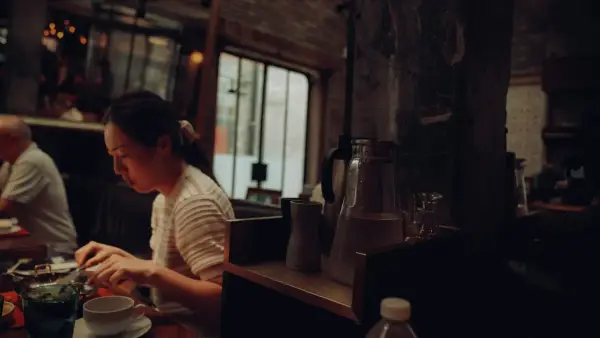
Children who always needed to leave the room before they could cry - who held it together through the argument, the bad grade, the phone call that changed everything, and then walked calmly to the bathroom or the car or the closet before the first tear fell - often become adults who cannot process emotion in the presence of another person, not because they are private or cold but because a child who learned that tears witnessed were tears that had to be managed and explained and apologized for discovered that the safest place to feel anything was wherever no one else was
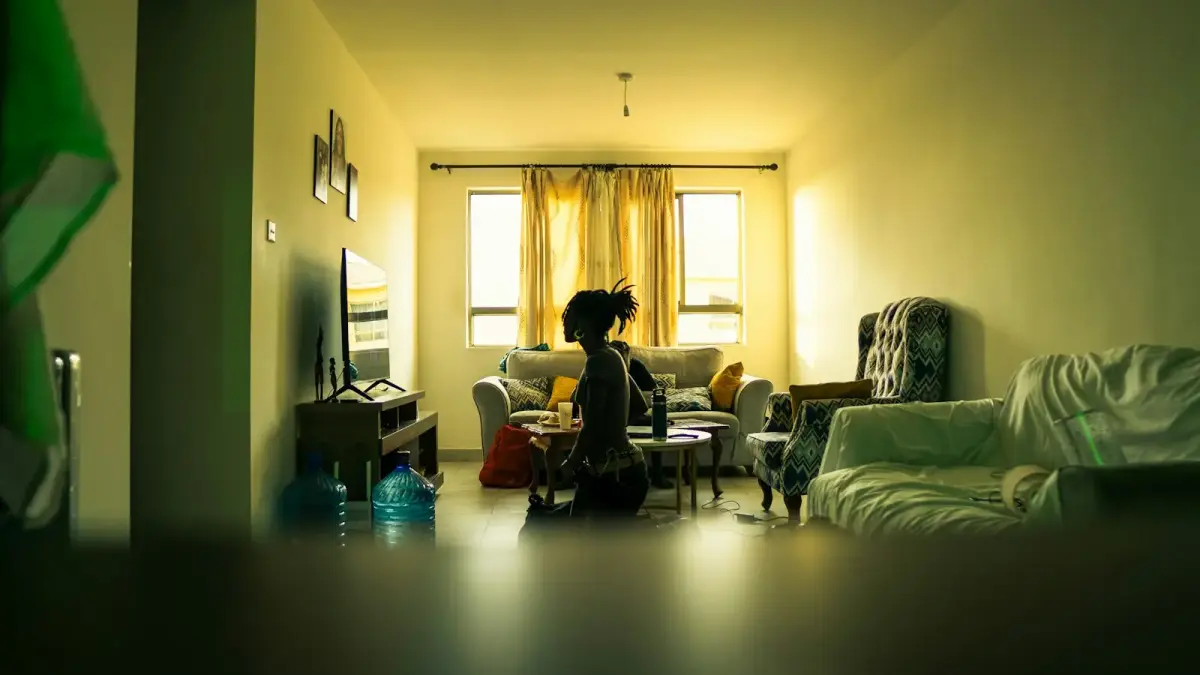
I was eleven when I perfected the walk.
The one where your chin stays level and your breathing stays even and your legs carry you down the hallway at exactly the right speed - not so fast that someone asks what’s wrong, not so slow that they catch the shimmer in your eyes before you round the corner. I could feel the pressure building behind my face like water against a dam, and I knew - the way you know your own name - that I had approximately forty-five seconds to find a door I could close behind me.
The bathroom was my first safe room. Then the car. Then the walk around the block that I told everyone was just fresh air.
I didn’t know I was building something. I didn’t know that every time I swallowed a feeling in public and released it in private, I was drawing a blueprint I would follow for the next thirty years. I just knew that crying in front of people felt dangerous in a way I couldn’t name, and being alone with my tears felt like the only place where they actually belonged to me.
If you recognize that walk - if you have your own version of it, perfected over decades - then you already know what I’m about to say. And you probably need to hear that it was never a flaw.
The moment a child learns that feelings need an audience of zero
It doesn’t always start with cruelty. Sometimes it starts with something much quieter.
A parent who sees you crying and immediately looks uncomfortable. A mother who says “you’re okay, you’re okay” before you’ve had the chance to figure out whether you are. A father who handles your tears by fixing the problem as fast as possible, because your sadness is an emergency he needs to resolve rather than an experience he needs to witness.
Sometimes it is sharper. “Stop crying or I’ll give you something to cry about.” “You’re being dramatic.” “You’re making this harder for everyone.”
But the lesson lands the same way regardless of volume. The child absorbs a single, devastating piece of information: my feelings, when visible, create a problem for other people.
A 2019 study published in the Journal of Personality and Social Psychology found that children who experienced consistent emotional dismissal - where caregivers responded to distress with discomfort, redirection, or punishment - developed what researchers called “emotion regulation through isolation.” These children didn’t stop feeling. They stopped feeling where anyone could see them.
The distinction matters enormously. Because what looks like emotional control is actually emotional relocation. The feelings don’t disappear. They just move to a different room.
How the bathroom becomes a cathedral
I want you to think about the places where you’ve done your real feeling.
The shower, where the sound of water covers everything and the steam makes your face look the same whether you’ve been crying or not. The car in the parking lot after a difficult phone call, where you sit with the engine off and let yourself fall apart for exactly as long as it takes before you can drive home with a neutral expression. The bathroom at work, third stall from the left, where you’ve pressed your forehead against the cool tile and let your body shake with something you couldn’t name.
These are not random locations. These are rooms you have consecrated with the only truly private grief you’ve ever allowed yourself.
The child who learned to leave before crying doesn’t grow out of it. She grows into it. She becomes the woman who excuses herself from the dinner table when the conversation gets too real. The man who needs to take a walk after an argument - not to cool down, but to finally feel the thing he held at arm’s length while another person was watching.
She becomes the person who processes a parent’s death in the shower over the course of months. Who grieves a marriage in the car. Who cries at the kitchen sink at 2 AM because that’s the only hour the house is truly empty.
The performance problem
Here’s what nobody talks about: when you cry in front of someone, the crying changes.
It becomes a communication. It becomes something you’re doing at another person, whether you mean to or not. And for a child who learned early that their tears were received as a demand - comfort me, fix this, stop what you’re doing and attend to my pain - the presence of a witness turns emotion into performance.
Not fake performance. Not manipulation. Something worse: involuntary performance. The feeling is real, but the moment someone sees it, a part of your brain starts managing how it looks. Are you crying too much? Too loudly? Is this making them uncomfortable? Should you explain why you’re upset so they don’t think it’s about them? Should you stop now because they look like they don’t know what to do?
The actual grief, the actual sadness, the actual rage - it gets buried under the labor of making your feelings palatable to someone else’s nervous system.
Daniel Goleman’s work on emotional intelligence describes this as a kind of emotional hypervigilance - the constant monitoring of how your internal state is affecting external relationships. For people who learned in childhood that their emotions were a burden, this monitoring never switches off. Every tear shed in company comes with an invisible checklist: Am I making this about me? Am I taking up too much space? Should I apologize for feeling this?
And so the only place where feeling can be pure - where sadness can just be sadness and not a negotiation - is alone.
The introversion connection no one draws
We talk about introversion as though it’s primarily about thinking. About needing quiet to process ideas, to recharge social batteries, to hear your own thoughts above the noise.
But for a significant number of introverts, the need for solitude isn’t just cognitive. It’s emotional. They don’t just need to be alone to think. They need to be alone to feel.
This is the part that gets misread constantly. The partner who says “you shut me out.” The friend who says “you never let anyone in.” The therapist who asks “why is it so hard for you to be vulnerable?”
And the honest answer - the one that’s almost impossible to articulate - is: I’m not shutting you out. I’m protecting the only space where my feelings are allowed to exist without an audience, without a purpose, without becoming labor.
A 2021 study in Frontiers in Psychology examined the relationship between childhood emotional socialization and adult solitude-seeking behavior. Researchers found that adults who had experienced what they termed “conditional emotional acceptance” in childhood - where emotional expression was tolerated only within specific parameters - were significantly more likely to seek solitude during periods of emotional intensity. Not because they valued connection less, but because solitude was the only context in which they had ever experienced emotional safety.
The introversion isn’t personality. It’s architecture. It’s the building you constructed, room by room, every time you walked yourself to a private place to feel something that wasn’t safe to feel in public.
What the walk actually cost you
I want to be honest about the price.
Because there is one, and pretending otherwise would be dishonest.
The child who perfects the walk - who learns to hold emotion until she finds a safe room - that child also learns something she didn’t mean to learn. She learns that intimacy has a ceiling. That there is a depth of feeling she will never share with another living person, not because she doesn’t want to, but because her body won’t let her.
She’s forty-nine now, and she loves her husband. But when her mother died, she grieved in the car. When she got the diagnosis that scared her, she processed it in the shower before telling him at dinner with a calm voice and a plan already in place. When their son left for college and the emptiness hit her like a physical thing, she waited until he went to bed and then sat in the kitchen alone with it.
He thinks she’s strong. She is strong. But strength wasn’t the goal. Privacy was the goal. And sometimes privacy becomes a wall so seamless that even the people who love you can’t find the door.
Gabor Mate writes about how the adaptations that protect us in childhood become the constraints that limit us in adulthood. The walk that saved you at eleven - that kept you from being punished or dismissed or made to feel that your pain was an inconvenience - is the same walk that keeps you from collapsing into your partner’s arms at forty-nine.
The mechanism that protected you is the mechanism that isolates you. And naming that isn’t a criticism. It’s a recognition of how extraordinarily well you adapted to a situation that should never have required adaptation.
The blueprint was brilliant
Here’s what I need you to hear.
A child who figures out, at seven or nine or eleven years old, that the safest place to feel is alone - that child is not broken. That child is an engineer. She assessed her environment, identified the threat, and built a structure that allowed her to feel everything she needed to feel without anyone interfering, punishing, or making her emotional life about their comfort.
That’s not dysfunction. That’s a survival design so elegant it’s still running decades later.
The problem isn’t that you built the room. The problem is that you were a child who needed one.
A 2023 study in Psychological Science found that adults who process emotion primarily in solitude show no deficit in emotional depth or empathy. In fact, they often score higher on measures of emotional granularity - the ability to distinguish between closely related emotional states. They feel everything. They might feel more precisely than people who process emotion socially. They just do it behind a closed door.
You are not emotionally unavailable. You are not cold. You are not shut down.
You are someone who learned, very young, that your feelings were safest in your own hands. And you have been carrying them there ever since - carefully, privately, with a competence that no one sees because the whole point was that no one would see.
Learning to leave the door open
I’m not going to tell you to start crying in front of people. That would be ridiculous, and honestly, it would miss the point.
But I will tell you this: the room you built - that bathroom, that car, that 2 AM kitchen - it doesn’t have to have a lock on it forever.
You can start small. You can let someone see the red eyes without explaining them away. You can say “I’m having a hard day” without performing recovery in the same breath. You can sit with someone in silence after something difficult and let them see that you’re not okay, even if you can’t bring yourself to name what’s wrong.
You don’t have to dismantle the room. You spent a lifetime building it, and it kept you safe. You’re allowed to keep it.
But you’re also allowed to discover - slowly, at your own pace, in your own time - that some people can witness your tears without turning them into a project. That being seen mid-feeling doesn’t always mean being managed. That the door can be open and the room can still be yours.
The child who walked to the bathroom before she cried was doing the best she could with what she had. The adult she became is allowed to have more. Not because the old way was wrong. But because she has already proven, a thousand times over, that she can handle the full weight of her own heart.
She just doesn’t have to carry it alone anymore. Not unless she wants to.