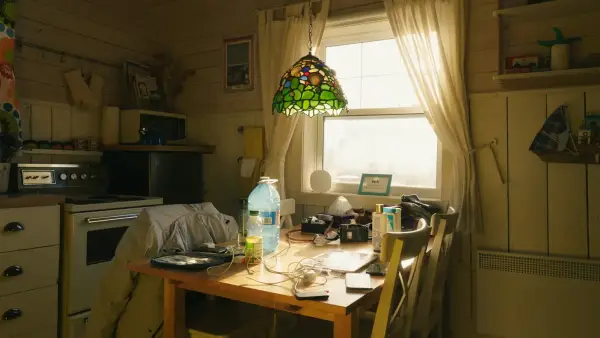
Children who always noticed when the household was about to run out of something - who tracked the level of the milk carton, the number of paper towels left on the roll, the soap shrinking in the bathroom dish - before anyone asked them to and often before anyone else noticed, often become adults who walk through their own homes conducting a constant invisible inventory of everything that might be about to run out, because a child who learned that running out of something was never just about supplies but about the mood that followed the discovery built a surveillance system that measures abundance the way other people measure weather
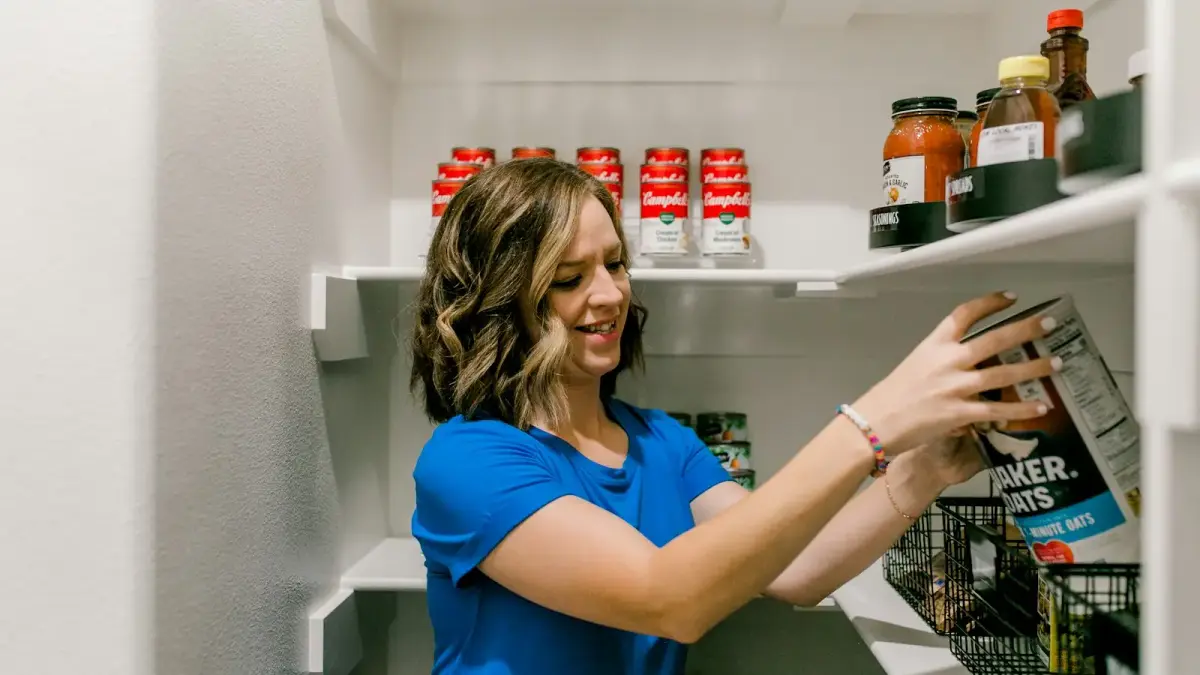
I was nine when I started checking the milk. Not drinking it. Checking it. I would open the refrigerator door, lift the carton just slightly off the shelf, and gauge by its weight whether we had enough to get through the next morning. If it felt light, a small wire of tension would pull across my chest. Not because I was thirsty. Because I knew what happened when someone reached for the milk and the carton was empty.
The morning would change. The air in the kitchen would tighten. Whoever discovered it first would slam a cabinet or mutter something that wasn’t really about milk at all. And I learned, very early, that the distance between a calm morning and a terrible one could be measured in ounces.
So I started tracking everything. The toilet paper rolls. The dish soap. The laundry detergent getting closer to the bottom of the bottle. I became a quiet, unofficial inventory system for a household that never asked me to be one. I didn’t have a clipboard. I didn’t make lists. I just knew, at all times, what was running low. And I carried that knowing like it was keeping us safe.
If you recognize yourself in this, I want you to understand something before we go any further. You were not a strange child. You were an intelligent one responding to an environment that punished absence more than it rewarded presence.
The Child Who Counted What Was Left
There is a particular kind of childhood vigilance that doesn’t look like vigilance at all. It looks like helpfulness. It looks like a kid who just happens to notice things. Teachers might call it maturity. Parents might call it being responsible. But underneath the surface, the child who tracks household supplies is doing something far more sophisticated than being tidy.
They are monitoring the emotional weather by watching the physical environment.
Gabor Mate has written extensively about how children in unpredictable homes develop what he calls a heightened attunement to their surroundings. The child cannot control the adults. They cannot manage the emotions directly. But they can manage the conditions that trigger those emotions. If running out of coffee means Dad has a bad morning, then the child who watches the coffee level is not being helpful. They are performing emotional threat assessment through the proxy of a canister.
This is not a conscious strategy. No nine-year-old sits down and decides to become the household supply monitor. It happens the way all adaptive behaviors happen in childhood - through repetition and consequence. The child notices a pattern. Something runs out. A mood shifts. The house gets harder to be in. And the child’s nervous system quietly begins cataloging what needs to be full for people to stay calm.
A 2004 study published in the Journal of Personality and Social Psychology by Mischel and colleagues found that children who grow up in environments with unpredictable resource availability develop heightened monitoring behaviors that persist well into adulthood. The monitoring was not about the resources themselves. It was about the predictability that those resources represented.
What You Were Really Measuring
Here is what most people never say about this pattern. The child was not tracking milk. They were tracking safety.
Every container in the house was a small gauge. Full meant calm. Low meant approaching danger. Empty meant the moment had arrived where someone’s frustration would need a place to land. The soap in the bathroom dish wasn’t soap. It was a countdown timer to an emotional event the child had learned to dread.
And the truly painful part is that the child was often right. In homes where scarcity - whether financial or emotional - created tension, the moment something ran out really did change things. The parent who was already stressed about money would see the empty container as proof that nothing was working. The parent who was already overwhelmed would treat the absence as one more failure in a long list of failures. The child did not invent this pattern. They simply learned to read it earlier than anyone else in the room.
Daniel Goleman’s research on emotional intelligence describes this as a form of environmental empathy. The child is not reading faces. They are reading shelves. They are reading the weight of bottles, the thickness of soap bars, the number of eggs in the carton. They have externalized their emotional radar onto the physical objects in their home because the physical objects were more reliable predictors of mood than the people were.
This is a devastating sentence to write, and I want to sit with it for a moment. When a child trusts the soap dish more than the adults to tell them what kind of day it will be, something has gone very wrong. Not with the child. With the environment the child was asked to navigate.
The Adult Version of the Inventory
You probably already know what this looks like now. You walk through your house and you are always scanning. Not anxiously, not obviously. It is more like a background program running behind everything else you do.
You pass the bathroom and your eyes flick to the toilet paper holder. You open the pantry and you mentally calculate how many days of coffee are left. You notice, without trying to notice, that the hand soap is getting thin. You keep backup supplies of things that most people buy when they run out. You buy them before they run out because the idea of actually running out creates a feeling in your body that is far bigger than the situation warrants.
Your partner might tease you about it. You have three bottles of shampoo under the sink. You bought paper towels again even though you bought them last week. Your pantry has a depth to it that looks like preparation but feels like protection.
Research published in Frontiers in Psychology in 2019 explored how early experiences with household instability shape adult purchasing and stockpiling behaviors. The study found that adults who reported childhood environments where resource depletion was associated with parental distress showed significantly higher rates of what the researchers termed “preventive accumulation” - not hoarding, but a persistent need to maintain surplus. The behavior was not driven by a fear of the item itself being gone. It was driven by a fear of the emotional consequence of its absence.
This is the part that is hard to explain to people who did not grow up this way. You are not afraid of running out of dish soap. You are afraid of the feeling that running out of dish soap used to create. Your nervous system stored that feeling decades ago, and it replays it faithfully every time a container gets light.
The Surveillance System You Built to Survive
Brene Brown talks about how vulnerability is the birthplace of connection, but for children who monitored household supplies, vulnerability was the birthplace of something else entirely. It was the birthplace of systems. The child who could not tolerate the unpredictability of what happened when something ran out built an internal surveillance architecture designed to eliminate the surprise.
And it worked. That is the complicated truth. The monitoring kept things calmer. The quiet report to a parent that you were almost out of something headed off the frustration. The child who noticed the trash was full and took it out before anyone had to ask prevented the moment where someone would notice the overflowing trash and let their whole day collapse onto it.
The system worked so well that you brought it with you into adulthood. You brought it into your own home, where the stakes are entirely different. You brought it into a kitchen where no one is going to have a meltdown because the milk is low. You brought it into a bathroom where an empty soap dish is just an empty soap dish, not a fuse.
But your nervous system does not know that. Your nervous system is still operating on the old data. It still believes that abundance equals safety and scarcity equals emotional danger. And so you keep counting. You keep scanning. You keep walking through rooms and taking invisible measurements of how much is left of everything.
Learning to Let the Soap Get Small
The path forward is not to stop noticing. You cannot uninstall the pattern through willpower alone. You have spent decades developing an extraordinarily sensitive awareness of your environment, and that awareness is not a flaw. It is a skill that was built under pressure.
What you can begin to do is notice the noticing. When you pick up the shampoo bottle and feel its weight, pause. Ask yourself what you are actually checking. Is this a practical question about whether you need to buy shampoo? Or is this the old surveillance system activating, scanning for the thing that is about to run out so you can prevent the feeling that used to follow?
The distinction matters. One is logistics. The other is a nervous system echo from a childhood where you had to be the early warning system for everyone else’s emotions.
A 2017 study in Psychological Science examined how adults who developed hypervigilant monitoring behaviors in childhood could begin to decouple the monitoring from the emotional urgency behind it. The researchers found that the most effective intervention was not eliminating the behavior but changing the meaning attached to it. When participants learned to recognize the monitoring as a trauma response rather than a practical necessity, the compulsive quality of the behavior decreased significantly even when the behavior itself continued.
You might still check the pantry. You might still keep an extra bottle of everything under the sink. But you can do those things from a place of choice rather than a place of dread. That is the difference between a pattern that runs you and a pattern you understand.
What the Full Shelf Was Always About
You were a child who learned that the world could shift in an instant, and that the shift was always preceded by something running out. You built a system to prevent that shift. You monitored and tracked and counted, and you did it so quietly that most people around you had no idea you were doing it at all.
That child deserves enormous credit. Not for being organized. Not for being helpful. For being so determined to keep the peace that they turned themselves into a measurement system for the emotional stability of an entire household.
You are not broken for still doing this. You are not ridiculous for having three backup bottles of conditioner. You are not controlling for knowing exactly how many rolls of paper towels are in the closet. You are a person whose body learned, very young, that the distance between everything being fine and everything falling apart was the width of a soap bar, the weight of a milk carton, the last few squares on a roll.
And every time you check, you are not being anxious. You are being the child who kept everyone safe, still working, still counting, still making sure that nothing runs out. Not because you need to anymore. But because the part of you that learned this has not yet heard, in a voice it trusts, that it is allowed to stop.
You can tell it now. Gently. Not all at once. But you can begin.