Children who always set the table without being asked - who counted the plates, lined up the forks, folded the napkins the way their mother did, and stood back to check that everything was even before anyone sat down - often become adults who prepare for every gathering as though the quality of the welcome determines whether people will come back, because a child who set the table every evening at six was not helping with dinner but rehearsing the only proof of love she understood: that someone expected you, and made room
I was seven the first time I set the table without being asked.
My mother was on the phone in the hallway - one of those long calls with her sister that meant dinner would be late and her mood afterward would be unpredictable. My father wasn’t home yet. My brother was in his room with the door shut. The kitchen smelled like onions starting to burn on the stove, and nobody was coming to fix it.
I turned the burner down. Then I opened the cabinet and started pulling out plates.
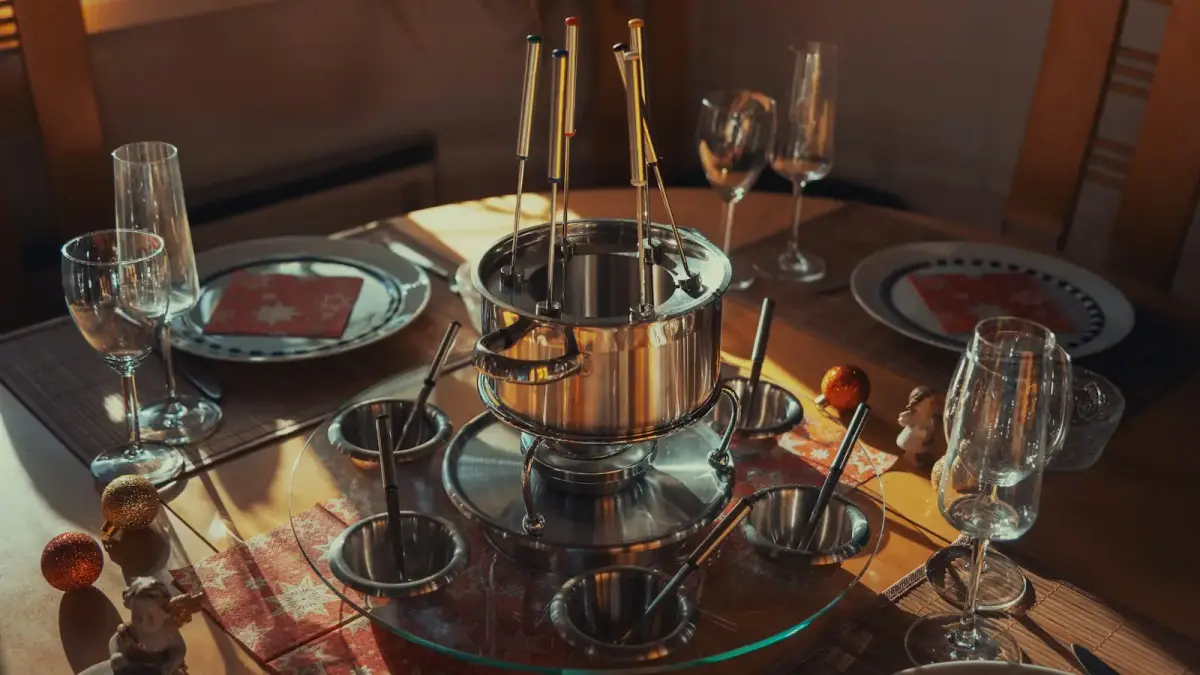
Four plates. Four forks. Four knives on the right, blades facing in, the way my mother always arranged them. I folded paper napkins into triangles and placed one under each fork. I checked the spacing. I adjusted a glass that was too close to the plate’s edge. And when I was finished, I stood at the end of the table and looked at what I had made - four places, four settings, four silent announcements that said: someone is coming, and there will be room for them when they arrive.
I didn’t know why it calmed me. I just knew the kitchen felt different with the table set. It felt like someone had decided the evening would work.
The child who prepares the room
You know if you were this child. You didn’t wait to be told. You saw the empty table as a problem - not a logistical one, but an emotional one. An unset table meant the evening was still uncertain. A set table meant someone had made a decision: we are eating together tonight, and everyone has a place.
The behavior usually starts between ages six and nine. It looks like helpfulness. Teachers and relatives praise it. “What a good little helper,” they say. “You’re so responsible.”
But the child setting the table is rarely thinking about responsibility. She is thinking about something much more urgent. She is thinking about whether tonight will hold together.
A 2019 study published in Developmental Psychology examined what researchers called “domestic anticipation behavior” in children - the tendency of some kids to perform household tasks before being asked, particularly tasks related to gathering and meal preparation. The study found that this behavior was significantly more common in children from homes where emotional availability was inconsistent. The child wasn’t helping. She was building the scaffolding that she hoped would hold the evening in place.
Where the pattern takes root
John Bowlby described how children develop internal working models of relationships - mental blueprints for what love looks like, how safety feels, and what a person must do to earn belonging. For most children, these blueprints form through consistent emotional attunement from caregivers. The child cries and someone comes. The child reaches and someone reaches back.
But for some children, the blueprint forms differently. Love is present but irregular. Warmth arrives on its own schedule, not yours. The household is not dangerous, exactly, but it is unreliable. Dinner might happen at six or it might happen at eight. The family might sit together or they might eat in separate rooms. The evening might be warm or it might be tense, and there is no way to know which one until it unfolds.
In that kind of home, a child learns to influence the outcome by controlling the setup.
If the table is set, dinner is more likely to happen on time. If dinner happens on time, everyone is more likely to sit together. If everyone sits together, the evening is more likely to feel like a family. And if the evening feels like a family, the child can stop holding her breath.
The table becomes a stage. And the child becomes its designer - not because she loves the theater but because she is terrified of what happens when there is no show.
The adult version is called hosting
Fast forward twenty-five years. The child who set the table is now a woman who cannot have people over for dinner without spending three days preparing. She cleans rooms no guest will enter. She buys fresh flowers for the bathroom. She irons the tablecloth - an actual tablecloth, the one her mother-in-law gave her, the one that takes forty minutes to press.
She arranges and rearranges the seating. She worries about the lighting. She tests the playlist. She makes two appetizers when one would be enough, and she plates them on her best dishes because paper plates would feel like a failure she can’t quite name.
Her partner says she overcomplicates things. Her friends say she makes everything so beautiful. Neither of them is seeing what is actually happening.
What is happening is this: the woman is performing the same ritual she performed at seven. She is preparing a room so thoroughly that the people who enter it will feel expected, wanted, and held. She is building - with napkins and candles and a cheese board that took an hour - the evidence that someone anticipated their arrival and made room.
A 2017 study published in the Journal of Personality and Social Psychology found that adults who engage in what the researchers called “environmental preparation behavior” - the tendency to invest disproportionate effort in readying a space for others - often trace the behavior to childhood experiences where belonging felt conditional on atmosphere. The study noted that these individuals did not simply enjoy hosting. They experienced the act of preparation as emotionally regulatory. The doing calmed them. The finished room reassured them. And the moment guests walked in and exhaled - that moment of arrival, of someone settling into a space you built for them - provided a hit of safety that nothing else replicated.
What it costs
The woman who hosts beautifully is also the woman who collapses after everyone leaves. She loads the dishwasher in silence. She wipes down counters that are already clean. She replays the evening, scanning for the moment things might have gone wrong - the pause in conversation she should have filled, the friend who left early, the dish that didn’t turn out.
She cannot enjoy her own gatherings. Not fully. Because she is monitoring them. She is watching the room the way she watched the kitchen at seven - reading faces, checking temperatures, calculating whether the evening is holding together or starting to come apart.
John Gottman’s research on emotional bids - those small moments of reaching for connection - revealed that the healthiest relationships are ones where bids are noticed and returned. The child who set the table was making a bid every evening. She was saying, without words: I prepared this for you. Will you sit down? Will you stay?
And the answer was not always yes. Sometimes her mother ate standing at the counter. Sometimes her father didn’t come home until the food was cold. Sometimes everyone sat in their places and nobody spoke, and the carefully folded napkins didn’t fix a thing.
But the child kept setting the table. Because the alternative - leaving it bare, leaving the evening to chance - was worse than any silence that followed.
The gathering you cannot stop perfecting
If this is you, something specific happens before anyone arrives. You stand in the room you have prepared and you do the same thing you did at seven. You scan. You check. You adjust something that didn’t need adjusting. And for a brief moment, the room looks exactly the way you want it to look, and that moment - before the doorbell rings, before anyone’s mood or lateness or offhand comment can disrupt what you built - that moment is the safest you will feel all night.
A 2020 study in Frontiers in Psychology explored the connection between childhood role-taking and adult perfectionism in social contexts. The researchers found that children who assumed “preparatory roles” in their households - setting the table, tidying before guests arrived, arranging shoes by the door - often developed what the study called “anticipatory perfectionism,” a pattern in which the individual’s anxiety about an event is managed almost entirely through preparation. The event itself is secondary. What matters is the readiness. What matters is the proof that you thought of everything.
You are the person who checks the guest bathroom three times. You are the person who remembers that your friend doesn’t eat gluten and your neighbor prefers sparkling water and your mother-in-law needs a chair with good back support. You carry the entire architecture of other people’s comfort in your head, and you assemble it before they walk through the door.
It looks like generosity. It looks like attention to detail. And it is both of those things.
But it is also something older and more tender than either.
What the table was always saying
Here is what I want you to know, if you were the child who set the table before anyone asked.
You were not helping with dinner. You were writing a letter. Every plate was a sentence. Every fork was a word. And the message was always the same: I am here. I expect you. There is room for you in this house tonight, and I am the one who made it.
You were not fussy. You were not controlling. You were not, as someone once probably told you, “too much.”
You were a child who understood - before you had the language for it - that belonging is not a feeling. It is a setting. It is a plate placed on a table with enough care that the person who sits down in front of it knows, before a single word is spoken, that they were anticipated.
That is not a flaw. That is a gift.
The woman who irons the tablecloth is not wasting her time. The man who rearranges the patio furniture three times before the barbecue is not being ridiculous. The person who arrives at the potluck an hour early to help set up, who adjusts the chairs and straightens the centerpiece and checks that there are enough forks - that person is still performing the first act of love they ever learned.
And it was never about the table. It was about the people who would sit at it. It was about the belief - stubborn, beautiful, unshakable - that if you prepare the room well enough, the people you love will stay.
You didn’t learn that from a book. You learned it from a kitchen at six o’clock on a Tuesday, when nobody was coming to help but you decided the evening would hold together anyway.
And it did. Because you held it.