Children who always wrote the thank-you notes - who sat at the kitchen table after every birthday party, every Christmas morning, every small gift from a distant relative, and composed words of gratitude they were not entirely sure they felt, in handwriting they were not entirely sure was neat enough, for people they were not entirely sure would read them - often become adults who cannot receive a compliment without immediately deflecting it, because a girl who was trained to acknowledge every kindness as a debt learned that receiving anything without performing gratitude first was the same as taking something that was never meant to be free
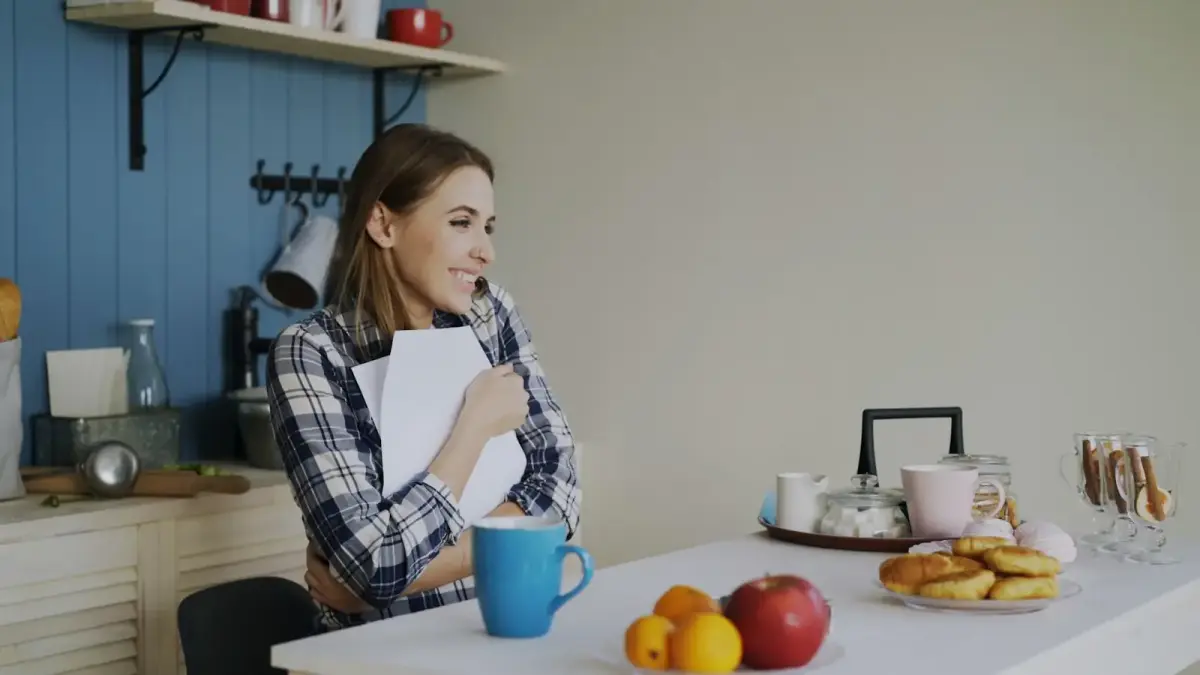
I was eight years old the first time my mother handed back a thank-you note and told me to rewrite it. The problem wasn’t my spelling. The problem was that I’d written “Thanks for the sweater” to my great-aunt Dorothy, and my mother said that wasn’t enough. I needed to say something about the color. I needed to mention that I would wear it. I needed to make Dorothy feel like the sweater had changed my life in some small, specific way.
So I sat back down at the kitchen table with a fresh sheet of lined paper and wrote something warmer, something more generous, something that made a polyester sweater two sizes too big sound like the most thoughtful gift a person could receive. My mother read it, nodded, and sealed the envelope.
I don’t think she was trying to teach me what she actually taught me. She thought she was teaching manners. What I learned instead was something quieter and much more permanent - that receiving something without immediately proving you deserved it was a kind of theft.
1. The kitchen table was a classroom for emotional debt
There’s a particular posture that belongs to children who wrote thank-you notes. Hunched over the table, pen gripped too tightly, tongue pressed against the inside of their cheek. They weren’t writing letters. They were completing transactions.
Every birthday gift came with invisible terms and conditions. You could keep the doll, but only after you produced written evidence that you understood what it cost someone to give it to you. The wrapping paper hadn’t even made it to the trash before the obligation kicked in.
A 2019 study published in the Journal of Personality and Social Psychology found that children who were taught to express gratitude performatively - through required rituals rather than organic feeling - were more likely to develop what researchers called “gratitude anxiety” as adults. The gratitude was real. But it came wrapped in pressure, and the pressure never fully unwound.
2. “Oh, this old thing?” is not modesty - it’s a reflex
You know this woman. Maybe you are this woman. Someone tells her she looks beautiful and she immediately points out that her shirt was on sale. Someone praises her work and she lists everyone else who helped. Someone says “I love you” and she says “You too” so fast that neither of them can feel it land.
This is not humility. This is a nervous system that learned, decades ago, that receiving anything nice without immediately deflecting it means you think you deserve it. And thinking you deserve it means you’re greedy. And being greedy means the kindness might stop coming.
The deflection is instant. It doesn’t pass through conscious thought. It lives in the body - in the tight laugh, the dismissive hand wave, the way she turns every compliment into a joke before it can settle somewhere real.
3. Gratitude became a performance, and the performance never ended
Here’s what nobody tells you about being trained to write thank-you notes: the training doesn’t stop when you stop writing the notes. It just moves inward. It becomes the voice in your head that says you haven’t thanked someone enough, haven’t appreciated them loudly enough, haven’t earned the right to keep what they gave you.
You start thanking people for things that don’t require thanks. For showing up. For texting back. For being kind, as if their kindness is a favor and not simply who they are.
I once thanked a friend for inviting me to her birthday party. Not when I arrived - three separate times. Once when she invited me, once when I got there, and once the next morning via text. She finally said, “Elena, you don’t have to keep thanking me. You’re my friend. You belong here.” I remember staring at that text for a long time because some part of me genuinely did not believe her.
4. The compliment becomes a debt the moment it arrives
For women who grew up this way, a compliment is not a gift. It’s an invoice with no due date, which somehow makes it worse. When someone says something kind, the internal calculator switches on immediately. What do I owe them now? How do I balance this? What do I need to say or do to make sure they don’t think I just took that and kept it?
This is exhausting. And it’s invisible. Nobody sees the math happening behind the smile.
Dr. Kristin Neff, whose research on self-compassion at the University of Texas has reshaped how psychologists understand self-worth, has written about how difficulty receiving is often misread as low self-esteem. But it’s more specific than that. It’s not that these women don’t think they’re worthy. It’s that they were trained to believe worthiness requires constant proof - and accepting something without immediately reciprocating feels like failing to provide that proof.
5. Every favor gets repaid before it can be enjoyed
She brings a bottle of wine to your house even though you told her not to bring anything. She insists on splitting the check even when it’s your treat. She sends a gift back within days of receiving one, not because she wanted to, but because the imbalance was physically uncomfortable.
This is the thank-you note pattern in adult form. Every act of generosity toward her must be neutralized. Balanced. Paid off. Because somewhere in her wiring, receiving without reciprocating is the same as owing - and owing is the same as being a burden - and being a burden is the thing she has spent her entire life trying not to be.
The tragedy is that people who love her want to give to her. They want her to just take the compliment. Just enjoy the gift. Just let someone do something nice without turning it into a project. But she can’t. Not yet.
6. She learned that love has terms and conditions
This is where it gets deeper than manners. A child who was required to perform gratitude for every kindness didn’t just learn to write polite letters. She learned a theology of love - one where nothing is free, everything must be earned, and the price of receiving is perpetual proof that you were worth the giving.
That belief doesn’t announce itself. It hides inside reasonable-sounding thoughts. “I don’t want to be a bother.” “I should do something nice for them since they did something nice for me.” “I don’t need help, I can handle it.”
A 2021 study in Frontiers in Psychology found that adults who reported difficulty receiving compliments, gifts, and help were significantly more likely to describe their childhood homes as loving but conditionally expressive - meaning affection was present but tied to behavior, achievement, or social performance. The love was real. The conditions were also real. And the child learned to meet the conditions before she could relax into the love.
7. Relationships become a ledger she can never close
In romantic relationships, this pattern is particularly painful. She tracks who did what last. Who texted first. Who said “I love you” more recently. Who initiated plans. Not because she’s controlling - because she’s terrified of being the one who takes more than she gives.
Her partner says, “You don’t have to keep score,” and she nods, but the scorekeeping is automatic. It’s not a choice. It’s the operating system she was installed with at that kitchen table, pen in hand, writing “Dear Aunt Dorothy” for the third time because the first two drafts weren’t generous enough.
She doesn’t know how to let someone love her without working for it. Rest feels like laziness. Receiving feels like taking. And taking, the little girl at the table learned, is what ungrateful children do.
8. The real wound isn’t ingratitude - it’s the inability to rest inside being loved
I want to be careful here, because the parents who taught their children to write thank-you notes were not villains. Most of them were kind, well-meaning people who believed they were raising considerate daughters. And in many ways, they were. These women are extraordinarily thoughtful. They remember birthdays. They write the most beautiful cards. They make people feel seen.
But they cannot make themselves feel seen. That’s the cost.
The real wound is not a lack of gratitude. It’s an excess of it - a gratitude so hyperactive that it never allows the nervous system to settle into simply being loved. Every moment of receiving gets interrupted by the compulsion to respond, to reciprocate, to prove that you noticed, that you’re worthy, that you won’t waste what you’ve been given.
Brene Brown has spoken about how the most difficult emotional experience for many people is not grief or fear but joy - because joy requires vulnerability. You have to let something good happen to you without controlling it. For the woman who wrote the thank-you notes, joy is that moment between receiving the gift and writing the letter. And she was taught to make that moment as short as possible.
9. Receiving is not taking - but she may need years to believe that
If you recognize yourself in any of this, I want to say something that might feel uncomfortable: you are allowed to receive things without performing gratitude. You are allowed to hear “you’re beautiful” and simply say “thank you” - not “oh stop” or “you’re sweet” or “I look terrible today, but thanks.”
You are allowed to let someone give you something and just hold it. Just feel it. Just let it be yours without immediately calculating what you owe.
This is not selfishness. This is not entitlement. This is what healthy receiving looks like - and it might feel foreign because you were trained in a system where receiving always came with paperwork.
A 2022 study in the Journal of Research in Personality found that learning to receive without immediate reciprocation was one of the strongest predictors of relationship satisfaction and emotional well-being in adults. Not giving more. Not expressing more gratitude. Learning to receive. Learning to let something land.
The little girl at the kitchen table did her best. Her handwriting was careful. Her words were chosen with more precision than any eight-year-old should need. She wrote “thank you” so many times that the phrase lost its meaning and became a reflex - a spell she cast to keep herself safe inside a world where kindness always came with a receipt.
She is allowed to put the pen down now.
She is allowed to just keep the sweater.