Children who ate lunch alone at school every day and learned to make it look like a choice - who brought a book to the cafeteria and built a fortress of contentment around a table nobody else wanted - often become adults who have built entire lives around solitude and genuinely call it self-care, because a child who had no choice but to be alone got so practiced at making isolation look like a decision that by adulthood the preference became real, and the woman who spends every Sunday morning alone with a book and a coffee is not performing solitude anymore but living inside something a lonely girl built so carefully it became the most genuine room she owns
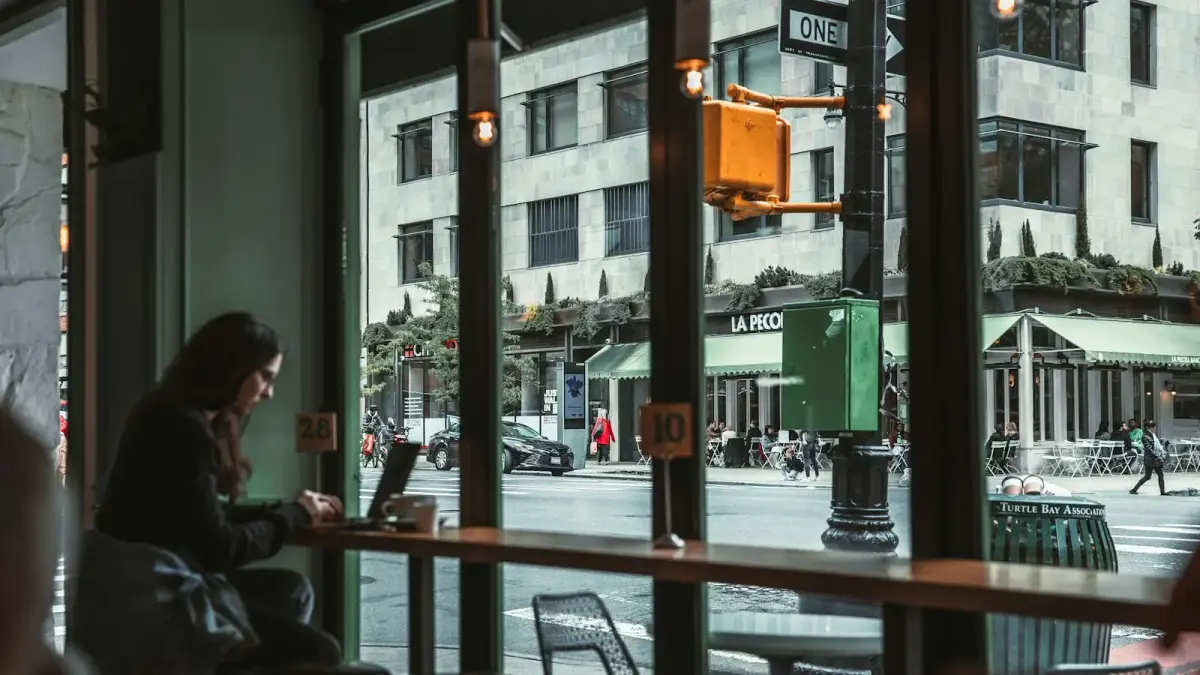
The girl at table nine
I was eleven when I perfected the posture.
Chin slightly tilted down. Eyes moving steadily across the page. One hand holding the book open, the other resting near a sandwich I’d take small, deliberate bites of - never rushed, never frantic. The whole composition said the same thing: I am here because I want to be.
Nobody asked me if that was true. Which was, I think, the entire point.
There’s a particular skill that children learn when they eat lunch alone every day at school, and it has nothing to do with reading or independence or being comfortable in your own skin. The skill is architectural. You learn to build a room around yourself - out of a paperback, out of a carefully arranged lunch, out of a facial expression that says contentment so convincingly that even you start to believe it.
And here’s what nobody tells you about that room: if you build it well enough, and live in it long enough, it stops being a performance. It becomes your actual home.
The cafeteria architect
You know the child I’m talking about. Maybe you were that child.
She found the table in the corner, the one near the window or the wall, the one that was too small for a group or too far from the action to attract anyone. She claimed it early, before anyone could see her looking for a place to sit. She had the book out before the tray was down.
The book was the most important part. Not because she was reading it - though eventually she was, voraciously, desperately - but because it was a prop that told a story. A child sitting alone at a table looks abandoned. A child sitting alone at a table with a book looks like she has somewhere better to be.
This is a distinction that an eleven-year-old understands in her bones, even if she could never articulate it. The difference between being alone and choosing to be alone is entirely a matter of staging.
And she staged it beautifully, every single day.
A 2014 study published in the Journal of Research in Personality found that children who consistently spend time alone develop what researchers called “constructive solitude” - the ability to use time alone for reflection, creativity, and emotional regulation. But what the study also noted, and what I find more interesting, is that the children who benefited most from solitude were often the ones who had the least choice about it. They didn’t seek solitude. Solitude found them, and they learned to furnish it.
When coping becomes identity
Here’s the mechanism, and it’s more elegant than most psychology textbooks make it sound.
A child who eats alone every day faces a problem. Not the loneliness itself - children are remarkably adaptable to loneliness, which is one of the saddest things I know. The problem is the story. She needs a narrative that explains her situation in a way that doesn’t make her the rejected one, the unwanted one, the girl nobody chose.
So she writes a different story. She’s the girl who likes being alone. She’s the reader, the thinker, the one who doesn’t need the noise. She’s not missing out on anything at that crowded table across the room - she has a whole world in her hands, right here, in chapter fourteen.
And the thing about stories is that if you tell them long enough, they rewrite your neurology.
This isn’t metaphor. A 2019 study in Psychological Science demonstrated that repeated behavioral patterns in childhood don’t just shape habits - they reshape the brain’s reward systems. Children who consistently engage in solitary activities begin to experience genuine neurological reward from being alone. The dopamine pathways that might have been wired toward social connection get rerouted, not through trauma exactly, but through practice.
She didn’t just tell herself she preferred being alone. Her brain started agreeing with her.
By middle school, the performance had become less effortful. By high school, it barely felt like a performance at all. By college, she genuinely sought out the single dorm room, the quiet study carrel, the solo walk across campus at dusk. By thirty, she had a word for it: introvert.
And she meant it. That’s the part that matters. She genuinely, sincerely meant it.
The architecture of adulthood
You can spot the adult version of this child by the life she’s built.
Her weekends have structure, and that structure involves a lot of silence. Saturday morning is the farmer’s market - alone. Sunday morning is coffee and a book by the window, and if someone asks her what she’s doing this weekend, she says “nothing” with the particular warmth of someone who considers nothing to be the most luxurious something.
She takes solo trips. Not out of loneliness, but because she’s discovered that a city is a completely different place when you walk through it with no one else’s preferences to accommodate. She eats dinner at restaurants alone and doesn’t bring a book anymore - she doesn’t need the prop. She’s graduated from performing solitude to simply living it.
Her friendships are deep but infrequent. She loves the people in her life with a fierce, quiet intensity, but she doesn’t need to see them every week. A long phone call every month feels like abundance. She’s not avoiding connection. She’s curating it.
Susan Cain wrote about this kind of person in her exploration of introversion - not as someone who lacks social ability, but as someone who has built a rich interior world that genuinely competes with the exterior one. The alone time isn’t a retreat from something. It’s an arrival at something.
And all of this is real. I want to be very clear about that. The woman who spends Sunday morning alone with her coffee is not lying to herself. She is not secretly lonely. She is not performing. The preference is as genuine as any preference can be.
But it was built by a girl who deserved a seat at the table.
The origin story you’re allowed to honor
This is where most articles about introversion get it wrong, and I want to be careful here.
The typical narrative goes one of two ways. Either introversion is presented as a pure, inborn trait - you were always this way, it’s just who you are - or it’s presented as a wound that needs healing, a coping mechanism you should outgrow so you can finally learn to be “normal” around other people.
Both of those stories are incomplete.
The more honest version is this: your preference for solitude is real and it is yours. It is not a costume you’re still wearing from childhood. It has become genuinely, neurologically, emotionally who you are. The Sunday mornings alone are not a leftover defense mechanism. They are your actual life, and it’s a beautiful one.
And also, a child built that life because she didn’t have another option. A girl who deserved to be chosen sat at a table by herself and decided that being unchosen was actually a form of freedom. She was resourceful and creative and brave, and what she built from loneliness was so well-constructed that it became indistinguishable from preference.
Knowing that doesn’t make the preference less real. It makes it more remarkable.
A 2021 study in Frontiers in Psychology examined what researchers called “post-coping identity” - the phenomenon where adaptive strategies developed during difficult circumstances become integrated into a person’s core sense of self. The study found that these identities were not false or fragile. They were, by every psychological measure, as stable and authentic as identities formed under easier circumstances. The researchers’ conclusion was striking: the origin of a trait does not determine its authenticity.
You are not “actually” an extrovert trapped in introvert habits. You are not broken. You are not hiding.
You are someone who built a home, and you live there now, and it fits.
The girl who deserved better built something extraordinary
I still read alone at lunch sometimes. Not at a school cafeteria, but at a small table by the window of a restaurant near my apartment, with whatever I’m reading that week and a bowl of soup that I eat slowly, deliberately, with the same composure I practiced at eleven.
The difference is that nobody is watching now. There’s no audience to convince. The posture isn’t a performance anymore - it’s just how I sit when I’m comfortable, which is to say, when I’m alone.
But sometimes, between paragraphs, I think about that girl. The one who figured out that if you hold a book at the right angle, nobody can see your face. The one who learned to arrange solitude like furniture in a room she hadn’t chosen but was determined to make beautiful.
She deserved friends who found her interesting. She deserved a table full of people who wanted to hear what she thought about chapter fourteen. She deserved to be chosen.
She wasn’t. And so she built something instead.
If you recognize her - if she looks a little like the girl you used to be, or the girl you still carry inside the life you’ve built - I want you to know two things.
The room she built is real. It is yours. The solitude you love is not a lie you’re telling yourself. It is the most honest thing about you.
And the girl who started building it was braver than anyone ever gave her credit for. She took what she was given, which wasn’t enough, and she made it into something that holds you even now, on a quiet Sunday morning, with your coffee getting cold and your book open to a page you’re in no hurry to finish.
She built you a home. You get to live in it.
That’s not a wound. That’s craftsmanship.

