Children who caught tadpoles in a jar of pond water and carried them home with both hands - who set the jar on the windowsill and checked it every morning before school, who watched the tiny black comma grow legs and slowly lose its tail over the course of weeks - often become adults who have an uncommon patience for the slow invisible work of becoming someone new, because a child who watched a creature lose everything it was in order to become what it was meant to be learned that transformation is not a decision but a shedding
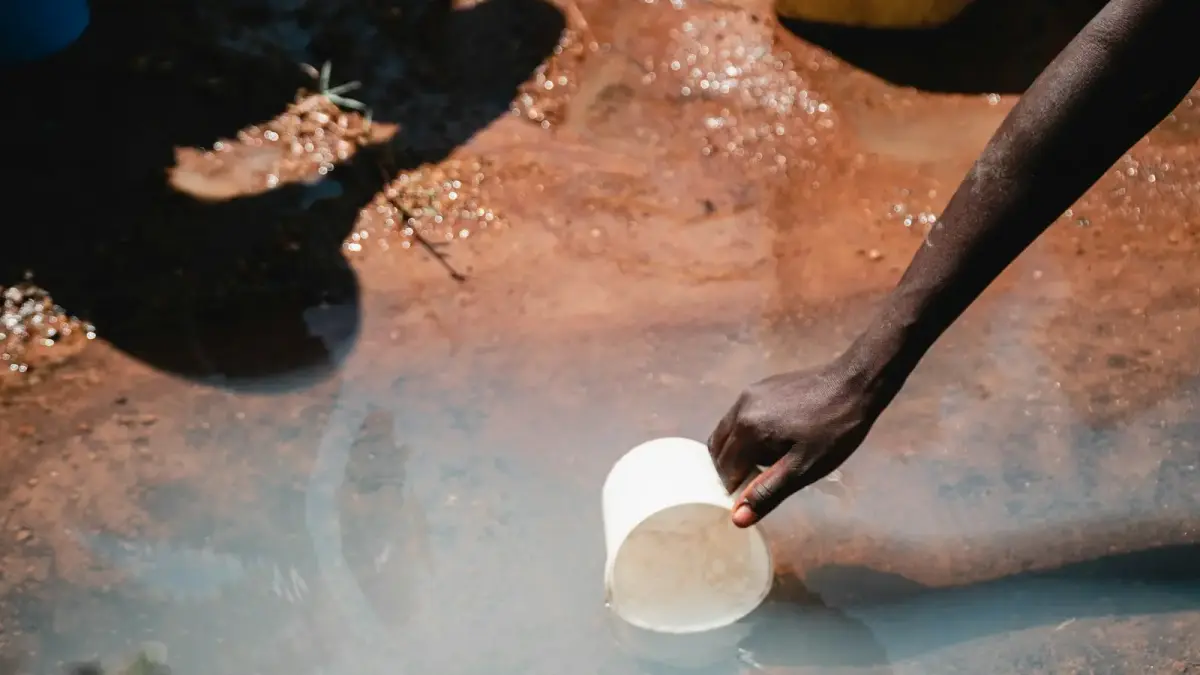
I carried the jar with both hands, the way you carry something that might break if you breathe wrong.
The water sloshed against the glass with every step. Little bits of pond - green threads of algae, a grain of sand, a world in miniature - swirled around the dark shapes that darted at the bottom. I walked so slowly up the driveway that my mother came to the door to check on me, and I remember looking up at her with the kind of seriousness only a seven-year-old on a mission can produce.
“I have tadpoles,” I said. As if I were delivering news of enormous consequence.
And in a way, I was.
That jar went on the windowsill above the kitchen sink, right where the morning light hit first. And for the next several weeks, it became the first thing I checked every day before school - before breakfast, before brushing my teeth, before anything else that the adult world considered important. I would press my face close to the glass and study those tiny black commas, looking for something I couldn’t name. Looking for evidence that change was happening.
Most mornings, I saw nothing different at all.
But I kept looking.
The longest experiment a child ever ran
What I didn’t understand then - what no child understands in the moment - is that I was conducting one of the most important experiments of my young life. Not a science experiment, though it looked like one. An experiment in patience. In witnessing. In learning to trust a process I couldn’t control or accelerate.
A 2005 study published in the Journal of Research in Personality found that children who engaged in sustained naturalistic observation - watching plants grow, caring for animals, tracking seasonal changes - developed measurably stronger capacities for delayed gratification and emotional regulation later in life. The researchers called it “attentional patience,” the ability to remain engaged with something that offers no immediate reward.
I didn’t know any of that. I just knew the tadpoles mattered.
Howard Gardner, the developmental psychologist who identified multiple forms of intelligence, described what he called “naturalist intelligence” - the capacity to observe, categorize, and connect with living systems. He argued it was one of the most undervalued forms of knowing. Children who had it didn’t just notice nature. They entered into a kind of dialogue with it. They watched and waited and let the world show them something on its own timeline.
That’s what I was doing at the kitchen windowsill every morning. I was letting the world show me something on its own timeline.
First, the bumps
The changes were so small that I almost missed them.
One morning, I noticed two tiny bumps near the base of a tadpole’s tail. They were barely visible - just the faintest suggestion that something new was forming. I pressed my nose to the glass and held my breath, as if breathing might scare the bumps away.
The next day, the bumps were the same.
The day after that, the same.
For what felt like forever, nothing happened. I started to wonder if I had imagined the bumps. If I was seeing what I wanted to see. If the tadpoles were just going to stay tadpoles forever, swimming in their jar of cloudy pond water on my mother’s windowsill.
But I kept checking. And then one morning - I couldn’t tell you which one, because transformation doesn’t announce itself - the bumps had become legs. Real, actual, impossibly small legs. They moved. They kicked. Something was happening that I hadn’t caused, hadn’t hurried, and couldn’t have predicted by looking at the day before.
That feeling - the feeling of witnessing change that accumulated so slowly it seemed invisible until suddenly it wasn’t - never left me.
The one that didn’t make it
Not all of them survived. That’s the part of the story I don’t usually tell.
One morning I found a tadpole floating at the top of the jar, still and pale. Its legs had just started forming. It was in the middle of becoming something new, and it died there, suspended between two versions of itself.
I cried in the bathroom before school so my parents wouldn’t see. I buried it in the backyard under the azalea bush with a ceremony that I conducted alone, with the gravity of a child who has just learned that not every transformation gets to finish.
That grief - small and private and entirely real - taught me something I wouldn’t have language for until decades later. It taught me that becoming is not guaranteed. That the courage to change is not the same as the certainty that you’ll survive it. That some creatures begin the work of transforming and don’t get to see the other side.
It made the ones who did survive feel like miracles.
Watching the tail disappear
The strangest part wasn’t the legs appearing. It was the tail disappearing.
I expected the growing. I didn’t expect the losing.
But that’s exactly what happened. As the legs grew stronger, the tail - the very thing that had defined this creature, that had propelled it through the water, that was its primary means of moving through the world - began to shrink. Day by day, it got shorter. It was being absorbed back into the body, consumed by the very organism it had served.
The frog didn’t cut off its tail. It didn’t reject it. It metabolized it. It turned what it no longer needed into fuel for what it was becoming.
I watched this happen over the course of weeks, and something settled into my understanding that I carry to this day. Something about how the things you lose during a transformation aren’t really lost. They become part of the foundation of whatever you’re turning into. The tail doesn’t vanish. It becomes the frog.
A 2019 study in Frontiers in Psychology examined how early experiences with biological metamorphosis shaped children’s understanding of personal change and identity continuity. The researchers found that children who had directly observed complete metamorphosis - caterpillar to butterfly, tadpole to frog - were significantly more likely to understand identity as fluid rather than fixed. They grasped, intuitively, that you can lose fundamental parts of yourself and still be you. That becoming someone new doesn’t mean the person you were is gone.
The adults these children become
If you were one of these children - if you carried a jar of pond water home like it was holy, if you checked it every morning with the quiet devotion of a scientist and the hope of a believer - there’s a good chance you grew into a particular kind of adult.
You’re the person who doesn’t panic when things fall apart slowly. When a career dissolves, when a relationship shifts into something unrecognizable, when you wake up one morning and realize you don’t know who you are anymore - you don’t immediately try to fix it. You don’t rush to fill the emptiness with the first available answer.
You wait. You watch. You trust the process even when you can’t see evidence that the process is working.
This isn’t because you’re passive. It’s because you learned, at the windowsill, that the most profound transformations happen in the space between what was and what will be. That the messy middle - the part where you have legs but still have a tail, where you can’t swim like you used to but can’t walk yet either - is not a failure. It’s the actual mechanism of change.
Gabor Mate has written extensively about how early sensory experiences with nature shape our capacity for self-regulation and emotional resilience. Children who learned patience from living systems - not from being told to be patient, but from watching patience yield results in real time - carry that understanding in their nervous systems. It becomes part of how they process difficulty.
You became an adult who can sit with uncertainty. Who doesn’t need to know the ending in order to trust the story. Who understands that healing is not a straight line and growth is not a performance.
The wisdom you didn’t know you were collecting
Here’s what I want you to know, if you were that child.
Your patience is not passivity. It has never been passivity. It’s the deep, embodied knowledge of someone who witnessed transformation happen in real time and learned the one thing most people spend their whole lives trying to accept - that it cannot be hurried.
You learned this before you had words for it. Before anyone taught you about resilience or growth mindsets or the psychology of change. You learned it from a jar of pond water on a windowsill, from a creature that lost its tail and grew legs and climbed out of the water and sat on a rock in the sun as if it had always been a frog.
You learned that becoming requires losing. That the tail has to go. That the water you’ve been breathing in has to become the air you’ll breathe from now on. And that this process - terrifying, slow, invisible to anyone who isn’t watching closely - is not something that happens to you. It’s something you’re doing, right now, whether you can see it or not.
The jar is gone. The windowsill belongs to someone else now. But you still check every morning, don’t you? You still press your face close to the glass of your own life and look for bumps that might be legs. For evidence that the change you can’t see is happening anyway.
It is.
It always was.
You learned that from a tadpole when you were seven years old, and you have never, not once, forgotten it.