Children who grew up in houses where photographs were never displayed - where there were no framed pictures on the walls, no albums on the coffee table, no visual proof that the family existed as a unit worth remembering - often become adults who take thousands of photographs of their own children, who document every birthday and every ordinary Tuesday, not because they are obsessed with preserving moments but because a girl who grew up in a house with no evidence she had ever been small and loved and held is building the archive she never had, and the camera at forty-seven is not nostalgia but a rebuttal to a childhood that left no trace
I went looking for a photograph of myself as a baby and realized there were only three. One from the hospital, slightly out of focus. One from what might have been a first birthday, though nobody wrote the date on the back. And one taken at a relative’s house where I am being held by someone whose name I no longer remember.
Three photographs for an entire childhood.
Not because anything terrible had happened. Not because anyone was hiding something. Just because in our house, the camera was never the thing you reached for. The walls were clean and bare and stayed that way for twenty years.
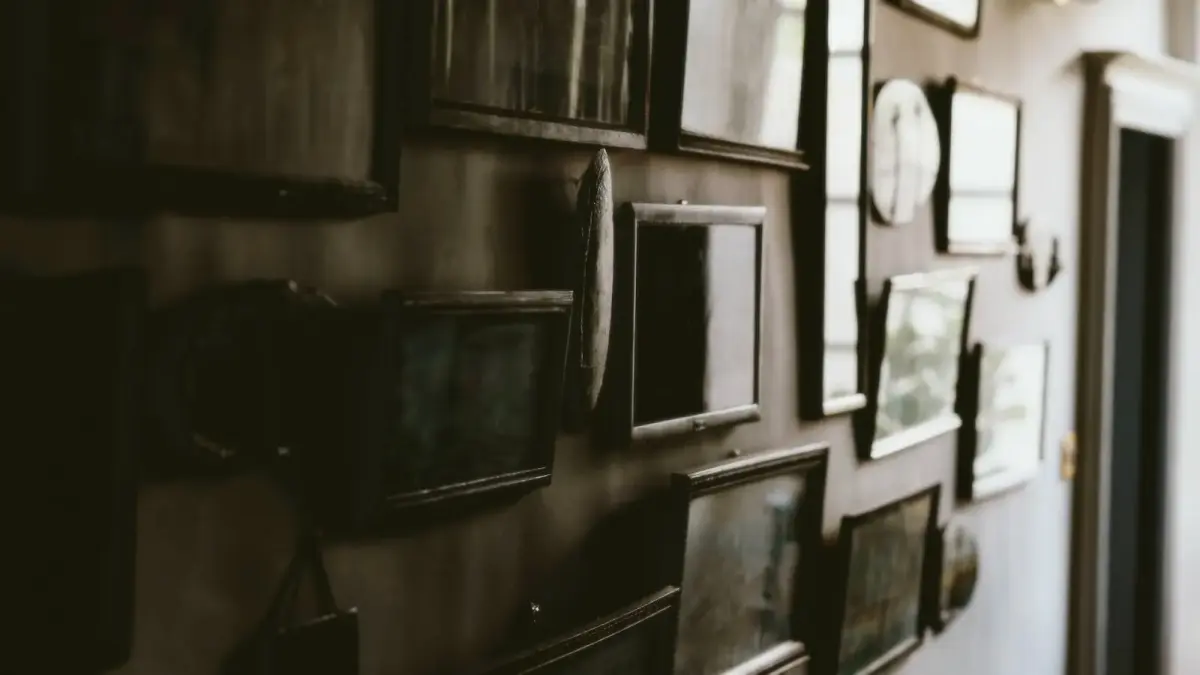
I did not think this was unusual until I visited a friend’s home when I was nine and saw the hallway lined with framed school portraits - every year, every sibling, every gap-toothed grin arranged in chronological order like a museum of being loved. I remember standing in that hallway and feeling something I could not name. It was not jealousy, exactly. It was closer to vertigo. The sudden awareness that some families treated their own existence as something worth hanging on a wall.
The House With Nothing On The Walls
There is a particular kind of home that many people will recognize without being told what it looks like. The paint is fine. The furniture is functional. But the walls are empty.
No framed photos on the mantel. No magnet-covered refrigerator displaying a child’s drawing. No album on the shelf that anyone ever pulls out at holidays.
This is not a sign of cruelty. In most cases, it is not even a sign of indifference. It is the landscape of a family that was too busy surviving to curate evidence of itself. Working-class families, immigrant families, families where both parents worked shifts and nobody had the time or the money to develop a roll of film, let alone frame anything.
Film cost money. Developing cost more. Frames were a luxury that bought nothing useful. And the culture of documentation - the idea that ordinary life deserved to be preserved - was not something every household absorbed equally.
A 2019 study published in the journal Memory found that the presence of family photographs in a home significantly shapes how children construct their autobiographical narratives. Children who grew up surrounded by visual records of their own history developed more coherent and detailed personal memories than those who did not. The photographs were not just decoration. They were scaffolding for the self.
But in the house with nothing on the walls, the scaffolding was absent. And the child growing up there absorbed a message that was never spoken aloud but landed in her body anyway: this family does not commemorate itself.
What The Absence Teaches
Nobody sat you down and said you were not worth photographing. Nobody had to.
The lesson arrived through accumulation. Through every school event where other parents held cameras and yours did not. Through every holiday that passed without anyone saying, wait, let me get a picture. Through the slow, dawning realization that you had no visual proof of your own early years - that the child you used to be had left almost no trace.
What does a child do with that? She does not collapse. She does not protest. She adapts.
She learns that her existence is something that happens in the present tense only. That the past is not a place you visit or preserve but a thing that simply falls away. She learns to hold memories in her body instead of in frames - the smell of a particular laundry detergent, the sound of a screen door, the feeling of carpet under bare feet in a room she can no longer prove she lived in.
And she carries this forward. Not as trauma in the clinical sense, but as a quiet absence she may not even recognize until decades later, when she finds herself standing in her own kitchen with a phone full of four thousand photographs of her daughter and wonders why she cannot stop.
The Woman With The Camera
You know her. You might be her.
She is the one who photographs everything. The birthday parties, yes, but also the unremarkable Wednesday where her son is eating cereal and the light is hitting his face in a way that makes her chest ache. She takes photos of shoes by the door, of handwriting on homework, of the back of her daughter’s head while she watches cartoons.
People tease her about it sometimes. Her husband says she should put the phone down and just be present. Her friends joke that she has enough photos to fill a museum.
But she is not performing parenthood for an audience. She is not chasing likes or building a brand. She is doing something far more private and far more urgent.
She is building the archive she never had.
Every photograph is a small act of defiance against the blankness of her own childhood record. Every image saved to the cloud is a promise that her children will never stand in a hallway at nine years old and wonder why their family did not think itself worth preserving. She is not documenting her children’s lives. She is constructing proof - tangible, scrollable, undeniable proof - that these people existed and were loved and that someone thought every ordinary Tuesday was worth remembering.
Dr. Robyn Fivush, a developmental psychologist at Emory University, has spent decades studying how families construct narratives about their shared past. Her research consistently shows that the act of creating and revisiting family records - photographs, stories, shared reminiscences - is not vanity. It is one of the primary ways children develop a sense of belonging and emotional security. The family that documents itself is telling its children: you are part of something continuous. You have a history. You are held by a story that started before you.
The woman with the camera is not obsessed. She is giving her children what she never received - the experience of being a person whose life was treated as evidence of something meaningful.
The Generational Divide Nobody Talks About
There is an important generational layer to this that often gets missed in conversations about over-documentation and screen addiction and parents who photograph too much.
For much of the twentieth century, family photography was a class marker. Cameras were expensive. Film and developing were recurring costs that many families could not justify. The culture of the posed family portrait - everyone dressed up, standing in front of the fireplace - belonged to a particular economic bracket.
Working-class families in the 1960s and 1970s might own a camera, but they used it sparingly. A roll of film had twenty-four exposures, and you did not waste one on a random Tuesday. You saved it for Christmas, maybe. For a graduation. For something that felt officially important enough to justify the cost.
This means that millions of people who grew up in loving, stable, perfectly adequate homes have almost no photographic record of their childhoods. Not because they were unloved, but because the economics of documentation excluded them.
And then the smartphone arrived and obliterated every barrier. Suddenly documentation was free, instant, unlimited. And the generation that had grown up unrecorded met the technology that allowed them to record everything.
A 2021 study in the Journal of Family Psychology examined how adults’ childhood experiences with family photographs predicted their own documentation behaviors as parents. The researchers found a clear compensatory pattern: parents who reported having few childhood photographs were significantly more likely to engage in extensive photographic documentation of their own children, often describing it as an emotionally driven need rather than a casual habit.
The phone full of four thousand photos is not a symptom of the Instagram age. It is the collision of unmet childhood need with suddenly available technology. It is repair work disguised as habit.
What The Camera Is Really Saying
When you understand this pattern, something shifts.
The mother at the birthday party who is holding up her phone while everyone else is eating cake stops looking like someone who cannot be present. She starts looking like someone who is ferociously present - so present that she needs to capture it, to hold it, to make sure it cannot disappear the way her own birthdays disappeared into the unmemorable past.
The father who insists on the annual family portrait, who herds everyone together on the porch every Thanksgiving, who will not let anyone leave until the photo is taken - he is not being sentimental. He is refusing to let his family become the kind of family he grew up in, the kind that left no visible trace of its own togetherness.
The camera is not nostalgia. It is a rebuttal.
It says: I was here. We were here. This happened. This mattered. This life, these people, this kitchen table and these mismatched chairs and this particular Tuesday in July - all of it is worth preserving. All of it is worth hanging on a wall.
The Tenderness of Ordinary Evidence
If this is your story - if you grew up in a house with bare walls and you now have a phone bursting with photographs you cannot bring yourself to delete - I want you to know something.
You are not being excessive. You are not being ridiculous. You are not failing to live in the moment because you keep reaching for the camera.
You are doing something profoundly loving. You are telling your children, in the only language your childhood taught you to speak, that they are the kind of people who get remembered. That their ordinary faces and their messy rooms and their unremarkable breakfasts are worth preserving.
You are giving them what no one gave you - the gift of evidence. The quiet, accumulating proof that they were here, they were small, they were held, and someone thought it all mattered enough to save.
And if someday your daughter scrolls through those thousands of photographs and laughs about how many you took, she will never know what you know. She will never understand the bare walls. She will never feel the vertigo of standing in someone else’s hallway and realizing that some families kept records of their love and yours simply did not.
She will not understand it because you made sure she never had to.
That is not obsession. That is the quietest, most determined kind of devotion - building a world for someone that is the exact opposite of the one you grew up in, one photograph at a time.