Children who grew up being the one who remembered every birthday and anniversary - who knew when the permission slip was due, which relative needed a thank-you card, and what day the dentist appointment was before anyone thought to ask - often become adults who never forget a single important date in anyone else's life but cannot understand why nobody seems to remember theirs, not because they want a party but because a child who tracked everyone else's calendar learned that if they stopped counting, no one would notice anything at all, and at forty-eight the forgotten birthday is not about the cake but about the proof that nobody else was ever keeping score
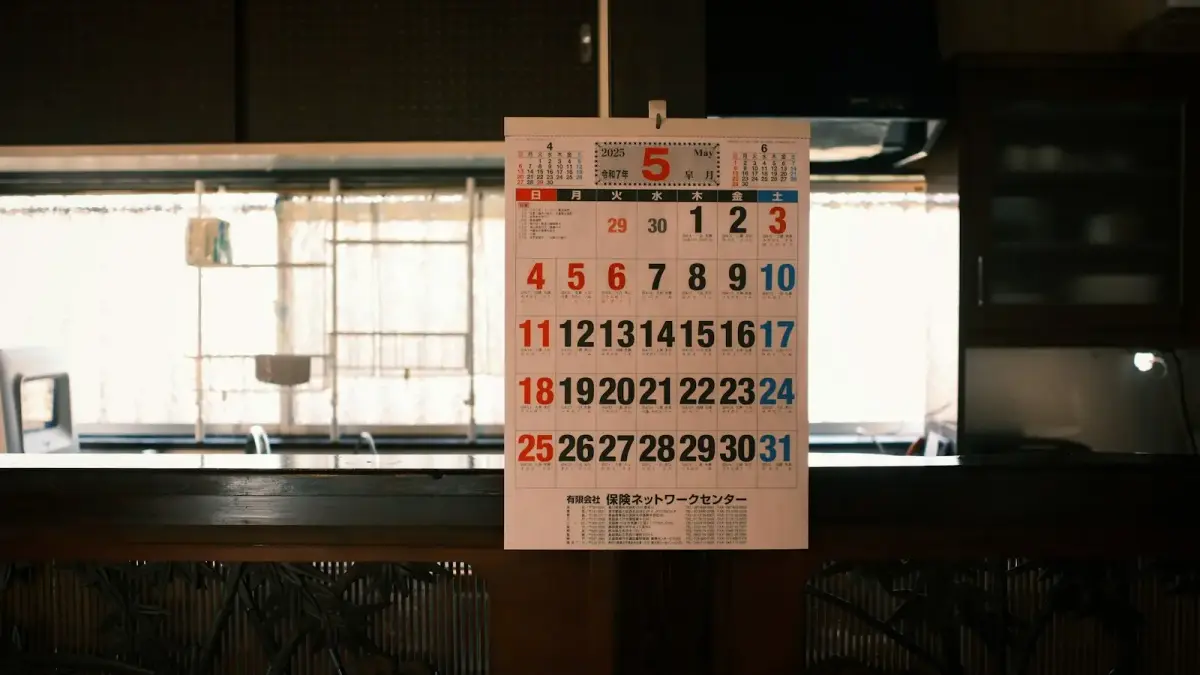
My mother’s birthday is March 14th. My father’s is August 2nd. My aunt Linda’s is November 19th, and she prefers a phone call over a card but will absolutely notice if neither arrives.
My cousin’s daughter had a piano recital on May 6th that I texted about the night before, because I knew her mother would forget to wish her luck. My best friend’s wedding anniversary falls the same week as his father-in-law’s death anniversary, so I always reach out on the happy day but never mention the hard one.
I know all of this because I have always known all of this. Not because I have an exceptional memory or a particularly organized mind. Because somewhere around the age of nine, I looked around my family and realized that if I didn’t keep track, nobody would.
I saw the look on my sister’s face when nobody mentioned her science fair. I watched my grandmother pretend she didn’t mind that half the family forgot her seventy-fifth birthday. And I decided, without ever putting it into words, that I would be the one who made sure nobody in this family ever had to fake that smile again.
I am forty-six years old. I have never missed a birthday. And I cannot tell you the last time someone remembered mine without a prompt from their phone.
Here are seven things people like me know intimately - the ones who grew up keeping the family’s calendar in their heads and carrying the weight of everyone else’s important dates long before they were old enough to drive.
1. You didn’t start remembering because you were thoughtful - you started because you saw what happened when nobody did
There is a difference between a child who is naturally attentive and a child who becomes attentive because the consequences of forgetting were too painful to watch. You were the second kind.
You remember the specific moment it clicked. Maybe it was a birthday dinner that almost didn’t happen because nobody planned it. Maybe it was your mother crying quietly because your father forgot their anniversary again.
A 2018 study published in the Journal of Family Psychology found that children in homes with inconsistent emotional attunement develop what researchers call “compensatory vigilance” - a heightened awareness of the family’s needs that goes far beyond what any child should be managing. The remembering wasn’t ambition. It was damage control.
You weren’t a child with a good memory. You were a child who understood, far too early, that forgetting had a price and nobody else in the house was willing to pay it.
2. You learned that caring and counting were the same thing
Here is the logic a child builds when they become the family’s calendar: if I remember your birthday, it means I love you. If I forget, it means I don’t.
This equation is clean, mathematical, and completely devastating. Because it means that when someone forgets your birthday, the only possible interpretation is that they don’t care enough to count.
You know, intellectually, that this isn’t true. People forget things. People get busy.
But the child in you doesn’t believe that for a second. In your house, the person who remembered was the person who cared. The people who forgot were the people who let things fall apart.
You watched the missed permission slips and the forgotten parent-teacher conferences. You saw the anniversary that no one mentioned until your father came home with flowers two days late and your mother’s mouth went thin. So you became the one who counted, and you never stopped equating the counting with the love.
3. Your memory became your identity - and your cage
People praise you for it constantly. “How do you remember all this?” your coworkers ask when you show up with a card on their work anniversary. “You’re so thoughtful,” friends say when you text them on the anniversary of their father’s death.
And you smile, because the praise feels good for about three seconds before it settles into something heavier. You know the truth they don’t - you don’t remember because you’re thoughtful. You remember because you can’t stop.
Psychologist Dr. Harriet Lerner writes about what she calls “overfunctioning” - the pattern where one person in a relationship system takes on more than their share of emotional and logistical work, not out of generosity but out of anxiety. The overfunctioner isn’t doing more because they’re better at it.
They’re doing more because doing less feels like a moral failure.
That’s you. You don’t keep track of everyone’s dates because you want to. You keep track because the alternative - being the kind of person who forgets - feels like becoming the very thing you organized your childhood around preventing.
4. You test people without ever telling them you’re testing them
This is the part that’s hard to admit. Somewhere along the way, the remembering became a quiet experiment.
You send the birthday card on time. You remember the anniversary. You text on the first day of the new job.
And then you wait.
Not consciously. You’d never frame it that way. But underneath the thoughtfulness, there’s a ledger - a record of who reciprocated and who didn’t.
When your birthday comes and goes with a late text and a generic “hope it was good,” something in you marks it down. Not vindictively. Sadly.
Like a scientist confirming a hypothesis they hoped would fail.
A 2020 study in the journal Personal Relationships found that individuals with a strong “communal orientation” were more likely to experience what researchers called “invisible labor distress.” They didn’t resent giving. They resented the asymmetry - the feeling that the giving was a one-way mirror where they could see out, but no one was looking in.
You’re not keeping score to punish anyone. You’re keeping score because a child who counted everything is still waiting for someone else to start counting too.
5. You plan your own birthday because you learned that nobody else will
At some point - maybe in your thirties - you started organizing your own celebrations. You pick the restaurant, send the group text, make the reservation. If anyone asks, you say you just like having control over the plans.
But there’s a quieter reason. You plan your own birthday because the alternative is sitting in your house at seven p.m. on a Saturday, wondering if anyone is going to call.
You tried that once or twice. The silence was specific - not the silence of people forgetting because life is busy, but the silence of no one else running the program. You took your hands off the wheel and the car just stopped.
So now you plan it yourself. The dinner is good, the people show up, everyone has a good time. But there’s a moment, usually when someone raises a glass, where you feel a flicker of something that looks like gratitude but tastes like grief.
Because the toast is warm, but you wrote the invitation. And the child in you still wonders what it would feel like to walk into a room that someone else prepared.
6. You confuse being needed with being loved
This is the deepest pattern, and the hardest one to see. When you are the person who remembers everything, people need you. They rely on you for the phone number, the recipe, the name of that restaurant from three years ago.
And that need feels like closeness. But need and love are not the same thing. Need is transactional - love is something else entirely, something that doesn’t require you to be useful to earn it.
Dr. Gabor Mate writes extensively about how children who take on caretaking roles develop what he describes as a self organized around being indispensable. The child learns that their value lies in what they provide, not who they are.
So they keep providing, keep remembering, keep being the one with the calendar and the pen.
Because if they stopped being useful, they’re not sure anyone would keep them around just for being them. You don’t remember everyone’s birthday because you love them, though you do. You remember because somewhere in you is a child who believes that being forgettable is the same as being left.
7. The forgotten birthday is never about the birthday
Here is what people don’t understand when you go quiet on the evening of your birthday after a handful of late texts and a gift card with no note. They think you’re being dramatic. They think you’re high-maintenance.
Which is ironic, because you’ve spent your entire life being the opposite of high-maintenance. You’ve spent decades making sure no one ever had to remember anything because you already handled it for them.
The birthday isn’t about the birthday. It was never about the birthday.
It’s about the fact that you were a child who looked around a house full of adults and realized that no one was keeping track. No one remembered that Grandma’s anniversary was next week. No one had signed the permission slip.
And instead of asking why the adults weren’t handling it, you just picked up the pen.
Your forgotten birthday is the latest proof of something you’ve known since you were small. You were the one who counted. And counting, it turns out, is a very lonely thing to be good at.
There’s a moment I keep coming back to. I’m maybe ten years old, standing at the kitchen counter, copying addresses from my mother’s address book onto Christmas card envelopes.
She’s in the other room watching television. She didn’t ask me to do this.
I just noticed, sometime around December 10th, that the cards hadn’t gone out yet. And I knew from the previous year what happened when they didn’t - the phone calls from relatives, the guilt on my mother’s face, the tense silence that settled over the house.
So I did it myself. Quietly. Without being asked.
I think about that boy sometimes. I want to tell him that it wasn’t his job. That the Christmas cards were not his responsibility, and a ten-year-old shouldn’t be standing at a counter with a pen and a roll of stamps, managing a task that no adult had thought to handle.
But I also want to tell him something else - something I’m only now beginning to understand. The remembering was real. The care behind it was real.
The love that drove a child to track every birthday and appointment and anniversary was extraordinary, and it was not nothing.
But it was also not a fair trade. You gave the world a perfect memory, and the world gave you back a quiet ache every time your birthday rolls around and the people you love most need a reminder from their phone to call you.
You’re not petty for noticing. You’re not needy for wanting someone to count for you the way you’ve counted for everyone else.
You are a person who learned, very young, that love was a calendar and attention was a chore. And you did the chore so faithfully that everyone assumed it did itself.
It didn’t do itself. You did it. Every single time.
And if no one has said this to you lately, let me say it now. Someone should have been keeping count for you. Not because you earned it, but because you always deserved it.