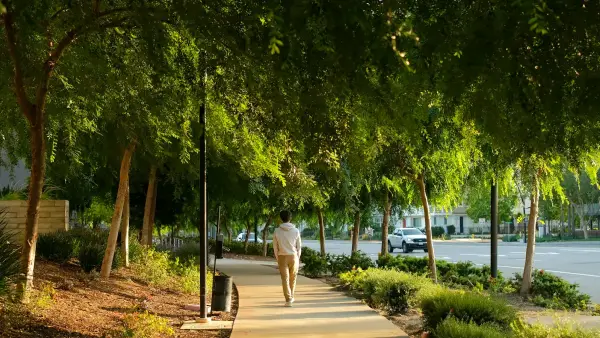
Children who were happiest in the back seat of the car on long family drives - forehead pressed against the window, watching highway lines blur into nothing - often become adults who think most clearly in transit, who drive with no destination just to feel their mind finally unspool
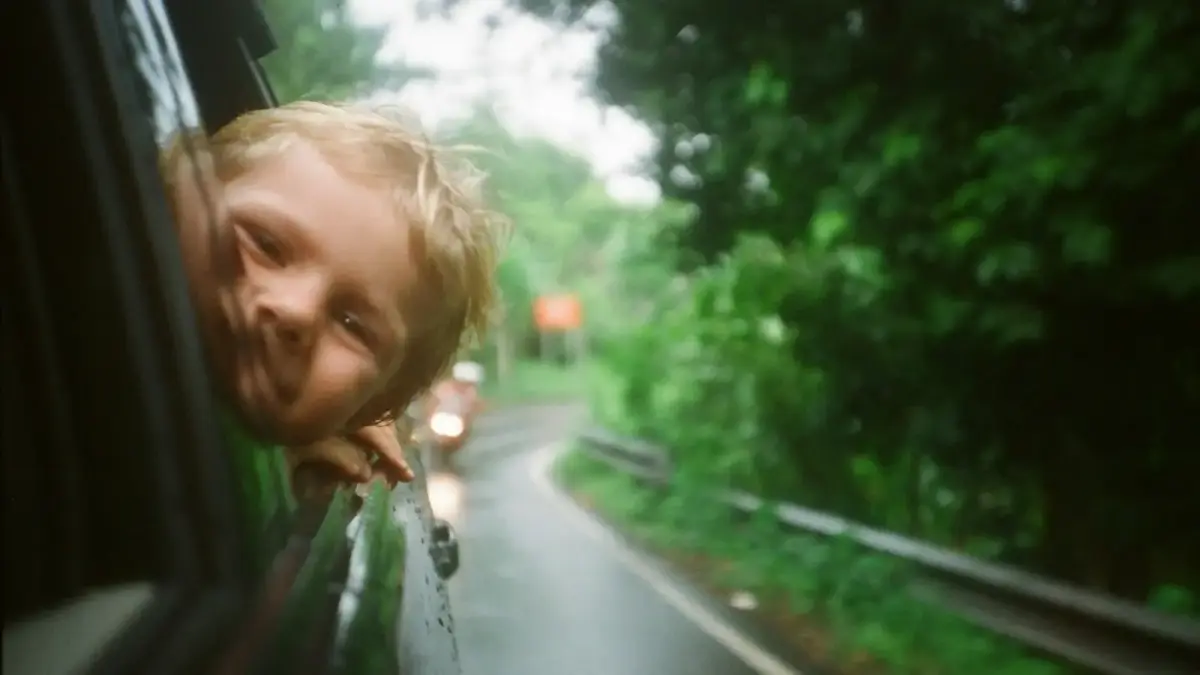
I was maybe nine or ten the first time I realized the back seat was mine.
Not in a territorial way. My brother got carsick up front, so there was never a fight. But it was more than that. Somewhere between our driveway and the highway on-ramp, something would shift. The conversation up front would thin out. The radio would go low. And I would press my forehead against the glass and feel - for the first time all day - like I could breathe without anyone noticing how deeply I was breathing.
Nobody ever asked me what I was thinking back there. That was the miracle of it. The car was the one room in my entire childhood where silence was expected rather than suspicious. Where staring at nothing wasn’t interpreted as sadness, withdrawal, or a problem that needed solving.
I didn’t know then that I was building something. I didn’t know that the back seat was teaching me how to think.
The only room where quiet wasn’t questioned
If you grew up introverted, you know what it’s like to have your inner life constantly interrupted by people who think stillness is a symptom.
“Why are you so quiet?” “Are you okay?” “Come join us.” “What’s wrong?”
Nothing was wrong. Everything was working exactly as designed. But try explaining that to a room full of people who measure aliveness by volume.
The back seat of a car on a long drive was different. It was the one space where every person in the vehicle was doing the same thing - sitting quietly, facing forward, watching the world move. Your silence wasn’t notable because silence was the ambient condition. For a child whose default mode was interior, this was permission that didn’t exist anywhere else.
A 2014 study published in the Journal of Environmental Psychology found that certain spatial conditions - low social demand, gentle sensory input, the absence of direct eye contact - create what researchers call “restorative environments.” Places where cognitive fatigue lifts and reflective thinking deepens. The back seat of a moving car meets every one of those criteria.
You weren’t hiding. You weren’t withdrawing. You were being restored.
The vibration that loosened your thoughts
There was something about the physical sensation, too.
The hum of the road underneath you. The slight vibration through the seat, through the glass where your temple rested. The landscape streaming past at a speed too fast to hold but slow enough to register - tree, field, water tower, gone.
That combination of rhythm and movement did something to your thinking that stillness never could. Your thoughts didn’t organize themselves at a desk or at the dinner table. They organized themselves when the world was sliding past.
This isn’t imagination. Research on the relationship between physical motion and cognitive processing suggests that gentle, repetitive movement - what some neuroscientists call “passive locomotion” - activates the default mode network in ways that static rest does not. A 2019 study published in Frontiers in Psychology found that participants who engaged in monotonous travel reported significantly higher rates of spontaneous insight and creative problem-solving than those who sat in stationary rest conditions.
Your nine-year-old brain didn’t have the language for this. But your body knew. The back seat was where your mind finally moved at the same speed as the car.
The window as a screen for your interior life
Here’s what you were actually doing with your forehead against the glass.
You were watching your own thoughts projected onto the landscape. The trees became the backdrop. The highway lines became a rhythm. And against that moving canvas, your mind would unspool whatever it had been carrying all day - the interaction at school you couldn’t decode, the feeling you had no name for, the imagined conversation where you finally said the right thing.
The window wasn’t something you looked through. It was something you thought against.
Susan Cain, in her work on introversion, has written about how introverted children often need an external anchor for internal processing - a consistent, low-stimulation sensory input that gives the mind something to rest on while it does its real work underneath. For some children, that anchor was reading. For some, it was drawing.
For you, it was the window. The endless, streaming, uncommenting window.
And no one interrupted. That was the part that mattered most. Your parents were driving, navigating, talking to each other about adult things you only half-heard. Your siblings were asleep or reading or absorbed in their own silence. The car created a temporary social contract where nobody owed anybody conversation.
For an introverted child, that contract was everything.
What the back seat was actually teaching you
You were learning something in those hours that no classroom ever offered.
You were learning that your mind works best when it’s given motion and silence simultaneously. That you don’t think in straight lines - you think in landscapes. That your processing style isn’t slow; it’s scenic. It takes the long way around because the long way is where the interesting things live.
You were learning that you need a container for your thoughts, but the container can’t be a room. It has to be something moving. Something that carries you while you carry your own interior weight.
You were also learning - and this is the part that matters most for your adult life - that you think best when nobody is waiting for your conclusion. The back seat didn’t ask you to arrive anywhere intellectually. It just let you travel.
A 2021 study in the Journal of Research in Personality found that individuals who score high on introversion and reflective processing tend to show measurably better cognitive performance in environments that combine sensory monotony with spatial transition - in other words, environments that are moving and predictable. Trains. Planes. Long highways with nothing but farmland and sky.
The back seat wasn’t just comfortable. It was cognitively optimal for the kind of mind you were already building.
The adults these children become
If this was you - the back seat child, the window watcher, the one who could ride for six hours and never once ask “are we there yet?” because you weren’t waiting to arrive - then I already know several things about your adult life.
You drive to think. Not to commute, not to run errands, but to process. When something big happens - a difficult conversation, a decision that won’t resolve, a feeling that sits in your chest like a stone - your first instinct isn’t to talk about it or write about it. Your first instinct is to get in the car.
You take the long way home. Not because you’re avoiding anything but because the extra twenty minutes of highway is where your brain finally opens the file it’s been refusing to access all day.
You do your clearest thinking on planes. Something about the enforced stillness, the white noise, the window - always the window - unlocks a quality of thought that your office, your kitchen, your bedroom can’t touch.
You feel most yourself in transit. Not arrived, not departing - but moving. The in-between space is where you’ve always lived most honestly.
And if someone asked you why, you probably wouldn’t be able to explain it. You’d just say something like, “I don’t know, I just think better when I’m moving.” And you’d leave it at that because the explanation lives in a place that’s hard to reach with words.
But the explanation is the back seat. It was always the back seat.
Why movement feels like permission
Here’s what I think is really happening, underneath all the neuroscience and the developmental psychology.
The back seat taught you that thinking is an activity that deserves its own space. Not a meeting room. Not a therapist’s office. Not a journal. A space that moves, that doesn’t ask you to produce a conclusion, that lets your thoughts exist without needing to justify them.
When you drive alone now, you’re not escaping. You’re returning. To the only room where your silence was never questioned. Where your interior life was allowed to be exactly as large and slow and winding as it needed to be.
Daniel Goleman has written about how emotionally intelligent adults often develop their reflective capacity through childhood experiences of “protected solitude” - time alone that wasn’t punished, pathologized, or interrupted. For many introverted children, that protected solitude was rare. It came in fragments - a few minutes before the house woke up, a walk to school, the pause between being called and having to answer.
But the back seat was hours. Uninterrupted hours of being interior without anyone calling it a problem.
That’s not a small thing. That’s the foundation of a mind that knows how to sit with itself.
You’re still that child
You might be fifty now. Or sixty-two. Or forty-seven with a commute you secretly love because it’s the only thirty minutes of your day that belongs entirely to your own thoughts.
You might not even remember the specific drives. But your body remembers. Your mind remembers. Every time you get behind the wheel and feel something in your chest loosen - that’s the back seat. That’s your nine-year-old self pressing their forehead against the glass and realizing, maybe for the first time, that being quiet wasn’t something that needed fixing.
It was something that needed protecting.
And you’ve been protecting it ever since - in the car, on the train, on the long walks that don’t go anywhere, in the extra ten minutes you sit in the driveway before going inside. Not because you don’t love the people in your house. But because you love your own mind too, and your mind has always needed motion to find its way home.
The back seat was never a lesser place to sit. It was the first place that let you be whole.