Children who kept a pen pal for years - who sat at the kitchen table on Saturday mornings and wrote to someone they had met once at summer camp or a cousin in another state, who addressed envelopes in careful handwriting and walked them to the mailbox and then waited, checking every day for a reply that sometimes took three weeks to arrive - often become adults who maintain friendships across impossible distances, who remember birthdays without being reminded, who write long messages when a quick reply would do, because a child who learned that love could survive the mail also learned that connection is not about proximity but about the decision to keep showing up in someone's life when nothing and no one is requiring you to
I found the box last spring. It was in the back of my mother’s hall closet, behind a stack of old quilts and a broken humidifier she kept meaning to fix. A shoebox - the kind with a lid that doesn’t quite close anymore because the cardboard has gone soft at the corners. Inside were forty-three letters from a girl named Rebecca who lived in Michigan and whom I had met exactly once, at a lake cabin the summer I turned ten.
We wrote to each other for six years.
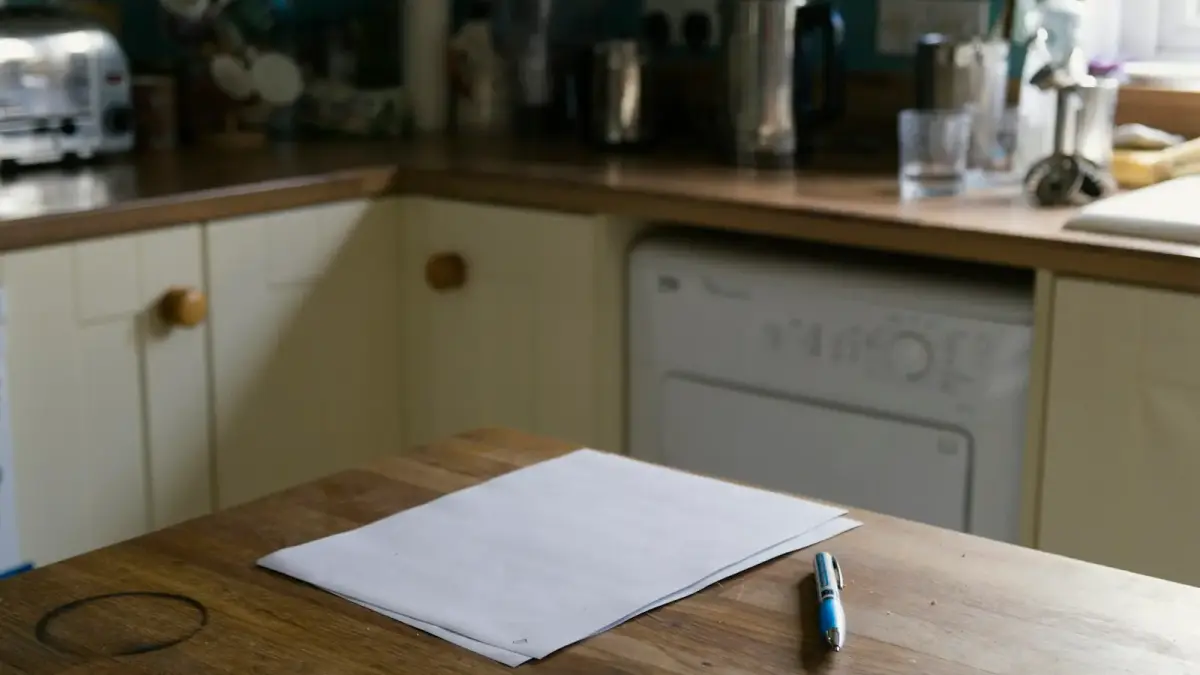
I sat on the floor of that closet and held those letters and something in my chest cracked open. Not grief, exactly. Something quieter. Something like recognition. Because reading those letters, I could see the person I was becoming. A child sitting at a kitchen table every other Saturday morning, carefully printing an address she had memorized, walking to the mailbox at the end of the driveway, and then doing the hardest thing a ten-year-old can do - waiting.
And I thought: that child is still running things.
The Saturday Morning Ritual
If you had a pen pal, you remember the ritual. The way you’d pull out a fresh sheet of paper - maybe lined, maybe decorated with tiny flowers or stars at the border if you were lucky enough to have the good stationery. The way you’d pause before the first sentence, thinking about what to say to someone who wasn’t standing in front of you. Someone you couldn’t read. Someone whose face you had to hold in memory because there was no other way to see it.
You learned something enormous in that pause.
You learned to translate your inner world into words on purpose. Not because someone asked you a question. Not because a teacher required it. But because you wanted another human being to know what your life felt like from the inside.
A 2015 study published in the Journal of Social and Personal Relationships found that the quality of long-distance friendships often exceeds that of geographically close ones - not despite the distance, but partly because of it. The researchers discovered that people in long-distance friendships engaged in more deliberate self-disclosure and more intentional expressions of care. They couldn’t rely on running into each other. Every interaction was chosen.
That is exactly what a pen pal friendship taught you before you had the vocabulary for it.
The Patience That Became a Superpower
Here is what no one talks about when they talk about pen pals: the waiting.
You’d drop a letter in the mailbox on a Monday. And then Tuesday came. Wednesday. A full week. You’d check the mail every day after school, flipping through bills and catalogs, looking for your name in someone else’s handwriting. Sometimes two weeks passed. Sometimes three. And during that silence, you had to hold the relationship in your mind without any evidence that it was still there.
That is an extraordinary act of faith for a child.
Most children learn relationships through proximity. Your friend is the kid next door, the one in your class, the one at the lunch table. When they’re gone for the summer, the friendship sometimes fades. It’s not anyone’s fault. Children learn that connection lives in shared space and shared time.
But you learned something different. You learned that connection could survive silence. That just because someone wasn’t writing back yet didn’t mean they had forgotten you. That a relationship could exist in the gap between letters - invisible but real, like a phone line humming with no one talking.
Robin Dunbar, the evolutionary psychologist famous for his research on the limits of human social networks, has written extensively about how friendships decay without maintenance. His work suggests that we lose contact with about half our close social circle every seven years unless we actively invest in those bonds. But the investment doesn’t have to be grand. It has to be consistent. A pen pal child understood this instinctively. You didn’t send your friend a novel. You sent her two pages about your new teacher and the weird thing your dog did and the question you’d been wondering about since her last letter. You just kept reaching.
What You Were Really Learning
On the surface, you were writing letters. Underneath, you were building an entire relational architecture that most people don’t develop until much later in life - if they develop it at all.
You learned that effort is the language of love
Nobody made you write those letters. Your parents might have reminded you, sure. But the actual sitting down, the choosing of words, the folding and sealing and stamping - that was all you. You were learning that relationships don’t maintain themselves. That love is not a feeling you wait to have. It’s a thing you do with your hands.
You learned to hold someone in mind
Psychologists call this “object permanence” in a relational sense - the ability to maintain a felt sense of connection with someone who isn’t physically present. It’s a cornerstone of secure attachment. When you sat down to write to your pen pal, you were practicing the art of holding someone in your heart across time and space. You were learning that people don’t stop existing when you can’t see them.
You learned that silence is not rejection
This might be the most important one. In a world of instant communication, most people experience a gap in contact as a kind of abandonment. If someone doesn’t text back within hours, we spiral. We assume the worst. But you - you spent three weeks waiting for a reply and it never occurred to you to be offended. You understood that people have lives. That a delay was not a message. That patience could be an act of love rather than a failure to demand more.
You learned the courage of going first
Every letter you sent was a small act of vulnerability. You were putting your thoughts and feelings on paper and sending them into a void with no guarantee of a response. No read receipts. No blue check marks. Just an envelope disappearing into a blue mailbox and your quiet hope that it would be received with the same care you used to write it.
A 2019 study in Psychological Science found that people consistently underestimate how much others appreciate being reached out to - especially when the contact is unexpected or comes after a long silence. The researchers called this the “liking gap.” We are afraid to reach out because we assume it will be unwelcome. But pen pal children never learned that fear. They learned the opposite. They learned that reaching out is almost always worth it.
The Adults These Children Become
You probably already know who you are.
You are the friend who sends a long text message when everyone else sends a thumbs up. You are the one who remembers that your college roommate’s mother had surgery last week and texts to ask how she’s doing. You are the person with friendships spanning twenty, thirty, forty years - friendships that survive moves across the country, career changes, marriages, divorces, long stretches of quiet.
You are the one who maintains the relationship when no one is requiring you to.
People sometimes marvel at this. They say things like “I don’t know how you keep up with everyone” or “You’re so good at staying in touch.” And you nod, but you don’t quite know how to explain that it doesn’t feel like a skill. It feels like breathing. It feels like something you’ve always done - sitting at a table, thinking about someone who isn’t here, and deciding to reach for them anyway.
Because that’s what the pen pal years wired into you. Not just the habit of writing, but the belief that distance is not an ending. That a relationship can be real even when it’s quiet. That the people who matter to you deserve more than your convenience - they deserve your intention.
The Grief of Being This Person
I want to be honest about something, because I think you’ll recognize it.
Being the person who keeps showing up is beautiful. It is also, sometimes, lonely.
You know what it feels like to be the one who always initiates. To be the one who writes the long message, who plans the visit, who notices the silence first. You have probably wondered, more than once, whether you matter as much to other people as they matter to you. Whether the effort is ever truly equal.
I won’t pretend it always is. Some of your pen pals stopped writing back. Some of your adult friendships have felt one-sided. And there is a particular kind of heartbreak reserved for people who were trained to believe that love survives distance - because when it doesn’t, it feels like something fundamental has broken.
But here is what I want you to hold onto.
The capacity you built at that kitchen table - the capacity to love someone across silence, across miles, across the slow and uncertain passage of time - that is not a burden. It is one of the most remarkable things a human being can learn. And the fact that you learned it young, before anyone told you it was difficult, before anyone warned you that most people don’t bother - that is not your naivety. That is your depth.
The Mailbox at the End of the Driveway
I called Rebecca last year. It took me thirty minutes to find her through a mutual friend of a mutual friend. When she picked up, I said my name and there was a pause. And then she laughed - this bright, sudden laugh - and said, “Oh my God. I still have your letters.”
We talked for two hours.
She lives in Oregon now. She has three grown children and a garden she’s unreasonably proud of. She remembered the summer at the lake. She remembered my handwriting.
And I thought about that ten-year-old girl walking to the mailbox in the early afternoon, pulling down the little metal door, reaching inside. The thrill of finding an envelope with her name on it. The quiet disappointment of an empty box. The decision, either way, to sit down the next Saturday and write again.
That girl was practicing something she didn’t have a word for yet.
She was practicing the belief that love is not a thing that requires proof to continue existing. That showing up for someone - consistently, quietly, without being asked - is not weakness. It is the strongest thing she knows.
And if you were that child too, then you already understand what I mean.
You don’t need to be reminded to remember people. You don’t need a notification to care. You were built to reach across distance, to hold connection in the space between contact, to love people not because they are near you but because you chose them.
That is not ordinary. That is not something everyone learns.
That is the thing the mailbox taught you, and you have been carrying it your whole life.