There is a particular kind of man who keeps a folding chair in the trunk of his car - not a camping chair, not an expensive one, just a plain fabric chair with aluminum legs that he brings to every outdoor event, every sideline, every parking lot tailgate - because a boy who stood at the edge of every gathering watching adults sit in circles from which no one offered him a seat learned that a man who carries his own chair is a man who never has to ask if there's room for him
The Chair in the Trunk
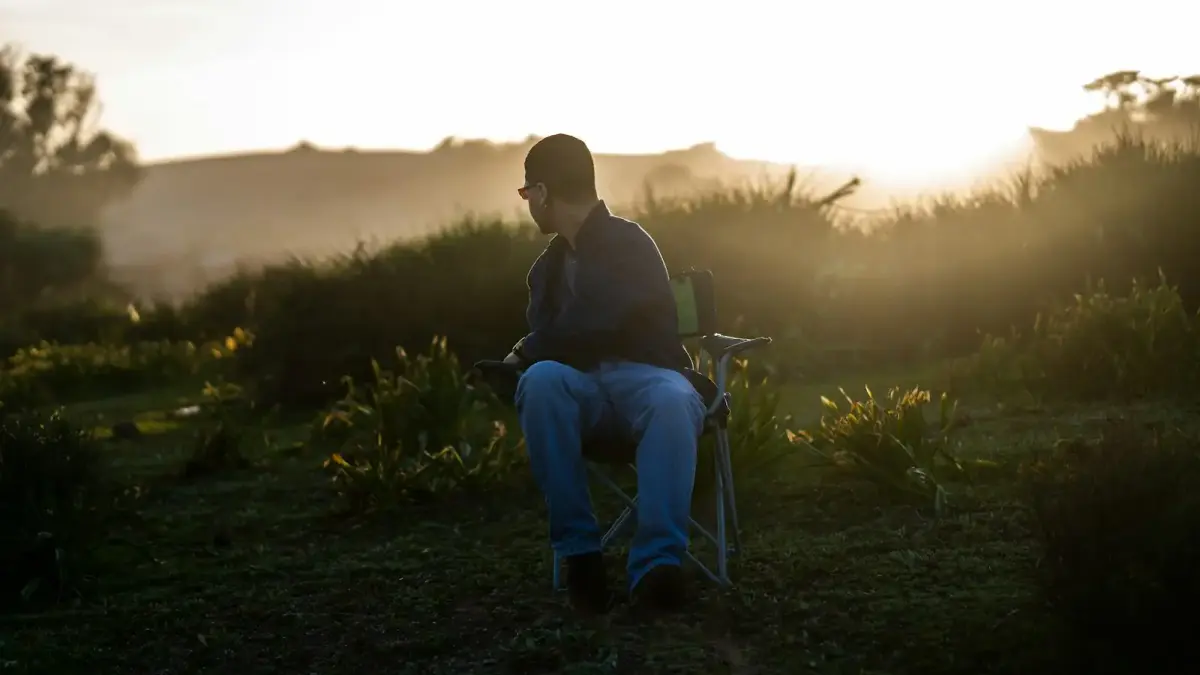
I noticed it for the first time at my daughter’s soccer game three years ago. A man parked his truck at the far end of the lot, opened the tailgate, and pulled out a folding chair - navy blue, nothing special, the kind you can get at any hardware store for twelve dollars. He carried it across the field, set it up slightly apart from the cluster of parents who had gathered near the bench, and sat down without saying a word to anyone.
He did this every Saturday. Same chair. Same quiet walk across the grass. Same slight distance from the group.
I recognized him immediately. Not the man - I’d never spoken to him. I recognized the behavior. I recognized it because I have the same chair in my trunk right now.
There is a language that men speak entirely in logistics. We don’t say “I need to feel like I belong somewhere.” We say “I’ll bring my own chair.” We don’t say “I’m afraid there won’t be space for me.” We say “I like to be prepared.”
And if you’ve ever watched a man unfold a twelve-dollar chair at the edge of a gathering with the quiet precision of someone performing a ritual he has perfected over decades, you’ve watched someone build the first architecture of belonging that nobody else ever thought to build for him.
The Boy at the Edge of the Circle
There is a particular kind of boyhood that teaches you, without anyone ever saying the words, that your presence is conditional.
Maybe it was a large family where the chairs at the table were always counted for the adults first. Maybe it was a neighborhood cookout where the kids were expected to sit on the ground or wander, while the circle of lawn chairs was understood to be an adult territory with no invitation forthcoming. Maybe it was something subtler - a household where you were provided for but never quite anticipated. Where your needs were met if you voiced them, but never predicted.
A 1995 paper by Roy Baumeister and Mark Leary in Psychological Bulletin described what they called the “belongingness hypothesis” - the idea that human beings have a fundamental, pervasive need not just to form social bonds, but to feel that those bonds are stable and that others genuinely care about maintaining them. They argued that this need is as basic as hunger. That it shapes cognition, emotion, and behavior at every stage of life.
What struck me about their research wasn’t the existence of the need. Everyone knows people need to belong. What struck me was the distinction they drew between mere contact and genuine inclusion. You can be physically present in a group and still starving for belonging. You can attend every gathering and never once feel gathered.
That boy at the edge of the circle wasn’t absent. He was there. He just wasn’t assumed.
And there is an enormous distance between being invited somewhere and being included once you arrive. Between someone saying “you can come” and someone saving you a seat.
Portable Belonging
The folding chair is not about the chair.
I need you to understand that. The man at the cookout who shows up with his own seat is not making a statement about outdoor furniture. The man at the beach with a full setup in his trunk - chair, umbrella, cooler, towel - is not simply organized. The man at the tailgate who arrives with everything he could possibly need, who is entirely self-contained, who requires nothing from the group in order to be comfortable within it - that man is solving an emotional problem with physical infrastructure.
He is building portable belonging. A kit he can carry anywhere that guarantees he will never have to stand at the edge of a circle and wonder if someone is going to make room.
A 2011 study published in Psychological Science by researchers at Purdue University found that experiences of social exclusion literally change the way people perceive temperature - excluded participants estimated room temperatures as significantly colder than included participants did. The body registers exclusion as physical exposure. Being left out feels, neurologically, like being left outside.
So of course the man brings his own chair. Of course he brings a jacket he doesn’t need and a cooler with more drinks than he’ll consume and a blanket for a chill that may never come. He is insulating himself. He is making sure that wherever he goes, he carries the conditions for his own comfort, because he learned very early that the environment would not reliably provide them.
This is not pessimism. This is architecture.
The Preparedness That Nobody Questions
Here is what makes this particular pattern invisible: our culture celebrates it.
A man who is always prepared is admired. A man who shows up self-sufficient is respected. “He’s so organized.” “He always has everything.” “You can always count on him to bring what’s needed.” These are compliments. And the man accepts them and smiles and says nothing about why.
Because the alternative is saying something that most men have no language for: I bring everything because I learned that if I don’t provide it for myself, I may not receive it at all.
It’s the same impulse that drives certain men to arrive everywhere early, to always have a plan, to carry a pocket knife and a phone charger and cash even though nobody uses cash anymore. The preparedness is not about the objects. It’s about the promise the objects represent - that he will never be caught needing something from a group that might not think to offer it.
Researcher Julianne Holt-Lunstad, whose work on social connection has been published in journals like PLOS Medicine, has shown that chronic feelings of social disconnection carry health risks comparable to smoking fifteen cigarettes a day. But what interests me is not the extreme cases - the deeply isolated, the visibly lonely. What interests me is the man who appears connected and self-sufficient and present at every event, who is in fact performing an elaborate workaround for the feeling that he was never quite expected.
That man is not lonely in any way you’d notice. He has friends, a family, a Saturday routine. He’s at the soccer game. He’s at the Fourth of July barbecue. He’s at the school fundraiser.
He just brought his own chair.
What He Built for Himself
I want to be careful here, because I am not describing a wound that needs healing. I’m describing an adaptation that works.
The man who carries his own chair has solved the problem. He belongs everywhere he goes, because he brings the infrastructure of belonging with him. He doesn’t wait to be offered a seat because he has one. He doesn’t wonder if there’s room because he makes his own room. He doesn’t need the group to anticipate him because he has already anticipated himself.
And there is something beautiful about that, even if the origin story is tender.
Because what he built - this habit of self-provision, this refusal to arrive anywhere unprepared, this quiet insistence on never being caught without what he needs - is a kind of emotional competence that most people never develop. He pays attention to logistics because logistics are the language he uses for care. He packs the trunk carefully because that’s how he holds himself together.
The man who arrives at a gathering with nothing, who drops into whatever chair is open, who borrows a bottle opener and forgets to bring a dish to pass - that man may have grown up feeling fundamentally assumed. Expected. Included without having to earn it.
And the man with the folding chair looks at him and feels something he might not be able to name. Not envy, exactly. Something closer to bewilderment. What must it be like to walk into a space and simply trust that it will accommodate you?
The Seat That No One Saved
My father was a folding-chair man. I didn’t understand it until I became one myself.
He had a green plaid chair that lived behind the driver’s seat of his pickup for as long as I can remember. He brought it to Little League games and church picnics and family reunions at my uncle’s property where there were never enough seats on the porch and nobody thought to bring extras.
I asked him about it once, when I was maybe thirteen. “Why do you always bring that chair?”
He shrugged. “I like to have my own spot.”
That was the whole conversation. And it was decades before I realized that “I like to have my own spot” was the most vulnerable thing my father ever said to me. Because what it meant was: I cannot rely on there being a spot for me if I don’t make one.
He grew up the fourth of six kids in a house where being noticed required volume he didn’t have. He was quiet and watchful and somewhere in those years he absorbed a lesson that he would carry for the rest of his life: the world makes room for the people it remembers to make room for, and the rest of us had better bring a chair.
I have a black chair in my trunk now. My daughter has seen me pull it out a hundred times. And someday she might ask me about it, and I’ll probably shrug and say something like what my father said.
But what I’ll mean is: I love you enough to always be seated when you look for me on the sideline.
The Architecture Nobody Else Built
If you are a man who keeps a folding chair in his car, I want you to know something.
You are not over-prepared. You are not rigid. You are not “that guy” who always has to have his own setup. You are a person who learned, in the particular silence of a childhood where your presence was tolerated but not anticipated, that the safest way to belong somewhere is to bring your belonging with you.
And that is not a flaw. That is an engineering solution to an emotional problem that most people don’t even know exists.
The chair in your trunk is not furniture. It’s a promise you made to yourself - maybe before you were old enough to articulate it - that you would never again stand at the edge of a circle and wait for someone to notice that you didn’t have a place to sit.
You built that promise out of aluminum and fabric, and you carry it with you everywhere you go. It weighs almost nothing. It folds up small. It fits in any trunk, behind any seat, in any corner of any closet.
And every time you unfold it and sit down, you are doing something that the boy at the edge of the gathering needed someone to do for him and nobody did.
You are making room for yourself.
That was always enough.