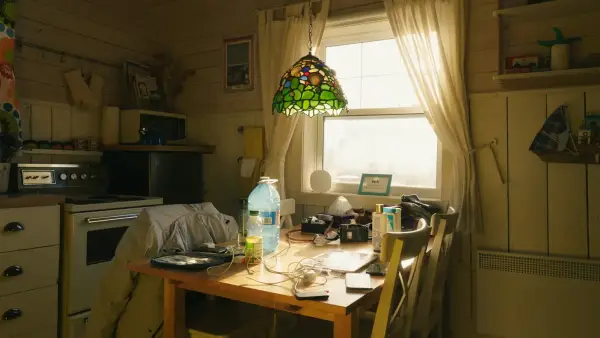
Children who learned to cook by standing on a chair beside the stove and watching - who memorized the sound of oil reaching the right temperature, who knew by smell alone when the onions were done, who absorbed an entire cuisine through proximity rather than instruction - often become adults who trust their senses more than any recipe, because a kitchen where nobody explained anything taught them that the most important knowledge arrives through the body, not the page
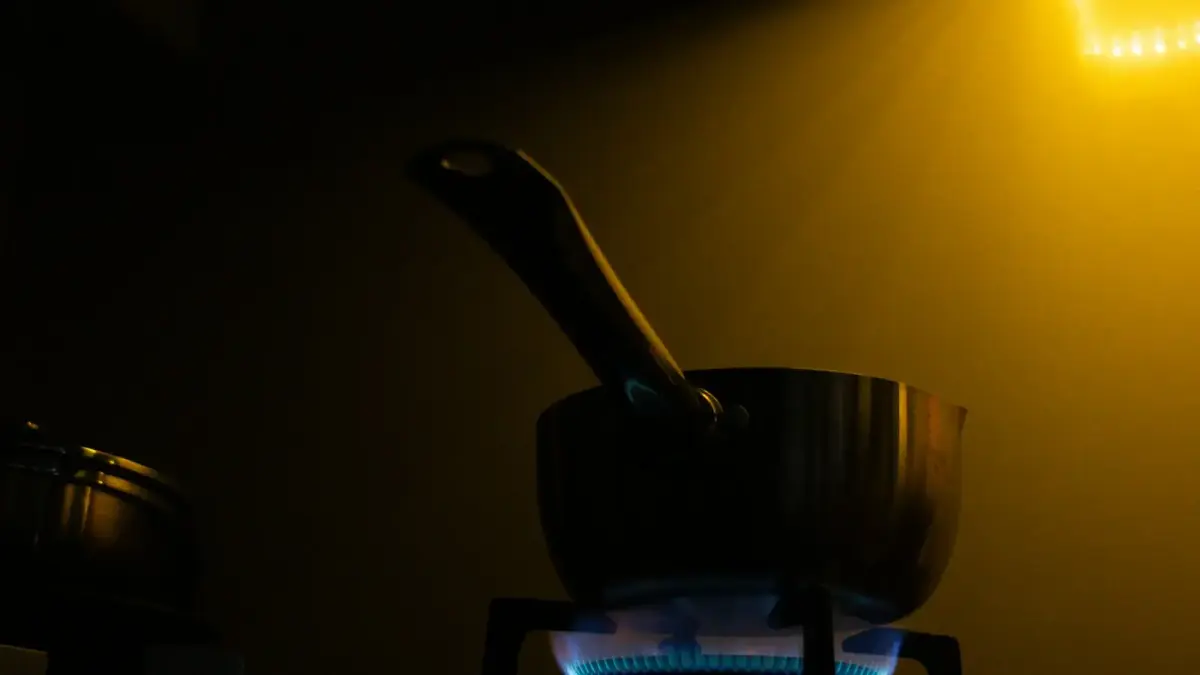
I was maybe five when I decided the kitchen chair wasn’t close enough to what my grandmother was doing. I dragged it across the linoleum, climbed up, and stood at her elbow while she fried scallion pancakes in a cast-iron pan that weighed more than I did.
She didn’t explain anything. She didn’t turn to me and say, “Watch how the edges curl before I flip.” She just cooked - and I just breathed it in.
Nobody handed me a recipe card or quizzed me on measurements. There were no measurements. There was the sound of oil hissing against wet dough. There was the way her wrist flicked when the pan got too hot. There was the steam that told me, without words, that something was about to become food.
I didn’t know it then, but that chair beside the stove was the most important classroom I’d ever stand in. And I wasn’t the only child who learned this way - absorbing an entire cuisine through proximity, through watching, through a kind of attention that nobody asked for and nobody graded.
If you were one of those children, you already know what I’m about to say. You carry knowledge in your body that you could never quite put into words. And that knowledge has shaped you in ways that go far beyond the kitchen.
Here are eight things that tend to be true about adults who learned to cook by watching.
1. You cook without measuring, and you’re almost never wrong
You add salt with your fingers. You pour oil until it “looks right.” You have never once leveled off a cup of flour, and the idea of doing so feels almost offensive - like someone asking you to spell out a word you’ve known since before you could read.
This isn’t carelessness. A 2021 study published in Frontiers in Psychology found that procedural knowledge - skills acquired through repeated physical practice rather than verbal instruction - becomes deeply embedded in implicit memory systems. Your body learned the ratios before your conscious mind had any say in the matter.
When someone asks you, “How much garlic do you use?” you genuinely don’t know what to tell them. You use the right amount. You’ve always used the right amount. Your hands decided that years ago.
2. You trust smell over timers
The timer on your phone is decoration. You know the bread is done because the kitchen smells a certain way. You know the garlic is about to burn because something in the air shifted - not dramatically, just enough.
You learned this because the person you watched never set a timer either. They stirred by instinct. They pulled things from the oven based on color and scent and some internal clock that had nothing to do with minutes.
What you actually learned was a form of sensory calibration that most formal cooking education tries to teach and rarely succeeds at. You absorbed it the way children absorb language - not through rules, but through total immersion.
3. You find meditation in chopping
There’s a particular state you enter when you’re cutting vegetables. The rhythm of the knife, the sound of the blade against the board, the way your hand curls around a pepper and guides it into uniform pieces. You don’t think about anything while you’re doing this. You don’t need to.
Developmental psychologist Lev Vygotsky described something he called the “zone of proximal development” - the space where a child learns by being close to someone more skilled, absorbing competence through shared activity rather than direct teaching. Your knife skills didn’t come from a YouTube tutorial. They came from standing beside someone and watching their hands move until your hands knew what to do.
This is why chopping calms you. It’s not just repetitive motion. It’s a return to that original state of absorbed attention - the focused quiet of a child watching someone they love do something with practiced ease.
4. You feed people as a love language, and you may not fully realize you’re doing it
When someone you care about is hurting, your first instinct is to cook for them. Not to ask what they need. Not to suggest therapy. To feed them.
You learned this before you had words for it. The person who stood at that stove wasn’t just making dinner. They were holding a family together. They were converting hours and effort into something that said, without a single spoken syllable, “You are worth this.”
A 2019 study in the Journal of Research in Personality found that what researchers call “food-related caregiving” - cooking for others as an expression of attachment - is strongly linked to early household food rituals. You didn’t learn a recipe. You learned an entire emotional vocabulary, and the dialect is garlic and oil and something simmering on the back burner.
You might not even connect the two. But every time you show up at a friend’s door with a container of soup, you are doing exactly what someone once did for you - speaking love in the only language that doesn’t require anyone to be vulnerable enough to say it out loud.
5. You remember recipes as stories, not instructions
Ask you to write down your grandmother’s braised pork, and you’ll struggle. Not because you’ve forgotten it, but because the recipe isn’t a list. It’s a narrative.
It starts with a Tuesday. It starts with the way the kitchen light hit the counter in late afternoon. It starts with the sound of the cleaver against the cutting board and the particular way she pushed her glasses up her nose before she started.
The dish is inseparable from the person who made it, the season they made it in, the conversation happening at the table while it cooked. You don’t remember ingredients - you remember scenes.
This is actually how human memory prefers to work. Cognitive psychologist Endel Tulving’s research on episodic memory showed that we store experiences as rich, contextual narratives rather than isolated facts. Your recipe memory isn’t flawed. It’s functioning exactly as designed. The problem is that recipe cards don’t have a field for “the way the rain sounded on the kitchen window.”
6. You feel most at home in kitchens - even other people’s kitchens
There’s a specific kind of comfort you feel the moment you step into a working kitchen. Not a showroom kitchen - a real one. One with oil stains on the backsplash and a wooden spoon that’s been used so often it’s curved to fit someone’s hand.
You gravitate toward kitchens at parties. You end up leaning against the counter while everyone else is in the living room. You feel more yourself in a kitchen than in almost any other room, and you can’t entirely explain why.
The explanation is simpler than you think. The kitchen was where you first learned to pay attention. It was where you first felt included in adult activity without being asked to perform. Nobody tested you. Nobody corrected you. You just stood on that chair and watched, and that was enough.
Psychologist Gabor Mate has written extensively about how children form their deepest sense of belonging not through grand gestures but through quiet proximity - through being allowed to exist in the same space as a caregiver who is focused and calm. That kitchen was your first experience of belonging without conditions.
7. You absorb skills through observation rather than formal teaching
This goes beyond cooking. You’ve noticed it your whole life - you learn by watching. You pick up a new skill not by reading the manual but by standing beside someone who already knows how to do it.
In meetings, you read body language before you process words. When someone shows you a task at work, you need to see it done once, maybe twice, and then your hands know. You have always been better at watching than at being told.
This is not a quirk. It’s a learning style that was shaped in the most formative years of your development. You were trained - without anyone intending to train you - in observational learning. Albert Bandura’s social learning theory describes exactly this: the process by which children acquire complex behaviors simply by watching a model perform them.
You might have spent years thinking you were a poor student because classrooms didn’t work for you. But you were never a poor student. You were a brilliant student in the wrong classroom. The right classroom had a stove and a cutting board and someone who never once told you to pay attention, because you already were.
8. You carry an entire generation’s knowledge in muscle memory
This is the one that catches people off guard. You don’t just know how to make a particular dish. You know how your grandmother made it. You know her version - the one with slightly too much ginger, the one where the vegetables were always cut a little larger than they needed to be, the one that tasted different from anyone else’s version of the same thing.
And when you make it now, decades later, in a different kitchen, in a different city, maybe on a different continent - your hands do what her hands did.
You are a living archive. The way you fold dumplings, the way you knead dough, the way you crack an egg with one hand - these are not your inventions. They are inherited gestures, passed down not through language or written record but through the body.
A 2020 study published in Psychological Science examined what researchers called “embodied cultural transmission” - the way physical practices carry cultural knowledge across generations without explicit teaching. Your kitchen skills are not just skills. They are a form of memory that belongs to someone who may no longer be alive.
And when you stand at a stove and your hands move in a way that surprises you - a gesture you didn’t plan, a technique you never consciously learned - that is her. That is him. That is everyone who ever stood at a stove while a small child watched from a chair and absorbed everything without being asked to.
I still make my grandmother’s scallion pancakes. I’ve never looked up a recipe. I couldn’t tell you the proportions if you asked.
But I can tell you the exact moment the oil is ready by the sound it makes. I can tell you when the dough needs more water by how it feels between my fingers. I can tell you when to flip because something in the air shifts - a change so subtle that I couldn’t describe it, but my body recognizes it every single time.
Nobody taught me any of this. I stood on a chair and I watched, and the knowledge moved from her hands into mine without either of us noticing it happen.
If you carry this kind of knowledge - if your body remembers things your mind never formally learned - I want you to know something. That is not a small thing. That is an inheritance more valuable than anything that could have been written down.
You are the living record of someone’s hands. And every time you cook without a recipe, every time you trust your nose over a timer, every time you show up at someone’s door with food because you didn’t know what else to do - you are keeping that person alive in the most tender, practical, unshakable way there is.
That chair beside the stove was the beginning of everything you know about paying attention, about love, about trust.
You just didn’t know it had a name.