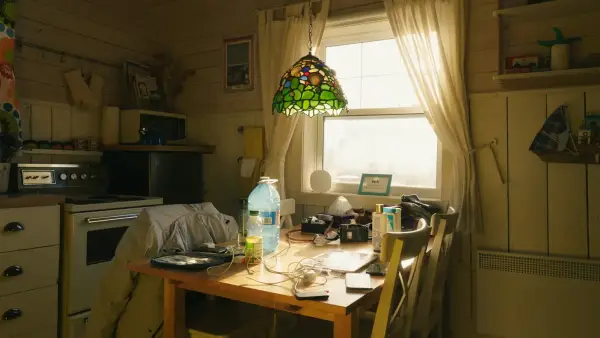
Children who learned to tell time by the quality of light in the house - who knew that the angle of sun through the kitchen window at four o'clock meant the afternoon was still theirs but the shift to amber at five thirty meant someone was about to come home and the evening was about to begin - become adults who feel a quiet unnamed anxiety every day at dusk, not because they fear the dark but because the girl who tracked the sun across the linoleum never stopped reading the light for what it promised about the next three hours
I used to think I just loved golden hour.
For years, I told myself the reason I noticed the light shifting in every room I entered was because I was observant. Artistic, maybe. The kind of person who paid attention to beautiful things. I would sit in my apartment at five in the afternoon and watch the sun move from the wall above the couch to the edge of the bookshelf, and I’d feel something tighten in my chest - something I couldn’t name.
It wasn’t until my thirties that I understood what I was actually doing. I wasn’t admiring the light. I was reading it. Measuring it. Calculating what came next based on the angle of the sun on the floor.
I was doing the same thing I did at seven years old, standing in the kitchen of the house I grew up in, watching the rectangle of light on the linoleum shrink toward the cabinets. Because when that light turned amber, the front door was about twenty minutes from opening. And when the front door opened, the house changed.
If you recognize this - if you’ve ever felt your body tighten at dusk without knowing why - this is for you.
The clock that wasn’t a clock
Some children learned to tell time the way most children do. They looked at the numbers on the microwave. They asked a parent. They waited for a show to come on TV and knew roughly where they stood in the day.
But some children built a different system entirely.
These children learned to tell time by how the light moved through the house. The bright, high-angled sun of early afternoon meant safety. Hours stretched ahead. No one was coming home yet. The kitchen was warm and still and belonged to them.
Then the light would shift. It would go from white-yellow to something deeper. The shadows on the hallway wall would lengthen. The rectangle of sun on the floor would slide toward the wall and begin to climb it.
This was the signal. Not a conscious thought - a full-body knowing. The afternoon was ending. Someone was coming home. And depending on who that someone was and what kind of mood walked through the door with them, the next three hours could be calm or they could be something else entirely.
The child didn’t choose to track the light. Their nervous system did it for them, because the nervous system’s only job is to predict what’s coming next and prepare the body accordingly.
When light becomes information
Developmental psychologists have long understood that children in unpredictable home environments develop heightened sensory awareness. A 2011 study published in the journal Development and Psychopathology found that children exposed to emotional volatility at home showed significantly faster processing of environmental cues - sounds, facial expressions, shifts in atmosphere - compared to children from stable households.
The researchers called this “perceptual vigilance.” The children weren’t more anxious by temperament. They had simply learned, through repetition, that the environment contained information their safety depended on.
Light was one of those information channels.
The child who tracked the sun across the kitchen floor wasn’t being poetic. They were running a prediction model. If it’s still bright, I have time. If it’s turning gold, the window is closing. If the room is getting dim and no lamps are on yet, someone is about to walk in and the next chapter of the day is starting - and I don’t know yet which version of it I’ll get.
This is hypervigilance. But it doesn’t look like hypervigilance. It looks like a quiet kid watching the light change in the kitchen. It looks like sensitivity. It looks, from the outside, like a child who might grow up to be an artist.
And sometimes they do grow up to be artists. But the origin of the noticing wasn’t beauty. It was survival.
The body that never stopped tracking
Here’s what happens to that child when they grow up.
They’re forty-three. They live alone, or with a partner who is kind and predictable. The house is safe. No one is coming home to change the atmosphere. There is no reason, logistically or emotionally, for five-thirty to feel different from four o’clock.
But it does.
Every single day, somewhere around the time the afternoon light begins to deepen, something shifts in their chest. It’s not panic. It’s not even recognizable anxiety. It’s more like a thickening. A feeling of the day closing in. A sense that the good part is over and they need to brace for what comes next.
They might pour a glass of wine. They might turn on every light in the house. They might suddenly feel restless, or suddenly need to clean, or suddenly feel a wave of sadness they can’t attach to anything happening in their actual life.
They call it “the evening thing.” They joke about not being a night person. They tell friends they just prefer mornings.
What they don’t realize is that their nervous system is still running a program it wrote at age six. The light is changing. Someone is coming. Get ready.
A 2018 study in Psychological Science demonstrated that sensory associations formed during childhood stress become deeply embedded in implicit memory - the kind of memory that operates below conscious awareness. The body responds to the sensory cue (the quality of light, a particular sound, a temperature shift) before the conscious mind has any idea why.
The adult isn’t choosing to feel anxious at dusk. Their body is responding to a cue that once meant something real and dangerous. The signal outlived the danger by decades.
The rooms you read without knowing it
It goes beyond dusk.
Adults who grew up reading the light often become adults who read every room they enter. They notice which direction the windows face. They register the quality of the light - fluorescent versus natural, warm versus cool - within seconds of walking in.
They choose seats near windows. They feel uncomfortable in rooms without natural light, not because of a preference for aesthetics but because a windowless room is a room where you can’t track what time it is by feel. You’ve lost your early warning system.
They notice when clouds pass over the sun. They notice the exact moment a room shifts from afternoon to evening. They can feel - without looking at a clock - that it’s getting to be that time, whatever “that time” means to their particular nervous system.
Some of them become photographers. Some become architects. Some become the person at the dinner party who says, “The light in here is really beautiful right now,” and everyone nods and moves on, not realizing that what they just witnessed was a surveillance system offering a status report.
Dr. Bessel van der Kolk’s research on how trauma is stored in the body describes this phenomenon precisely. The body keeps score, he writes. But it keeps score in the language of sensation - not thought. The adult who tracks light in every room isn’t thinking about their childhood. Their body is thinking about it for them, in the only language it knows.
The golden hour that isn’t golden
There’s a particular cruelty in this pattern, and it’s worth naming.
Golden hour - that stretch of warm, amber light before sunset that photographers and filmmakers love - is widely considered one of the most beautiful times of day. Social media is saturated with it. People plan picnics around it. It’s supposed to feel magical.
But for some people, golden hour feels like a countdown.
The warmth in the light isn’t comforting. It’s urgent. It means the day is ending and the safe part is almost over. The beauty everyone else sees is, for them, layered with a meaning they can’t fully access - a meaning that lives in their body rather than their mind.
This is one of the loneliest parts of carrying a sensory memory from childhood. You look like everyone else. You’re standing in the same light. But you’re having a completely different experience, and you may not even know why.
You just know that something about five-thirty makes you want to go inside and lock the door.
What the light was actually measuring
Here’s what I want you to understand, if any of this sounds familiar.
You weren’t being dramatic. You weren’t being overly sensitive. You were a child whose nervous system did exactly what nervous systems are designed to do - it learned the patterns of your environment and built a prediction system to keep you as safe as possible.
The fact that you tracked the light means your brain was working beautifully. Efficiently. It found a reliable environmental cue and used it to prepare you for what came next. That’s not a flaw. That’s intelligence - the deepest, oldest kind of intelligence a body can have.
The problem isn’t that you learned to read the light. The problem is that the light was carrying information no child should have needed to decode. The light should have just been light. Afternoon shifting to evening. The sun doing what the sun does.
Instead, it became a signal. And your body, doing its faithful, tireless job, is still listening for it.
Letting the light just be light
Healing from this doesn’t look like forcing yourself to enjoy sunsets. It doesn’t look like affirmations or exposure therapy or sitting in golden hour until you feel fine about it.
It looks like noticing. That’s all.
The next time you feel that shift - that unnamed tightening at dusk, that urge to turn on the lights before you need to, that quiet dread as the afternoon deepens - just notice it. Name what’s happening.
My body is reading the light again. It’s doing the thing it learned to do when I was small. This is old information. I’m safe now.
You don’t have to fix it. You don’t have to make the feeling go away. Research on mindfulness and interoception - our awareness of internal body states - published in Frontiers in Psychology suggests that simply naming a sensory-emotional response reduces its intensity. The act of noticing interrupts the automatic loop. It puts a small gap between the signal and the response.
You spent your childhood reading the light because you had to. You can spend your adulthood learning that the light doesn’t mean what it used to.
The afternoon can turn to evening now. No one difficult is coming through the door. The amber light on the kitchen wall is just the sun doing its slow, ancient work.
And the part of you that still watches it - that part isn’t broken. She was just paying very, very close attention. And she kept you safe during a time when no one else was doing that job.
She deserves to rest now. The light can just be beautiful.