Children who grew up in homes where nobody ever raised their voice often become the most conflict-avoidant adults - not because they learned peace, but because they never once saw two people disagree and still love each other afterward, so every argument feels like it might be the last conversation they ever have
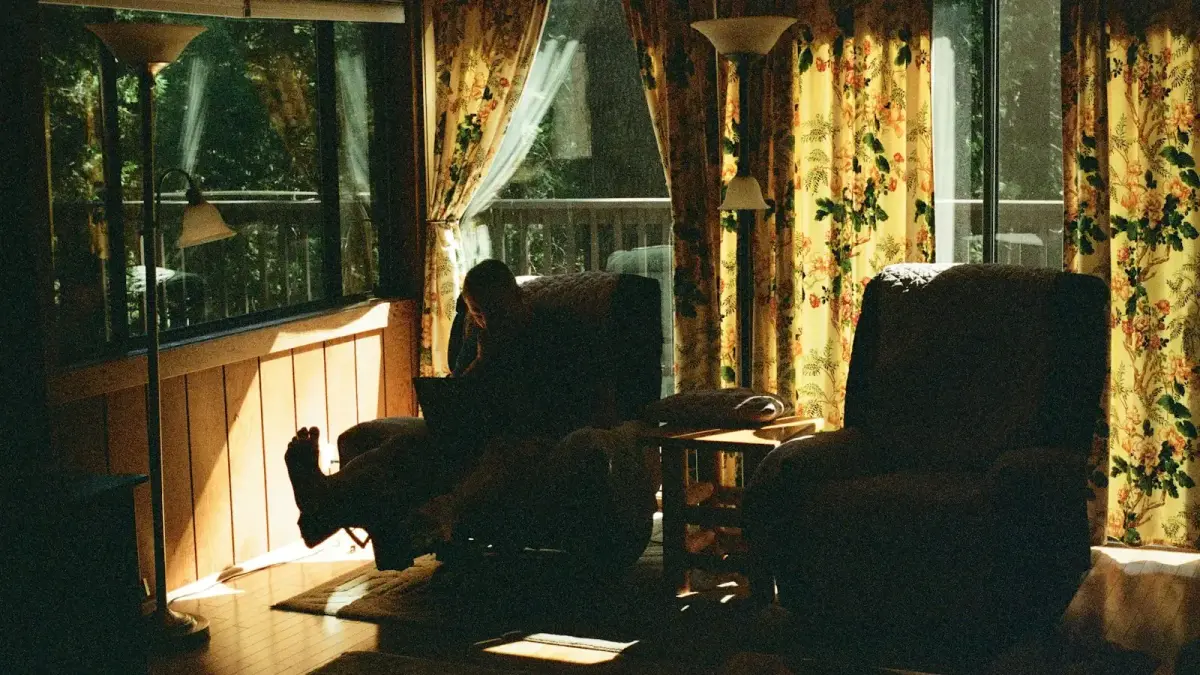
Last Tuesday, I spent forty-five minutes composing a text to my friend. Not a breakup text. Not a confrontation. Just a simple message saying that the restaurant she’d picked for dinner didn’t work for me and could we try somewhere else.
Forty-five minutes. For one sentence.
I sat on my couch rewriting it, softening it, adding exclamation points and smiley qualifiers until the message barely resembled what I actually wanted to say. And somewhere around minute thirty, I realized I wasn’t afraid of the restaurant conversation. I was afraid of what I’d learned before I had language for it - that saying “actually, I’d prefer something different” was the same as saying “I don’t love you anymore.”
I grew up in a home where nothing was ever wrong. And I mean that literally. Nothing was ever, visibly, wrong.
The quietest homes leave the loudest gaps
My parents loved each other. I believe that completely. They loved me. The house was warm, the meals were shared, the evenings were calm.
But I never once heard them disagree.
Not about money. Not about parenting. Not about whose turn it was to handle something difficult. If tension existed - and of course it did, because they were two humans sharing a life - it happened behind closed doors, after bedtime, or not at all. The version of their relationship I witnessed was one where conflict simply didn’t exist.
And I thought that was beautiful. For decades, I thought I’d been given a gift.
What I’d actually been given was an absence. A missing education. Because a child who never sees two people argue and repair doesn’t learn that conflict is safe. They learn that conflict is so dangerous it must be hidden entirely.
Dr. John Gottman’s research at the University of Washington has shown that children who witness healthy conflict resolution - what he calls “repair attempts” - develop stronger emotional regulation and relationship skills than children who witness either volatile conflict or no conflict at all. The key word there is “witness.” Children need to see the full cycle: rupture, repair, reconnection.
I saw none of it. So I filled in the blanks myself.
When silence becomes the only language for anger
Here’s what happens when anger is never modeled in your home: you don’t learn that anger doesn’t exist. Children are perceptive. They feel the temperature shift when Dad comes home stressed. They notice Mom’s jaw tighten at the dinner table. They register the silence that falls after a phone call.
What they learn is that anger is unspeakable. That it’s so terrible, so destructive, so relationship-ending that the only responsible thing to do is bury it completely.
A 2019 study published in the Journal of Research in Personality found that adults who reported growing up in homes with very low expressed conflict were significantly more likely to catastrophize disagreements in their own relationships. They didn’t just avoid conflict - they genuinely believed that any expression of anger or dissatisfaction would result in abandonment or relationship dissolution.
This isn’t dramatic. This is logical. If you never saw the evidence that people can fight and stay, your brain has no template for it. Every disagreement is uncharted territory. And uncharted territory, to a nervous system, means danger.
I didn’t learn that anger was one emotion among many. I learned that anger was the emotion that ended things.
The myth of the peaceful childhood
People are often confused when I describe this pattern. “But that sounds like a good home,” they say. “At least nobody was screaming.”
And they’re right. It was a good home. That’s what makes this so difficult to name. There was no abuse. No volatility. No walking on eggshells around a rageful parent. The silence in my childhood home wasn’t the silence of fear - it was the silence of avoidance dressed up as civility.
But Gabor Mate has written extensively about how emotional absence creates its own kind of wound - not through what happens to a child, but through what doesn’t happen. The things we needed to witness but never did. The emotional education that was never delivered.
My parents weren’t trying to harm me. They were likely doing exactly what their parents did, or they were overcorrecting for homes where conflict was genuinely dangerous. They chose peace. But the peace they chose was a performance, and I internalized the script without ever seeing the rehearsal.
The result: I became an adult who could handle almost anything except someone being upset with me.
What conflict avoidance actually looks like from the inside
People assume conflict avoidance means you’re passive. Quiet. A pushover.
Sometimes it looks like that. But more often, it looks like this: over-functioning to prevent anyone from ever having a reason to be upset. Scanning rooms for emotional temperature. Apologizing before anyone has expressed displeasure. Rewriting text messages for forty-five minutes.
It looks like saying yes when you mean no, then resenting the person for asking. It looks like letting small frustrations accumulate until they become a wall so thick you can’t climb over it to reach the person on the other side. It looks like ending relationships not with a fight, but with a slow fade - because you never learned how to say “this isn’t working for me” and stay in the room afterward.
A 2021 study in Frontiers in Psychology found that conflict-avoidant individuals reported higher rates of relationship dissatisfaction - not because they experienced more conflict, but because they experienced more suppression. The problems didn’t go away. They just went underground.
I’ve lost friendships not because of arguments, but because of the arguments I refused to have. The conversations that needed to happen but felt, in my body, like they would destroy everything.
The body remembers what the mind rationalizes
Here’s what I’ve come to understand about my nervous system: it wasn’t taught that conflict is unpleasant. It was taught that conflict is existential.
When my partner says “we need to talk,” my heart rate doesn’t just elevate. It spikes. My hands go cold. My mind begins scripting exit strategies - not because I think he’s going to leave, but because my body has no stored memory of what happens after someone expresses displeasure and the relationship survives.
Intellectually, I know people fight and stay together. I’ve read the research. I’ve watched other couples navigate disagreements. But the knowing that matters isn’t intellectual - it’s somatic. It’s experiential. And my body’s experience says: when things go quiet, that’s love. When things get loud, that’s the end.
This is why rational arguments don’t fix conflict avoidance. You can’t think your way out of a pattern that was installed before you could think.
Learning the language you were never taught
Recovery from this isn’t about forcing yourself into arguments. It isn’t about suddenly becoming someone who “speaks their mind” without filter. That’s just swinging to the other extreme of a pendulum you didn’t choose.
What’s helped me is smaller than that. More boring. More repetitive.
It’s saying “actually, I’d prefer the other restaurant” and then sitting with the discomfort of having stated a preference. It’s telling my partner “I felt hurt by that” and not immediately apologizing for having feelings. It’s letting a moment of tension exist in a room without rushing to dissolve it.
Gottman’s research suggests that what matters in relationships isn’t the absence of conflict but the presence of repair. People who stay together long-term aren’t people who never fight - they’re people who know how to come back to each other afterward. They have a template for “we disagreed and we’re still here.”
I’m building that template now, in my forties, one uncomfortable conversation at a time.
You weren’t given peace - you were given silence
If you recognize yourself in any of this - if you grew up in a home that looked calm from the outside but left you somehow terrified of anyone being upset - I want you to know something.
You are not weak for finding conflict difficult. You are not broken for wanting to flee every hard conversation. You are someone who was never shown the full picture of what love looks like - the messy parts, the raised voices that settle back down, the moment after the argument where someone reaches for your hand.
You learned the quiet version of love. And now you’re teaching yourself the rest of it.
That takes a kind of courage your childhood home never required of you. And the fact that you’re learning it now - that you’re sitting in the discomfort instead of running - means you’ve already gone further than the template you were given.
The restaurant text, by the way, took forty-five minutes to send. My friend replied in three seconds: “Oh totally, where do you want to go instead?”
Nothing ended. Nothing broke. The world kept turning.
It keeps surprising me, every single time.