Children who noticed when adults spelled words instead of saying them - who understood by age six that the letters their parents traded across the kitchen table were not a game but a gate - often become adults who cannot hear a conversation carefully avoiding a subject without hearing the subject itself, because a child who taught herself to decode what the room was hiding never received the moment when the room said it was safe to stop listening
The Letters That Were Never Meant for You
I was five the first time I decoded it.
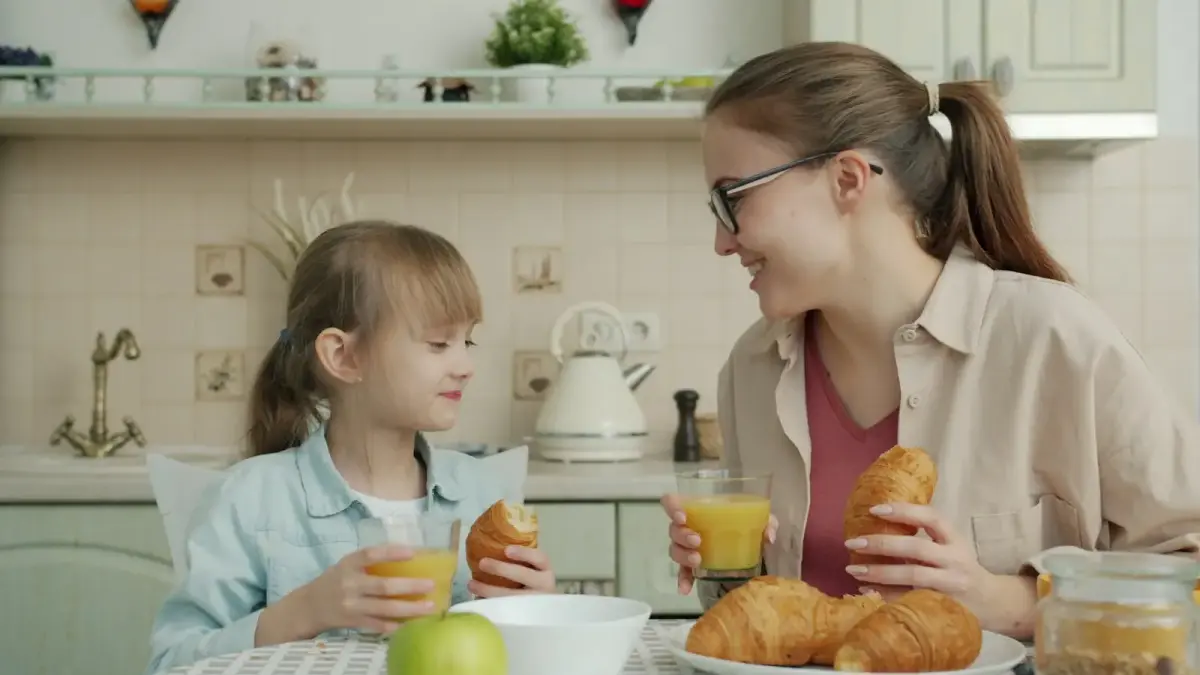
My parents were sitting across from each other at the kitchen table, coffee between them, morning light catching the steam. My father looked at my mother and said, slowly, carefully, “Do you think we should talk to the D-O-C-T-O-R about it?” And my mother glanced at me - just a flicker of her eyes - before spelling back, “Not until after the A-P-P-O-I-N-T-M-E-N-T.”
I didn’t say anything. I sat with my cereal and let the letters rearrange themselves in my head like a lock clicking open.
Doctor. Appointment.
I wasn’t supposed to know. That was the whole point of the spelling - to keep the conversation happening above me, over my head, in a frequency I wasn’t supposed to be able to receive. But I could. And from that morning forward, I understood something I couldn’t have put into words at the time: the things that mattered most in my family were the things that had to be hidden from me.
That realization changed the way I listened to everything.
If you grew up in a household where the adults spelled the important words, where you learned to mentally unscramble letters before anyone thought you could read, then you already know what I’m about to describe. You know the feeling of cracking a code you were never supposed to crack - and the lifelong consequence of becoming someone who can’t stop decoding.
The Kitchen Table Cipher
Every family has its own version of this. Maybe your parents spelled. Maybe they switched to another language mid-sentence, dropping into Spanish or Polish when the conversation turned serious. Maybe they simply went quiet, their voices dropping to a murmur behind a closed bedroom door, the muffled rhythm of their words telling you more than silence ever could.
The mechanism doesn’t matter. What matters is the message underneath it: there are things happening in this family that you are not allowed to know about.
For most children, this is invisible. They hear the strange string of letters, shrug, and go back to their cartoons. But for some children - the ones reading this right now - those spelled-out words became a puzzle that demanded solving. Not because you were nosy. Because you were paying attention in the way that only a child in an emotionally complicated household pays attention.
You learned the alphabet not from picture books but from urgency. The first words you decoded weren’t “cat” or “dog.” They were words like M-O-N-E-Y. D-I-V-O-R-C-E. C-A-N-C-E-R. Words with weight. Words the adults thought you were too small to carry.
A 2019 study published in the Journal of Child Psychology and Psychiatry found that children in households with high emotional tension develop what researchers call “precocious social monitoring” - an accelerated ability to read adult emotional states, often years ahead of their peers. These children aren’t more intelligent in the traditional sense. They’re more alert. Their nervous systems learned early that information is safety, and that the most important information is always the information being withheld.
You were one of those children. And the kitchen table was your classroom.
Cracking the Code Before Anyone Expected You To
Here’s the part no one talks about: the moment you solved the puzzle, you couldn’t tell anyone.
Think about that. You’re five, maybe six. You’ve just figured out that D-O-C-T-O-R means doctor, that the hushed conversation your parents are having is about something medical, something frightening. And you can’t say, “I know what you’re talking about.” Because the moment you reveal that you’ve cracked the code, two things happen. First, they stop spelling - and find a new way to hide. Second, and more importantly, they realize you’ve been listening the whole time.
So you stayed quiet. You kept the knowledge inside you like a stone in your pocket, heavy and private. You became a child who knew things she wasn’t supposed to know, and who understood - instinctively, wordlessly - that knowing was something she had to do alone.
This is the part that shapes you. Not the decoding itself, but the secrecy of the decoding. The aloneness of understanding. You learned that comprehension is something you carry silently, that the people around you don’t want to know how much you understand, and that the safest thing to do with insight is to hold it without letting anyone see you holding it.
Dr. Gabor Mate has written extensively about how children in stressful environments develop what he calls “an antenna for the unsaid.” These children become exquisitely tuned to emotional undercurrents - not because anyone taught them to, but because their survival depended on reading the room more accurately than the room wanted to be read.
You didn’t just learn to spell early. You learned to listen in a way that most people never learn at all.
The Adult Who Hears the Conversation Behind the Conversation
Fast forward thirty years.
You’re sitting in a meeting at work. Your manager is talking about “restructuring” and “new opportunities” and “exciting changes.” Everyone else is nodding. You’re the only one in the room whose stomach just dropped, because you heard it - the thing that wasn’t said. Someone is about to be let go. The words your manager chose, the ones she carefully avoided, the slight shift in her posture when she mentioned the department by name - you read all of it the way you once read the letters your parents traded across the breakfast table.
You’re at dinner with a friend who says she’s “fine, just busy.” You hear the word “fine” land with a hollowness that makes your chest tighten. You know she’s not fine. You know it the way you knew D-I-V-O-R-C-E wasn’t a spelling game. You know it in your body before your mind catches up.
Your partner says, “We should talk later,” and you’ve already mapped every possible meaning of “later” - the weight of it, the deflection in it, the door it opens to a conversation they’re not ready to have yet. You’ve already decoded the sentence they haven’t spoken.
This is what you became. Not paranoid. Not anxious. Not overthinking.
You became someone whose listening has depth perception. You hear what’s being said, and simultaneously, you hear the shape of what’s being left out. You register the gap between the words someone chooses and the words they almost chose. You notice when a subject enters a room and everyone unconsciously agrees not to mention it.
A 2021 study in Psychological Science demonstrated that adults who experienced childhood environments with high levels of “information asymmetry” - where important truths were concealed from them - scored significantly higher on measures of social perception and emotional inference. They were remarkably accurate at detecting deception, identifying concealed emotions, and predicting interpersonal outcomes. The researchers noted that this skill came with a cost: these same adults reported higher levels of cognitive fatigue and difficulty “turning off” their monitoring.
That tracks, doesn’t it? You’re brilliant at reading rooms. You’re exhausted by it.
The Decryption System That Never Got Permission to Shut Down
Here’s what I want you to understand about yourself.
What you do - this constant, involuntary reading of subtext - is not a personality flaw. It’s not anxiety wearing a clever disguise. It’s a system. A system built by a very young child who needed to understand what was happening in her world, and who discovered that the adults around her were encoding the most critical information in a format they assumed she couldn’t access.
You built a decryption engine when you were five years old. And it worked. It worked beautifully. It kept you informed when the adults wanted you uninformed. It gave you a map of the emotional landscape when everyone else was pretending the landscape was flat.
The problem is that no one ever told you the war was over.
No one sat you down and said, “You can stop listening for the hidden thing now. You can take a conversation at face value. You can let ‘fine’ mean fine.” No one gave you permission to power down the system, because no one knew the system existed. You built it in secret, you operated it in secret, and now, decades later, it runs in the background of every interaction like software you can’t uninstall.
Susan Cain, in her work on the inner lives of quiet, perceptive people, has described how early pattern recognition in childhood often becomes a permanent feature of adult cognition. The child who learned to read emotional weather doesn’t grow out of it. She grows into it. The skill deepens, sharpens, becomes more sophisticated - but it never becomes optional.
You’re not reading too much into things. You’re reading exactly as much as you always have. The difference is that now, most of the rooms you walk into aren’t actually hiding anything.
Most of them. Not all.
The Gift That Won’t Stop Giving
There’s a particular loneliness in being the person who always hears the unspoken thing.
You notice when your sister calls and doesn’t mention her husband. You notice when your coworker laughs just slightly too hard at a joke that wasn’t that funny. You notice when a group text suddenly goes quiet after someone’s name comes up. You notice, and you hold the noticing, and you rarely say anything because you learned as a child that revealing what you know makes people uncomfortable.
People call you intuitive. They say you’re perceptive, empathetic, a good reader of people. And you are all of those things. But what they don’t see is the machinery behind the perception - the five-year-old at the kitchen table, mentally rearranging letters, realizing that the adults who loved her were building small walls out of the alphabet to keep her on the other side of knowing.
That child did something remarkable. She refused to stay on the other side. She climbed the wall. She decoded the code. She understood, years before anyone expected her to, that language is as much about what’s concealed as what’s communicated.
And she never stopped understanding that.
The Room Hasn’t Said It’s Safe Yet
If this is you - if you’re the person who walks into a room and immediately begins scanning for the thing no one is saying - I want you to know something.
You are not paranoid. You are not difficult. You are not “too much.”
You are the product of a childhood that required you to become fluent in a second language - the language of omission, of careful avoidance, of words chosen specifically because other words were too dangerous to say out loud. You learned that language when you were small, and you learned it well, and you carry that fluency with you into every room you enter.
The world is full of people who hear only what is said. You hear what is said, what is almost said, and what is deliberately not said. That’s not a disorder. That’s a kind of intelligence that most people will never develop, born from a kitchen table where the most important words were never spoken aloud but spelled out, letter by letter, in a code that was supposed to keep you out.
You broke the code anyway.
And somewhere inside you, a five-year-old is still sitting with her cereal, still rearranging the letters, still waiting for someone to look at her and say, in whole, unspelled words, “You can stop listening so hard now. We’re not hiding anything anymore.”
Maybe you can be the one who finally says that to her.