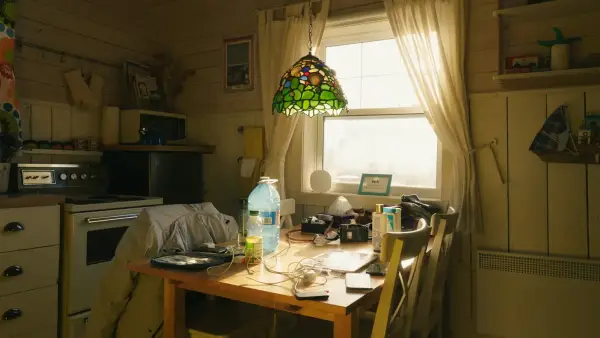
Children who fell asleep on the porch swing to the creak of the chain and the sound of their parents talking about things they half understood often become adults who need gentle motion to think clearly - because they learned that honesty only surfaced when everyone was swaying together and that stillness is where truth hides
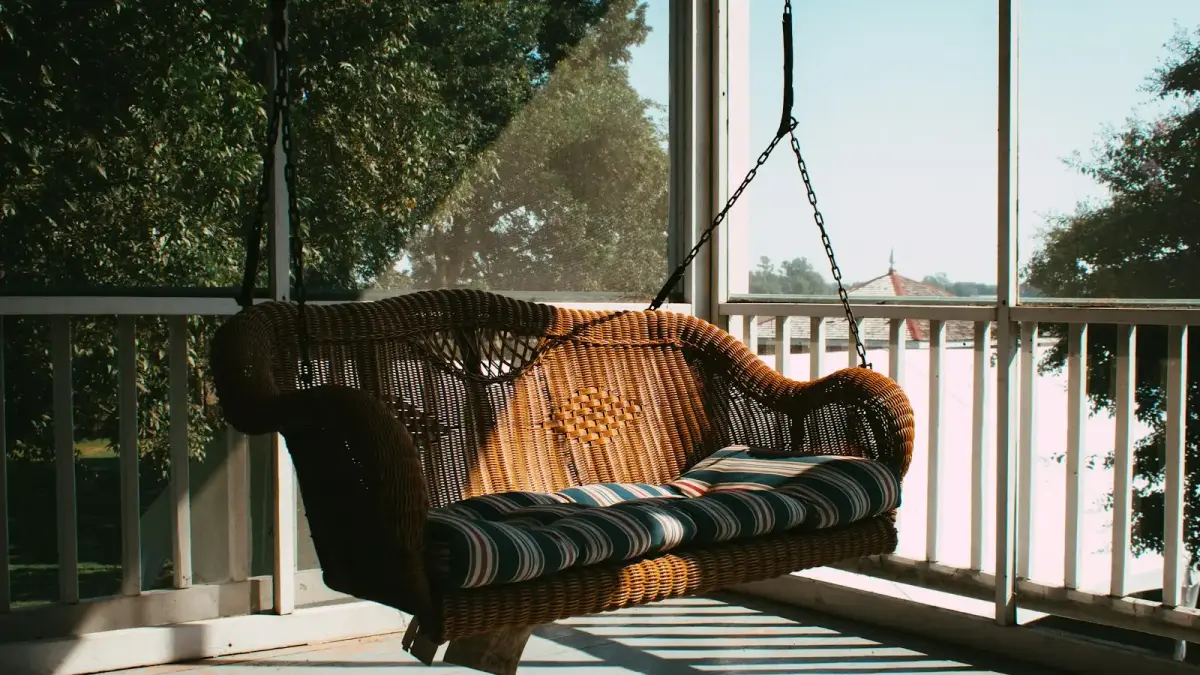
I can still hear the creak if I close my eyes.
Not the words my parents said - those came back to me later, in fragments, years after the porch swing had rusted and the house had been sold to a couple who replaced it with a bench that didn’t move. What stayed was the rhythm. That slow, predictable arc through warm air that smelled like cut grass and someone’s charcoal grill three doors down.
I was maybe seven. My mother was telling my father something about Aunt Linda’s test results - something I didn’t fully understand then and only pieced together as an adult. Their voices were low and almost melodic, rising and falling with the motion of the swing.
I was curled between them with one bare foot dangling off the edge, not really awake and not really asleep. The streetlights had just come on. The chain made its slow metallic groan every time we reached the top of the arc.
I didn’t know it then, but my body was learning something my mind wouldn’t understand for decades. The most important things people say to each other happen when no one is sitting still.
If that evening sounds familiar to you - if you can feel the grain of painted wood under your thighs right now just reading this - then what follows might explain a few things about the adult you became.
1. They pace during phone calls without realizing they’ve started
You pick up the phone and within thirty seconds you’re walking. Not to get somewhere - just moving. Circling the kitchen island, drifting down the hallway, tracing the same loop between the living room and the back door.
You don’t plan it. Your body just decides that if this conversation matters, your feet need to be involved.
This isn’t restlessness. A 2014 study by Oppezzo and Schwartz, published in the Journal of Experimental Psychology, found that walking increased creative output by an average of 60 percent compared to sitting. But for porch swing children, it isn’t about creativity.
It’s about access. Your body learned early that the important words - the ones about money trouble, about someone being sick, about your parents’ real feelings - only came out when the swing was moving.
Your nervous system internalized a simple equation: motion equals honesty. Stillness equals the version of things people say when they know you’re listening.
2. They rock in their chair during every meeting that actually matters
Watch yourself in the next conversation that carries real weight. Not the casual ones. The ones where someone is telling you something true, or where you’re trying to find the right words for something difficult.
You’ll tilt back slightly. You’ll shift your weight forward, then back. If the chair swivels, you’ll rotate a few degrees in each direction, a tiny pendulum that no one else in the room notices.
The developmental psychologist Donald Winnicott wrote extensively about what he called “holding environments” - the physical and emotional conditions that allow a person to feel safe enough to be genuine. For many of us, the porch swing was our first holding environment outside of someone’s arms. It held you without gripping.
It moved you without directing. And now, decades later, your body recreates that holding whenever the stakes are high enough to require honesty.
3. They drive with no destination when they need to make a decision
The car has become your porch swing.
You don’t realize this is what you’re doing. You tell yourself you need gas, or groceries, or that you just want to get out of the house for a bit. But fifteen minutes into the drive, with no music playing and the window cracked two inches, you notice that your mind has finally settled into the shape of the problem you’ve been avoiding.
The gentle vibration. The forward momentum. The world sliding past in a way that asks nothing of you.
It is the closest thing an adult can find to being rocked on a summer evening by someone else’s weight on the other end of the bench.
Porch swing children often report that their best thinking happens in transit. Not at a desk. Not in meditation.
In a car, a train, a plane - anywhere the body is carried gently forward while the mind is left alone.
4. They find stillness suspicious rather than peaceful
This is the one that confuses people. You’ve been told your whole adult life that stillness is the goal. Meditation apps, therapy techniques, wellness culture - everyone insists that peace lives on the other side of being still.
But your body doesn’t believe it.
When everything goes completely quiet - no motion, no ambient rhythm, no background hum of conversation - you don’t feel calm. You feel alert. Something in you tightens, as if the silence is a warning rather than a gift.
A 2019 study published in Frontiers in Psychology found that rhythmic sensory stimulation - including gentle rocking - significantly reduced the time it took participants to fall asleep and improved their sleep quality. The researchers suggested that rhythmic motion activates deep-brain networks associated with safety and rest. Your porch swing self knew this instinctively.
Stillness wasn’t where you were safe. Stillness was what happened after the adults went quiet and the screen door closed and you were alone.
5. They process grief through their feet
When something breaks - a relationship, a diagnosis, a loss that rearranges the furniture of your life - you don’t sit with it. You walk with it.
You walk around the block at eleven at night. You walk the same park trail so many times the dog starts leading you there without being told. You walk until your legs ache and your thoughts finally slow down enough to feel the thing you’ve been outrunning.
This is not avoidance. This is your body’s oldest coping strategy, learned in the years before you had language for sadness.
On the porch swing, you watched adults metabolize hard things in real time. They didn’t sit in silence and feel. They swayed and talked and let the motion carry some of the weight.
You learned that grief doesn’t need stillness. It needs a gentle, rhythmic witness. Your feet provide the rhythm now because the swing no longer can.
6. They suggest walks when conversations get heavy
You’re the friend who says, “Want to go for a walk?” right when the conversation tips from casual to real. Not because you’re uncomfortable sitting - though you might be. Because you’ve learned, in a place deeper than language, that hard truths travel better when both people are moving.
Gabor Mate has written about how the body stores what the conscious mind cannot process, and how movement can unlock emotions that sitting still keeps locked away. Porch swing children understand this without reading a single page.
You know that the friend who can’t make eye contact will tell you about the affair while you’re both looking straight ahead on a path. You know that your teenager will say the real thing during a car ride, not across a dinner table. You know this because you were that child once - the one who heard the truth only because everyone was looking at the yard and not at each other.
7. They understand that sitting next to someone in silence is its own language
The porch swing was the last piece of furniture in the American home designed for doing nothing.
Think about that. Every other surface in the house has a function. The couch faces the television.
The dining table organizes meals. The desk commands productivity. But the porch swing existed solely for the act of being present with another person without any requirement to perform.
Attachment researchers, building on the foundational work of John Bowlby, have long noted that secure attachment is not built through grand gestures or constant verbal affirmation. It is built through what they call “quiet availability” - the simple act of being near someone in a way that communicates safety without demands.
If you grew up on a porch swing, you learned that love is not always a conversation. Sometimes love is the weight of someone beside you, the chain creaking in time with your breathing, and the mutual agreement that neither of you needs to say a word for this moment to count.
8. They associate the sound of something old and slow with emotional safety
A screen door closing. A ceiling fan clicking on its highest setting. A rocking chair on a wooden floor.
These sounds do something to you that you can’t fully explain. They don’t just trigger nostalgia. They trigger a felt sense of permission - as if the sound itself is telling your nervous system that it can stand down.
Stephen Porges’ polyvagal theory describes how the autonomic nervous system uses environmental cues to determine safety. Low-frequency, rhythmic sounds signal to the vagus nerve that the environment is non-threatening. The creak of a porch swing chain is almost perfectly calibrated to this frequency range.
Your body didn’t just enjoy those evenings. It encoded them as a template for what safe feels like. And now, whenever you encounter a sound that rhymes with that original rhythm, something in your chest loosens and your shoulders drop half an inch before you even know why.
I still rock without noticing. In my office chair, on the edge of a bed, standing in line at the grocery store with a barely perceptible weight shift from one foot to the other. My husband pointed it out years ago and I had no explanation for it.
Now I do.
The porch swing taught me that the space between people is not empty. It is alive with rhythm, with the particular frequency of two bodies moving in the same direction at the same speed without trying. It taught me that the best conversations are the ones where nobody is trying to have a conversation.
Where the words arrive because the motion invited them, not because someone demanded them.
If you recognize yourself in any of this - if you are reading this while gently rocking, or if your foot is bouncing under your desk right now, or if the image of a painted wooden seat on two chains just made your throat tighten - I want you to know something.
You are not fidgety. You are not restless. You are not bad at being still.
You are a person whose body remembers a time when love was a porch, a swing, and the willingness to sit together while the sky went dark. And your body has been trying to get back there ever since.