Children who preferred to watch other kids play rather than join in - who sat on the bench at recess, stood near the fence, and watched the game with genuine interest but no desire to enter it - often become adults who observe the party rather than participate in it
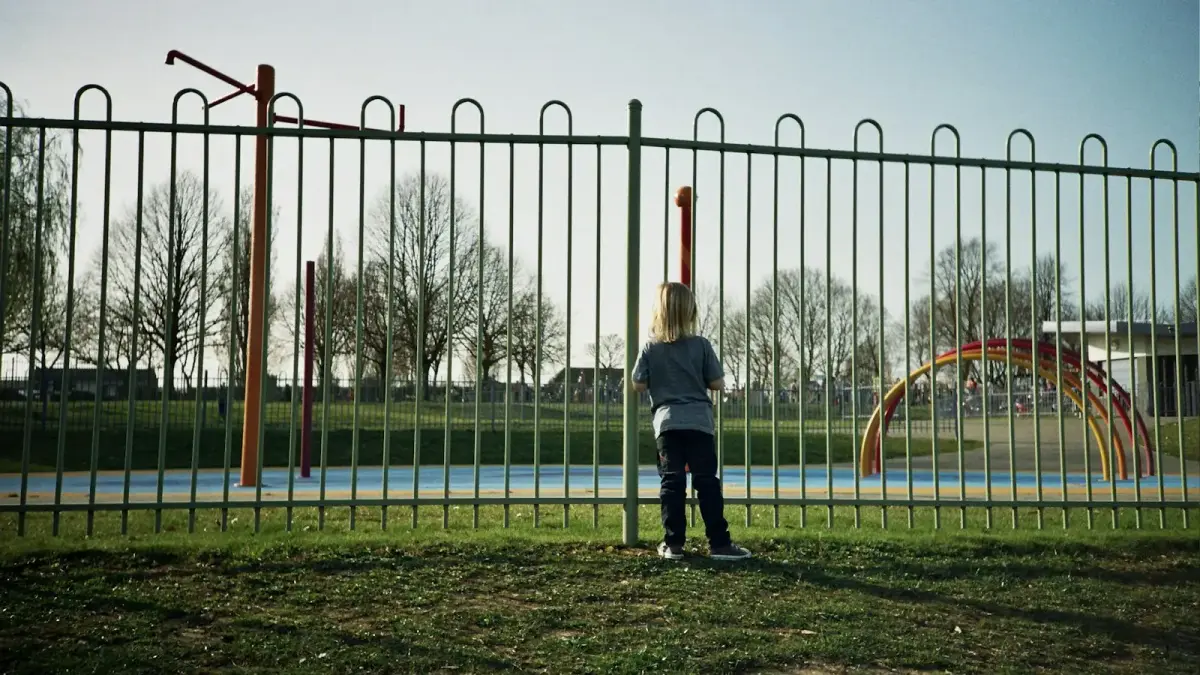
I was seven years old the first time a teacher called my mother about it.
Not about bad grades. Not about behavior. About recess. Specifically, about how I spent it - sitting on the low brick wall near the basketball court, knees pulled up, watching the other kids run and shout and collide into each other like happy little bumper cars. The teacher was concerned. She used words like “withdrawn” and “isolated” and “not integrating with peers.”
My mother, to her credit, asked me one question that evening. “Do you want to play with them?”
I thought about it honestly. “No,” I said. “I like watching. I can see everything from there.”
She never brought it up again.
I think about that conversation now, decades later, standing in my friend’s kitchen doorway at her birthday party, drink in hand, watching fifteen people laugh and talk and move around each other in the living room. I am not lonely. I am not anxious. I am doing exactly what I have always done - finding the one spot where the whole picture comes together.
If you were that child on the bench, I think you already know what I mean. And I think the world has been misreading you for a very long time.
1. You learned early that watching wasn’t missing out - it was the only way to see the whole picture
There is a particular kind of child who discovers something at recess that takes other people decades to understand: the game looks completely different from outside it.
Inside the kickball game, you know who has the ball and whether you’re about to get tagged. From the bench, you can see that Marcus always passes to the same person, that the quiet girl in the red jacket is actually the best player but nobody picks her first, that the two kids who say they’re best friends never actually stand near each other.
A 2014 study in the Journal of Research in Personality found that individuals who scored high in “observer orientation” - a preference for watching social dynamics rather than actively participating - demonstrated significantly stronger accuracy in reading group emotions and predicting interpersonal conflict. They weren’t disengaged. They were processing at a different altitude.
You carried that altitude into adulthood. You’re the person at the dinner party who notices the couple isn’t speaking to each other three hours before anyone else picks up on it.
2. You became the person everyone talks to in the kitchen
Every party has a kitchen. And every kitchen has someone leaning against the counter who didn’t choose that spot by accident.
You gravitated there because kitchens are peripheral. They’re adjacent to the action without being in it. People drift in and out. Conversations happen in fragments - real ones, not performance ones. The kitchen is where someone finally exhales and says what they actually think about their job, their marriage, their weird Tuesday.
You became the person who hears those conversations because you were never competing for the center of the room. You were never trying to be the loudest voice. People sense that about you, even if they can’t name it. They find you in the kitchen because you feel safe in the way that only someone who has never needed to dominate a room can feel safe.
3. You read rooms the way other people read faces
Most people walk into a social gathering and immediately start navigating it - who to talk to, where to stand, how to enter a conversation already in progress. You walk in and read the room like a paragraph.
You notice the energy before you notice the individuals. Who is performing. Who is uncomfortable. Where the real warmth is happening versus where the loudness is. You can feel when a room shifts - when someone’s joke lands wrong, when the mood tilts slightly toward something heavier, when two people are about to have a conversation they don’t know they’re about to have.
A 2019 study published in Psychological Science found that people who habitually observe social situations before engaging demonstrate higher “social-perceptual accuracy” - the ability to correctly interpret unspoken group dynamics. The researchers noted this wasn’t a compensatory skill developed from social anxiety. It was a cognitive orientation, present from early childhood, that simply never went away.
You didn’t learn to read rooms because you were afraid of them. You learned because you were fascinated by them.
4. You never stopped choosing the edge of the frame
The bench at recess. The back row in class. The corner booth at the restaurant. The aisle seat on the plane. The chair nearest the door at the meeting.
There is a geography to how you move through the world, and it has not changed since you were six years old. You choose positions that give you the widest possible view with the least possible exposure. Not because you’re hiding. Because you discovered early that the edge of the frame is where things make sense.
You are the person who, at a wedding reception, finds the one chair that faces the dance floor and the bar and the entrance all at once. You sit there with a slight smile and a full glass and you watch people you love be happy, and that watching fills you in a way that joining never quite does.
5. You developed deep friendships instead of wide social networks
The peripheral child doesn’t collect friends like trading cards. They find one or two people who feel like home and hold onto them with quiet ferocity.
This makes sense when you think about it. If your natural mode is observation, you’re selecting people based on what you’ve actually seen of them - not their social performance, not their popularity, not their ability to work a room. You chose friends based on who they were when they thought nobody was watching. Because you were always watching.
A 2021 study in Developmental Psychology tracked children who displayed consistent “onlooker behavior” - watching peers play without joining - from ages five through twelve. The researchers found these children did not have fewer friendships than their more socially active peers. They had fewer but significantly deeper ones, characterized by higher levels of trust, emotional disclosure, and longevity.
Your friendships at forty-five look remarkably like your friendships at eight. Few. Deep. Built on the kind of knowing that only comes from paying very close attention.
6. You became someone who enters conversations late but says the thing everyone was thinking
You know this moment. The group has been talking for twenty minutes. Opinions are flying. People are interrupting each other and circling the same point from slightly different angles without realizing it.
You’ve been quiet. Not because you have nothing to say. Because you’ve been listening at a frequency that requires your full attention. You’ve been tracking not just what people are saying but what they’re trying to say - the thing underneath the words that nobody has managed to articulate yet.
Then you say one sentence. And the room goes quiet. Not because you were louder. Because you were more precise. You named the thing that was hovering over the conversation like weather.
People sometimes call this wisdom. It isn’t, exactly. It’s the natural result of a lifetime spent watching from just outside the circle - a lifetime of processing patterns before speaking, of treating language like something that should be spent carefully rather than scattered freely.
7. You carry a quiet guilt about not wanting to be in the middle of things
Here is the part nobody talks about.
Even after decades of being this way, there is a small voice that asks whether something is wrong with you. Whether you should want to be on the dance floor instead of watching it. Whether your preference for the periphery is actually a fear you’ve dressed up as a choice.
That voice usually sounds like every teacher who worried about you, every extroverted friend who tried to “bring you out of your shell,” every well-meaning relative who said you just needed to put yourself out there more. Their concern was real. But their diagnosis was wrong.
You are not on the periphery because you’re afraid of the center. You’re on the periphery because you learned, as a very small person sitting on a very small bench, that the center has a cost. When you enter the frame, you can no longer see the frame. When you join the game, the patterns dissolve. And you are someone for whom the patterns matter more than the game.
That is not a deficit. That is a orientation - as fundamental to who you are as your handedness or the pitch of your voice.
8. You found your way to work that rewards the watcher
Look at what you do for a living and I suspect you’ll find the thread.
You became the therapist, the editor, the researcher, the strategist, the teacher, the nurse who notices what the chart doesn’t say. You found your way to work where observation is the primary skill - where noticing what others miss is not a personality quirk but a professional requirement.
This wasn’t an accident. The child who watched recess was rehearsing for a life in which paying attention would become the most valuable thing they could do. Every minute on that bench was training for the work that would eventually feel like the first thing that made complete sense.
A 2022 study in Frontiers in Psychology found that adults who self-reported a childhood preference for observational play were disproportionately represented in careers requiring “perceptual sensitivity” - roles that demand reading subtle cues, anticipating needs, and synthesizing complex information from fragmented inputs. The watchers became the professionals that other professionals rely on to see what’s actually happening.
9. You still find the bench - and it still feels like the best seat in the house
You are at your nephew’s soccer game, sitting slightly apart from the other parents, and you can see the whole field. You notice the kid on the opposing team who keeps looking at the sideline for a parent who isn’t there. You notice your nephew glance at you once to make sure you’re watching, then relax when he sees that you are.
You are at the office holiday party, standing near the window with a colleague who also somehow ended up at the edge of things, and you’re having the only real conversation in the room. You are at Thanksgiving, drying dishes in the kitchen while laughter rolls in from the dining room, and you feel more connected to everyone in that house than you would if you were sitting at the table.
The bench never went away. It just got more comfortable.
If you were that child - the one on the wall, the one near the fence, the one who watched with genuine interest and no desire to enter - I want you to know something that no teacher’s note or worried parent or well-meaning friend ever quite said.
You were never on the outside looking in. You were on the outside seeing everything.
That position you chose at seven years old was not a retreat. It was a vantage point. And the fact that you’re still choosing it - at the party, at the meeting, at the family gathering, at the wedding - doesn’t mean you never learned how to join in.
It means you learned something better. You learned how to see.
Some people were built to be in the picture. You were built to be the one who understands what the picture means. And the world needs both, but it has always had a harder time recognizing yours.
Consider it recognized.

