Children who recorded songs off the radio onto cassette tapes - who sat cross-legged on the bedroom floor with one finger hovering over the play-and-record buttons, waiting for the DJ to stop talking, who pressed down at the exact right moment and held their breath through the entire song - often become adults who are extraordinarily patient with the people they love, because a child who learned that the most beautiful thing on the radio would only pass by once learned that the only skill that matters is knowing when to press down
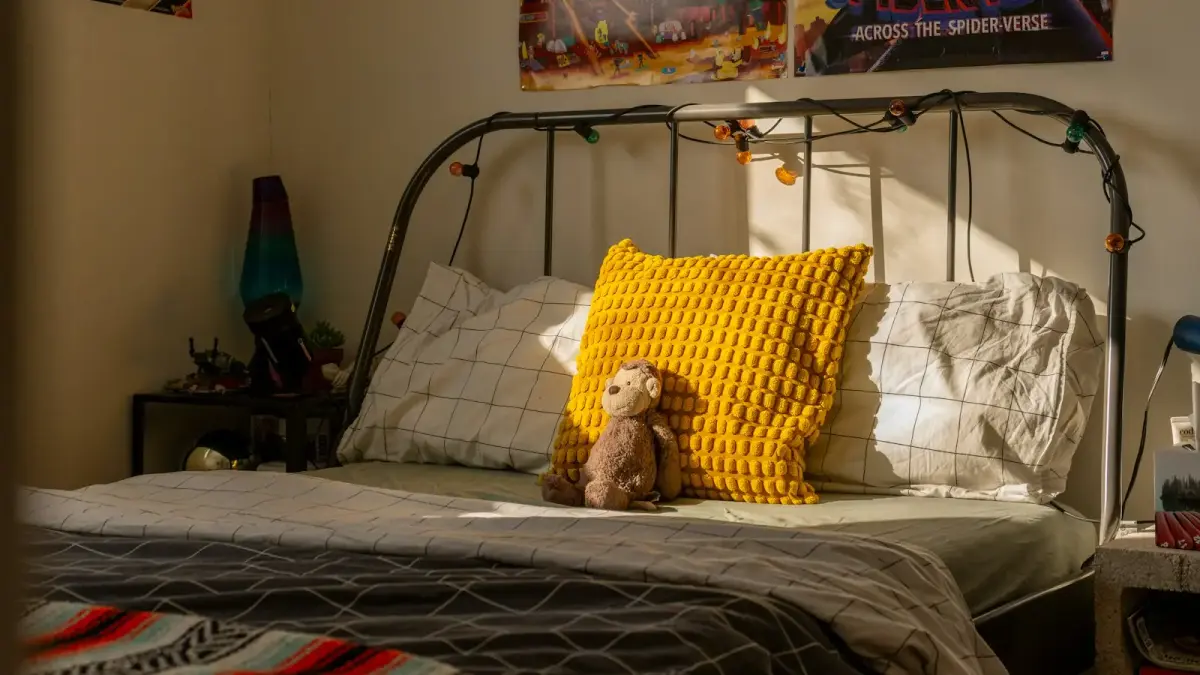
I was eleven years old, sitting on my bedroom carpet with my knees pulled under me, staring at my dad’s old boombox like it owed me something. The local FM station had played “Everybody Wants to Rule the World” twice that afternoon and I’d missed it both times - once because I was eating dinner and once because the DJ talked over the first twelve seconds and I refused to keep a version that started with someone else’s voice instead of the song’s.
So I waited. I sat there with my right index finger resting across the play and record buttons, both of them needing to go down at the same time, and I listened to three songs I didn’t care about and two commercial breaks and a traffic report for highways I’d never driven on. And when those opening synth notes finally came through clean, I pressed down with everything I had and didn’t breathe again until the last note faded into silence.
That tape still exists somewhere. And so does the person it made me.
If you grew up recording songs off the radio onto cassette tapes, you learned something about patience and timing and love that the rest of the world is only now realizing it desperately needs. Here are eight ways that child with the hovering finger became the adult everyone relies on.
1. They are extraordinarily patient with the people they love
You can’t rush a radio. You can’t skip forward or pull up a menu or type the song title into a search bar. You sit and you wait and you accept that the thing you want will arrive when it arrives, not when you demand it.
That kind of waiting changes a person. A 2015 study published in the Journal of Personality and Social Psychology found that individuals who developed patience as a dispositional trait in childhood demonstrated significantly higher relationship satisfaction in adulthood. The researchers noted that patience wasn’t passive - it was an active skill involving sustained attention and emotional regulation.
The people who recorded off the radio learned this before they had words for it. They learned that the person you love will tell you what’s wrong when they’re ready, not when you ask for the fourth time. They learned to hold space the same way they held that pause between commercials - alert, quiet, ready, but never forcing.
2. They know how to wait for the right moment without forcing it
There was a specific agony to pressing record one second too late. You’d hear the song start, your brain would scream “NOW,” and your finger would come down - but the first three notes were already gone. You’d have a version of the song that started mid-word, and you’d know it was close but not right.
So you learned to anticipate. You learned to read the DJ’s cadence, to feel the shift in energy between the chatter and the music, to sense when the intro was about to land. You developed a kind of emotional sonar for timing.
As adults, these are the people who know when to bring up a difficult conversation and when to let it rest for another night. They don’t blurt things out at the wrong moment. They’ve been trained by hundreds of hours of almost-perfect captures that timing isn’t everything - it’s the only thing.
3. They feel genuine grief when something beautiful happens and nobody is paying attention
The worst part of radio recording wasn’t missing a song entirely. It was hearing a perfect song play while you were in another room, unable to reach the boombox, knowing that this performance of this song at this moment would never exist again in exactly this way.
That grief stays with you. It becomes a kind of hyperawareness for beauty that other people walk past. The way light hits your kitchen table at 7 AM. The specific laugh your daughter has when she’s not performing for anyone. A stranger being quietly kind to another stranger at the grocery store.
Psychologist Dacher Keltner’s research on awe at UC Berkeley has shown that people who regularly notice fleeting moments of beauty demonstrate higher levels of empathy and generosity. The cassette kids didn’t need a study to know this. They lived it every time a perfect song played to an empty room.
4. They label and organize things with care because a tape without a track listing was just noise
I had a system. Blue pen for the A-side, black pen for the B-side. I wrote the song title first, then a dash, then the artist. If I recorded over something, I’d cross out the old entry with a single neat line so I could still read what used to be there, like a tiny archive of decisions.
A tape without a track listing on the insert card was chaos. You’d have to fast-forward and rewind, listening to the first two seconds of every song, trying to find the one you wanted. It was a search engine made of magnetic ribbon and frustration.
These adults label their spice jars. They keep a calendar that actually reflects their life. They name their computer files things that make sense six months later. Not because they’re rigid - because they learned young that the things you love become inaccessible if you don’t take the small, boring step of writing down what they are and where they live.
5. They have a complicated relationship with abundance - too much choice overwhelms them
There’s a moment I remember clearly from the first time I used Spotify. I typed in a song I’d spent an entire Saturday afternoon trying to catch off the radio when I was thirteen. It appeared instantly. I could play it whenever I wanted, as many times as I wanted, forever.
I felt nothing.
Barry Schwartz wrote about this in The Paradox of Choice - how unlimited options don’t liberate us but paralyze us. A 2000 study published in the Journal of Personality and Social Psychology by Sheena Iyengar and Mark Lepper confirmed that people presented with fewer choices reported greater satisfaction with their selections than those given extensive options.
The cassette kids already knew. When you only had ninety minutes of tape and every song you recorded meant erasing the possibility of another, each choice carried weight. You curated because you had to. And that curation made every single song on that tape feel like it belonged to you in a way that a ten-thousand-song library never could.
6. They trust the process of repetition - they’ll listen to the same thing fifty times
The worn-out sections of tape told a story. You could hold a cassette up to the light and see where the ribbon had gone slightly translucent from rewinding, the physical evidence of love pressed into magnetic coating. That one section between songs three and four on Side B where the tape always caught for half a second because you’d rewound past it so many times.
These adults reread books. They rewatch movies. They aren’t bored by repetition - they’re deepened by it. They understand that the fiftieth listen reveals something the first listen couldn’t, that familiarity isn’t the death of wonder but the doorway to it.
They bring this to their relationships too. They don’t need novelty to stay interested in the people they love. They find new things in old conversations. They notice the way their partner’s storytelling has changed over twenty years, the way certain memories get polished smoother with each retelling while others grow sharper.
7. They believe in the mixtape principle - the order matters as much as the content
A great mixtape wasn’t just good songs. It was good songs in the right order. You didn’t put two slow songs back to back. You didn’t open with the most intense track. You built something - a rising arc of energy, a gentle descent at the end, a surprise in the middle that changed the whole mood.
This is how these adults plan a dinner party, structure a difficult conversation, or arrange their living room. They understand that sequence creates meaning. The same ingredients in a different order produce a completely different experience.
Daniel Goleman’s work on emotional intelligence touches on this - the idea that socially skilled people intuitively understand the sequencing of emotional exchanges. They know that bringing up money before you’ve established warmth will land differently than bringing it up after. The mixtape kids learned this with magnetic tape and gut feeling, long before anyone called it a skill.
8. They carry a specific kind of sadness for things that can’t be rewound
There’s a hiss on every cassette recording. A low, steady whisper underneath the music that you’d never hear on a CD or a digital file. After a while, you stopped noticing it. It became part of the song. And then one day you heard the same song on a different format and it sounded wrong - too clean, too sterile, like someone had removed the room the music was living in.
That hiss was imperfection, and it was yours. It was the sound of your specific radio, your specific afternoon, the exact atmospheric conditions between the broadcast tower and your bedroom antenna. No one else’s recording of that song sounded exactly like yours.
A 2022 study published in Frontiers in Psychology found that nostalgia - even when tinged with sadness - serves a vital psychological function, strengthening feelings of social connectedness and reinforcing a sense of meaning in life. The researchers found that bittersweet memories were often more psychologically nourishing than purely happy ones.
The cassette kids carry this. They hold a specific sadness for the analog world - not because it was better, but because it asked something of you. It required your presence, your patience, your willingness to sit with imperfection. And in that asking, it gave you something that convenience never could.
You learned to be still in a world that hadn’t yet learned to rush. You learned that the most important things - the song, the person, the moment - arrive on their own schedule, and your only job is to be ready when they do.
If you were that child on the bedroom floor with your finger on the button, you already know something that mindfulness teachers charge hundreds of dollars to explain. You know how to wait without leaving. You know how to want something without grabbing at it. You know that the hiss between songs isn’t silence - it’s the sound of you, paying attention.
That tape is full. And so, quietly, are you.