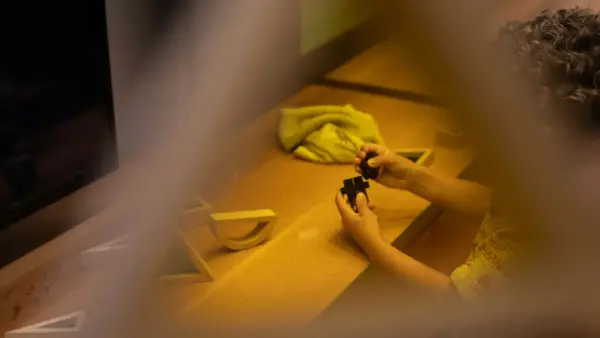
Children who spent hours in the bathroom mixing everything they could find into elaborate potions - shampoo, conditioner, hand soap, a splash of their mother's perfume, whatever colored liquid was within reach - who stirred it with a toothbrush handle and held it up to the light and believed with their whole body that this time it might actually work - often become adults who still believe that the right combination of ordinary things can produce something no one has ever seen before, because a child who stood on a step stool and poured one liquid into another was not making a mess but conducting the first experiment of a mind that would never stop asking what happens if
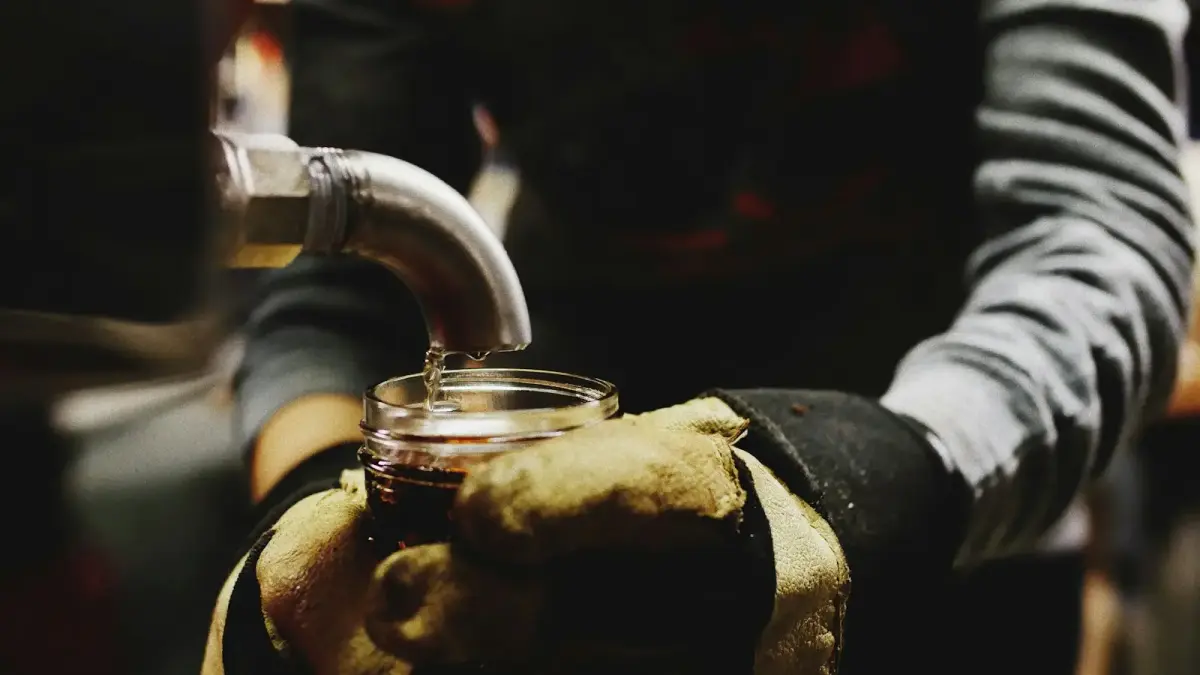
I found the bottle in the back of the bathroom cabinet last month when I was cleaning. A small plastic container with a faded strip of masking tape across it, the handwriting unmistakably mine at seven or eight, the letters careful and uneven: MAGIC POTION - DO NOT DRINK - VERY POWERFUL.
I opened it. It smelled like lavender hand soap and something vaguely minty. Whatever I had believed this concoction could do in 1994 had long since settled into a cloudy beige liquid that looked like nothing and promised even less.
But I stood there in the bathroom holding it for a long time, because the girl who made that potion and labeled it and hid it in the back of the cabinet like a treasure was not being silly. She was being something much more important than silly. She was being a scientist who didn’t know the word yet.
The laboratory that smelled like strawberry shampoo
If you were this child, you remember the setup. The bathroom counter, cleared of everything except the raw materials. The bottles lined up like reagents. The mixing vessel - usually a cup from the kitchen, sometimes a jar, once or twice the good Tupperware that your mother would later find sticky and inexplicable.
You remember the choices. The pink shampoo that smelled like strawberries went in first, because pink was a good base. Then the conditioner, the white one, because white and pink made a color you didn’t have a name for yet. Then a pump of hand soap, because it had a different thickness and you were interested in what happened when thick met thin. Then the perfume. Just a little. Just enough to make it smell like something important.
You stirred it slowly. You watched the colors merge. You tilted the container toward the light and studied the way the liquid caught the sun through the bathroom window, and in that moment you were not a child wasting products. You were standing at the edge of the first question that would define the rest of your life: what happens when you put two things together that nobody told you to put together?
What the child was actually doing
Jean Piaget spent decades studying the way children construct knowledge, and one of his most enduring observations was that children do not learn by being told. They learn by acting on the world and observing what happens. The child mixing shampoo and perfume in a plastic cup was not following instructions. There were no instructions. She was generating a hypothesis - if I combine these things, something new will happen - and testing it with her hands.
A 2013 study published in Child Development found that children who engaged in frequent pretend play and experimental play showed significantly higher cognitive flexibility than children who engaged primarily in structured activities. The researchers noted that the act of combining materials in novel ways - even when the combinations produced nothing useful - strengthened the neural pathways associated with divergent thinking. The mess on the bathroom counter was not a failure of discipline. It was the architecture of a creative mind being built in real time.
And the belief mattered. The absolute, body-level conviction that this potion might actually work - might actually turn you invisible or make flowers grow faster or cure your brother’s cold - was not naivete. It was the engine that kept the experiment going. Without the belief, there was no reason to try another combination. Without the belief, the shampoo stayed in the bottle and the counter stayed clean and the question - what happens if - stayed unasked.
The parent at the door
Here is the part that most people remember with a complicated tenderness.
The knock on the bathroom door. The voice on the other side. Sometimes patient, sometimes not. What are you doing in there? Why is the shampoo almost empty? Who said you could use my perfume?
The child at the counter understood, in that moment, something about the cost of experimentation. The raw materials did not belong to her. The space did not belong to her. The time she had been spending - quietly, absorbed, following the logic of combination and observation - was time that someone else had a different plan for.
Some children learned to hide it. To experiment only when the house was quiet, when the adults were busy, when the bathroom door could be locked for fifteen uninterrupted minutes. Some children learned to stop entirely. To put the bottles back and clean the counter and pretend they had been doing something acceptable, like brushing their teeth.
And some children - the stubborn ones, the ones whose curiosity was louder than their caution - kept going. They moved the laboratory to the kitchen. To the backyard. To the garage, where the paint cans and the turpentine and the WD-40 offered a new and more dangerous periodic table. The venue changed. The question never did.
The combinatorial mind
Creativity researchers have a term for what the potion-making child was practicing. They call it combinatorial creativity - the ability to take existing elements and combine them in ways that produce something genuinely new. It is the mechanism behind almost every significant invention, artistic breakthrough, and entrepreneurial leap in human history. Johannes Gutenberg combined a wine press with a coin punch to create the printing press. The Wright brothers combined principles from bicycle mechanics with observations of bird flight. Every recipe that has ever been written is a potion that worked.
A 2017 study in the Creativity Research Journal found that adults who scored highest on measures of combinatorial thinking were significantly more likely to have engaged in unstructured experimental play as children. The researchers described a clear developmental pipeline: the child who mixes materials without instruction becomes the adolescent who remixes ideas without permission becomes the adult who sees connections between fields that other people keep separate.
You know these adults. You may be one of them. They are the ones who cook without measuring cups, who add a little of this and a little of that and taste as they go and somehow arrive at something that no recipe could have predicted. They are the ones who fix things with unconventional materials - the leaky pipe repaired with a binder clip, the wobbly table stabilized with a folded piece of cardboard, the solution that makes an engineer wince and a seven-year-old nod in recognition.
They are the ones who start businesses from kitchen tables, who combine two industries that have never been introduced to each other, who see a gap in the market and fill it with something assembled from parts that were already lying around. They are the adults who still, fundamentally, believe in potions.
The experiment that never ended
A 2020 study published in Frontiers in Psychology examined the relationship between unstructured childhood play and creative problem-solving in adulthood. The researchers found that adults who reported high levels of autonomous experimental play before age ten - play that involved combining materials, testing hypotheses, and tolerating failed outcomes - were significantly more likely to describe themselves as innovative in their professional lives. More importantly, they were more likely to persist after failure. To try another combination. To adjust the recipe instead of abandoning it.
This is what the child at the bathroom counter was really learning. Not chemistry. Not magic. Persistence. The willingness to pour one more thing into the cup and stir it one more time and hold it up to the light one more time, even though the last forty-seven attempts had produced nothing but a cloudy liquid that smelled like hand soap and regret.
The potion never worked. That is the fact. But the child who made it became an adult who still walks into a room full of ordinary things and thinks: I wonder what would happen if I put those two together. And sometimes - not always, not predictably, but often enough to matter - the answer is something no one expected.
If you were the child in the bathroom with the masking tape and the toothbrush handle and the absolute conviction that lavender soap plus your mother’s perfume plus a drop of food coloring equaled something powerful, I want you to know that you were right. Not about the potion. About the principle. The belief that ordinary things, combined with intention and curiosity and the willingness to make a mess, can become extraordinary - that belief was never childish. It was the first honest thought of a creative mind.
And if you still cook without recipes, if you still fix things with whatever is lying around, if you still look at two unrelated ideas and think what if - you are still making potions. You just call them something else now.