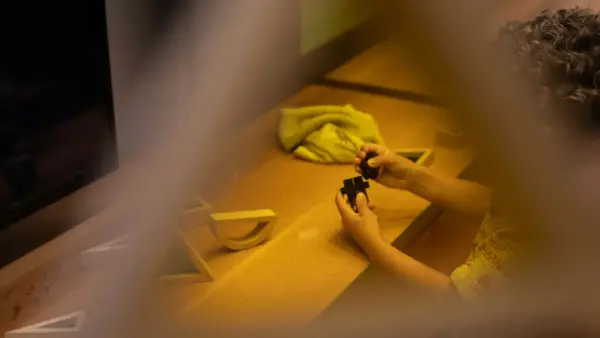
Children who spent hours building elaborate structures out of blocks or whatever they could find - who constructed cities on the living room floor that no one was allowed to touch, who woke up early to add another wing to a wooden block castle before school, who cried when it was time to put them away because the architect had no say in the demolition - often become adults who pour themselves into building things the world will eventually dismantle, because a child who learned that the most beautiful thing she could create would always be taken apart at the end of the day also learned that the act of building is its own justification, even when nothing you build is allowed to stay
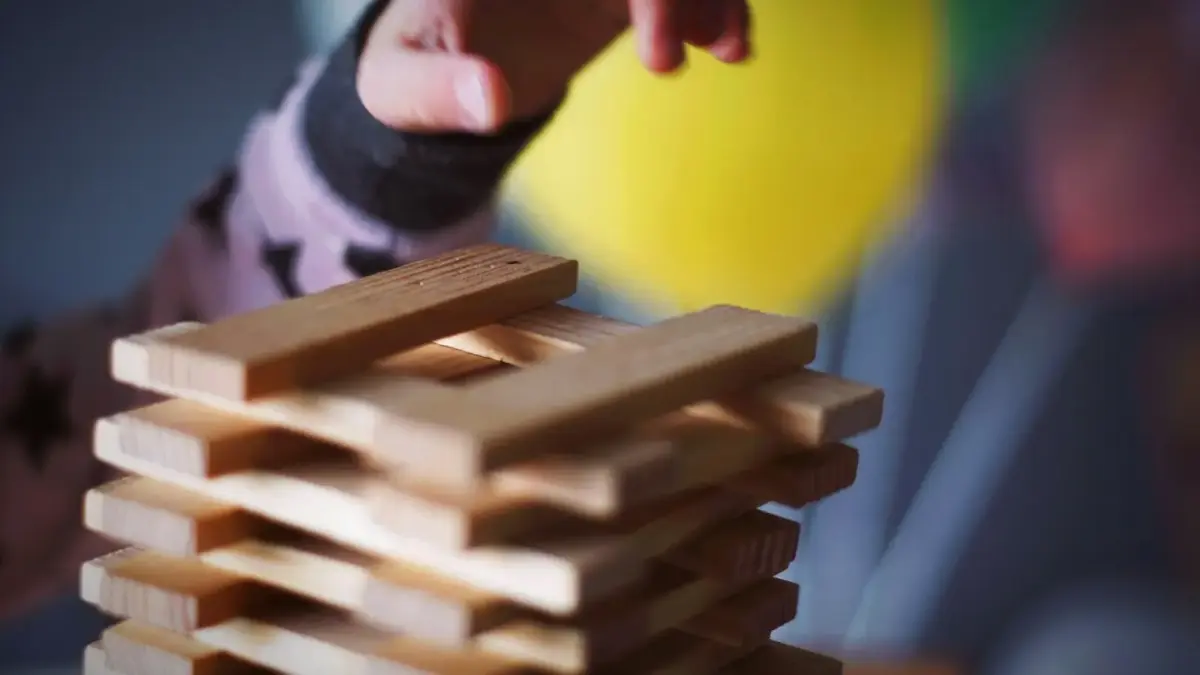
I was seven years old when I built what I considered my masterpiece.
It was a city, technically. Wooden blocks for the buildings, Lego pieces for the bridges, and a winding river made from a blue scarf I’d taken from my mother’s closet without asking. The city had a name I don’t remember anymore and a population I’d calculated on the back of a spelling worksheet. I worked on it for three days. I expanded it every morning before school, tiptoeing out of bed while the house was still dark, adding a tower here, a wall there.
On the fourth day, my parents had people coming over for dinner. The city was in the living room. It had to go.
I remember the feeling more than the event itself. Not anger, exactly. Something quieter. Something that settled in my chest like a stone dropped into still water. My mother was kind about it. She said we could rebuild it tomorrow. But I already understood something she didn’t - that the city I’d build tomorrow would not be this city. That what was being swept into a plastic bin wasn’t blocks. It was three days of my interior life, flattened into cleanup.
I think about that city more often than makes sense for a grown woman.
1. The living room floor was never just a floor
If you were one of these children - the ones who built - you already know what I mean when I say the floor was a canvas.
You didn’t play on the living room carpet. You colonized it. You turned it into something with geography, with logic, with intention. And you expected the people around you to respect it - to walk around your creation, to acknowledge the invisible borders of a world they couldn’t see but you had mapped completely.
A 2007 study published in the journal Child Development found that children who engaged in complex constructive play - building structures with spatial reasoning and planning - showed significantly stronger problem-solving abilities and cognitive flexibility than peers who didn’t. The researchers noted something interesting. It wasn’t the finished product that mattered developmentally. It was the sustained engagement with the process of making something from nothing.
That distinction matters. Because the child on the floor wasn’t trying to build a beautiful thing. She was trying to build a world she could control.
2. Constructive play is rehearsal for a life of making things
Jean Piaget observed that children in the preoperational stage - roughly ages two to seven - use play as a way to process and organize reality. Constructive play specifically is how a child practices imposing order on chaos. You take a pile of unrelated pieces and you give them structure, sequence, meaning.
What nobody tells you is that this rehearsal never ends.
The child who built towers becomes the adult who builds teams, businesses, gardens, homes, creative projects, relationships that require daily tending. The instinct is the same. Take what’s scattered. Make it hold together. Add to it every day. Protect it from the people who want to walk through the middle of it.
If you’ve ever poured yourself into a project - a renovation, a manuscript, a department you built from scratch - and then watched someone dismantle it in an afternoon meeting, you know the feeling. It’s not professional disappointment. It’s older than that. It’s the blocks in the plastic bin. It’s the blue scarf river being folded back into a drawer.
3. The specific grief of demolition you didn’t authorize
There’s a particular kind of pain that belongs to builders, and it’s this - the demolition is never yours.
You didn’t decide to move out of that house. Your parents did. You didn’t decide to restructure the department. Leadership did. You didn’t decide to end the marriage. The other person did. And every time, some part of you is seven years old again, watching someone sweep your city into a bin because company is coming and the living room needs to be presentable.
The grief isn’t about the thing itself. You know you can build again. You’ve proven that a hundred times. The grief is about the powerlessness - the specific humiliation of having created something with intention and care, only to learn that the decision to keep it was never yours to make.
This is what separates builders from other people. Not the building. The rebuilding. The fact that you’ve had your work taken apart so many times that you should have stopped by now, and you haven’t.
4. Flow states and the child who forgot to eat lunch
Mihaly Csikszentmihalyi spent decades studying what he called flow - that state of complete absorption where time disappears and the self dissolves into the work. He found that people experiencing flow report some of the highest levels of satisfaction and meaning in their lives.
Here’s what I find remarkable. If you were a building child, you already knew flow before anyone gave it a name.
You knew it at age five, sitting cross-legged on the kitchen floor with a set of wooden blocks, so absorbed that your mother had to call your name three times before you heard her. You knew it at age nine, spending an entire Saturday constructing an elaborate fort from couch cushions and blankets and refusing to come to dinner because you were almost finished with the second floor.
That capacity didn’t go away. It followed you into adulthood, into your career, into every project that consumed you so completely your partner had to remind you to eat. A 2020 study published in Frontiers in Psychology found that adults who reported frequent flow states in creative and constructive work also reported higher rates of childhood constructive play. The researchers suggested that early building play may actually train the neural pathways involved in sustained attention and creative absorption.
You weren’t just playing. You were wiring your brain to lose yourself in the act of making.
5. The architect who had no say in the demolition
I want to sit with that phrase for a moment, because it’s the core of this.
The architect had no say in the demolition.
Children who build learn something profound and painful very early - that creating something beautiful does not protect it. That your investment of time, care, imagination, and love does not earn the thing permanence. That the person who builds and the person who decides what stays are almost never the same person.
This is a lesson about power. And it arrives before you have any framework to understand it.
So you adapt. You learn to build with one hand and hold on loosely with the other. You learn to love the process more than the product because the product is always temporary. You develop a strange relationship with attachment - deeply invested in the making, quietly prepared for the unmaking.
If this describes you, I want you to know something. That adaptation wasn’t a flaw in your development. It was intelligence. A child who can pour herself into building a world she knows will be taken apart has learned something most adults never figure out - that meaning doesn’t require permanence.
6. Why you keep starting over and why that’s not a problem
There is a specific kind of person who has started over more times than they can count - new cities, new jobs, new creative projects, new attempts at the same relationship dynamic - and who feels both exhausted by the pattern and unable to stop it.
If you were a builder child, this is probably you.
Not because you’re restless. Not because you lack commitment. But because the loop was installed early. Build, lose, grieve, build again. The cycle feels as natural to you as breathing, even when it’s breaking your heart.
A 2019 study in the Journal of Research in Personality examined what the researchers called “creative persistence” - the tendency to continue generating and building despite repeated setbacks. They found it was one of the strongest predictors of long-term creative achievement, and that it correlated strongly with early play patterns involving construction and spatial reasoning.
You’re not failing to settle. You’re doing the only thing your nervous system has ever truly understood - making something where there was nothing, over and over, because the making itself is where you feel most real.
7. The relationship between building and belonging
Here’s something I didn’t expect to find in the research, but it makes perfect sense once you see it.
Children who engaged heavily in constructive play often did so alone. The building was a solitary act. And the worlds they built were private - governed by internal rules that other children couldn’t always access or understand.
This translates into adulthood in ways that are both beautiful and isolating.
You build things that matter to you deeply, and then you struggle to explain why they matter. You pour yourself into a project and then can’t articulate why its dismantling feels like a personal loss. You create with an intensity that other people find admirable but slightly confusing, because they see the product and you see the thousands of small decisions that made it yours.
The loneliness of the builder isn’t about being alone. It’s about being surrounded by people who see the tower but not the architecture.
8. What the blocks were really teaching you
Piaget would say the blocks were teaching spatial reasoning, object permanence, cause and effect. And he’d be right. But I think they were teaching something bigger.
They were teaching you that you could make something real out of nothing but attention and care. That the gap between imagining a thing and making it exist was crossable, and that you were the kind of person who crosses it.
Every adult builder I know carries this same quiet confidence - not arrogance, but a bone-deep trust in their own capacity to construct. Give them an empty room and they’ll make it a home. Give them a blank page and they’ll make it a story. Give them a broken system and they’ll make it work. Not because they’re more talented than anyone else, but because they’ve been practicing since the living room floor.
The blocks taught you that you are someone who makes things. And that identity survived every demolition.
9. The act of building is its own justification
I’m in my forties now, and I’m still building things that won’t last.
I build lesson plans that will be outdated in a year. I build friendships that may not survive the next relocation. I build routines, rituals, little systems of meaning that could be swept away by a single phone call, a diagnosis, a layoff, a loss.
And I do it anyway. Not because I’m naive about impermanence, but because that seven-year-old on the living room floor taught me something I’ve never been able to unlearn.
The building is the point. Not the building that remains. The building that happens. The hours of absorption, the quiet satisfaction of watching something take shape under your hands, the moment when the thing in your mind becomes the thing in the world - that is the point. That was always the point.
If you were this child, you don’t need me to tell you that you turned out okay. You already know, because you’re still doing it. You’re still waking up early to add another wing to whatever castle you’re constructing now - a career, a home, a life - knowing full well that someone might ask you to put it all away before dinner.
You build anyway.
Not because you believe it will last. But because you learned, on a living room floor a long time ago, that the most honest thing a person can do is make something beautiful with the full knowledge that it’s temporary.
And that’s not a wound. That’s wisdom most people spend their whole lives trying to reach.