Children who watched their grandfather sharpen knives on a whetstone in the garage - who sat on the cold concrete floor while the blade moved across the stone in long, deliberate strokes - often become adults who trust that the most important work in life happens slowly, quietly, and without anyone watching
I can still hear the sound if I close my eyes.
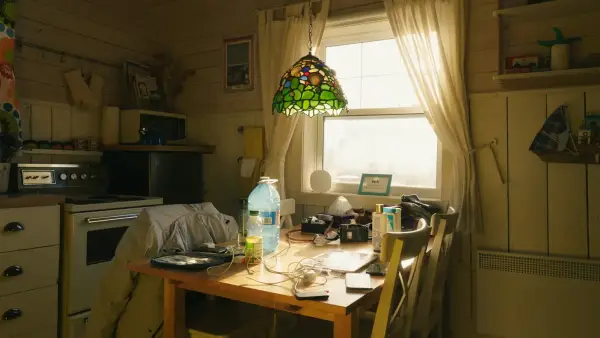
Not a screech. Not a grind. A whisper of metal finding its way along the face of a stone, slow and rhythmic, like a pulse the room had been holding all along. My grandfather’s garage smelled like machine oil and sawdust and coffee that had gone cold an hour ago. A bare bulb hung from a cord above the workbench, and it turned everything the color of honey.
I sat on the concrete floor with my knees pulled up to my chest. I must have been seven or eight. He never invited me in there exactly - he just never told me to leave. And so I watched. The blade moved across the whetstone in long, patient strokes, and my grandfather said nothing, and somehow I understood that nothing needed to be said.
That was the whole lesson. I just didn’t know it yet.
The workshop was a classroom without a curriculum
There was no instruction happening. Not in any way I could have named at the time.
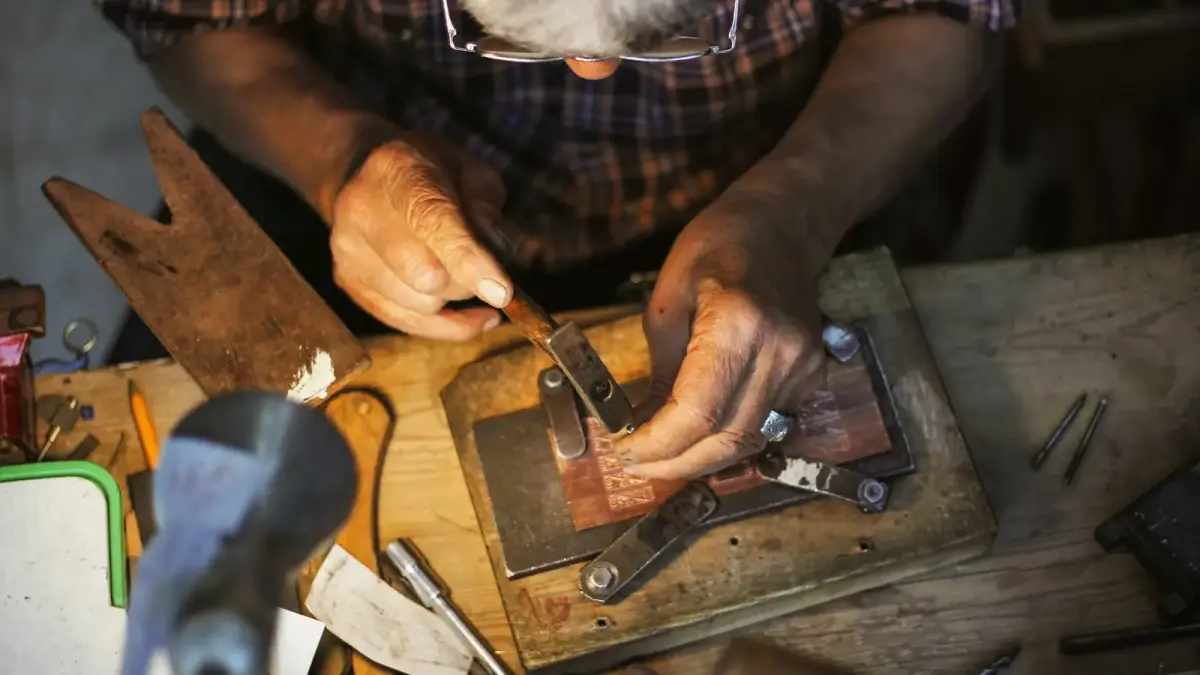
He didn’t explain the angle of the blade or the grit of the stone. He didn’t say “watch carefully” or “this is how you do it.” He just worked. His hands - thick-knuckled, callused, a scar across the left thumb from something he never talked about - moved with a steadiness that made the whole garage feel calm.
There was a coffee can full of nails on the workbench. A shop light clamped to the edge of a shelf. The concrete floor was cold even in summer, and I remember shifting my weight from one side to the other, but never wanting to get up.
The rhythm of the blade across the stone was the closest thing to meditation I’d ever experienced, though I wouldn’t have that word for another twenty years. Each stroke was the same length, the same pressure, the same speed. And every few minutes, he’d pause, run his thumb lightly across the edge - just barely - and then either nod to himself or go back to the stone.
He was teaching me something enormous. He just wasn’t using words to do it.
Patience is not something you learn from a lecture
We talk about patience as though it’s a value you can explain to a child. Sit still. Wait your turn. Good things come to those who wait.
But the children who actually grew up patient - the ones who carry it in their bones - didn’t learn it from a sentence. They learned it from watching someone they loved do something slowly, carefully, and with complete attention, over and over again, until the thing was right.
A 2019 study published in the Journal of Research in Personality found that children who spent significant unstructured time with grandparents scored higher on measures of delayed gratification and frustration tolerance in adolescence. The researchers noted that the mechanism wasn’t verbal instruction - it was behavioral modeling. Children absorbed the tempo of the adults around them.
That tracks with everything I remember.
My grandfather never told me to be patient. He showed me what patience looked like when it lived inside a person’s hands. The blade moved across the stone, and the stone did its work, and neither of them rushed. And a child sitting on a cold floor watching that - absorbing the smell of oil and steel, hearing the quiet rasp of metal sharpening itself against something harder - that child was being shaped without either of them knowing it.
Making something dangerous into something useful
Here’s the part that stays with me most.
A knife is dangerous. That’s the whole point of a knife. But a dull knife is more dangerous than a sharp one - any grandfather will tell you that. A dull blade slips. It requires force. It fights the hand that holds it.
A sharp blade does what you ask. It cooperates. It responds to the lightest pressure because someone took the time to make it right.
There was something profound in watching a man take a dangerous object and, through nothing but patience and repetition, make it safer. More precise. More trustworthy. He wasn’t removing the danger. He was refining it into something that could be held.
I think about this when I think about the adults those children become. The ones who watched the whetstone. They don’t avoid difficulty. They don’t shy away from things that could cut. They just believe - deeply, instinctively - that careful attention makes dangerous things manageable. That you build trust with the thing you’re holding by showing up to it again and again with steady hands.
Psychologist Mihaly Csikszentmihalyi wrote extensively about the state of flow that craft work produces - how repetitive, skilled manual tasks create a psychological state where time slows and attention deepens. The children who witnessed this state in their grandparents weren’t just watching a chore. They were watching a man enter a kind of reverence.
The deliberate ones
You probably know these adults. You might be one of them.
They’re the ones who read the instructions before assembling anything. Who sharpen their own kitchen knives instead of buying new ones. Who sand a piece of wood by hand when a machine would be faster, because faster was never the point.
They approach their work with a kind of quiet seriousness that other people sometimes mistake for hesitation. They aren’t slow because they’re uncertain. They’re slow because they learned - on a concrete floor, under a bare lightbulb, watching metal find its edge - that rushing is just a way of telling yourself the outcome doesn’t matter.
These are the people who stay in hard conversations longer than everyone else. Who revise the email a third time. Who show up early and leave late, not for performance, but because the work isn’t finished until it feels right under their hands.
A 2021 study in Frontiers in Psychology found that adults who reported strong childhood relationships with grandparents showed significantly higher levels of conscientiousness and what the researchers called “process orientation” - a tendency to value the quality of how something is done rather than just the speed of its completion.
The researchers didn’t mention whetstones. But I read that study and thought of the garage. Of the sound. Of the man who never once looked up from his work to check if I was watching.
What sharpening was really about
It was never about the knife. I understand that now.
It was about a man at the end of his working life, sitting in a garage he’d built with his own hands, doing a task he’d done a thousand times before, and giving it the same care he gave it the first time. It was about the belief - never spoken, always demonstrated - that repetition is not monotony. That doing something again is not the same as doing it over.
It was about the quiet conviction that the things worth doing in this world require patience, and the kind of attention that cannot be rushed, and hands that have learned to be gentle with sharp things.
And it was about a child. Sitting on cold concrete. Watching.
Not understanding yet. But absorbing everything.
Adam Grant has written about how the most formative mentorship often happens without the mentor intending it - that children learn more from what adults do in their presence than from what adults say to them directly. The garage was that kind of mentorship. Wordless. Unplanned. More powerful than anything a classroom could hold.
The sound that shaped you
If you were that child - if you remember the rasp of blade on stone, the smell of oil, the yellow light, the man who tested the edge with his thumb and then went back to work because it wasn’t ready yet - then you already know what I’m trying to say.
You learned that sharpness is not violence. It’s care. You learned that the slow way and the right way are often the same way. You learned that a man can teach you everything important about life without saying a single word, just by letting you sit close enough to watch his hands.
And if you find yourself, decades later, still approaching your work with a deliberateness that the world doesn’t always reward - if you still believe that getting it right matters more than getting it done - then I want you to know something.
That’s not hesitation. That’s not falling behind.
That’s a man in a garage, running a blade along a stone, teaching you something you’ll carry for the rest of your life.
You were paying attention. And it shows in everything you do.