Children who watched their mothers sit with a seed catalog at the kitchen table every January, circling varieties in pencil and planning a garden on paper months before the ground thawed, often become adults who cannot simply wait for something good to arrive but must begin building toward it in the dead of winter - because a child who watched someone choose a garden in the coldest month learned that hope was not something you waited to feel but something you ordered, one packet at a time, and trusted the ground to deliver
I still remember the sound of my grandmother’s pencil circling things on thin paper.
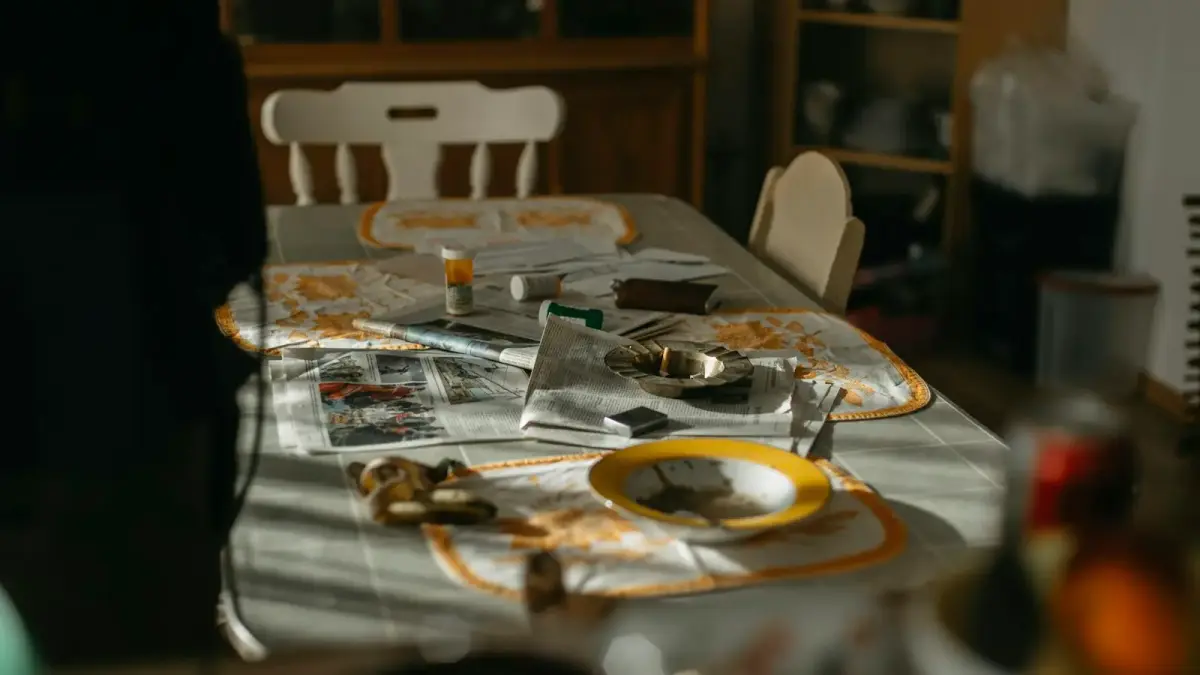
It was January. The windows were frosted at the edges and the furnace clicked on every twenty minutes. She sat at the kitchen table with her reading glasses low on her nose, a cup of tea going cold beside her, and a seed catalog spread open like a hymnal.
She wasn’t reading it the way you read a magazine. She was studying it. Comparing bloom times. Noting which tomatoes needed full sun and which could handle the shady patch behind the garage. She’d circle something, then turn back three pages to check a price, then return and circle it again with more conviction.
The ground outside was frozen solid. Nothing would be planted for months. And yet there she was, building a garden that existed only in pencil marks and imagination, as certain about July’s cucumbers as she was about tomorrow’s breakfast.
I didn’t understand it then. I do now.
1. They learned that waiting and preparing are not the same thing
There’s a difference between waiting for spring and getting ready for it. A child who watched someone plan a garden in January absorbed that distinction before they had words for it.
Waiting is passive. It’s sitting with your hands in your lap, hoping the weather changes. Preparing is active - choosing which seeds to order, sketching where the rows will go, calculating how many weeks until the last frost.
A 2019 study in the Journal of Personality and Social Psychology found that people who engage in what researchers call “proactive coping” - taking concrete steps toward future goals before challenges even arise - report significantly lower anxiety and higher life satisfaction. They aren’t worrying about the future. They’re furnishing it.
The child at the kitchen table didn’t know the term proactive coping. They just watched someone they loved make decisions about things that didn’t exist yet, and it looked like the most natural thing in the world.
2. They make lists the way other people pray
If you grew up watching someone circle items in a catalog, you probably grew into an adult who makes lists for everything. Not because you’re rigid. Not because you’re anxious. Because list-making was modeled for you as an act of faith.
Your mother or grandmother wasn’t writing a grocery list when she filled out that seed order form. She was making a covenant with the future. She was saying: I believe there will be a July, and in that July there will be tomatoes, and I am choosing which ones right now.
You do the same thing when you start planning a vacation six months out, or when you begin organizing the holidays in September, or when you buy school supplies in June. People sometimes tease you for it. They say you’re “too organized” or “always thinking ahead.”
But you know what it really is. It’s the only way you know how to hope.
3. They understood that desire required action, not just feeling
One of the most important things a child absorbs from watching a gardener plan is that wanting something beautiful is not enough. You have to do specific, unglamorous things to bring it into being.
You have to read the fine print about soil pH. You have to count backwards from first frost. You have to decide whether the zinnias go along the fence or near the driveway, and you have to make that decision in January when the fence is buried under snow and the driveway is covered in ice.
Psychologist Gabriele Oettingen’s research on “mental contrasting” - published extensively in journals including Motivation and Emotion - found that people who pair their positive fantasies with concrete planning are far more likely to achieve their goals than people who simply daydream. Wishing without planning actually decreases motivation, because the brain registers the fantasy as already accomplished.
The woman at the kitchen table with the seed catalog was doing mental contrasting decades before it had a name. She was imagining the garden and simultaneously confronting the reality of frozen ground, limited budget, and a short growing season. And then she picked up her pencil and started solving for it.
4. They carry a quiet confidence about things they cannot yet see
There is a particular kind of steadiness that belongs to people who grew up around planners. It’s not arrogance. It’s not even optimism, exactly. It’s a bone-deep familiarity with the idea that invisible things are already on their way.
If you watched someone order seeds in January, you learned that absence is not the same as impossibility. The garden wasn’t visible. The flowers weren’t real yet. But the packets would arrive in the mail in three weeks, and the seedlings would go into the ground in May, and by August the kitchen table would be covered not in catalogs but in tomatoes.
You carry that knowledge into everything. When a project at work is in its earliest, most uncertain stage, you don’t panic. When a relationship is new and undefined, you don’t rush it. You know from experience that some things need months of invisible work before they show themselves.
Other people sometimes mistake this for patience. But it’s not patience. It’s trust - earned over years of watching pencil marks turn into flowers.
5. They find comfort in the rhythm of seasons, not in certainty
The gardener at the kitchen table wasn’t certain her garden would thrive. She’d lost crops before. She knew about late frosts and early blights and the groundhog who lived under the shed and treated her lettuce like a buffet.
She planned anyway.
A child who absorbed this lesson grew into an adult who doesn’t need guarantees to begin. They’ve seen too many January catalogs turn into August harvests to believe that certainty is a prerequisite for action.
A 2021 study published in Frontiers in Psychology found that individuals with a strong “future time perspective” - the ability to mentally connect present actions to future outcomes - demonstrated greater resilience in the face of uncertainty. They weren’t better at predicting the future. They were simply more practiced at working toward it without knowing exactly how it would turn out.
That’s what the seed catalog taught you. Not that everything would be fine, but that you could begin before it was fine, and that beginning was itself a kind of answer.
6. They treat preparation as an emotional practice, not a productivity hack
Modern culture loves to frame planning as a productivity tool. Buy this planner. Use this app. Optimize your morning routine. But the kind of planning you learned at the kitchen table had nothing to do with efficiency.
Your grandmother wasn’t optimizing. She was sitting with possibility. She was spending a January evening in conversation with July, asking it what it wanted to become. The catalog was not a to-do list. It was a dialogue between who she was in the cold and who she intended to be in the warmth.
You still do this. When you plan, something in your chest loosens. Not because the plan itself is perfect, but because the act of planning connects you to a version of the future where things have worked out, where the seeds took, where the effort mattered.
Other people reach for meditation or journaling. You reach for a notebook and a pencil. Both are forms of the same thing - choosing to sit with what’s coming instead of running from what is.
7. They know that hope is a practice, not a feeling
This might be the deepest thing the seed catalog taught you.
Hope is not an emotion that washes over you. It’s not a mood. It’s not something that arrives on its own when circumstances improve. Hope is something you do. It’s a verb disguised as a noun.
Your mother or grandmother demonstrated this every January. She didn’t sit at that table because she felt hopeful. She sat there because sitting there - opening the catalog, reading the descriptions, circling the varieties, filling out the order form - was how she practiced hope. The feeling came after, if it came at all. But the practice came first.
Brene Brown has written about how hope is actually a cognitive process, not an emotional one. It involves setting goals, finding pathways to those goals, and believing in your own agency to follow those pathways. The woman with the seed catalog embodied all three without ever reading a self-help book.
She set the goal: a garden. She found the pathway: these seeds, this soil, this timeline. And she believed in her ability to make it happen - not because she was confident, but because she’d done it before, year after year, catalog after catalog.
8. They pass it on without realizing it
Here’s the part that gets me every time.
You probably didn’t sit down as an adult and decide to become someone who plans ahead. You didn’t read an article about the benefits of preparation and adopt it as a life strategy. It just happened. It seeped into you the way the smell of turned soil seeps into your clothes.
You plan your weeks on Sunday nights because someone planned their garden on January evenings. You start Christmas shopping in October because someone started ordering seeds in the coldest month. You carry a notebook with lists that reach months into the future because someone once carried a catalog with circled flowers that wouldn’t bloom for half a year.
And if you have children, they’re watching you do it. They’re sitting at the kitchen table while you make plans for things they can’t see yet. They’re learning, without knowing they’re learning, that hope is something you build before you feel it.
The inheritance is quiet. No one announces it. No one hands it down in a ceremony. It passes through kitchen tables and pencil marks and the particular hum of a person in winter, thinking about summer.
I keep a small box in my desk drawer. Inside it are three seed packets I ordered last February - snap peas, nasturtiums, and a variety of cherry tomato called Sun Gold.
I haven’t planted them yet. The season got away from me. The patio containers still have last year’s dried basil stalks in them.
But I ordered the seeds in February, on a night when it was sleeting outside and the world felt small and gray. I sat at my kitchen table, opened a catalog on my laptop, and chose things that would need sun and warmth and time I hadn’t lived yet.
It felt like the most natural thing in the world. It felt like sitting across from my grandmother, both of us making promises to a season that hadn’t arrived.
You didn’t learn to plan because you’re anxious about the future. You learned to plan because someone showed you that the future was worth preparing for - that it deserved your attention even when it was invisible, that it was worth a pencil mark and a stamped envelope and a small act of faith performed at a kitchen table while the snow piled up outside.
That’s not anxiety. That’s not rigidity. That’s a woman in January, circling flowers she already knew by heart, teaching you without words that hope is something you order one packet at a time and trust the ground to deliver.