Children who grew up watching a parent apologize with gifts instead of words - the flowers that appeared after the argument, the toy that arrived after the silence - often become adults who cannot receive a kind gesture without immediately searching it for a motive, because a child who learned that generosity was the language of guilt never stopped reading the fine print on every act of love

My partner brought me flowers last Tuesday. No occasion. Just a bunch of yellow tulips from the farmer’s market because he said they reminded him of me.
I stood in the kitchen holding them, and my stomach dropped.
Not fluttered. Dropped. The way it does when you open an envelope you know contains bad news. I smiled and said thank you, but my mind was already running the math. What happened today? What’s he about to tell me? Did he forget something, break something, do something I haven’t discovered yet?
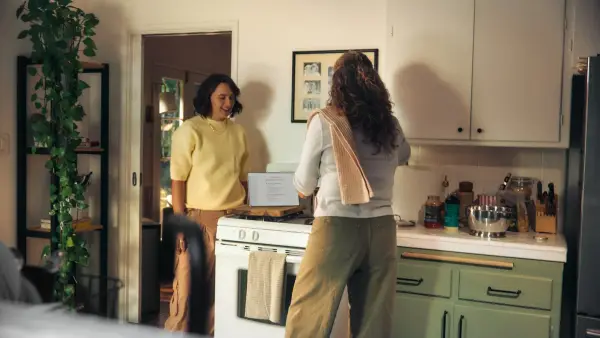
He was already back at the counter chopping onions for dinner, completely unaware that I was standing there holding a perfectly innocent bouquet of flowers and scanning it for evidence.
It took me years to understand why I do this. Why kindness makes me suspicious instead of happy. Why generosity feels like a warning instead of a gift. The answer lives in a very specific room in my childhood - the one where apologies never sounded like words. They sounded like the crinkle of wrapping paper.
The Replacement Language
My father missed my piano recital when I was nine. I’d practiced the piece for weeks. I remember sitting on the bench scanning the audience for his face and not finding it.
He never said he was sorry. He never sat down with me and explained why he wasn’t there or asked me how it felt to look out and see his empty chair.
What he did was bring home a stuffed elephant the next day. It was enormous, almost as tall as I was. He presented it with this big smile, like the elephant was supposed to fill the shape of the conversation we weren’t having.
I loved that elephant. I also understood, in the wordless way that children understand everything, exactly what it meant. It meant we were done talking about the recital. It meant the elephant was the period at the end of a sentence he never actually spoke.
This is what psychologists call a “substitution pattern” in emotional communication. A 2019 study published in the Journal of Family Psychology found that children who grew up in homes where material gestures consistently replaced verbal repair after conflict were significantly more likely to develop what the researchers described as “transactional interpretive frameworks” - meaning they learned to read every generous act as a transaction with hidden terms.
My mother had her own version. After the really bad arguments - the ones where her voice got so loud the neighbors’ dog would start barking - she’d take me shopping. New shoes. A dress I didn’t need. Ice cream on the way home. The afternoon would be bright and sweet and entirely performative, and I knew, even at seven, that we were not shopping because she wanted to buy me things. We were shopping because she needed me to stop being afraid of her.
The gift was never for me. The gift was for her guilt.
When Kindness Becomes a Coded Message
Here’s what happens when you grow up in a house where presents are apologies and generosity is guilt wearing a nicer outfit: you become fluent in a language no one else is speaking.
Someone surprises you with concert tickets, and you don’t think about the music. You think about what they’re compensating for. A friend sends you a care package during a hard week, and instead of feeling supported, you feel the faint electrical hum of suspicion. Your partner books a weekend getaway, and your first instinct isn’t excitement - it’s interrogation.
You become the person who says “you didn’t have to do that” and means it literally. Please don’t do that. Because when you do that, I have to figure out why you did that, and the figuring out is exhausting.
A 2021 study in Frontiers in Psychology examined how early experiences with “conditional generosity” - kindness that reliably preceded or followed conflict - shaped attachment behaviors in adulthood. The researchers found that participants who reported growing up with this pattern showed heightened activation in the brain’s threat-detection regions when receiving unexpected gifts, even from trusted partners. Their nervous systems had learned to treat generosity as a signal that something was wrong.
Not as a signal that something was right. As a signal that something was wrong.
That’s worth sitting with for a moment. Your body learned to feel danger in the exact place where other people feel loved.
The Fine Print Reader
You know how some people can just accept a compliment? Someone says “you look great today” and they say “thanks” and that’s the whole interaction?
I have never once been that person.
Every kind word, every generous gesture, every unexpected act of thoughtfulness gets run through an internal audit that I did not ask for and cannot shut off. I’m reading the fine print on the kindness. I’m looking for the clause that says what this generosity is going to cost me. I’m scanning for the part where the other shoe drops, because in my childhood, the other shoe always dropped. It just dropped quietly, wrapped in tissue paper and tucked inside a gift bag.
This shows up in relationships in ways that are hard to explain to someone who didn’t grow up this way.
You struggle to enjoy surprise gifts because surprises were never just surprises. They were diplomatic maneuvers. You trust consistent, boring presence more than grand romantic gestures, because the grand gestures were the ones that meant something had gone wrong. You feel most safe with people who show up predictably, without fanfare, without bringing you anything except themselves.
And the hardest part - the part that can make you feel truly broken - is that you know your reaction isn’t fair. You know that sometimes flowers are just flowers. You know that your partner isn’t your father, that your friend isn’t your mother, that the present doesn’t contain a hidden apology.
You know this. Your body doesn’t.
The Guilt Translation
Daniel Goleman’s work on emotional intelligence describes how children develop their understanding of emotions primarily through observation - not through what they’re told feelings mean, but through what they watch feelings do. When a child watches guilt consistently transform into generosity rather than accountability, the child doesn’t learn that guilt leads to repair. The child learns that guilt leads to purchase.
This creates a very specific kind of adult.
You become someone who is generous to a fault - but your own generosity sometimes frightens you, because you know what generosity meant in your house. You catch yourself buying a gift for someone after a disagreement and have to stop and ask: am I doing this because I want to, or because I learned that this is what you do instead of saying the hard thing?
You become someone who would rather hear “I’m sorry I hurt you” than receive any gift in the world. Words are the currency you were starved of. Material things are the currency that was used to buy your silence, your forgiveness, your willingness to pretend the hard conversation didn’t need to happen.
You also become someone who is remarkably good at reading rooms. You can sense when someone’s being too nice. You can feel the tension underneath a cheerful dinner. You can detect the difference between kindness that comes from love and kindness that comes from guilt - and you can detect it from across a room, in under a second, before your conscious mind even catches up.
That’s not a flaw. That’s a skill you built to survive.
What You Were Actually Learning
A 2020 study published in the Journal of Personality and Social Psychology found that adults who grew up in emotionally avoidant households - where direct conversation about conflict was consistently sidestepped - developed what the researchers called “heightened relational vigilance.” These individuals were actually more accurate than their peers at detecting insincerity in social interactions.
Read that again. More accurate.
You weren’t learning to be suspicious for no reason. You were learning to read the subtext because in your house, the subtext was the only honest text there was. The gifts lied. The shopping trips lied. The nice dinners out lied. But the energy underneath all of it told the truth, and you became an expert at reading energy because your emotional safety depended on it.
The child who learned to look underneath the wrapping paper wasn’t being paranoid. They were being perceptive. They were doing exactly what a child’s brain is supposed to do - scanning the environment for accurate information about what’s really happening and adjusting accordingly.
The problem isn’t that you learned this skill. The problem is that you’re still running the program in rooms where you no longer need it. You’re still reading the fine print on love letters that don’t have any fine print.
Learning to Receive Without Translating
I wish I could tell you there’s a clean fix for this. There isn’t. You can’t just decide to stop scanning kindness for hidden meaning, the same way you can’t decide to stop flinching when someone raises their hand too fast near your face. The reaction lives deeper than decision.
But here’s what I’ve learned, slowly, imperfectly, over years of catching myself in the act.
You can notice. You can stand in the kitchen holding yellow tulips and feel your stomach drop and say to yourself - quietly, without judgment - there it is. The old program running. The one that says flowers mean someone did something wrong.
You can let the feeling exist without letting it narrate. The suspicion can sit in your chest while you put the tulips in water. Both things can be true at the same time: your nervous system can be scanning for danger while your adult mind acknowledges that this man just bought you flowers because they were yellow and he thought of you.
You can tell the people you trust what’s happening. Not as an accusation, but as information. “When you surprise me with something, my first reaction is fear. It’s not about you. It’s an old reflex.” The people who love you will not be offended by this. They’ll be grateful you trusted them enough to explain.
And you can begin to notice the difference between the generosity you grew up with and the generosity you’re being offered now. The old generosity came with silence. It replaced a conversation. It was the period at the end of a sentence nobody spoke. The new generosity - the real kind - comes alongside words, not instead of them.
You were never ungrateful. You were a child who learned to read a very specific emotional language, and you read it fluently. The work now isn’t to stop reading. It’s to learn that some people are actually saying exactly what they mean, and the flowers are just flowers, and there is no fine print, and you are allowed to simply hold them and feel something that isn’t fear.
That’s not easy. But you already did the harder thing. You survived a childhood where love always came in a box, and you figured out - all by yourself, with no one explaining it to you - that the box was never really the point.