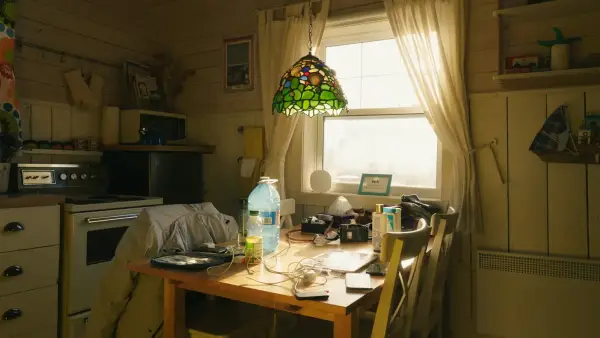
Children who always cleaned up without being asked - who started the dishes before anyone finished eating, who wiped the counters and swept the floor while their siblings watched television - were not naturally tidy or unusually responsible, they were children who discovered before age eight that a clean kitchen lowered the temperature of an entire house, and the woman at forty-nine who cannot sit down until every surface is clear is not cleaning but performing the only version of safety her body has ever trusted
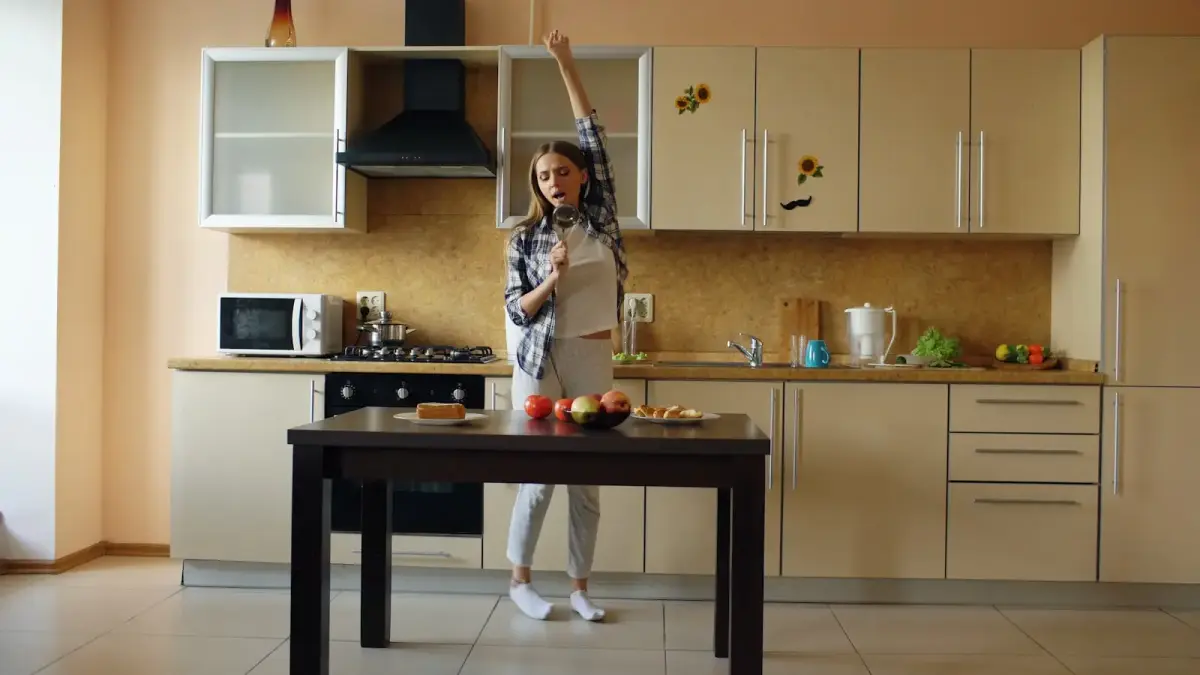
I was nine the first time I realized I could change the mood of a room without saying a word.
My parents had been arguing about something small - a bill, maybe, or who forgot to call someone back. The kind of argument that didn’t have a real subject, just a pressure that had been building all day and needed somewhere to land. I remember standing in the doorway of the kitchen, watching my mother’s jaw tighten, watching my father’s hands go still around his fork. And then, without thinking about it, I started clearing the table.
I collected plates that still had food on them. I ran the water until it was hot. I squeezed dish soap into the sink and began scrubbing, and somewhere between the second plate and the third, the argument lost its momentum. My mother dried her eyes. My father leaned back in his chair and exhaled. The room got quieter.
I didn’t understand what I had done. But my body understood it perfectly. And it never forgot.
The kitchen was never about the kitchen
If you grew up as the child who cleaned - who swept without being asked, who started the dishes while everyone else was still eating, who straightened the shoes by the door and wiped down the bathroom counter before bed - you probably heard a version of the same compliment your entire childhood.
“She’s so responsible.” “He’s such a good kid.” “I wish my children were that helpful.”
And you probably smiled when you heard it, because the compliment meant the system was working. You were being seen as good. Which meant, for another day, you were safe.
But you were not naturally tidy. You were not born with a gene for organization or an unusual tolerance for housework. You were a child who had learned - earlier than any child should have to - that the emotional climate of your home was unstable, and that the fastest way to stabilize it was to make yourself useful before anyone had to ask.
A 2014 study published in the Journal of Family Psychology found that children in high-conflict homes often develop what researchers call “emotional labor strategies” - behaviors designed not to solve the conflict but to reduce the ambient tension. Cleaning, organizing, managing younger siblings, preparing food. These are not chores. They are survival behaviors dressed up as helpfulness.
The child who cleaned was not helping. The child who cleaned was negotiating.
Usefulness as a form of permission
Here is what no one tells that child, because no one in that house has the language for it: you were not cleaning the kitchen. You were earning the right to exist in the room without apology.
In homes where a parent’s mood is unpredictable - where affection is conditional, where calm is temporary and always feels borrowed - a child learns very quickly that there are two versions of themselves. There is the version that takes up space, has needs, makes noise, and risks triggering something. And there is the version that is useful, quiet, productive, and invisible in all the ways that matter.
The useful version is safer. So the useful version becomes the only version they know how to be.
Gregory Jurkovic, whose research on parentification has shaped how we understand these dynamics, described this pattern as a form of “destructive parentification” - when a child takes on adult responsibilities not out of maturity but out of necessity. The child is not being responsible. The child is being recruited into an emotional economy where their labor purchases stability.
And the currency is always the same: if I make this house run smoothly, maybe no one will yell tonight. If I keep things clean, maybe I can stay.
What the body learns before the mind catches up
You did not decide to become this person. Your nervous system decided for you.
Before you had the vocabulary to name what was happening in your house - before you understood words like “volatility” or “emotional neglect” or “walking on eggshells” - your body was already cataloging data. It was learning which sounds meant danger. Which silences meant the pressure was building. Which facial expressions on your mother or father meant the next hour was going to be hard.
And it was learning which of your behaviors made those signals go away.
A 2019 study in Frontiers in Psychology on adverse childhood experiences found that children who develop hypervigilant caregiving behaviors show measurable changes in their stress response systems. Their cortisol patterns look different. Their startle responses are heightened. They are not relaxed children who happen to enjoy cleaning. They are children whose bodies have learned that stillness is dangerous and productivity is the closest thing to peace.
This is why, decades later, you cannot sit down in your own living room when there are dishes in the sink. It is not about the dishes. It has never been about the dishes.
It is about the fact that your body still believes, at a level deeper than thought, that a messy room is a room where something bad is about to happen.
The woman at forty-nine
I want to tell you about a version of this story that plays out in adulthood, because if you recognize yourself in any of this, you probably recognize her too.
She is forty-nine. Her children are in high school or already gone. Her home is beautiful - always clean, always organized, always ready for someone to walk through the door and find nothing out of place.
She cannot sit down until the kitchen is spotless. She cannot go to bed if there is a single dish in the sink. She cannot enjoy a dinner party in her own home because she is mentally tracking the crumbs, the water rings on the table, the jacket draped over the chair that should be in the closet.
Her partner says she is a perfectionist. Her friends say she keeps a beautiful home. Her mother - the same mother whose moods once governed the entire house - says, “You were always like this. Even as a little girl, you just liked things clean.”
And she smiles when she hears it. Because the system is still working. She is still being seen as good.
But she is exhausted in a way that has nothing to do with the cleaning. She is exhausted because she has been performing safety for forty years, and she has never once been allowed to stop.
The cost of compulsive usefulness
The research on parentification makes something clear that is hard to hear: children who take on caregiving roles in their families of origin do not simply outgrow the pattern. They carry it into every relationship they build.
A 2018 study in the Journal of Research in Personality found that adults who scored high on measures of childhood parentification were significantly more likely to experience difficulty setting boundaries, chronic people-pleasing, resentment toward partners who did not match their level of household labor, and a persistent, low-grade sense that they were only as valuable as their last act of service.
This is the adult life of the child who cleaned.
You say yes when you mean no. You take care of things before anyone asks, and then you feel angry that no one noticed. You cannot receive help without feeling guilty, because help implies that you are not handling it, and not handling it was never an option.
You do not know how to rest without earning it first. And the earning never feels finished.
Your partner loads the dishwasher wrong, and you feel a flash of rage that is completely out of proportion to the moment - not because you care about the dishwasher, but because the dishwasher being loaded wrong means the kitchen is not safe, and the kitchen not being safe means you are not safe, and the chain reaction happens so fast that by the time you register the feeling, you have already re-loaded the dishwasher yourself.
The cleaning was never about cleanliness
If you are reading this and your chest feels tight, I want you to hear something that the nine-year-old version of you needed to hear and never did.
You were not responsible for the temperature of that house.
The adults in your life had a job - to create an environment where you could be a child. Where you could leave your shoes in the middle of the floor and forget to put your plate in the sink and watch television with your siblings instead of scrubbing the counters. That was their job. Not yours.
And the fact that you took it on - that you stepped into a role no child should have to fill - does not make you strong. It makes you someone who deserved more than they got.
The cleaning was never about cleanliness. It was about control. It was the only lever you had in a house full of forces you could not influence, and you pulled it every single day because pulling it was the only thing that made the unpredictable feel survivable.
Learning to sit down
I am not going to tell you to stop cleaning. That would be like telling someone to stop breathing - the pattern is too deep, too wired into your nervous system, too tangled up with your sense of self.
But I want to offer you something small.
The next time you feel the pull - the urgent, almost physical need to get up and wipe the counter, to straighten the pillows, to clear the table before anyone has finished eating - I want you to pause. Not to stop. Just to pause.
And in that pause, I want you to ask yourself one question: Am I cleaning because I want to, or because my body believes something bad will happen if I don’t?
You do not have to answer it. You do not have to change anything. Just noticing the question is enough.
Because that question is the beginning of something the child who cleaned was never given - the possibility that you are allowed to sit in a room, in the middle of the mess, and still be safe. Still be wanted. Still be enough.
The kitchen does not need to be clean for you to deserve to be here.
You deserved to be here the whole time.