Children who always knew when someone in the family was about to cry - who could see it building in a parent's face minutes before the first tear, the slight glass in the eyes, the breath that changed, the mouth that did something no one else noticed - become adults who carry other people's sadness home like luggage they never packed, because a body that learned to detect grief never learned how to stop detecting
The Watching
I was eight years old, sitting at the kitchen table pretending to do homework, when I noticed my mother’s jaw do something almost imperceptible. A tiny shift. A tightening that lasted less than a second.
I put my pencil down. I knew what was coming.
Three minutes later, she turned away from the sink and wiped her eyes with the back of her wrist. She hadn’t made a sound. Nobody else in the house registered anything at all.
But I had already left my body. I was already across the room in my mind, already assembling the right expression, already preparing to be whatever she needed me to be in the next ninety seconds.
I was eight. And I was already fluent in a language no one had taught me - the language of someone else’s grief arriving before it had fully formed.
If you know exactly what I’m describing - if you read that paragraph and felt something unlock in your chest - then you probably grew up the same way. Watching. Scanning. Catching things three beats before they became visible to everyone else. And you’re probably still doing it now, decades later, in every room you enter.
What the child actually learned
Here’s what most people don’t understand about growing up this way. You didn’t develop a skill. You developed a survival system.
The child who learns to read pre-emotional cues in a parent’s face isn’t doing something extraordinary. They’re doing something necessary. Somewhere early in their development, their nervous system received a clear message: knowing what’s about to happen in this house is how you stay safe.
Maybe the parent’s tears meant the whole evening would shift. Maybe it meant raised voices later. Maybe it meant you’d need to become small, become helpful, become invisible, become the one person who could make it better.
It doesn’t matter what came after. What matters is that your body made a calculation - one you had no say in - that detecting emotional shifts early was more important than anything else happening in that moment. More important than your homework. More important than your own feelings. More important than being a child.
A 2005 study published in the journal Development and Psychopathology found that children raised in emotionally unpredictable households develop significantly heightened accuracy in reading facial micro-expressions - particularly those associated with sadness and anger - compared to children in stable environments. The researchers called it “perceptual sensitization.” The children weren’t more emotionally intelligent in the way we usually mean that phrase. They were more emotionally vigilant.
There’s a difference. And it’s one that follows you for the rest of your life.
The body that never got the memo
You’re fifty-three now. Or forty-seven. Or sixty-one. You haven’t lived in your childhood home for decades. The parent whose face you used to scan may not even be alive anymore.
And yet.
You walk into a meeting at work and within four seconds, you know your colleague is upset about something she hasn’t mentioned yet. You can feel it in the room like a weather shift. You notice the way her smile doesn’t quite reach the muscles around her eyes. You notice the slightly longer pause before she responds to a question. You notice the way she holds her pen differently.
Nobody else notices. They never do.
By the time you get home that evening, you’re carrying something heavy. Something shapeless. Something that technically has nothing to do with you. And you can’t put it down because you don’t even know when you picked it up.
This is what it means to have a detection system with no off switch. Your body learned to scan for emotional distress the way other bodies learned to scan for traffic before crossing a street. It became automatic. Pre-conscious. You don’t choose to notice. You can’t choose not to.
Dr. Gabor Mate writes extensively about how the nervous system of a child adapts to its environment with ruthless efficiency. The adaptation that kept you safe at seven doesn’t know that you’re safe now. It doesn’t know the context has changed. It keeps running the same program in every relationship, every room, every interaction - because no one ever told it the emergency was over.
The weight you carry that has no name
People in your life have probably told you that you’re “so empathetic.” They say it like a compliment. Like it’s a gift you were given - this ability to feel what others feel, to know what’s wrong before anyone speaks.
But you know the truth. It doesn’t feel like a gift most days. It feels like a tax.
You come home from a dinner party and you’re exhausted in a way that has nothing to do with how late you stayed. You absorb your partner’s stress before they’ve even articulated it. You know when your adult child is struggling even when they insist they’re fine, and the knowing sits in your stomach like a stone you can’t dissolve.
You carry other people’s emotional weather inside your own body. Not because you choose to. Because your nervous system genuinely cannot tell the difference between their feelings and yours.
A 2019 study in Frontiers in Psychology examined what the researchers called “empathic distress fatigue” - the phenomenon where highly empathic individuals experience burnout not from their own life circumstances but from chronic absorption of others’ emotional states. The study found that individuals who reported high childhood emotional vigilance were significantly more likely to experience this form of fatigue in adulthood. Their bodies had never learned the boundary between witnessing pain and metabolizing it.
You were taught - not in words but in repetition, thousands of times before you turned ten - that someone else’s sadness was your assignment. Your nervous system still believes this. Every single day.
Why “just stop caring so much” doesn’t work
People who love you have probably tried to help. They’ve said things like “you can’t carry everyone’s problems” or “you need to set boundaries” or “you have to let people have their own feelings.”
And you’ve nodded. Because you know they’re right. Intellectually, you understand that your colleague’s bad day is not your burden. That your friend’s grief is hers to process. That you are allowed to leave sadness where you found it.
But understanding something intellectually and being able to do it physically are two entirely different things.
You can’t think your way out of a nervous system response. You can’t reason with a body that was trained before you had language. The detection system isn’t a habit. It’s architecture. It was built into the wiring of who you are at an age when you had no capacity to consent to it.
This is why willpower doesn’t touch it. This is why telling yourself to “stop absorbing” feels like telling yourself to stop hearing. The instruction doesn’t match the mechanism.
What’s happening isn’t emotional weakness or poor boundaries in the way those terms are usually used. What’s happening is a deeply intelligent system doing exactly what it was designed to do - in an environment where it’s no longer needed. Your body is solving a problem that ended twenty, thirty, forty years ago.
The grief underneath the detection
Here’s the part nobody talks about. Underneath the hypervigilance, underneath the constant scanning, underneath the weight of carrying everyone else’s feelings - there is a very old sadness.
It’s the sadness of the child who became the watcher instead of the watched. Who learned to track a parent’s emotional state with more precision than that parent ever tracked theirs.
Because here’s what was stolen from you in that exchange: the experience of being the one whose face someone else was reading. The experience of being the one whose shifts someone else noticed. The experience of having your grief detected - three minutes before you yourself knew it was coming.
You learned to see everyone else with extraordinary clarity. But nobody was learning to see you.
And so you became, in some fundamental way, invisible to the people closest to you. Not because they were cruel. But because you were so good at watching that no one realized you needed to be watched too.
That’s the grief. Not that you feel too much. But that the feeling was always flowing in one direction.
What the body needs to hear
I want to be careful here. I’m not going to give you a five-step program to “heal your hypervigilance.” I don’t think that’s honest. This pattern is deep, and it shifts slowly, on its own timeline, in its own way.
But I will tell you what I’ve come to understand after years of living inside this same architecture.
The detection system is not your flaw. It’s your history. It was built by a child who was doing something remarkably brave - paying exquisite attention in an environment that demanded it. That child did not fail. That child survived. And the adult you became is not broken for still carrying the tools that kept that child safe.
A 2021 study in the Journal of Personality and Social Psychology found that individuals with high empathic accuracy - the ability to correctly read others’ internal states - reported lower life satisfaction unless they also developed what the researchers called “empathic regulation.” Not suppression. Not disconnection. But the learned ability to notice without absorbing. To see without carrying.
That’s the work. Not to shut down the seeing. But to build, slowly, the part that was never built for you in childhood - the part that says: I can witness this without it becoming mine.
What I want you to know
You are not too sensitive. You are not too much. You are not failing at boundaries.
You are a person whose body learned something extraordinary at an age when it should have been learning something else entirely. You learned to hold space for other people’s pain before you learned to hold space for your own.
And the fact that you’re still doing it - at forty-five, at sixty, at seventy-two - isn’t a sign that something is wrong with you. It’s a sign that the child who built this system never got told the emergency is over. Never got told they could put the scanner down. Never got told that the room would survive without them watching it.
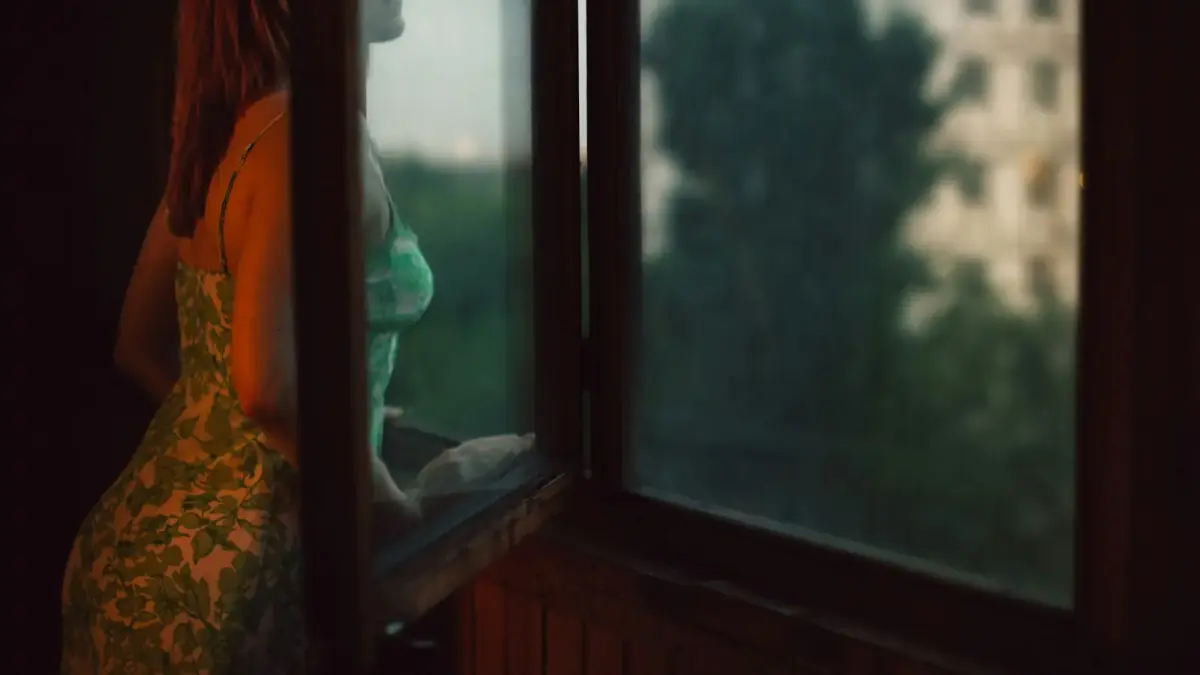
You can start telling them now. Not all at once. Not perfectly. But gently, in small moments, the way you’d reassure a child who’s been standing guard at a window for far too long.
You can come away from the window. The house is quiet now. You did your job. You can rest.