Children who became the parent to their younger siblings - cooking dinner, checking homework, walking them to school - before they understood this wasn't normal often become adults who can hold anything together except their own needs
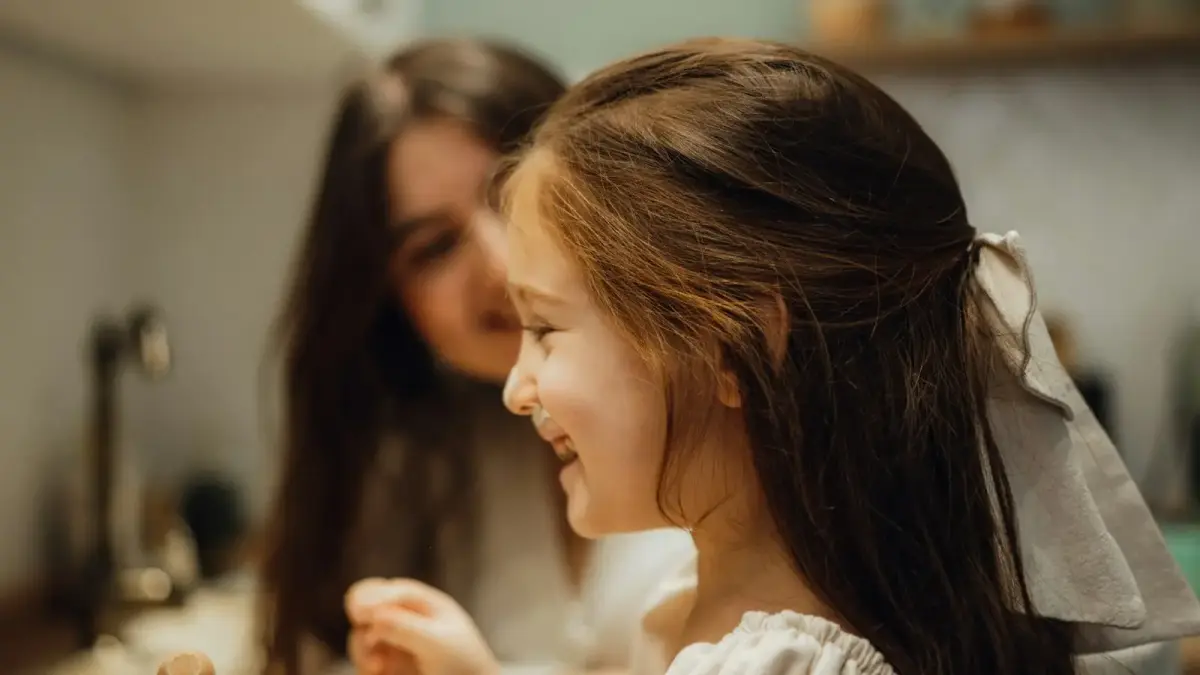
I was nine when I learned how to make spaghetti from a box. Not because I wanted to, but because my little brother was hungry and nobody else was coming home for a while.
I remember standing on a step stool, stirring the pot with a wooden spoon that was almost as tall as I was, and feeling something I couldn’t name at the time. It wasn’t pride exactly. It was closer to a door closing quietly inside me - the part of me that was still allowed to need things locking itself away so the part of me that handled things could take over.
If you were that child - the one who packed lunches, checked homework, braided hair, and knew which sibling needed what before anyone asked - then you already know what I’m about to say. You grew up to become the most competent person in every room you walk into. And you grew up to become someone who has almost no idea how to let another person take care of you.
This isn’t a flaw. It’s an adaptation. And understanding where it came from is the first step toward finally letting yourself have what you spent your whole childhood giving away.
1. They learned to read a room before they learned to read a book
Children who step into a caregiving role early develop an almost supernatural ability to sense what other people need. They can walk into a room and immediately know who’s upset, who’s pretending to be fine, and who’s about to fall apart.
A 2014 study published in the Journal of Family Psychology found that parentified children develop heightened emotional perception - an ability to detect shifts in mood and tension that most children their age simply don’t register. This isn’t a gift. It’s a survival skill.
The problem is that this radar never turns off. As adults, they’re constantly scanning - at work, at dinner, in every relationship. They know what everyone else is feeling before they’ve checked in with themselves.
2. They became the calm one because someone had to be
When the house was chaotic - when a parent was absent, overwhelmed, or emotionally unavailable - these children learned that panic was a luxury they couldn’t afford. Someone had to stay steady. Someone had to say “it’s going to be okay” even when they had no reason to believe it.
So they became that person. They became the one who doesn’t cry at funerals, who handles the crisis at work while everyone else freezes, who speaks in a low, even voice when everything is falling apart.
People call them strong. What they actually are is practiced. They’ve been performing calm since they were seven years old.
3. They feel guilty when they rest
This is one of the most painful patterns, and almost every parentified child recognizes it instantly. The moment they sit down, the moment they take a day off, the moment they try to do absolutely nothing - a voice inside them starts whispering that they’re being selfish.
That voice isn’t theirs. It belongs to a childhood where rest meant someone else went without. Where sitting still meant a sibling didn’t get fed, didn’t get picked up from school, didn’t get comforted after a nightmare.
Gabor Mate has written extensively about how children who are forced into caregiving roles internalize the belief that their worth is tied to their usefulness. Rest, for them, doesn’t feel like recovery. It feels like abandonment.
4. They don’t know how to ask for help - not because of pride, but because they never learned the language
There’s a difference between being too proud to ask for help and genuinely not knowing how. Parentified children often fall into the second category.
They never had a model for receiving. Nobody taught them what it looks like to say “I’m struggling” and have someone show up without being asked. Their childhood was organized around one direction of care - outward.
So as adults, when someone offers to help, they feel a flash of something uncomfortable. Not quite fear. Not quite shame. More like confusion - as if someone just spoke to them in a language they were supposed to know but never learned.
5. They chose partners who needed them, not partners who matched them
A 2019 study in Frontiers in Psychology found that adults who experienced parentification in childhood are significantly more likely to enter relationships where they occupy a caregiving role. They don’t do this consciously. They do it because need feels like love to them.
When someone says “I don’t know what I’d do without you,” it doesn’t feel like pressure. It feels like home. It feels like the only kind of closeness they’ve ever known.
The tragedy is that these relationships often confirm the original wound. They keep giving. The other person keeps receiving. And nobody ever asks them how they’re doing.
6. They were praised for being mature - and it sealed them in
“You’re so responsible.” “You’re such a little adult.” “I don’t know what this family would do without you.”
These sentences were meant as compliments. They landed as job descriptions. Every time a parentified child was praised for being capable beyond their years, the message was clear - this is what makes you valuable. This is why people love you.
So they kept doing it. They kept being the responsible one, the reliable one, the one who holds everything together. Not because they wanted to, but because it was the only version of themselves that ever received approval.
7. They carry a grief they can’t quite name
There’s a specific kind of sadness that comes with realizing your childhood wasn’t really a childhood. It’s not dramatic. It’s not the kind of grief that announces itself. It’s quieter than that - more like a low hum that’s always been there.
It shows up when they watch other families and notice how the children are just being children. It shows up when someone asks about their favorite childhood memory and they have to think for a long time. It shows up at three in the morning when the house is quiet and there’s nothing left to manage.
A 2021 study in Psychological Science found that adults who experienced parentification report a persistent sense of lost childhood - not as a specific trauma, but as a diffuse feeling of having missed something they can’t quite name.
8. They take care of everyone at work, too
It doesn’t stop at home. Parentified children grow into the colleague who trains the new hire, covers the extra shift, remembers everyone’s birthday, and never once asks for a raise.
They become the manager who absorbs their team’s stress. The coworker who stays late so someone else can leave early. The person who is always, always holding the emotional weight of the group.
They’re not doing it for recognition. They’re doing it because their nervous system is wired to scan for who needs what and then provide it. It’s automatic. It’s exhausting. And most of them don’t even realize they’re doing it.
9. They struggle to let their own children just be children
This one is particularly heartbreaking. Parentified adults often become deeply loving, attentive parents. But beneath that devotion runs a current of anxiety - a fear that their child might have to carry what they carried.
They overcompensate. They hover. They make absolutely sure that their child never has to worry about adult problems, never has to take care of someone else, never has to grow up too fast.
And sometimes, in the quiet moments, they watch their child playing carelessly on the living room floor and feel a pang of something that isn’t quite sadness and isn’t quite joy. It’s recognition. That was supposed to be me, they think. That freedom was supposed to be mine, too.
10. They are not broken - they are carrying proof of how much they loved
Here’s what I need you to hear if this is your story. You were not a small adult. You were a child who loved your family so much that you set yourself aside to hold them together.
That competence you carry now - the ability to manage a crisis, to anticipate what people need, to keep everything running smoothly - that is not who you are. That is what you built to survive. And it served you. It kept your siblings fed and safe and loved.
But you are allowed to put it down now.
You are allowed to not be the strong one. You are allowed to say “I need something” without earning it first. You are allowed to rest without guilt, to receive without performing gratitude, to let someone take care of you without immediately looking for a way to pay them back.
I think about that nine-year-old standing on a step stool sometimes. I think about how she didn’t know she was doing anything unusual. She thought every kid made dinner. She thought every kid checked the locks at night and made sure their brother brushed his teeth.
She wasn’t broken. She was remarkable. And she deserved so much more than being needed.
If you were that child, I want you to know something. The fact that you’re reading this - that you’re trying to understand why you are the way you are - that is not a small thing. That is the part of you that never got to be a child finally raising its hand and saying, quietly, for the first time: I’m still here.
And you are. You’re still here. And it’s your turn now.