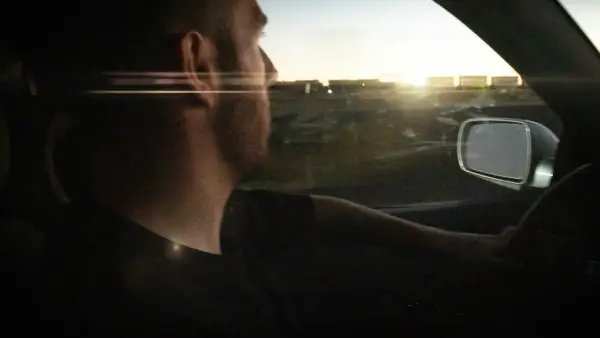
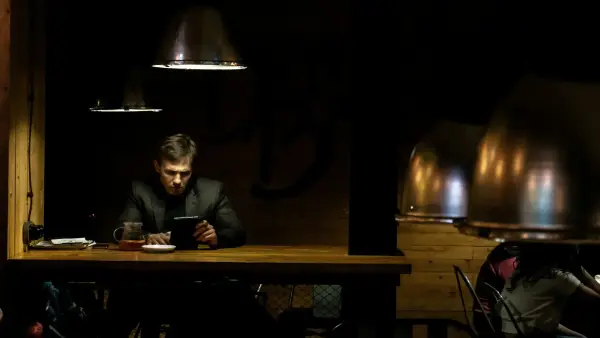
Children who grew up in unpredictable homes often become adults whose bodies broadcast calm so convincingly that nobody ever thinks to check, because they learned before they had words for it that the safest thing a child could do was make their body lie

When Stillness Was a Strategy
I used to get compliments on how calm I was. In meetings, in emergencies, at family gatherings where someone’s voice started climbing toward the ceiling. “You’re so steady,” people would say. “Nothing rattles you.”
I’d smile. The right kind of smile - warm, easy, not too wide. I’d been practicing it since I was seven.
What nobody could see was the inventory running beneath that smile. Who in the room was tense. Whether the energy had shifted in the last thirty seconds. How many steps to the nearest door. My shoulders were down. My breathing was even. My hands were loose in my lap. And every single one of those things was a decision, not a feeling.
If you grew up in a home where the atmosphere could change without warning - where a slammed cabinet or a certain tone of voice meant the next hour was about to become dangerous - your body figured something out long before your mind caught up. It figured out that looking scared made things worse. That flinching drew attention. That the safest posture was one that said, clearly and calmly, “everything is fine here.”
You didn’t learn this in words. You learned it in your muscles, your jaw, the space between your shoulder blades. And you got so good at it that the performance became invisible - even to you.
The Body Learns Before the Mind Does
Children are remarkable translators. They can read a room before they can read a book. And in homes where unpredictability is the norm - where a parent’s mood, sobriety, or presence is never guaranteed - children don’t just learn to read the room. They learn to respond with their entire body.
A 2005 study published in Development and Psychopathology found that children raised in volatile environments develop heightened autonomic regulation strategies far earlier than their peers. In plain language, their nervous systems learn to mask distress signals. Their bodies learn to lie.
This isn’t dramatic language. It’s literal. The child who sits perfectly still at the dinner table isn’t relaxed. They’re monitoring. The child whose face stays neutral when voices rise isn’t unbothered. They’ve learned that showing their real reaction - the flinch, the trembling lip, the wide eyes - creates a new target.
So the body learns a different vocabulary. Loose hands. Soft eyes. A posture that communicates “I’m not a threat and I don’t need anything.” It’s an act of extraordinary intelligence. And it costs more than anyone around that child will ever realize.
The Smile That Arrives Before the Feeling
Here’s something that might sound strange if you didn’t live it, and painfully obvious if you did: the smile comes first. Before the emotion. Before the thought. Someone walks into the room and your face rearranges itself into pleasantness before you’ve even registered who they are.
It’s not fake, exactly. It’s pre-emptive. Your body learned that a smiling child is a safe child. A child who looks happy doesn’t provoke questions. Doesn’t provoke anger. Doesn’t provoke the terrible thing that happens when a stressed parent feels judged by their own kid’s expression.
So the smile became automatic. A reflex dressed up as warmth.
As an adult, you might notice it in odd moments. You’re alone in an elevator and someone steps in, and your face does this thing - this softening, this quiet broadcast of “I’m fine, you’re fine, we’re all fine” - and you didn’t choose it. You might catch yourself smiling through a medical appointment where you’re describing real pain. Smiling while you tell a friend about something that hurt you. Smiling in your therapist’s office while tears run down your face.
The muscles know the choreography so well they don’t wait for permission.
Shoulders Down, Threat Assessment Running
There’s a specific kind of physical stillness that looks like peace but is actually surveillance. If you know it, you know it in your bones.
Your shoulders are down and back - not because you feel relaxed, but because tense shoulders are visible. Your breathing is measured - not because you feel calm, but because ragged breathing is audible. Your hands are still - not because you’re at ease, but because fidgeting communicates distress, and distress in your childhood home was not something you were allowed to advertise.
A 2011 study in Psychosomatic Medicine demonstrated that adults with adverse childhood experiences often show a paradoxical physiological pattern - their cortisol levels and heart rate variability indicate significant stress while their outward presentation appears composed. The researchers described it as a disconnect between internal state and external expression that becomes so habitual it operates below conscious awareness.
This is what hypervigilance looks like when it’s been polished into something presentable. You’re not scanning the room with darting eyes like they show in movies. You’re scanning the room with a soft gaze and a gentle expression, taking in every micro-shift in tone and posture around you, and nobody has any idea you’re doing it because you look like the calmest person at the table.
You probably get told that a lot, actually. That you’re calm. That you’re grounding. That being around you feels safe.
And some part of you wants to laugh, or cry, because your body is working so hard to maintain that illusion that you’ve forgotten what it feels like to actually let your guard down.
The Forgotten Posture
Here’s the part that breaks my heart a little. If I asked you to relax - truly relax, not perform relaxation, not arrange your limbs into what relaxation looks like - could you do it?
Most people who grew up this way can’t answer that question. Not because they don’t want to relax, but because they genuinely don’t know what their body does when it’s not performing. The performance has been running so long it replaced the original.
You might notice this in small ways. You lie down to sleep and realize your jaw is clenched. You get a massage and the therapist says “just let your arm go heavy” and you don’t know how to do that because you’ve been holding your own weight for so long your muscles don’t remember the alternative. You sit on the couch on a quiet Sunday and your partner says “you seem tense” and you say “I’m fine” - and you genuinely believe it, because this level of tension is your baseline.
A 2018 paper in Body, Movement and Dance in Psychotherapy described this phenomenon as somatic amnesia - the body’s loss of access to its own resting state. The researchers found it particularly common among adults who experienced childhood environments requiring sustained emotional suppression. The body simply forgot what it was doing before the performance began.
You’re not choosing tension. You’ve just never been shown what the absence of it feels like in your own skin.
Why Nobody Checks
The cruel efficiency of this adaptation is that it works exactly as designed. You learned to make your body say “I’m fine” so that nobody would look closer. And now, decades later, nobody looks closer.
Your friends think you’re the stable one. Your coworkers think you handle pressure beautifully. Your family - maybe even the same family that made this adaptation necessary - points to you as proof that everything turned out okay. “Look how well-adjusted they are.” “They were always the easy one.”
You were never easy. You were just exquisitely trained.
And because your mask is made of muscle and posture rather than words, it’s nearly impossible to remove on command. You can tell someone “I’m struggling” while your body radiates composure, and they’ll believe your body over your words every time. You can sit in a therapist’s office describing childhood chaos while looking like someone discussing weekend plans, and even trained professionals sometimes miss it.
The body is that convincing. You made it that way. You had to.
The First Honest Tremor
Recovery from this isn’t about learning a new skill. It’s about unlearning the oldest one you have.
It starts with noticing. Catching the moment your smile activates before you’ve decided to smile. Feeling the way your shoulders arrange themselves when someone enters the room. Registering the constant low hum of readiness that you’ve been calling “normal” your entire life.
It might mean letting your face do nothing for a moment. Not pleasant, not neutral, not any particular performance. Just nothing. And noticing how terrifying that feels - how your nervous system immediately protests that a blank face is a dangerous face, because somewhere in your body a child still believes that.
It might mean letting someone see you flinch. Letting your shoulders climb up to your ears without pushing them back down. Letting the tremor in your hands be visible instead of stilling them against your thigh.
These are small things. They feel enormous.
Because you’re not just dropping a habit. You’re renegotiating a contract your body made with danger when you were too young to have any say in the terms. Your muscles agreed to lie on your behalf, and they’ve been honoring that agreement faithfully for decades.
Letting them stop - even for a few seconds - is one of the bravest things a body can do.
You Were Never the Calm One
You were the watchful one. The careful one. The child who loved their family enough to become a mirror that only reflected what was safe to show. That took an extraordinary amount of intelligence, sensitivity, and physical discipline - more than any child should ever have to summon.
If your body still broadcasts calm when you’re falling apart inside, that’s not a flaw. It’s a testament to how hard you worked to survive a situation that demanded you disappear into composure.
But you’re allowed to stop performing now. You’re allowed to have shoulders that don’t know their position. A face that doesn’t arrange itself for anyone. Hands that shake when they need to shake.
You’re allowed to let your body finally tell the truth. And you’re allowed to take as long as you need to remember what that truth even feels like.
It’s still in there. Underneath the stillness, underneath the rehearsed ease, your body remembers what it was doing before it learned to lie. You just have to be patient enough - and safe enough - to let it come back.