Body Language
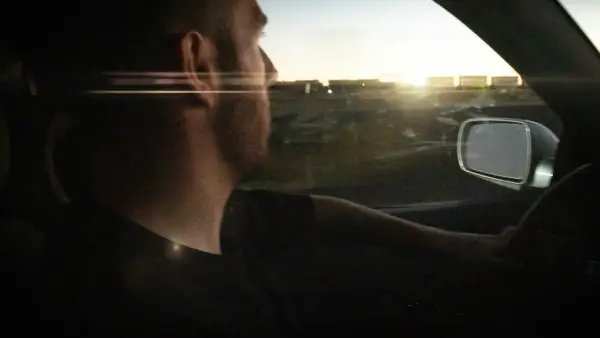
There is a particular kind of man who checks his rearview mirror one extra time before changing lanes even when nothing is behind him - who glances left, signals, glances left again, and then checks the mirror a third time not because he is a careful driver but because a boy who sat in the passenger seat while his father scanned every intersection like it contained a threat learned that a man who does not see what is coming deserves what hits him
There is a particular kind of man who has never once returned a meal at a restaurant even when it was completely wrong, because a boy who watched his father accept whatever was placed in front of him without complaint learned that a man who sends food back is a man who believes the world should rearrange itself to match his preferences, and the safest kind of man was the one who never asked for more than what arrived
Children who always curled their toes inside their shoes when they were nervous - who gripped the floor through their sneakers during parent-teacher conferences and dental appointments, hiding every spike of fear in the one place nobody could see - often become adults who still clench their feet under conference tables and press their toes into the carpet during difficult conversations, because a child who learned to conceal distress found the body's most private hiding place and never vacated it

She's 58 and still nods along when someone is talking to her, even on the phone where nobody can see, even when she agrees with nothing being said - not politeness, not passivity, a girl who learned that the visible performance of listening was the only currency that purchased the right to eventually speak, and the woman who nods at fifty-eight is still paying for something her childhood never gave away for free: the assumption that her attention was already present and did not need to be proved
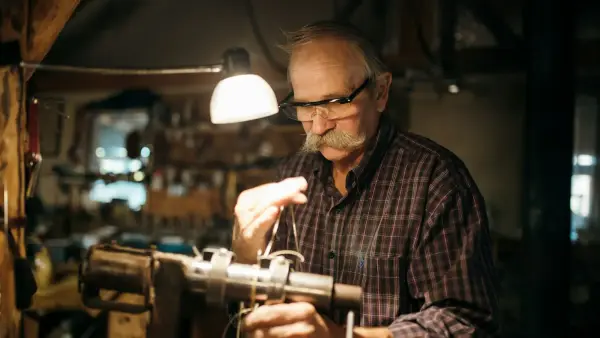
There is a particular kind of man who measures twice, holds the board against his body with his hip, and never asks another person to hold the other end - not because he is stubborn but because a boy who watched his father build alone on a Saturday learned that competence was something you performed silently, never something you asked for
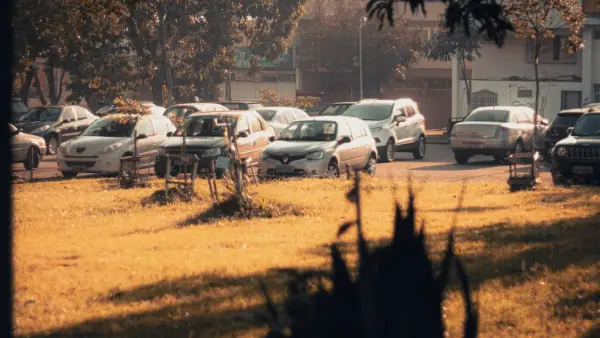
There is a particular kind of man who backs into every parking space with mirror-checking precision and quiet concentration, and if you watch him long enough you will recognize a boy who watched his father reverse a truck into tight spaces with calm authority and learned that a man who positions himself to leave quickly has never stopped preparing for something he might need to walk away from

Children who learned to walk through the house without making a sound - who knew which stair creaked third from the top, which section of hallway made the floorboards groan, who could open and close any door with a turn of the wrist so slow that the latch never once clicked - often become adults who move through every room they enter with a quietness that strangers call grace, because a girl who learned before the age of eight that the sound of her footsteps could wake something she was not prepared to face has spent her entire life making sure her body never announces its arrival before she has had time to determine whether the room is safe
Children who memorized every exit in every building they entered - who knew which windows opened, which doors were unlocked, which hallway led to the parking lot and which led to a dead end - often become adults who cannot sit down in any room until they have mapped every possible way out, because a child who grew up in a house where he sometimes needed to leave faster than a door would allow never stopped believing that the distance between safe and trapped is measured in exits

Psychology says the person who always sleeps on the side of the bed closest to the door - who positions herself between the hallway and whoever shares her bed, who has done this in every apartment and every hotel room and every house she has ever lived in - is not anxious or controlling but running a protection protocol that was installed before she was old enough to name what she was protecting against
Children who learned to speak more quietly the angrier they got - because volume in their childhood home meant someone was about to get hurt - become adults whose voice drops to a near-whisper during every conflict, and the coworker who calls them calm at fifty-three has no idea they are not calm but still the boy making himself quiet enough that the room cannot break through him
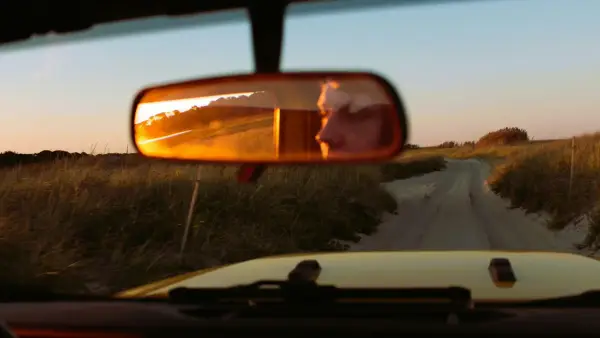
8 things people who always check the rearview mirror even when they know the lane is clear - who glance up every few seconds on an empty highway, who watch the car behind them more carefully than the road ahead, who cannot merge without looking three times even when there is no one there - do without realizing it, according to psychology
Body Language
Children who always sat with their back against the wall - who chose the corner booth, the end seat, the chair that let them see every door and every face in the room - often become adults who scan every restaurant for the right seat before they even look at the menu
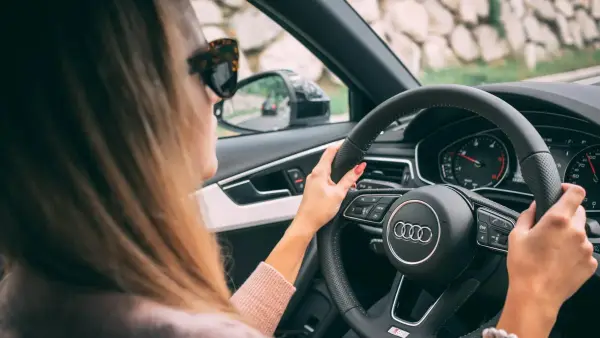
There is a particular kind of person who always offers to drive - not out of generosity or preference but because somewhere in childhood, the passenger seat became the place where bad things happened, and the steering wheel became the only seat in the world where safety lived in her own hands

Children who always went perfectly still when voices were raised - who froze in the hallway, stopped chewing at the dinner table, and held their breath until the house went quiet again - often become adults whose bodies turn to stone the moment conflict enters a room, because a child who learned that stillness was the only thing between her and becoming a target never told her muscles the war was over
There is a particular kind of man who turns his entire body to face you when you start speaking - not just his head but his shoulders and chest and feet - because a boy who spent years talking to the back of his father's head made a promise that no one would ever receive the side of his face in return
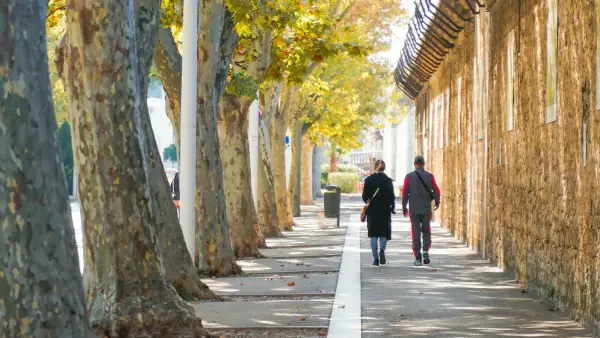
There is a particular kind of person who adjusts their walking pace to match whoever they are walking with, speeds up, slows down, matches step for step, because as a child they learned that moving at their own rhythm was always the wrong speed
There is a particular kind of apology that never uses the word sorry - the coffee made exactly the way you like it the morning after an argument, the gas tank filled before you notice it is low, the blanket pulled up over your shoulders while you pretend to be asleep - because some people learned that love after a fight is not a conversation but a series of quiet repairs performed when the other person is not looking
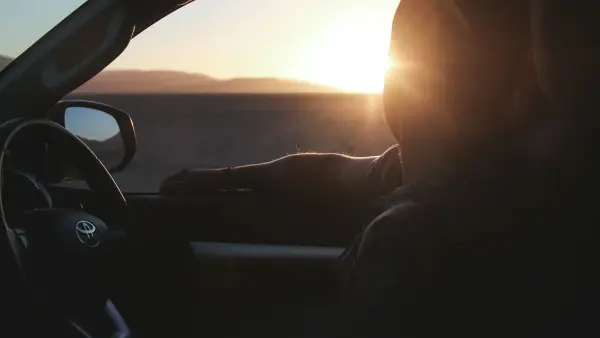
He's 60 and just realized the way he holds the steering wheel in traffic - one hand draped over the top of the wheel, elbow on the window frame, jaw set the same way his jaw always sets when the world is moving too slowly - is the exact posture his father held on every commute home from the plant for thirty years, and a boy who sat in the passenger seat watching a man drive home from a job that took everything from him except the thirty minutes behind the wheel learned that the one-handed hold at the top of the wheel was never about driving but about a man whose entire day belonged to someone else reclaiming the only sovereignty a working man ever had, one red light at a time

He's 65 and just realized he says 'text me when you get home' to every single person who leaves his house - not just his wife or his children but his neighbor, his old college roommate, the plumber who came to fix the kitchen sink - not because he thinks the drive is dangerous but because his mother stood at the screen door and watched every car pull away until the taillights disappeared, and a boy who grew up watching a woman hold the door open until the world swallowed the people she loved learned that departure is something you accompany with your voice when your body can no longer follow
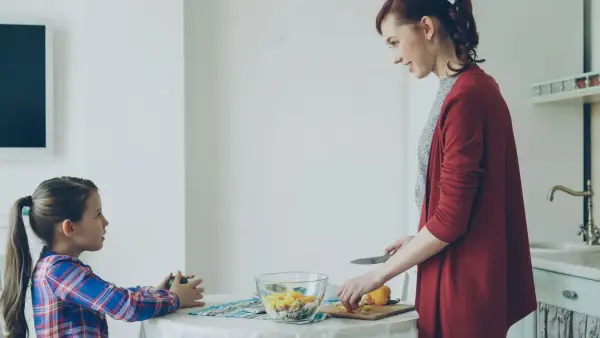
She's 59 and just realized she always touches the back of her children's heads when she walks past them - a quick palm against the crown, barely a second, never announced - not because she is unusually affectionate but because her own mother did the exact same thing every time she walked past one of her children, and a girl who grew up being silently confirmed by a hand that appeared on her head while she was reading or eating or watching television learned that the deepest expression of love between a mother and child is not a conversation or a declaration but a palm on the crown of a head that says I am here and you are here and neither of us needs to stop what we are doing for that to be enough
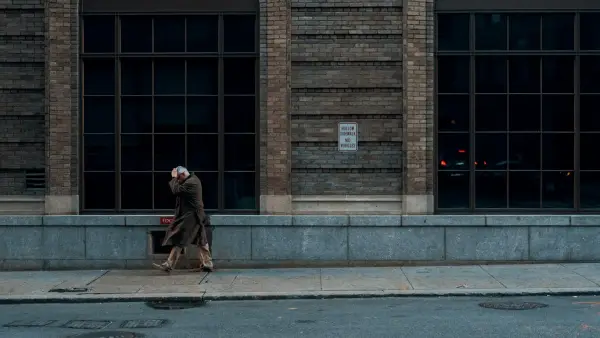
He's 63 and just realized he always offers his jacket before anyone says they're cold - removes it at the first evening breeze and drapes it over her shoulders without asking, because a boy who watched his father sit in a short-sleeved undershirt at every outdoor event so his mother could have the wool learned that love between a man and a woman is measured in the degrees of warmth you willingly subtract from your own body
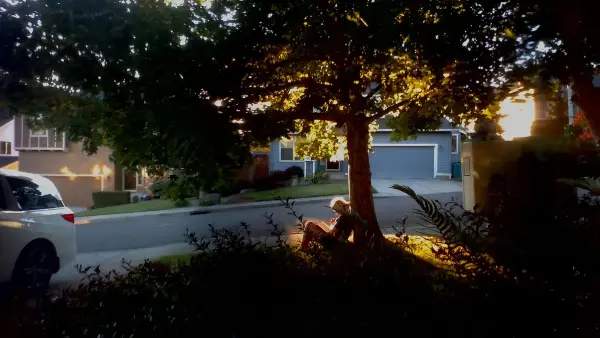
He's 59 and just realized he always takes his watch off and places it on the table when someone sits down to talk to him - not because the band is uncomfortable or the face catches the light but because his father did this exact thing every time a child came to him with something important, and a boy who watched a man physically remove the instrument that measured time before listening to his son learned that attention is not something you give with your ears but something you perform with the things you set down first
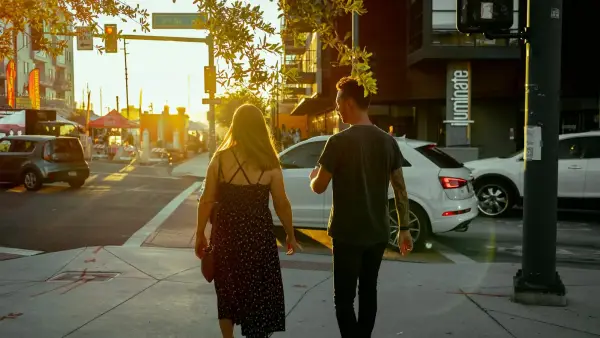
He's 61 and just realized he always places his hand on the small of his wife's back when they walk through a crowd - not possessiveness or any kind of display, but the exact gesture his father performed with his mother at every church door and grocery store for forty years, and a boy who watched a man guide a woman through the world with nothing but the quiet flat of his palm learned that love in public is not something you announce but something you navigate with the architecture of where you place your hand
He's 63 and just realized he always walks on the street side of the sidewalk - positions his body between his wife and the road without deciding to, shifts her to the inside when they cross to the other side of the street, has been performing this quiet choreography for four decades without once being asked - because his father walked that way with his mother on every sidewalk of his childhood, and a boy who watched a man place his body between his family and the traffic learned that protection is not something a man says out loud but something he performs with his left shoulder and the physics of where he stands
Psychology says the man who always stands up when someone enters the room - who rises from his chair every time his wife walks in, every time a guest appears in the doorway, who cannot remain seated when someone he respects crosses the threshold of a space he occupies - is not performing some outdated courtesy or compensating for anything, he is someone who watched his father rise from the kitchen table every single time his mother walked through the back door, and the standing was never about manners but about a man who believed that the arrival of someone he loved was an event worth acknowledging with his entire body

Psychology says the person who always touches their own neck when someone pays them a compliment - whose hand rises to the throat, the collarbone, the back of the neck the instant someone says something genuinely kind about them, as if the praise is a physical object that needs to be intercepted before it reaches the chest - is not shy or uncomfortable with attention, they are someone who learned as a child that visible pleasure at being noticed made her a target for correction, and the hand that covers the throat is protecting the place where the honest response still lives, the 'thank you' that was never safe to say without immediately making itself smaller
Children who always watched the door whenever a parent left the room - who tracked every exit, every time someone stood up, every hand that reached for car keys - often become adults who notice the exact moment someone in a conversation begins to withdraw, before a single word has changed, because a child who learned that people she loved could disappear without announcement never stopped reading the body for signs of departure

Psychology says the person who always lowers the volume on everything - the TV, the car radio, their own voice in restaurants, the music at their own gathering - who reaches for the dial before anyone has complained, who speaks at a register the room has to lean in to hear - is not naturally quiet, they are someone whose childhood taught them that volume was the first signal that the atmosphere was about to change, and keeping things low became the only way their nervous system ever agreed the room was safe enough to stay in
Children who always knew which parent was home by the sound of their footsteps on the stairs - who could tell from the weight of a shoe whether the evening ahead would be safe or something to brace for - often become adults who read every room by listening to how people move, because a child who learned to decode mood from the sound of approaching feet never stopped listening for what the body says before the mouth catches up
Body Language
He's 61 and just realized he always touches the doorframe with his fingertips when leaving a room - a gesture so brief that no one has ever mentioned it, not his wife, not his children, not a single person in thirty-eight years of marriage - because his father pressed his palm flat against the frame every morning before leaving for the factory, and a boy who watched a man touch wood before walking into a world that would test him learned that leaving requires a physical goodbye to the place that holds you
He's 58 and just realized he stirs his coffee the exact same way his father did - slow circles with the spoon, then two taps on the rim, then setting it down handle facing right - because a boy who sat across from a man every morning for eighteen years absorbed a physical vocabulary that nobody taught and nobody noticed until the hands doing it were his own
She's 59 and just realized she always checks the rearview mirror one extra time after she has already parked - engine off, keys in her hand, nothing behind her but an empty street - because her mother made the same backward glance every time she turned off the car, and a girl who watched a woman look behind her before opening the door learned that leaving requires one last look at what you are about to walk away from
She's 62 and just realized she runs her hand along the banister every time she climbs the stairs - even in her own house, even on the four steps between the kitchen and the living room, even when she is carrying nothing and holding nobody's hand - because her grandmother's palm never once left the railing in forty years of climbing those same stairs, and a girl who walked beside a woman whose fingers read every wooden surface for balance learned that the body starts reaching for support long before the mind admits it needs any
Body Language
He's 63 and just realized the way he holds a pen - the grip pressed hard between thumb and forefinger, the third finger bearing a permanent groove from decades of pressure, the slight leftward tilt of the wrist that no teacher ever corrected - is the exact grip his father used signing checks at the kitchen table on Sunday evenings, and the son who inherited a penmanship nobody taught him was really inheriting the physical record of a man who pressed down hard because every signature cost him something and he wanted the paper to know it
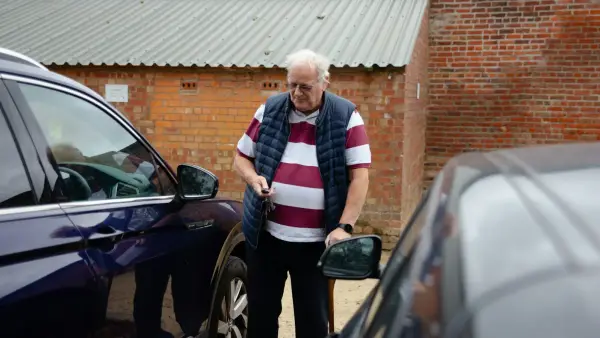
He's 63 and just realized that the way he taps the roof of the car twice after closing the passenger door for someone he loves - that double pat against the metal before walking around to the driver's side, a gesture so automatic his hand moves before his mind catches up - is the exact motion his father made every time he closed the car door for his mother, and the man who thought he was signaling 'all clear' was performing the only benediction his father ever learned to give without speaking
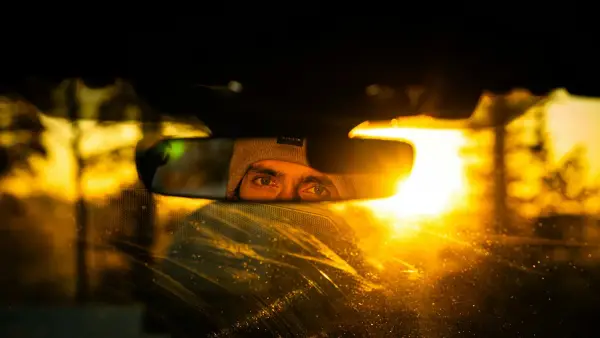
She's 59 and just realized the reason her arm still shoots across the passenger seat every time she brakes too hard - even when the seat is empty, even when the only thing beside her is a handbag that does not need saving - is because her mother's arm did the same thing for eighteen years, and a daughter who spent her childhood being held back by a reflex faster than any seatbelt learned that love is the thing your body does before your brain has time to decide whether anyone still needs protecting
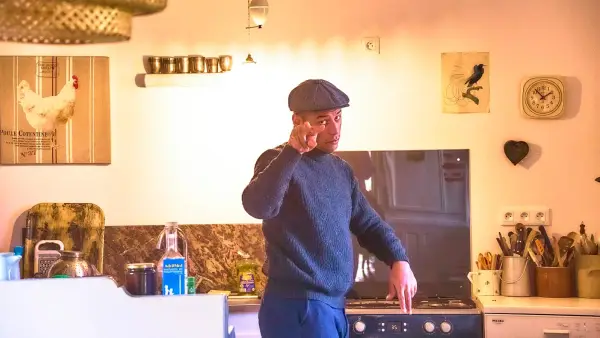
She's 62 and just realized the way she holds her phone - shoulder raised, head tilted, receiver trapped between ear and collarbone so both hands stay free to stir, wipe, fold, and write - is the exact posture her mother held the kitchen phone in for thirty years, and the daughter who inherited that tilt was never multitasking but performing the only posture in which a woman could hold everything together

8 things people who tuck their hair behind the same ear dozens of times a day - the reach, the sweep, the brief stillness as the strand stays for a moment before falling forward again, the hand returning to do it all over before the conversation is finished - do according to psychology, because a girl whose hands were never allowed to be idle learned to give them something small and quiet to do that nobody would call fidgeting
8 things psychology reveals about people who always sit in the exact same seat - the same chair at the dinner table, the same corner of the couch, the same spot in every meeting room - because what looks like preference is actually the nervous system's way of saying I cannot think clearly until at least one thing in this world is where I left it
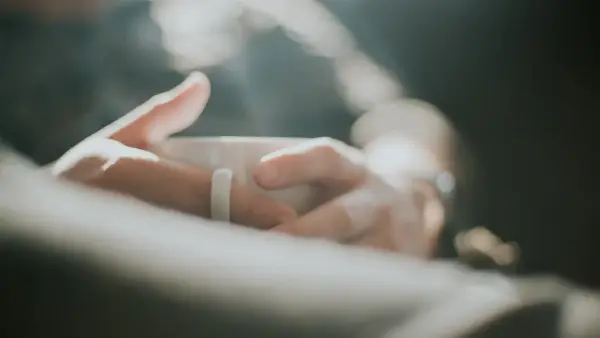
8 things people who always hold their coffee mug with both hands - who wrap every finger around the ceramic and pull it close to their chest even when the drink has gone cold, who cradle a cup of tea the way other people hold nothing at all - do according to psychology, because a child whose hands were never held learned to hold something warm instead
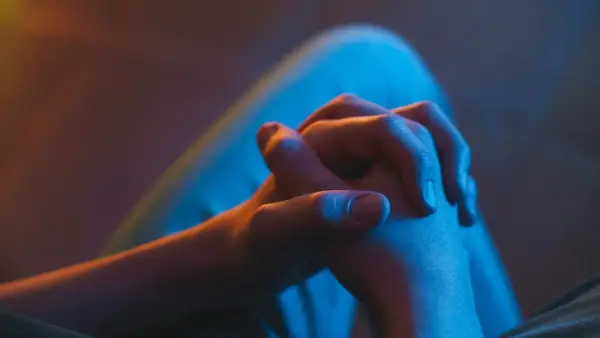
8 things psychology reveals about people who crack their knuckles before doing anything that requires their full attention - the press, the pull, the twist of each finger until every joint has spoken - because they cannot begin until their hands have announced themselves
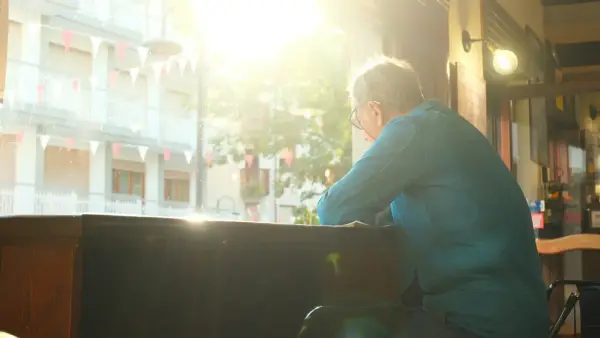
8 things people who bounce their knee under every table - the restless, rhythmic motion that starts the moment they sit down, the leg that won't stop even when someone puts a hand on their knee and says 'you're shaking the whole table' - do according to psychology, because a child whose body was never given permission to move freely learned to run in place

8 things people who always pull their sleeves down over their hands - who gather the cuff into a fist and stretch every sweater they own into something two sizes too long at the wrist - do according to psychology, because a child who learned that taking up space invited correction never told her hands the danger passed

8 things psychology says about people who always doodle during phone calls, meetings, and conversations - who cover the margins of notepads with spirals, geometric patterns, and interconnected lines because their mind was never built for the kind of stillness that listening demands
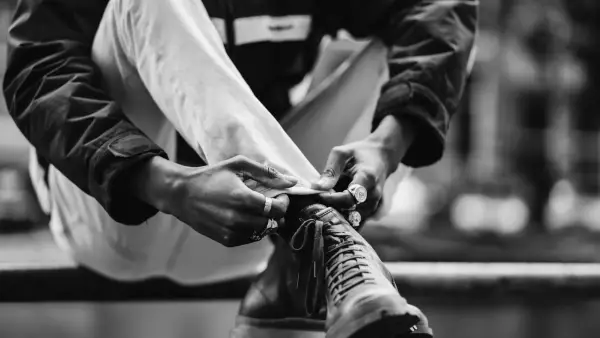
8 things people who double-knot their shoes every single time - who have never once trusted a single bow to hold, who tie and then tie again before their feet touch the ground outside - do according to psychology, because a child who was corrected for coming undone built an adult whose body refuses to leave anything that could unravel to chance
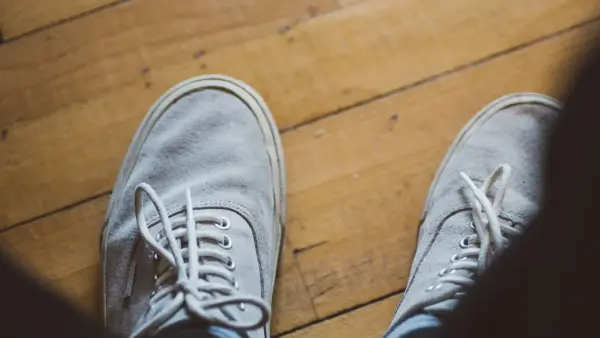
8 things people who always keep their shoes on inside the house - who have never once felt fully comfortable barefoot on their own floors, who sit on the couch in sneakers and could not have told you why until someone asked the right question - do according to psychology, because a boy who needed to be ready to leave never told his feet the moment passed
She is 58 and has just realized the reason she always touches the walls when she walks through her house - a hand trailing along the hallway, fingertips brushing the doorframe, palm flat against the kitchen wall while she waits for the kettle - is not absent-mindedness but a body that learned at seven that the only way to know a house was still standing was to keep touching it, because a girl whose home changed addresses without warning never stopped checking whether the walls were still there
8 things people who always speak more quietly in their own home than they do at work, at restaurants, or in any room that is not theirs - who lower their voice in the hallway, who take phone calls in near-whispers even though nobody else is home, who have been told by their own partner to speak up at their own dinner table - do according to psychology, because a child whose private conversations were heard through walls and revisited the next morning learned that the only safe volume for an honest sentence was the one that could not travel past the room she was standing in
He is 61 and has just realized that the reason he still rises from his chair - not all the way, not with any ceremony, just a reflexive lift from the cushion that settles back before anyone notices - every time a woman walks into the room is not manners he was taught but a reflex his body learned from watching his father push back from the kitchen table every time his mother came through the door, and the man at sixty-one whose knees protest the gesture his spine still insists on is not performing an outdated courtesy but running the only protocol for respect his body was ever given, at an age when the body remembers what the culture has already decided to forget
Children who learned to read the speed of footsteps in a hallway - who could tell from the weight and rhythm of approaching steps whether the person coming toward their room was calm or angry, whether the evening was safe or whether it had already turned - often become adults who can identify every person they love by the sound of their walk alone, because a child who needed to know what was coming before the door opened built a listening system that was never given permission to shut down
8 things people who always walk faster than everyone around them - who are three steps ahead on every sidewalk, who reach the door before the group has finished a sentence, who have been told 'slow down' and 'where is the fire' by every person they have ever walked beside - do according to psychology, because the child who learned that the safest speed was always slightly ahead of whatever was coming never received the message that the race ended

8 things people who cannot sit in the passenger seat of a car without watching the road as if they are the one driving do, according to psychology - because the woman at forty-nine who presses an invisible brake pedal, who tracks every mirror and tenses her entire body before every merge, is not a nervous passenger but a child who learned that the only way to survive a journey someone else was steering was to drive it from wherever she happened to be sitting

8 things people who can tell exactly how someone is feeling by the way they close a cabinet door do, according to psychology - because the child who learned to read the emotional forecast of a household from the weight of a footstep on the stairs, the speed of a key turning in the lock, and the pressure behind a refrigerator door never stopped listening, and the woman at fifty-two who freezes when her husband shuts the dishwasher a little too firmly is not overreacting, she is running an auditory surveillance system her nervous system installed before she was old enough to understand what she was monitoring
Psychology says people who always stand at the edge of group photographs - never in the center, never in the second row, but always at the margin where they could be cropped and the image would look exactly the same - aren't camera-shy, they are running a spatial protocol their body learned in a childhood where the safest position in any room was the one that could be subtracted without anyone noticing the difference

8 things people who always look at someone's hands before looking at their face when they walk into a room - who register whether fingers are drumming, whether a jaw is set, whether the grip on the coffee cup or the doorknob has tightened - do according to psychology, because a child who learned that a parent's mood arrived in their hands before it arrived in their words built a surveillance system that reads every room from the extremities inward and the woman at fifty-one who glances down before she glances up is not avoiding eye contact but reading the first page of a story most people do not start until the voice changes

Men over 55 who stand slightly behind their wives in every grocery store checkout line - not beside them, not ahead, but one half-step back with their hands on the cart handle or buried in their pockets - are not being polite or deferential but replaying a childhood choreography where the mother handled the counter and the boy's only job was to carry the bags to the car, because a child who learned that the transaction belonged to someone else never received the instruction that the counter was a place he could stand
There is a posture women adopt when walking into a room where they suspect people have been talking about her - shoulders back, chin level, smile ready - the body's full dress rehearsal for dignity, learned by the girl who noticed early that rooms rearrange themselves the moment she enters
Psychology says people who always smooth down their clothes before entering a room - who tug their shirt, adjust their collar, run a hand down the front of their outfit even when nothing is out of place - are not vain and are not anxious, they are people who grew up in homes where appearance was the first thing inspected and the fastest path to being found insufficient before they had even spoken, and the hand that adjusts the blouse at forty-nine is not grooming but a girl still passing inspection at a doorway she walked through twenty thousand times before she was tall enough to reach the handle
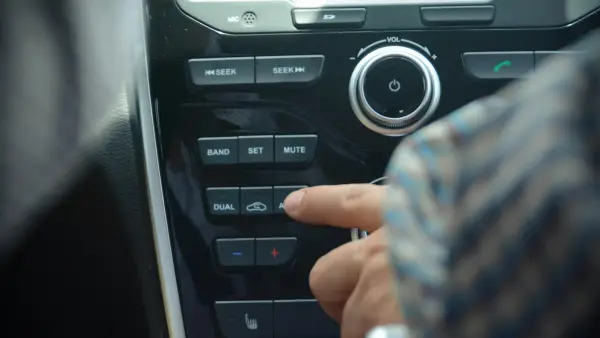
Psychology says people who always turn the volume down before starting the car - who reach for the dial before the key is even fully turned, who flinch when a song comes on at a volume they did not choose - are not noise-sensitive and are not anxious, they are people whose nervous system learned in childhood that sudden loud sounds were never just sounds but the first note of something they needed to be ready for, and the hand on the volume dial at forty-nine is not a preference but a girl still controlling the one variable she was never given permission to control in the original room

Psychology says people who instinctively mirror the body language of whoever they are sitting across from - who cross their legs when you cross yours, lean back when you lean back, tilt their head at the same angle without deciding to - are not socially gifted or naturally empathetic in the way those words are usually meant, they are people whose childhoods required them to become the physical echo of whoever held the emotional power in the room, because a girl who learned at eight that matching her mother's posture meant matching her mood meant reducing the chance of an eruption never stopped calibrating her body to the body nearest her, and the woman at fifty-three who unconsciously mirrors her boss in every meeting is not building rapport but still running the survival protocol her skeleton learned before she had a word for it
Children who answered the phone in a different voice than the one they used at home - who had a 'phone voice' before they were ten, a bright and careful version of themselves they could activate between the second and third ring - often become adults who shift register so instinctively they do not hear it happening, because a child who learned that one version of their voice opened doors and another version closed them never fully reconciled the two people living in the same throat
Children who learned to walk quietly through their own house - who knew which floorboards creaked and closed doors by turning the handle so the latch would not click - often become adults whose coworkers say 'I didn't hear you come in' and whose partners jump when they appear in a doorway, because a child whose body learned that being heard moving through a space was never neutral never fully revised the rule that said the safest version of you was the one nobody noticed

Children who were always the one told to say sorry first - who were sent to apologize regardless of who started it, who learned before ten that their job in every argument was not to be right but to be the one who ended it - often become adults whose body begins the apology before their mind has decided whether one is owed, whose shoulders round and whose voice drops and whose hands go still the instant tension enters any room, because a child who was taught that peace in the house was her responsibility learned to offer her body's surrender the way other people offer a handshake

Psychology says people whose voice automatically drops to a careful, calming register the moment anyone near them raises theirs - who become the room's emotional thermostat without ever being asked, who can hear themselves modulating, softening, slowing as if their vocal cords have a protocol that engages faster than thought - are not naturally calm or unusually composed, they are children who learned before ten that a calm voice was the only instrument that could de-escalate a house where volume meant danger, and the woman at fifty-one whose colleagues describe as 'unflappable under pressure' is not unflappable but still the girl running an emergency broadcast her body installed at nine: if my voice stays steady, nobody gets hurt
8 things people who always sit with one leg tucked underneath them - who cannot seem to put both feet on the floor at the same time, as if half their body is still deciding whether to stay - reveal about what their childhood taught their nervous system, according to psychology

Psychology says people who always cover their mouth when they laugh - who catch the sound before it reaches full volume, who press their fingers to their lips the moment joy threatens to escape without permission - are not polite and are not self-conscious, they are people whose body learned in childhood that uncontrolled joy was the thing that attracted attention, and the hand at forty-seven is not modesty but a girl's reflex still catching the sound before someone could tell her it was too much
Psychology says people who wrap both hands around their coffee cup - not the handle, not one palm resting casually, but both hands pressed against the ceramic as if the warmth is the only honest thing in the room - are not cold and are not performing coziness, they are people whose body discovered early that empty hands attract the wrong kind of attention, and the cup at forty-nine is not a drink but a dock where restless fingers can finally land without anyone asking what they are nervous about
He is sixty and has just noticed that he has never once in his adult life taken a phone call sitting down - that every time his phone rings his body is vertical before his mind has decided whether to answer, because a boy who watched his father conduct every piece of family business standing in the kitchen doorway with one hand braced on the frame learned before he had language for it that a seated man was a man who could be caught off guard, and the standing at sixty is not a habit but a boy's definition of ready that the man's body has never revised

Psychology says people who automatically step backward when someone steps toward them during a conversation - who maintain a radius of personal space their body enforces without conscious permission, who feel something tighten in their chest when a colleague leans in to make a point or a friend reaches for their arm mid-sentence - are not cold and are not standoffish, they are people whose body learned in childhood that the closing of physical distance was never just closeness but the opening act of something they needed to be ready for, and the step backward at forty-nine is not rejection but a girl's nervous system still measuring the distance between safe and not safe
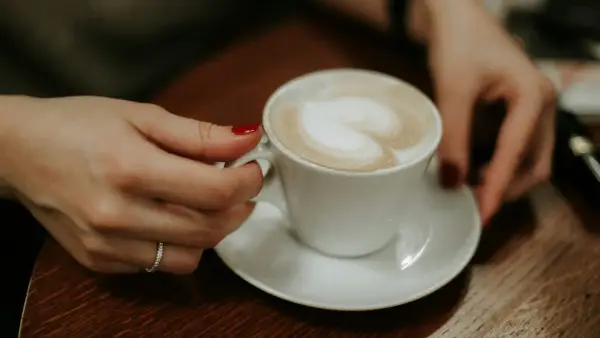
Psychology says people who always need something in their hands during a conversation - who shred a napkin into strips without noticing, who twist a ring, who peel the label off every bottle they have ever held, who cannot sit through a meeting without a pen to click or a paperclip to bend - are not nervous and are not bored, they are people whose hands learned in childhood that stillness was the thing that got noticed, and the woman at forty-seven tearing a paper coaster into confetti under the table while she listens to her friend talk is not fidgeting but still the girl whose hands are performing the one task that kept them safe - being too occupied to be empty, too busy to be still, too in motion to attract the kind of attention that came when the body stopped moving and became visible
Children who always announced where they were going before they went anywhere - who said 'I'm just stepping outside' to a room that never asked and would not have noticed - often become adults who cannot leave a conversation, a desk, or a dinner table without first explaining where they are going and when they will be back
Children who were shushed more than they were spoken to - whose volume was constantly corrected, whose laughter was told to lower itself, whose every burst of sound was met with a finger to someone's lips or a sharp 'keep it down' - often become adults who speak so quietly that people ask them to repeat themselves in every meeting, every restaurant, every phone call, and the woman at forty-eight whose voice never fills a room is not soft-spoken by nature but is still the girl whose body learned that the safest volume was the one nobody could hear, because the child who was told her sound was too much decided that almost-silence was the only guaranteed way to never be too loud again
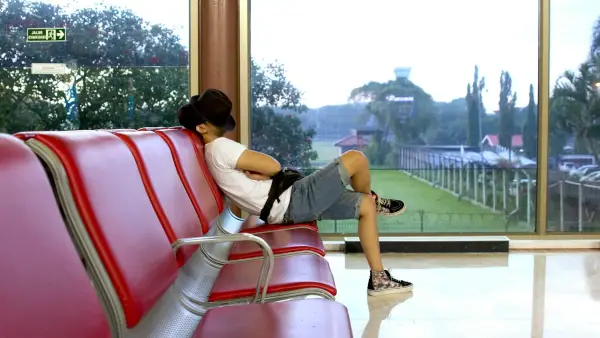
Psychology says people who sit perfectly straight in waiting rooms when nobody is watching - who press their knees together, keep their hands in their lap, and hold their spine like vigilance instead of comfort - are not disciplined or well-mannered. They are people whose body was taught to present itself before it was ever taught to be comfortable.
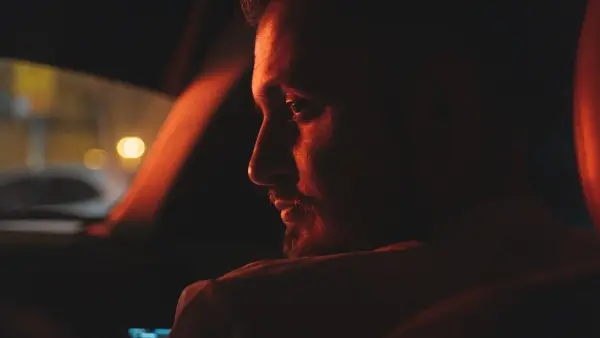
There is a reason certain men only say honest things while driving - not on a couch, not across a dinner table, not in bed at midnight when the room is dark enough to try, but behind a steering wheel with both of you facing the same direction and the windshield between him and whatever he is about to admit - and the boy who learned that eye contact during vulnerability was the thing that made the other person's face change understands, without ever having been told, that the car is not where he avoids intimacy but the only architecture his body ever trusted to hold it
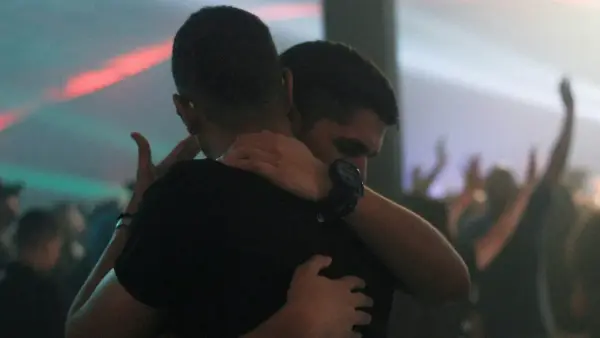
8 things men who always add a firm back-pat to every hug reveal about their childhood, according to psychology - and the one therapists notice first is that the three sharp pats on the shoulder at fifty-two are not affection but a timer the body invented to tell a boy when he was allowed to let go, because holding on a beat longer once brought something to his father's face that he learned never to cause again
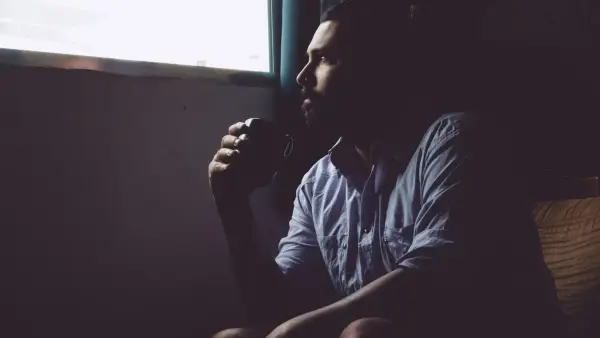
There are men who hold their breath the moment a conversation turns serious - whose chest goes still and jaw tightens the instant their wife says 'can we talk about something,' whose breathing stops so completely that a careful listener could hear the silence where air should be - not because they do not care but because a boy who watched his father turn to stone during every argument learned before ten that the safest thing a body could do in the presence of someone's pain was disappear into stillness, and the held breath at fifty-three is not indifference but the body performing the only emergency protocol a nine-year-old ever invented: if you are still enough, the storm passes around you without anyone noticing you were afraid
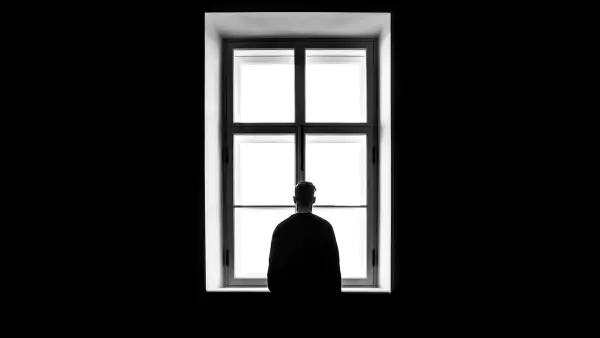
There are men whose voice drops to a single flat note the moment feelings enter a conversation, not because emotion is absent but because a boy learned that the wrong pitch, the wrong crack, the wrong tremor brought something worse than silence ever could
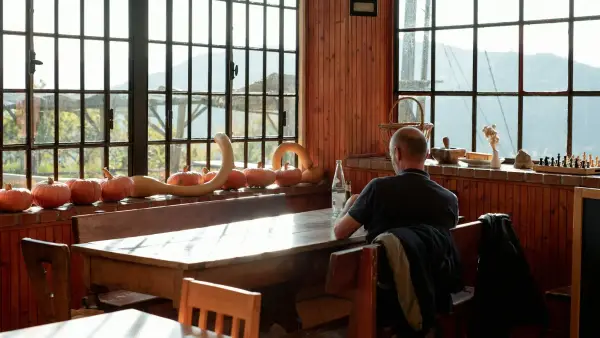
8 things people who always choose the seat facing the door reveal about their childhood, according to psychology - and the one that surprises therapists most is that the person scanning every exit in a restaurant is not expecting danger, they are a child who never stopped monitoring which direction the next disruption would come from
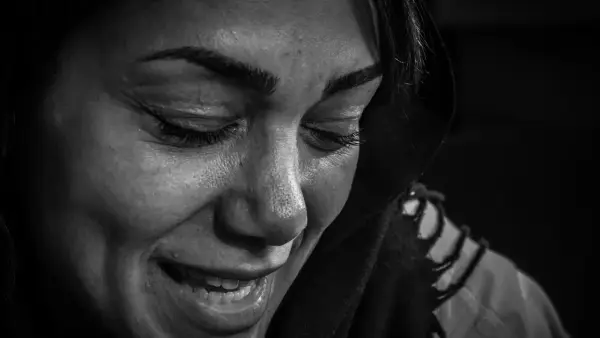
Psychology says people who laugh involuntarily at funerals, in hospital waiting rooms, and at the precise second someone holds their hand and asks 'are you really okay' are not deflecting and are not cold - they are people whose nervous system learned that laughter was the only exit for overwhelming emotion that would not frighten the people around them, and the laugh is not joy but the body choosing the one door it was ever given permission to walk through
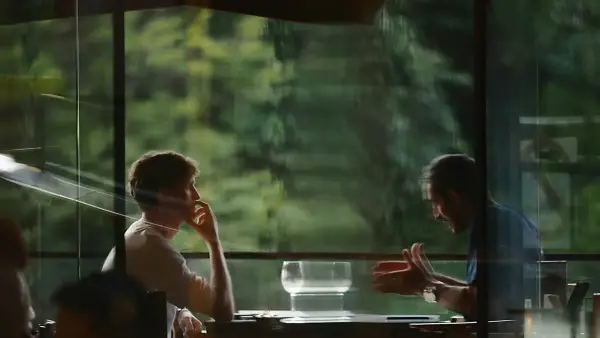
7 things your body does during difficult conversations that psychology says trace directly to childhood - and the one therapists notice first is the person who nods before the other person has finished speaking, not because they agree but because a child learned that the appearance of understanding was the fastest way to make a tense conversation end

Psychology says people who flinch when they accidentally drop something - who gasp at a fallen fork, freeze when a glass hits the counter too hard, and feel their whole body brace at any sound they did not plan - are not jumpy or nervous, they are running a sound-activated alarm system a child installed in a house where sudden noise was never just noise but the opening word of a night the body already knew the ending to
Body Language
People whose voice gets quieter the angrier they are - who drop to nearly a whisper when a room full of people would expect them to shout - are not controlled or composed, they are running a program a child wrote at seven in a house where volume meant someone was about to get hurt, and the near-silence of their fury at forty is not restraint but the last surviving instruction from a girl who learned that the safest version of anger was the one nobody could hear coming
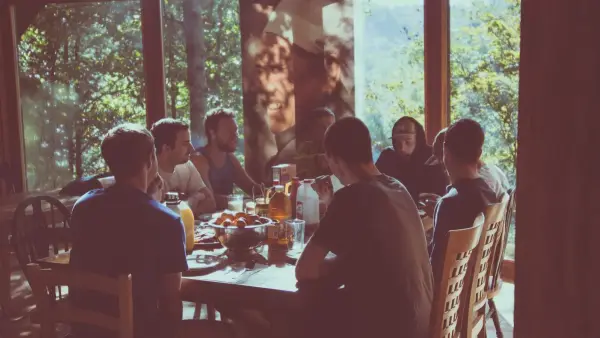
8 things people do at other people's dinner tables that psychologists say have nothing to do with manners and everything to do with growing up in a house where you could read the entire evening's forecast from the sound a chair made when someone pulled it back from the table
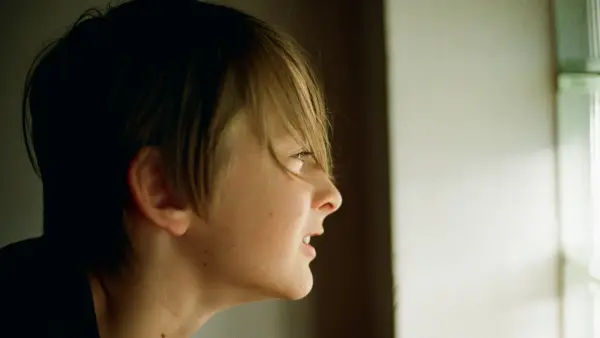
Children who learned that visible anger was dangerous often become adults whose eyes go flat the moment they feel it rising, not because they have mastered self-control but because a child's face learned at seven that the wrong expression could change the temperature of an entire house, and the flatness at forty-five is not composure but a mask the body installed before the mind had any say

People who deflect every compliment by immediately complimenting the other person back are not being modest - they are returning something warm before their body has time to remember that warmth, in their childhood house, always had a second half, and the fastest way to keep something good from turning was to never hold it long enough to find out

There are people who cross their arms every time someone pays them a compliment - not out of modesty and not because they disagree but because a child who was never told anything good about herself without a condition attached learned before kindergarten that praise is a door that opens in two directions, and the arms folded across the chest at fifty-one are not rejection but the body still bracing for the second half of a sentence that always started with something kind and ended with something that made the kindness feel like a trap
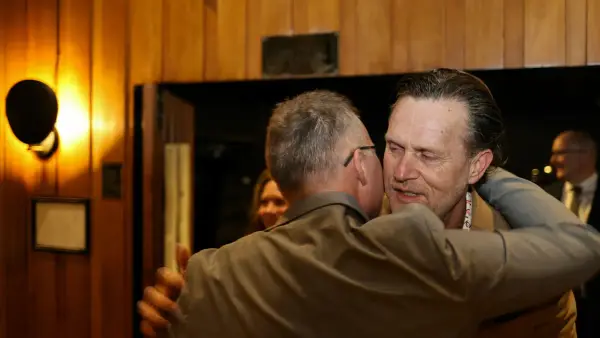
He is 62 and has noticed that every time he hugs his adult son, his right hand rises to deliver two firm pats on the back - not because the hug is finished but because a boy who watched his father extend a hand instead of open arms learned before first grade that male tenderness requires percussion, and the two pats at sixty-two are not a signal to let go but the last negotiation between the man who wants to hold on and the boy who was taught that holding on is something only women were allowed to do

Psychology says people who smile when they receive bad news are not in denial and are not being brave - they are running a program their nervous system installed in childhood, when a girl learned at her mother's kitchen table that the wrong facial expression made everything worse, and the smile is not happiness but a shield the body built before the mind had any say in the matter

Children who always sat nearest the door in any room - who chose the end of the bench, the chair closest to the hallway, the seat at the family table where they could see both the kitchen and the front door - often become adults who cannot sit with their back to a room, who scan every restaurant for the exit before choosing where to sit, because a child who learned that the architecture of escape was the only thing standing between a bearable evening and a terrible one never stopped calculating the distance between where she is and where she needs to be when everything changes

People who laugh along with jokes they did not actually hear - who produce the right sound at the right moment without processing a single word - are not distracted or absent, they were children who learned that confusion in a room full of adults was the fastest way to become visible for the wrong reason, and at forty-four the laugh is not humor but a reflex the body invented to keep you hidden in plain sight

People who clear their throat before disagreeing with someone - a small, almost inaudible sound before the sentence that might change the room's temperature - often grew up in homes where unexpected honesty was treated as an ambush, and the half-second of warning the body produces at fifty is still a child's courtesy alarm, installed decades ago, because a girl who once said what she thought without preamble watched the entire evening collapse and never forgot that the most dangerous word is the first one nobody saw coming
There are people who nod during conversations they stopped following minutes ago - not because they are dishonest or disinterested but because a child who watched what happened when someone in their family felt unheard learned that the safest thing a body could do in the presence of another person's words was perform attention whether or not the attention was real, and the nodding at fifty-four is not agreement or understanding but the last surviving gesture of a child who discovered before kindergarten that a still, unresponsive face was the most dangerous thing in any room

Psychology says people who clap when the airplane lands are not unsophisticated and they are not naive - they are people whose relationship with safe arrival was never guaranteed, and the applause is not a lack of worldliness but the last surviving dialect of a gratitude so deep it bypasses language and speaks directly through the hands
Psychology says people who always sleep with one foot outside the blanket are not regulating temperature - they are people whose nervous system learned to keep one part of the body ready to move at all times, because a child who grew up in a house where safety could change without warning never fully trusted that it was safe to be completely still, and the foot at fifty-three is not a sleep habit but the last outpost of a nervous system that never received the message that the danger is over

8 things that quietly happen to women who hold their purse on their lap at restaurants instead of setting it down - not because they are careful with their belongings but because a girl who grew up in a house where dinner could become an argument without warning learned that the safest version of herself was one who could leave any room in under five seconds, and the purse at forty-seven is not caution but the posture of someone whose body never stopped rehearsing the exit, according to psychology
Psychology says men who always back into parking spaces - who take the extra thirty seconds to reverse in even when pulling straight through would be easier - are not being obsessive or controlling. They are men whose earliest model of competence was a father who never parked a car he could not drive out of immediately, and the reversed sedan at fifty-four is not a preference but the posture of someone who was raised to believe that the way you love the people in the car is by always being ready to get them out.
Children who grew up in apartments with thin walls and neighbors below them - who learned before they could spell the word 'neighbor' that a dropped toy or a raised voice could bring a fist on the ceiling - often become adults who close cabinet doors with both hands, set glasses down without a sound, and still walk on the balls of their feet through a house that sits on solid ground
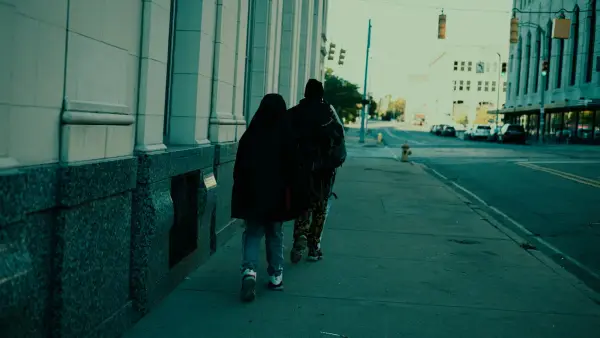
There are men who always walk on the street side of the sidewalk when they are beside someone they love, who switch positions at every crosswalk without being asked, who have been doing this since they were nineteen and have never once mentioned it because the men who taught them never mentioned it either, and the tenderness passes from body to body like a language that would die the moment someone tried to speak it out loud
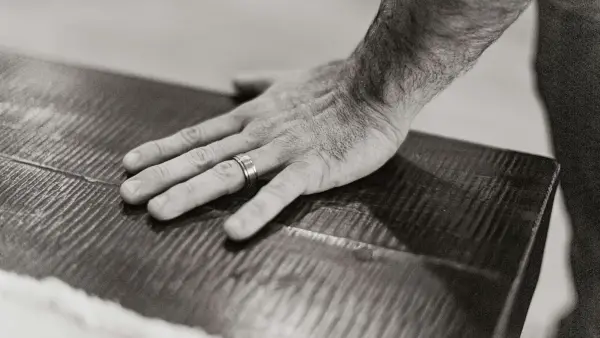
He's 56 and has noticed that he cannot walk through a hardware store without touching things - running his hand along the grain of the lumber, testing the weight of a hammer, pressing his thumb into the bristles of a brush - and it is not nostalgia or boredom, it is that a boy who followed his father through those aisles at nine learned that the world was something you were supposed to know by the feel of it, and the hands at fifty-six are still doing the homework a man set for his son in aisle seven of a store that no longer exists
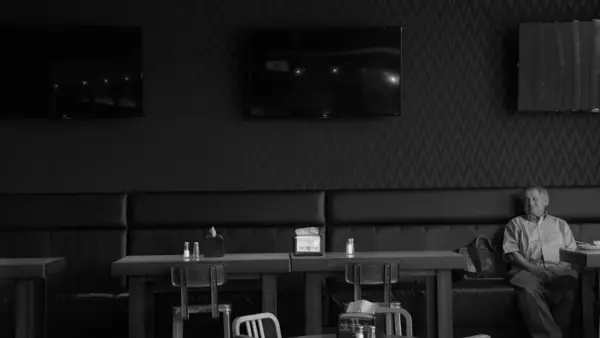
8 things that quietly happen to people who always need to sit facing the door in a restaurant - it is not paranoia, it is the body language of a child who grew up scanning for danger at home and never received the message that the room behind them was safe, according to psychology
Children who grew up in homes where the sound of a car pulling into the driveway changed the entire atmosphere of the house often become adults who can hear footsteps approaching a room and feel their whole body shift before the door opens, because a nervous system that learned at six to track arrivals never received the message that not every entrance is a threat
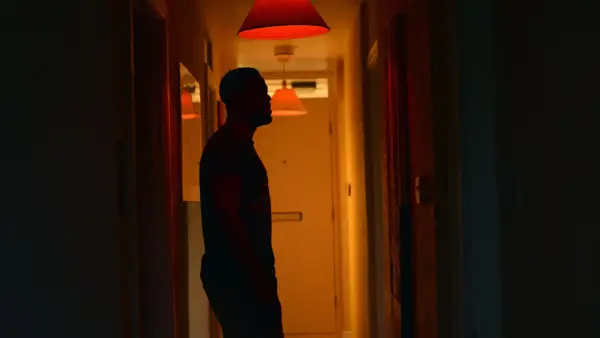
Children who grew up as the smallest person in every argument - standing in the doorway while adults shouted over their head - often become adults who instinctively step backward when someone raises their voice, not because they are afraid of the person in front of them but because their body is still protecting the child who learned that when voices got loud, being small and far away was the only form of safety anyone was going to offer them
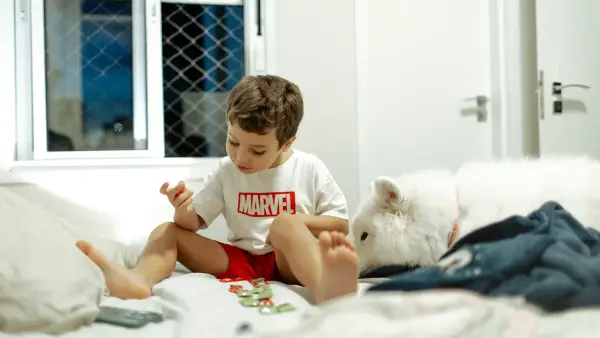
Children who heard their parents argue through the bedroom wall at night - not screaming but the low muffled kind where you could hear the tone but not the words - often become adults who can detect tension in someone's voice before the first sentence is finished, because a child who had to predict the next fight by the sound of voices through drywall never stopped listening for the frequency that meant everything was about to change
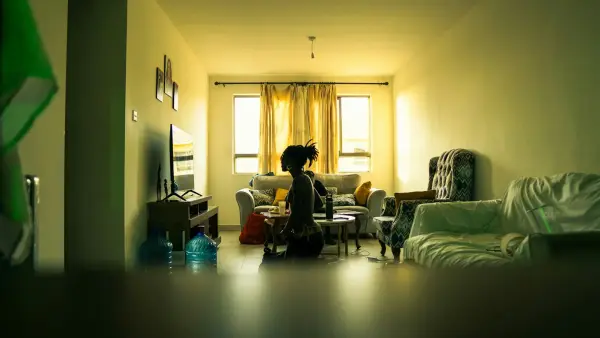
8 things that quietly happen to people who cannot accept a compliment about their home without immediately pointing out the crack in the ceiling or the carpet that needs replacing - because a child who grew up where the state of the house was a source of shame learned that the safest response to any praise was to beat the criticism to the punch, according to psychology

Psychology says people who apologize while they are crying - not after, but during, mid-sob, hands over their face, saying 'sorry, sorry, I'm fine' - are not embarrassed by their emotions, they grew up in homes where a child's tears were treated as a disruption the room had to manage rather than a signal the room was supposed to answer, and the apology they still attach to every tear at forty-five is the same child trying to make their pain small enough that nobody has to stop what they are doing
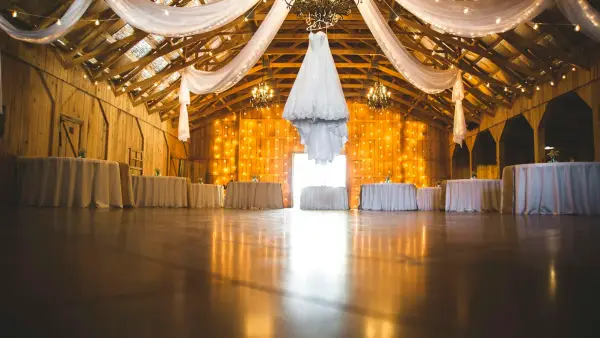
There is a particular kind of man who has never once danced when anyone was watching - not at his own wedding, not at his daughter's, not in the kitchen when his favorite song comes on - because somewhere before he was old enough to drive a boy learned that his body was for work and for stillness, and the joy it wanted to express was the first thing he taught it to keep quiet
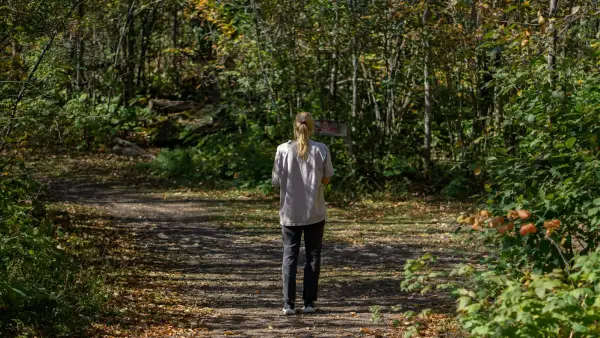
Children who grew up with a parent whose breathing changed before they raised their voice - that sharp inhale through the nose, the held exhale - often become adults who track every breath in a quiet room, who hear the difference between a sigh that means tired and a sigh that means angry, and who carry the constant weight of reading air the way other people read words
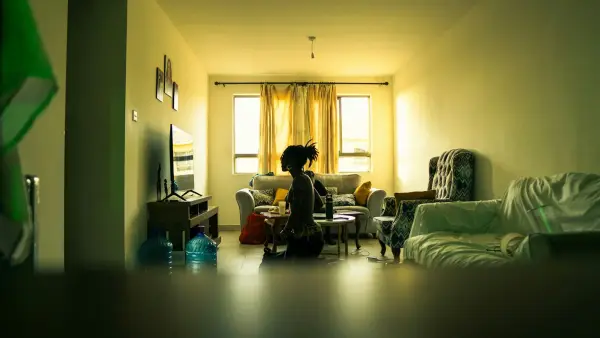
8 things that quietly happen in the body of someone who grew up keeping the peace between their parents - the shoulders that brace when voices rise, the hands that reach for something to hold, and the posture of a person whose nervous system learned that standing between two people was safer than standing anywhere else, according to psychology
8 things that quietly happen to people whose parents only touched them to fix something - straighten a collar, brush lint off a shoulder, push hair out of their face - who learned before they had words for it that a hand reaching toward them meant correction not comfort and whose body at forty-five still treats every gentle touch as something to hold very still for, according to psychology
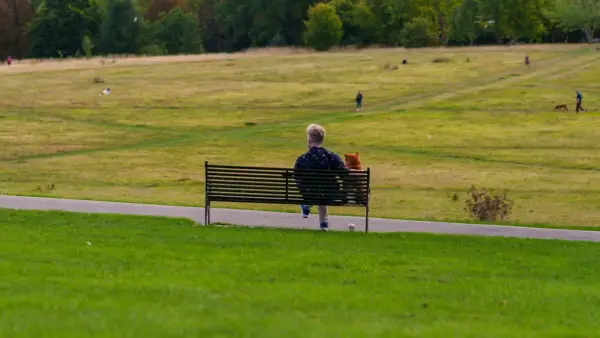
There is a way some women sit in every room they enter - perched on the edge of the sofa, bag still in their lap, coat within reach, weight shifted forward as though they might need to stand at any moment - and it is not nervousness and it is not good manners, it is the posture of a girl who was made to feel like a guest in every room she entered, including the rooms in her own home, and whose body at fifty-five has still never learned what it feels like to belong somewhere completely

There are people who smile the moment they are being criticized - who laugh when corrected, nod when they disagree, and arrange their face into something warm before the other person has even finished the sentence - not because they find anything funny but because they grew up in a house where the wrong expression on a child's face could change the entire evening, and their body learned to perform safety long before their mind understood what it was protecting
Children who were told they were 'too much' - too loud, too emotional, too needy, too intense - often become adults who have perfected the art of taking up as little space as possible, who sit on the edge of chairs in rooms they have every right to fill, because they learned before they could name it that their natural size was a problem other people expected them to solve

8 things that happen to your body language the moment you walk into your parents' house - your posture changes, your voice shifts register, your hands find the same nervous habits they had at twelve - and every single one traces back to a role your family assigned you before you were old enough to refuse it, according to psychology
People who always arrive fifteen minutes early to everything - who build in time they do not need, who sit in parking lots watching the clock, who feel physically ill at the thought of walking in after something has started - often became this way not because they are punctual by nature but because a child who was late once learned that the distance between on time and early was the distance between safe and sorry
7 things your hands quietly reveal about how safe you feel in a room, according to psychology - because the fingers that grip a coffee cup, press into a thigh, or rest open on a table are the most honest part of a body that learned to control everything else
Children who grew up in homes where the volume of a closing door told them everything they needed to know about the next two hours often become adults who can hear the difference between twelve kinds of silence, and the tension they carry in their jaw at fifty is forty years of listening for what was never said out loud

Children who grew up sharing a bed with a sibling and lying perfectly still so they would not wake them often become adults who sleep on the very edge of any mattress even when the rest of the bed is empty, because a body that spent its childhood rationing space never learned it was allowed to take up the whole room
8 things your body quietly does in the first ten seconds after someone near you raises their voice, and every single one of them started in a childhood room you have not lived in for thirty years, because a nervous system that learned volume meant danger does not care how safe the adult room actually is, according to psychology
Psychology says people who always volunteer to take the group photo instead of being in it are not being generous and they are not camera-shy - they are people who learned very early that the safest position in any room was the one where you could see everyone without anyone looking too closely at you, and the phone they hold up at every gathering is the same shield they have been carrying since they were small enough to stand behind a parent and disappear
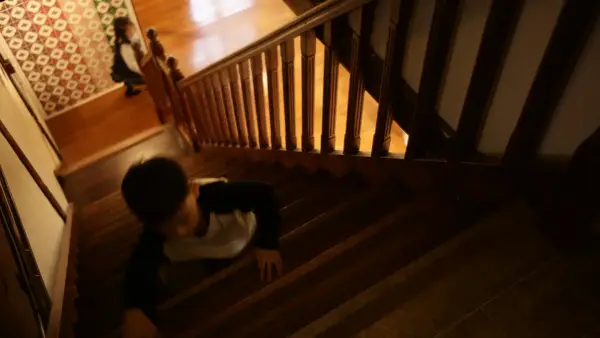
There are people who lower their voice in every room they enter before they have any reason to, who speak just below the volume the conversation calls for, and it is not shyness and it is not gentleness - it is a body that learned in childhood that the safest amount of space a voice could occupy was the smallest one that still counted as speaking
There are people who cross their arms in every group photograph not because they are closed off or uncomfortable but because a body that was rarely held as a child eventually learned to hold itself, and the posture that everyone reads as guarded is actually the quietest form of self-comfort they have ever known
Children who grew up eating dinner in silence where one wrong word could change the temperature of the room often become adults whose entire body goes still the moment someone at the table puts down their fork slightly too hard, because a nervous system that learned to read dinnertime as data never stopped treating every shared meal as an assessment
7 things that quietly happen in the body of someone who stiffens the moment they are hugged, because the brace is not coldness and it is not awkwardness, it is a nervous system that learned closeness arrived on someone else's schedule and the safest thing a small body could do was hold very still and wait for it to be over, according to psychology

Children who learned to read their mother's face across the kitchen table before they could read a book often become adults who break eye contact three seconds too early with every new person they meet, because a child who had to extract verdicts from microexpressions learns that holding a gaze any longer was the exact moment a mood could turn
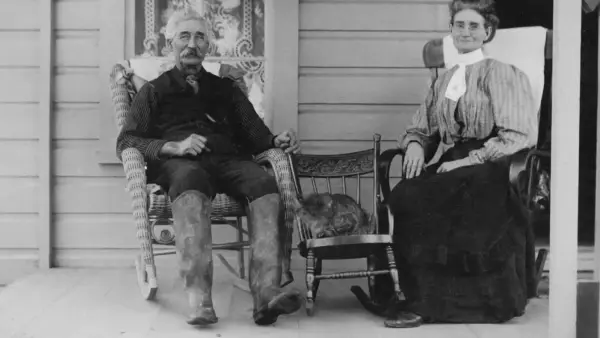
Psychology says the twenty minutes of silence between a couple on the drive home from his parents' house isn't the beginning of a fight and isn't coldness, it's the sound of two nervous systems slowly unspooling from an evening of performing composure, and the partner who finally reaches for the radio is not the one who cared least, they're the one who couldn't carry another minute of a body still bracing for a room that was always one comment away from tipping
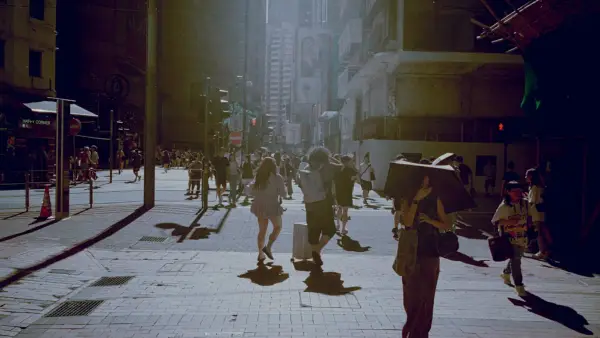
7 things that quietly happen to people who say sorry when someone else bumps into them, because the reflex to apologize for existing did not start in adulthood, it started the year a child first understood their presence was something the room had to accommodate rather than something the room was glad to hold, according to psychology
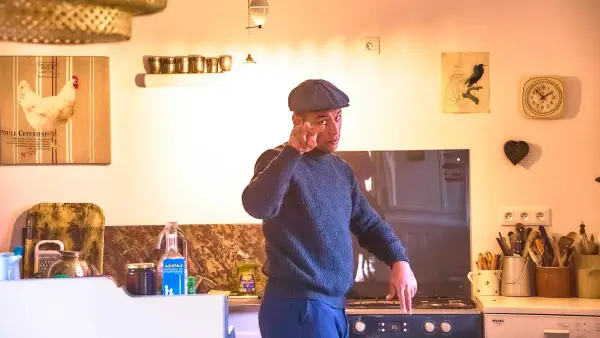
Boys who grew up in houses where a father's footsteps down the hallway could mean absolutely anything often become the men who walk through every room for the rest of their lives with their shoulders pulled in a half inch and their weight balanced forward on the balls of their feet, and they do not realize until their fifties that their entire body has been quietly braced for something that stopped happening forty years ago
There is a laugh some people only make when they finally feel safe with someone - not the polite laugh, not the one they practice in conversations at work, but the one that comes up from somewhere much lower in the body - and most people go entire decades without ever being in a room that could unlock it
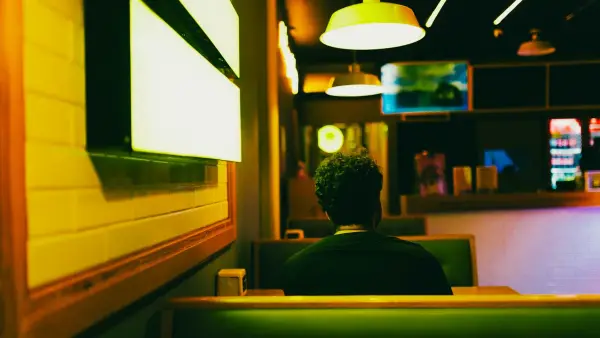
Psychology says people who always choose the seat facing the door aren't being difficult - they're running a threat assessment their nervous system learned before they had words for danger
Children who grew up in homes where love was loud but unpredictable - hugs one minute, slamming doors the next - often become adults whose bodies never learned to tell the difference between excitement and danger, and the racing heart they feel when someone raises their voice isn't weakness but a body that learned to prepare for both versions of love at the same time
7 ways your body silently protects you in conversations where you don't feel safe, and most of them started before you were old enough to understand what danger meant, according to psychology
7 things your body quietly does around someone you feel emotionally safe with that you never consciously choose, and most people have no idea their nervous system has already decided who to trust before their mind catches up, according to psychology
Children who grew up in unpredictable homes often become adults whose bodies broadcast calm so convincingly that nobody ever thinks to check, because they learned before they had words for it that the safest thing a child could do was make their body lie