Psychology says people who always choose the seat facing the door aren't being difficult - they're running a threat assessment their nervous system learned before they had words for danger
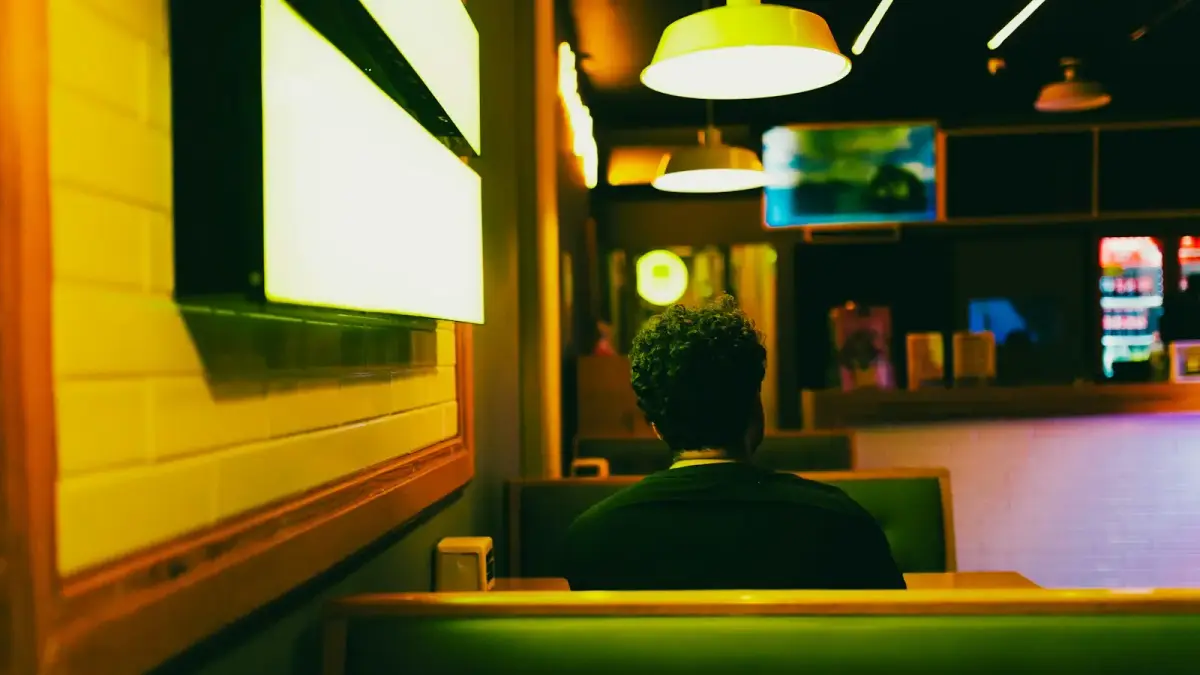
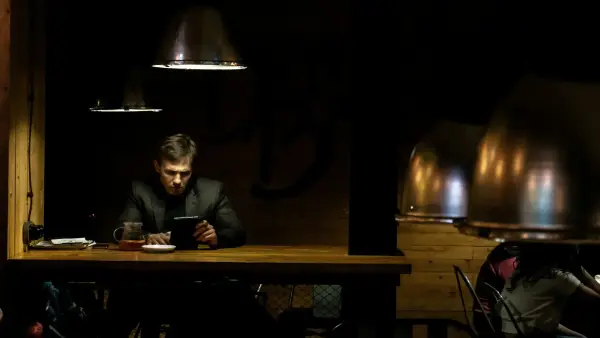
I do it every single time. I walk into a restaurant, and before I’ve even glanced at the menu on the wall or registered the hostess greeting me, my eyes have already swept the room. Where are the exits. Who’s sitting where. Which table lets me see the door.
My partner used to think I was being controlling. She’d pick a booth, and I’d quietly negotiate us to the other side - the side where my back was to the wall and my line of sight covered the entrance. I told her it was a preference. Like preferring window seats on planes or aisle seats in theaters.
But it wasn’t a preference. It was a requirement my body had been enforcing since long before I understood why.
If you recognize yourself in this - if you’ve spent your whole life positioning yourself in rooms the way a security professional would, but you’ve never had a day of tactical training - I want you to hear something clearly. You are not paranoid. You are not difficult. You are running a program that was written into your nervous system during a time when knowing where the door was might have been the most important thing in your world.
Your body learned the blueprint of every room before your mind learned to read
Children who grow up in unpredictable environments develop something researchers call hypervigilance - a heightened state of sensory awareness that scans for threat constantly, automatically, and without conscious effort. But that clinical term doesn’t capture what it actually feels like from the inside.
From the inside, it feels like breathing. You don’t decide to do it. You don’t notice you’re doing it. You walk into a space, and your nervous system has already mapped it. Exits, obstacles, sight lines, the energy of every person in the room.
A 2017 study published in the journal Psychological Science found that individuals with early-life exposure to unpredictable environments showed significantly faster threat detection in visual processing tasks - not because they were anxious, but because their perceptual systems had literally been trained to prioritize spatial awareness. Their brains weren’t broken. Their brains were exceptionally well-calibrated for the environments they grew up in.
This is worth sitting with. The thing you might have spent years feeling embarrassed about - the weird need to face the door, the inability to relax with your back to an open room - is evidence that your developing brain did exactly what it was supposed to do. It kept you safe.
The child who mapped the room was solving a real problem
Think about what it means to be small in a house where the emotional weather could change without warning. Maybe it was a parent whose mood shifted between the car and the front door. Maybe it was the sound of footsteps in the hallway that could mean tenderness or trouble, and you never knew which until the door opened.
In that world, physical positioning isn’t trivial. It’s strategic.
The child who sits where they can see the living room entrance knows who’s coming before they arrive. The child who keeps a wall at their back has eliminated one direction of approach. The child who memorizes the layout of every room in the house - which windows open, which doors lock, which floorboards creak - is not playing a game. They are conducting a continuous, unconscious threat assessment that most adults would associate with military training.
Gabor Mate has written extensively about how the body stores survival strategies long after the original danger has passed. The nervous system doesn’t distinguish between “I needed this when I was seven” and “I need this now.” It simply runs the program. And the program says: know where the door is. Always know where the door is.
Hypervigilance isn’t a disorder - it’s a dialect your nervous system speaks
Here’s where I think we get the framing wrong, and it matters. The clinical world tends to treat hypervigilance as a symptom - something to reduce, manage, medicate away. And in extreme cases, when it’s causing genuine distress or preventing someone from functioning, that intervention is appropriate and compassionate.
But for millions of people, hypervigilance doesn’t look like a clinical presentation. It looks like always arriving early to choose your seat. It looks like preferring the corner table. It looks like a subtle, persistent orientation toward exits that operates so quietly you might never have named it.
A 2020 study in Frontiers in Psychology examined what the researchers called “adaptive vigilance” - the idea that heightened environmental scanning, in many contexts, actually correlates with better decision-making, faster response times, and stronger situational awareness. The people in the study who scored highest on vigilance measures weren’t the most anxious. They were the most perceptive.
Read that again. The most perceptive.
Your nervous system isn’t malfunctioning. It’s functioning at a level most people never develop, because most people never needed to. You did. And now you carry that perceptual gift into every room you enter for the rest of your life.
What it costs to be the person who always scans the room
I don’t want to romanticize this. That’s not what honesty looks like.
Because there is a cost. The person who always scans the room is also the person who has trouble relaxing in one. The person who maps exits is also the person whose nervous system is burning fuel - constantly, quietly - that other people get to spend on rest.
You might notice it as a tiredness that doesn’t match your activity level. You slept eight hours, you didn’t do anything particularly demanding, and yet by mid-afternoon you feel wrung out. That’s because your threat-detection system has been running since you opened your eyes, processing spatial data, reading micro-expressions, tracking sounds - all below the threshold of conscious awareness.
Daniel Goleman’s work on emotional intelligence touches on this. He describes how the amygdala - the brain’s alarm center - can hijack cognitive resources when it’s been calibrated by early experience to stay on high alert. The result isn’t stupidity or weakness. The result is a brain that’s doing more work than anyone around you realizes.
Your partner doesn’t see it. Your friends don’t see it. You might not even fully see it yourself. But your body knows. It’s been working a double shift since childhood, and it rarely gets a break.
The moment you realize you’ve been protecting yourself in rooms that hold no danger
There’s a particular kind of sadness that arrives when you finally connect the dots. When you’re sitting in a perfectly safe Italian restaurant on a Tuesday evening, and you catch yourself scanning the room for the third time, and something in you whispers: oh. I’m still doing it. I’m still looking for the thing that isn’t coming.
That recognition isn’t weakness. It’s the beginning of something important.
Because once you see the pattern, you get to have a relationship with it instead of just being run by it. You get to sit facing the door - and know why. You get to scan the room - and gently acknowledge that your seven-year-old self is still on duty, still keeping watch, still doing the only job they ever learned to do.
A 2019 study published in the Journal of Personality and Social Psychology found that self-awareness around trauma responses - simply naming them without trying to eliminate them - was associated with reduced physiological stress markers over time. Not because the hypervigilance disappeared, but because the secondary layer of shame and confusion lifted. People who understood why they did what they did felt less broken by doing it.
You don’t have to stop scanning the room. You just have to stop believing it means something is wrong with you.
Sitting with your back to the wall was never about control
People will misread you on this. They’ll call you rigid, particular, difficult. They’ll roll their eyes when you swap seats again. They’ll make jokes about you being a spy or a cop.
Let them.
Because what they’re actually witnessing - without knowing it - is a person whose survival instincts were forged in conditions that demanded constant awareness. They’re watching someone whose nervous system learned, before they could tie their shoes, that spatial positioning was a matter of emotional or physical safety.
That’s not a quirk. That’s not a personality flaw. That’s not something you need to fix over brunch.
That’s the architecture of a person who was built by hard circumstances to notice everything. To read rooms the way other people read books. To carry a map of every space they’ve ever entered, filed away in a body that never stops cataloging the distance between where they are and where they could go if they needed to.
The seat facing the door is a monument to what you survived
I still take the seat facing the door. I probably always will.
But something has shifted in how I hold it. I don’t feel embarrassed anymore. I don’t rush to explain it away as a quirk or a joke. When I settle into that seat - back to the wall, sight line clear, exits mapped - I let myself feel the weight of what that habit carries.
It carries every room I ever walked into not knowing what I’d find. Every hallway I listened down. Every night I slept with one ear tuned to the world outside my door.
And it carries something else, too. It carries proof that I made it through. That the child who needed to know where the door was found it. Used it. Got out. Built a life on the other side.
If you’re someone who always faces the door, I want you to know something. That impulse isn’t a scar. It’s a compass. It pointed you toward safety when no one else was doing that job, and it’s still pointing now, even when the danger has passed.
You were never paranoid. You were never difficult. You were a child who paid attention to everything because everything mattered. And now you’re an adult who still pays attention - not because something is wrong with you, but because something very right inside you refused to stop keeping watch.
That’s not a disorder. That’s devotion. The deepest kind - the kind your body chose on your behalf, before you were old enough to choose anything at all.