Children who grew up in homes where the volume of a closing door told them everything they needed to know about the next two hours often become adults who can hear the difference between twelve kinds of silence, and the tension they carry in their jaw at fifty is forty years of listening for what was never said out loud
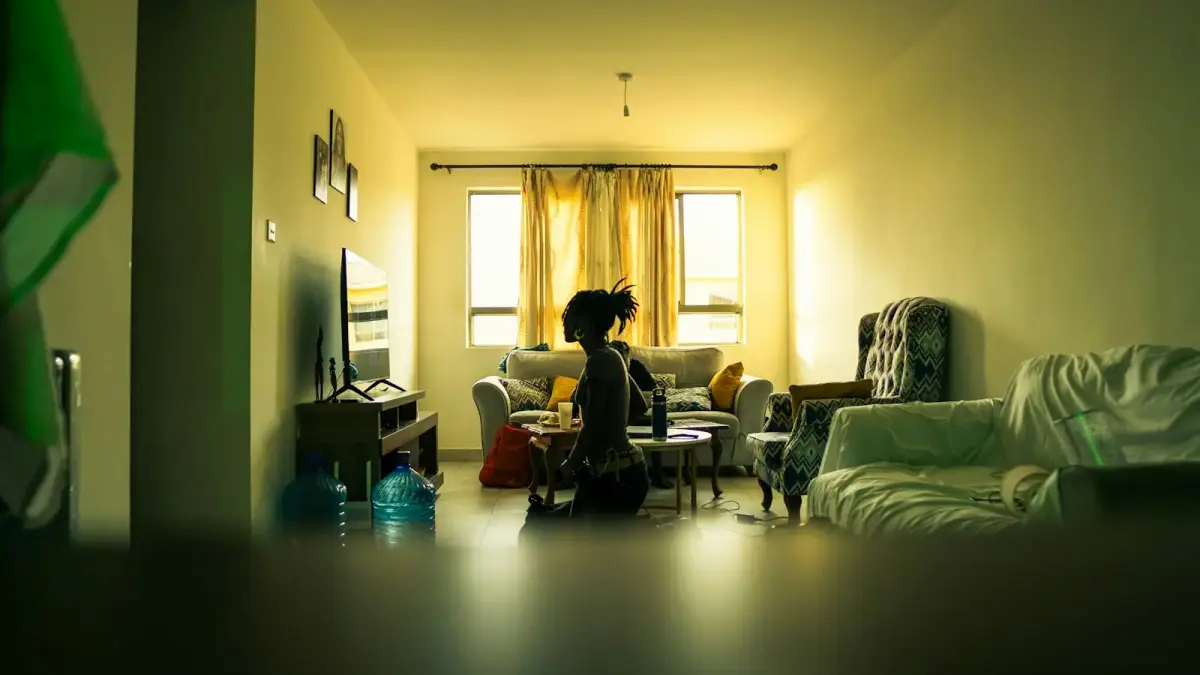
I can tell you the exact difference between a door that closes and a door that gets closed.
The first one clicks. The latch catches softly, and the air in the hallway barely shifts. The second one speaks. It doesn’t have to slam - sometimes the loudest message lives in the careful, controlled press of wood against frame, the deliberate quiet that says more than shouting ever could.
I grew up in a house where doors were sentences. A firm close from the bedroom meant someone was disappointed and didn’t want to talk about it. A gentle close from the bathroom meant tears. A slam from the kitchen meant something had been building for days and was about to land on whoever walked into the room next.
By the time I was nine, I could map the emotional weather of our entire house without leaving my bed. I didn’t need to see faces. I just needed to listen.
I have spent the years since then trying to understand why I still do this - why I still read rooms by their acoustics before I read them by their faces. And why, at the places in my body where sound lives longest, I carry a tightness that no amount of stretching seems to reach.
You learned to hear what wasn’t being said
There is a particular skill that develops in children who grow up in emotionally unpredictable homes, and it has nothing to do with intelligence or sensitivity, though those children are usually both. It is auditory hypervigilance - the ability to extract emotional information from sounds that most people don’t even register.
The weight of a footstep on the stairs. The specific clink of a glass set down on a counter - placed gently, or dropped with resignation. The rhythm of someone breathing in the next room. The difference between a sigh that means tiredness and a sigh that means you are about to become the reason someone is unhappy.
A 2019 study published in the journal Developmental Science found that children raised in high-conflict or emotionally volatile households develop significantly enhanced auditory threat detection. Their brains learn to prioritize environmental sounds - particularly those associated with human movement and emotional states - at a speed and accuracy that exceeds their peers. The researchers didn’t call it a gift. They called it an adaptation. But what they measured was a nervous system that taught itself to hear the future before it arrived.
You didn’t choose to become this good at listening. You had to. Because in your house, information didn’t arrive through words. It arrived through texture - the texture of a cabinet being opened, the texture of a silence that followed a question nobody answered.
The twelve kinds of silence
People who didn’t grow up this way tend to experience silence as one thing. Quiet. Absence of sound. Neutral space.
You know better.
You know the silence that means someone is angry but hasn’t decided what to do about it yet. The silence that means someone is hurt and wants you to notice without them having to say so. The silence after a phone call that didn’t go well, where the other person is still standing in the kitchen holding the phone and you can feel the temperature of the room change from two floors away.
There is the silence of someone pretending to read. The silence of someone choosing their words carefully. The silence of someone who has already decided to leave, not the house, but the conversation, the relationship, the version of themselves that keeps trying.
There is the silence that means forgiveness, and it sounds almost - almost - like the silence that means giving up. You learned the difference between those two at an age when most children were learning to ride a bike.
And here is what nobody tells you about growing up with this kind of hearing: you can’t turn it off. You walk into a dinner party at forty-seven and within ninety seconds you know which couple drove there in silence, which person is performing happiness, and which friend is three drinks from saying something they’ve been swallowing for a year.
You know this not because you’re watching. You know it because you’re listening.
Where the sound goes when it has nowhere to land
I want to talk about the body now, because this is where the story stops being about hearing and starts being about holding.
When a child learns to listen that carefully, something happens in the muscles. The jaw tightens slightly - not enough for anyone to see, but enough to hold the mouth closed so no sound escapes. The shoulders lift a quarter inch toward the ears, as though the body is trying to get closer to the information. The hands go still. The breath gets shallow.
These are the postures of a person who is trying to hear a whisper through a wall. And if you hold them long enough - say, for an entire childhood - they stop being postures and start being architecture. They become the way your body is built.
A 2021 study published in the Journal of Psychosomatic Research examined the relationship between childhood emotional hypervigilance and adult musculoskeletal pain, particularly in the jaw, neck, and shoulders. The findings were striking. Adults who reported chronic hypervigilance in childhood were significantly more likely to present with temporomandibular joint dysfunction - jaw pain, clenching, grinding - and chronic upper trapezius tension. The researchers described it as a “postural signature of sustained auditory monitoring.”
That phrase stopped me cold when I first read it.
A postural signature. Meaning your body wrote down everything your childhood sounded like, and it has been holding that document in your jaw and your shoulders and the base of your skull for decades.
The flinch you forgot you learned
There is a specific test I run on myself sometimes, and I encourage you to try it if any of this sounds familiar.
Sit in a quiet room. Have someone close a door in another part of the house without warning.
Notice what happens. Not what you think happens - what actually happens in your body in the first half-second before your conscious mind catches up.
If your shoulders rose. If your jaw clenched. If your breathing stopped for just a beat. If some part of you oriented toward that sound like a radar dish swinging toward a signal.
That is the flinch. And it is not fear, exactly. It is readiness. Your nervous system heard a door close and did what it has always done - it began gathering data. Who closed it. How hard. What mood it carried. What comes next.
Dr. Stephen Porges, who developed the polyvagal theory of the autonomic nervous system, has written extensively about how the middle ear muscles in hypervigilant individuals actually tune differently than in others - they become biased toward detecting low-frequency sounds associated with human movement and emotional vocalization. Your ears literally restructured themselves around the need to hear what was happening before it happened to you.
That is not damage. That is an extraordinary engineering project that your body completed under pressure before you were old enough to understand what it was building.
The cost of never putting it down
Here is the part that is harder to say.
The listening doesn’t stop when you leave the house. It doesn’t stop when you move out, when you get your own apartment, when you build a life that has none of the volatility you grew up in. The system that saved you at eight is still running at fifty, and it is running against a body that was never designed to maintain that level of auditory vigilance for a lifetime.
The jaw pain that wakes you at three in the morning. The neck that locks up for no reason. The shoulders that live at your ears even when nothing is wrong - even when the house is quiet and the doors are all gently closed and the person sleeping next to you is breathing peacefully.
Your body doesn’t know the war is over. It’s still listening for the sound of a cabinet opening too hard. Still braced for the silence that comes before someone says your name in the voice that means trouble.
And the tension you carry - the actual, physical, measurable tension in your masseter muscle and your upper traps and the little muscles that run along the back of your neck - is not stress. It is storage. It is your body’s way of keeping the archive accessible. Every silence it ever catalogued, every door it ever decoded, every footstep it ever translated - it is all still filed in your fascia, and your body does not know how to let the files go because it still believes you might need them.
You are not anxious - you are fluent
I want to reframe something before I let you go, because I think it matters.
What you have is not a disorder. It is not generalized anxiety dressed up in childhood trauma. It is a language. You are fluent in a language that most people don’t even know exists - the language of ambient sound as emotional data. You can hear what a room feels like. You can hear what a silence means. You can hear the difference between someone who is fine and someone who is performing fine, and you can hear it from the next room with your eyes closed.
That is remarkable. It is also exhausting, and those two things are allowed to be true at the same time.
The work - the real, lifelong work - is not to stop listening. You won’t. You can’t. Your nervous system completed that engineering project decades ago and it is not interested in a renovation.
The work is to teach your body that it can hear everything it hears and still be safe. That a door closing doesn’t require a response. That silence can just be silence sometimes. That the person in the other room might be quiet because they’re reading, not because they’re building a case against you.
That the listening can continue without the bracing.
A therapist I trust once told me something I think about often. She said the goal isn’t to hear less. The goal is to let the information arrive without your body treating it like a threat.
I’m still working on that. Most days the jaw still tightens when a door closes in a room I can’t see. Most mornings I wake with my shoulders already lifted, already listening, already reading the acoustic temperature of the house before my eyes are fully open.
But I know what it is now. And there is something that loosens - not in the muscles, not yet, but somewhere deeper - when you finally understand that the tension you carry at fifty is not brokenness.
It’s a record of everything you survived by listening.
And the fact that you heard all of it - every door, every silence, every weighted footstep - is not a flaw in your wiring.
It’s proof that your wiring worked.