Children who grew up watching their parents stay married but live in parallel - eating at the same table, sleeping in the same bed, speaking only in logistics - often become adults who cannot tell the difference between a relationship that works and a relationship that merely continues, because the only model of love they were given was endurance

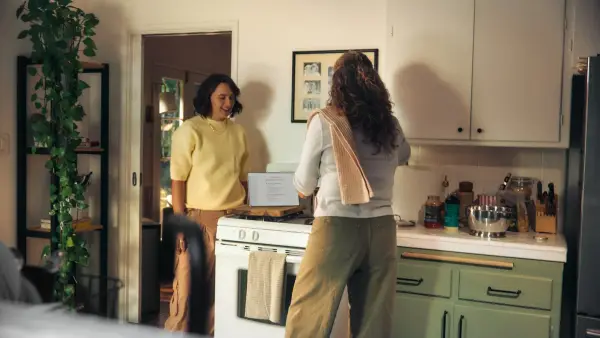
I remember sitting at the kitchen table on a Saturday morning, watching my parents move around each other like two people who had memorized the same choreography decades ago. My father poured coffee. My mother buttered toast. They didn’t fight. They didn’t laugh. They existed in the same room the way furniture exists in the same room - arranged, functional, silent.
For years, I thought that was what a good marriage looked like.
They never raised their voices. They never slammed doors. They attended every school event side by side, drove to holiday dinners in the same car, and slept in the same bed for over thirty years. By every measure that mattered to the outside world, their marriage was a success.
But I cannot recall a single moment when one of them looked at the other with curiosity. With tenderness. With the kind of attention that says, “I see you, and I’m choosing you - not out of habit, but on purpose.”
If you grew up in a home like that, you already know the strange ache I’m describing. And you may be starting to realize that it followed you into your own relationships in ways you’re only now beginning to understand.
The house was full, but something was missing
There’s a particular kind of childhood that doesn’t show up in trauma narratives. Nobody hit you. Nobody left. Nobody drank too much or screamed too loud. The holidays happened. The bills got paid. From the outside, your family looked like proof that commitment works.
But inside that house, there was a frequency missing. A warmth that should have hummed beneath the logistics but didn’t.
Your parents spoke to each other in transactions. “Did you call the plumber?” “What time is the game?” “I left money on the counter.” These weren’t hostile exchanges. They were just - empty. Two people managing a shared life without ever actually sharing it.
A 2019 study published in the Journal of Social and Personal Relationships found that emotional responsiveness between partners - not simply the absence of conflict - is the primary predictor of relationship satisfaction. In other words, it’s not enough to stop fighting. You have to start reaching.
But if you never saw reaching, you didn’t know it was supposed to be part of the deal.
You learned that love was a structure, not a feeling
Here’s what a child absorbs when they grow up in a parallel marriage: love is proximity. Love is showing up. Love is two people under the same roof who haven’t quit yet.
That’s not a small thing to internalize. It becomes the unconscious blueprint for every relationship you build.
You don’t look for someone who makes you feel alive. You look for someone who seems stable. Reliable. Willing to stay. And when you find that person, you build exactly what your parents built - a life that functions, a partnership that endures, a home where no one yells but no one really talks either.
And for a while, it feels like enough. It feels like success.
1. You confuse stability with connection
You chose your partner because they felt safe. Because they showed up consistently, paid attention to logistics, didn’t create chaos. Those are real qualities, and they matter.
But somewhere along the way, you started measuring your relationship by what it wasn’t rather than what it was. It wasn’t dramatic. It wasn’t volatile. It wasn’t falling apart. And you told yourself that the absence of bad things meant the presence of good ones.
Dr. John Gottman’s research at the University of Washington found that stable, long-lasting relationships require a ratio of at least five positive interactions for every negative one. But in parallel relationships, the ratio isn’t five to one. It’s zero to zero. Nothing bad, but nothing nourishing either.
You learned to read the absence of pain as the presence of love. They’re not the same thing.
2. You don’t know how to ask for emotional attention
When you grew up watching two people who never asked each other “How are you feeling?” with genuine interest, you didn’t develop the reflex to ask for that yourself.
You might feel a hollow ache on a Sunday afternoon - this vague sense that you’re lonely even though your partner is in the next room - but you don’t have the language for it. You weren’t given the vocabulary.
So instead of saying, “I need you to look at me right now, really look at me,” you say, “What do you want for dinner?” Because that’s the channel you inherited. Logistics. Tasks. The safe, flat terrain of managing a life together.
3. You feel guilty for wanting more
This is the one that keeps people stuck for years. Maybe decades.
Because your parents stayed. They endured. They did the “right” thing by every cultural standard available. And if you start admitting that their model wasn’t enough - that proximity without intimacy is its own kind of loneliness - it can feel like you’re ungrateful. Like you’re betraying them.
A 2021 study in Frontiers in Psychology found that adults who grew up in low-conflict but emotionally disengaged households often report higher levels of guilt when pursuing emotional needs in their own relationships. The researchers described it as a “loyalty bind” - the sense that wanting more than your parents had is a form of disrespect.
It isn’t. But it feels that way.
4. You mistake your partner’s presence for their participation
Your partner comes home. They eat dinner at the table. They watch something on the couch beside you. They fall asleep next to you at night.
And you count all of that as evidence that your relationship is fine. Because that’s what “fine” looked like in your childhood. Two people, same house, same routine, going through the motions of togetherness without ever pausing to actually be together.
The truth is, presence without engagement is just parallel living. And you’ve been trained since childhood not to notice the difference.
5. You interpret emotional distance as maturity
In a parallel household, intense emotion is suspect. If your parents never expressed longing, vulnerability, or deep affection, you may have internalized the belief that calm detachment is what grown-up love looks like.
You might even feel uncomfortable when someone expresses strong feelings toward you. Not because you don’t want it, but because it doesn’t match the template. It feels excessive. Immature. Unstable.
Brene Brown has written extensively about how emotional vulnerability is not weakness but rather the birthplace of connection. Yet for those of us who grew up in homes where vulnerability was simply absent - not punished, just never modeled - the idea of opening up can feel like speaking a language no one taught you.
6. You hit a wall at 40 or 50 and can’t explain why
This is where it often surfaces. You’ve built the life. The house, the career, the kids, the partner who stayed. Everything your parents had, you have.
And yet you’re sitting in your car in the driveway some evening, unable to go inside. Not because anything is wrong. But because nothing feels right, and you’ve run out of ways to convince yourself that “not wrong” is the same as “right.”
A 2022 study published in the Journal of Personality and Social Psychology found that midlife relationship dissatisfaction is significantly higher among adults who reported low emotional expressiveness in their family of origin - even when those families were otherwise stable and intact. The researchers noted that these individuals often struggled to identify what was missing because they had no reference point for what emotional intimacy was supposed to feel like.
You can’t miss what you never had. But your body knows. Something in you has been quietly starving for years, and you’re only now realizing it’s not food or sleep or success that you need.
It’s being known.
7. You start to see the pattern in your own home
Maybe the hardest moment is when you watch yourself do it. When you notice that you and your partner have a perfectly coordinated morning routine - coffee, lunches, keys, goodbye - and you can’t remember the last time either of you paused in the middle of it to say something real.
You see your parents in the choreography. And you realize that the thing you swore you’d never replicate has quietly built itself around you, brick by brick, because it was the only architecture you knew.
This is not failure. This is recognition. And recognition is where change begins.
What you didn’t learn, you can still choose
I want to be careful here, because I’m not interested in blaming your parents. They were likely replicating what they learned from their own parents, who learned it from theirs. Emotional disconnection is inherited, not invented. It’s a pattern that predates every person currently living inside it.
But inheritance is not destiny.
The fact that you’re reading this - that something in these words is landing somewhere deep and familiar - means you’ve already begun the work of seeing it. And seeing it is the hardest part.
You may not have been taught how to turn toward your partner with vulnerability. You may not have a model for what it looks like when two people share a life and actually inhabit the same emotional room. You may not know how to ask for attention without feeling like you’re being needy, or how to offer tenderness without feeling exposed.
But you can learn. Not from a script. Not from a self-help formula. From the slow, uncomfortable, deeply human practice of saying what’s true, even when your whole childhood taught you that the quiet way was the safe way.
Your parents’ marriage was not a failure. It was a survival strategy built by people who probably never learned another way. You can honor their endurance and still choose something different.
You can choose a relationship that doesn’t just continue - but one that actually lives.
And if you’re sitting in that driveway right now, unable to name the ache but feeling it everywhere, I want you to know: you’re not broken. You’re not ungrateful. You’re not asking for too much.
You’re just finally ready to want what you were never shown.