Children who developed the habit of reading in bed not because they loved books but because the bedroom was the only room in the house where nobody asked them to be anything often become adults who still reach for a book the moment the world gets too loud, and the reading they do at forty-five is not a hobby but the same hiding place they built at ten with better furniture
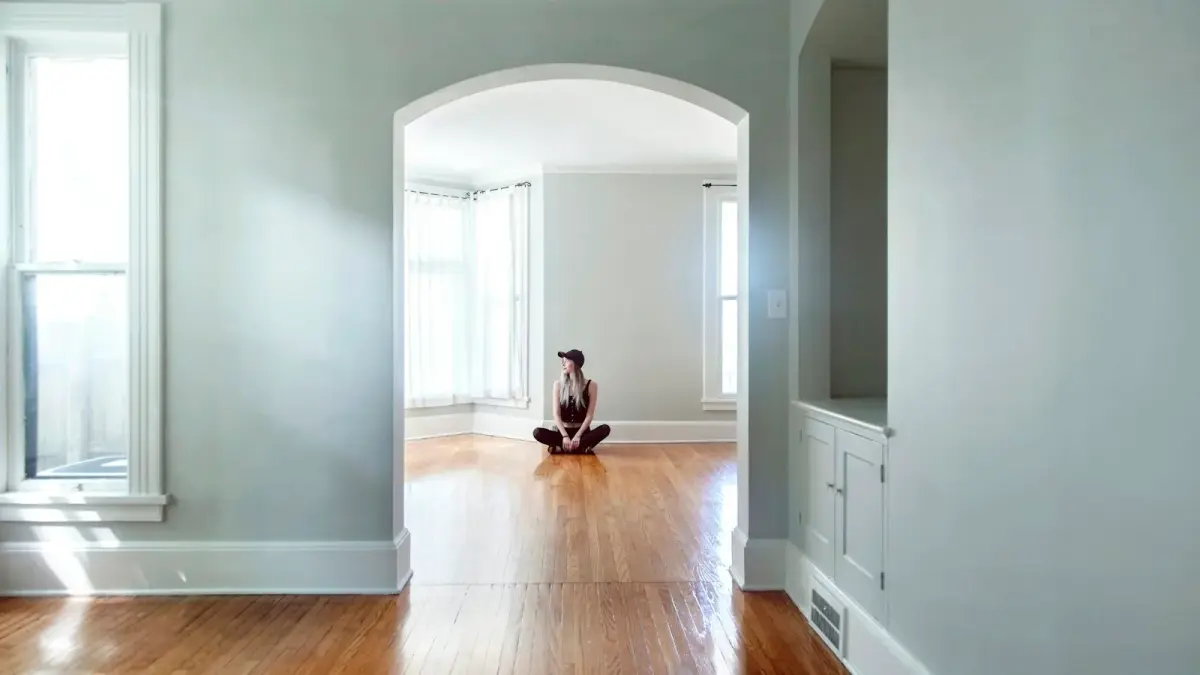
I was eleven the first time someone called me a bookworm. My aunt said it at Thanksgiving, smiling, like she was handing me an identity I should be grateful for. “She’s our little bookworm,” she told the table, and everyone nodded like that explained me.
It didn’t explain me at all.
I didn’t read because I loved books. I read because the bedroom was the only room in the house where nobody needed me to perform. The living room had my father’s questions about school. The kitchen had my mother’s quiet expectations about helping. The family room had the television and the unspoken requirement to laugh at the right moments, to be present in the specific way the family needed.
But the bedroom with a paperback and a lamp - that room asked nothing. The book didn’t need me to be cheerful. It didn’t need me to be helpful. It didn’t even need me to pay attention. It just sat there, open, waiting, making no demands while I disappeared into someone else’s story because my own felt like too much work.
If that sounds familiar, I want you to know something. You weren’t discovering a love of literature. You were discovering the only room with a door you were allowed to close.
1. The bedroom was never about the book
Here is what nobody talks about when they talk about children who read. The book was not the destination. It was the door.
A child who retreats to their bedroom with a novel is not making an intellectual choice. They are making a survival choice. They have scanned every room in the house and identified the one where the social cost of existing drops to zero. The bedroom happened to be that room, and the book happened to be the most socially acceptable reason to stay there.
A 2013 study published in the Journal of Research in Personality found that individuals high in introversion don’t simply prefer solitude - they experience measurably lower cognitive fatigue when environmental social demands are reduced. The child reading in bed wasn’t lazy or antisocial. They were regulating a nervous system that the rest of the house was quietly overloading.
The book gave them cover. “She’s reading” sounds so much better than “she’s hiding.” And so the child learned the first great lesson of their life: if you hold a book, no one questions your absence.
2. The living room had a script you never auditioned for
Think about what the living room actually required. Sitting on the couch meant being available. It meant responding to conversation. It meant laughing at the right volume and caring about the right things and performing a version of yourself that felt like wearing a costume you never picked out.
For some children, this was effortless. For others, it was a job they clocked into every time they left their bedroom.
The living room wasn’t dangerous. It wasn’t traumatic. It was just expensive - socially, emotionally, energetically. And the child who read in bed figured out very early that there was a room down the hall where the price of admission was free.
This is not about bad parents or a bad childhood. This is about a particular kind of child who experienced the ordinary social fabric of family life as something that cost them more than it cost everyone else. Not because anything was wrong with the family. Because something was different about the child.
3. The “bookworm” label hid what was really happening
Everyone thought it was a personality trait. A charming quirk. Teachers praised it. Parents bragged about it. “She reads three books a week,” they’d say, and other parents would look impressed.
Nobody asked why.
Nobody wondered whether a ten-year-old reading three books a week might be a ten-year-old who needs to disappear for twenty-one hours a week. The reading was visible. The reason was invisible. And so the child grew up believing that their retreat was a talent instead of recognizing it as a strategy.
Susan Cain writes about this in her work on introversion - how society rewards the output of solitude while ignoring the need that drives it. The child who reads voraciously gets gold stars and library awards. The child who sits in their room staring at the ceiling gets concern. Same need. Different camouflage.
The book made the hiding look productive. And so the child never had to explain what they were hiding from - which was not danger, not abuse, not neglect. Just the ordinary, relentless weight of being perceived.
4. The escape protocol hardened into identity
Here is what happens when a coping strategy works perfectly for fifteen years. It stops being a strategy. It becomes who you are.
The child who read in bed becomes the teenager with a novel in their backpack. Becomes the college student who spends Friday nights in the library. Becomes the adult with a nightstand stacked with books and a reading light that their partner knows not to question.
A 2019 study in Frontiers in Psychology found that habitual coping mechanisms established in childhood often persist into adulthood not because they remain optimal, but because they become neurologically automated. The brain stops evaluating whether the strategy is still needed. It just runs the program.
You are forty-five years old and you still reach for a book the moment the world gets loud. Not because you are an intellectual. Not because you love stories. Because a ten-year-old version of you figured out that a book is a door, and your nervous system never forgot the floor plan.
5. Your partner says “you always have your nose in a book” and doesn’t know what they are describing
This is the part that aches.
The person who loves you sees the reading and thinks it is a preference. A hobby. Maybe even a mild annoyance - the way you disappear after dinner, the way you bring a book on vacation, the way you can sit in a room full of people and somehow not be in the room at all.
They don’t realize they are watching a forty-year-old escape route in action. They are watching the same child who slipped out of the living room at eight o’clock every night, except now the living room is a marriage, a career, a social life, a mortgage, an entire adult existence that never stops asking you to be something.
The book is still the door. You are still walking through it. And the person who says “you’re always reading” is standing on the other side of that door, wondering why you keep leaving.
6. The reading is not the problem - and it is also not nothing
I want to be careful here because I am not pathologizing reading. Reading is beautiful. Books are genuine companions. The love of literature is real and it matters.
But there is a difference between reading because a book calls to you and reading because everything else is too loud. There is a difference between choosing a story and fleeing into one. And if you are honest - really honest - you know which one you are doing on any given Tuesday night.
Daniel Goleman’s work on emotional intelligence suggests that self-awareness is the foundation of emotional regulation. Knowing why you reach for the book doesn’t mean you have to stop reaching. It means you understand what the reaching is for. And understanding changes everything, even when behavior stays the same.
7. The bedroom was the first boundary you ever set
Here is the reframe that changed everything for me. That child reading in bed was not weak. That child was not broken or antisocial or damaged.
That child was setting a boundary before they had the language for boundaries. They were saying, in the only way a ten-year-old can say it: I need a room where I am not performing. I need a space where the cost of existing is zero. I need a door between me and the world’s expectations, and I need something on my side of that door that makes the hiding look like a choice.
That is not dysfunction. That is emotional intelligence operating years ahead of its vocabulary. The child knew what they needed and found a way to get it that hurt no one, disrupted nothing, and earned them praise instead of punishment.
That is, honestly, extraordinary.
8. The adult version deserves an upgrade - not a replacement
You do not need to stop reading. You do not need to give up the hiding place. But you might need to recognize that the ten-year-old who designed this system did so with a ten-year-old’s tools.
The bedroom with a book was the best solution available to a child with no authority, no language for their needs, and no permission to say “I need to be alone now.” But you are not that child anymore. You have authority. You have language. You have the right to say, out loud, to the people in your life: “I need an hour where nobody needs me to be anything.”
You don’t have to smuggle your solitude inside a book anymore. You can just ask for it. The door doesn’t have to be made of pages. It can be made of words.
A 2021 study in Psychological Science found that adults who explicitly communicate their need for solitude - rather than using indirect withdrawal behaviors - report higher relationship satisfaction and lower feelings of guilt around alone time. The hiding place works. But the spoken boundary works better.
9. The readers recognize each other
There is a quiet fellowship among people who grew up this way. You see them in coffee shops with paperbacks, on park benches with e-readers, in airport terminals with their faces buried in something thick and absorbing.
You recognize them not by what they are reading but by the particular quality of their stillness. The practiced invisibility. The way they hold the book like a shield that just happens to have a story on it.
If you see yourself in that description, I want you to know something. You are not weird. You are not cold. You are not “too much in your own head.”
You are a person who learned very young that the world has rooms that cost something and rooms that are free. And you have spent your whole life walking toward the free ones. That is not a flaw. That is a form of wisdom most people never develop.
10. The book was never the point - and that is okay
The reading you do at forty-five is not the same as the reading you did at ten. It has grown. It has deepened. Somewhere along the way, the escape route became a genuine love. The door you walked through to hide became a door you walk through because you know what is on the other side.
But the seed was not literary. The seed was a small person lying in bed with a lamp on, listening to the sounds of the house, knowing that in this room - just this one - nobody was going to ask them to be anything they didn’t already feel like being.
That child gave you something precious. Not a hobby. Not an identity. A survival instinct wrapped in paperback covers, disguised as a personality trait, carried quietly for decades until it became the truest thing about you.
You are not a bookworm. You are a person who found the one room with no expectations and decided to furnish it with stories. And the fact that you are still there, still reading, still reaching for the book when the world asks too much - that is not something to fix.
That is something to thank the ten-year-old for. They did the best they could. And honestly, they did it beautifully.