Children who re-read the same book over and over until the pages fell open by themselves often become adults who rewatch the same movie every year, because a child whose world changed without warning learned that a story with a known ending was the only adventure that felt safe enough to take
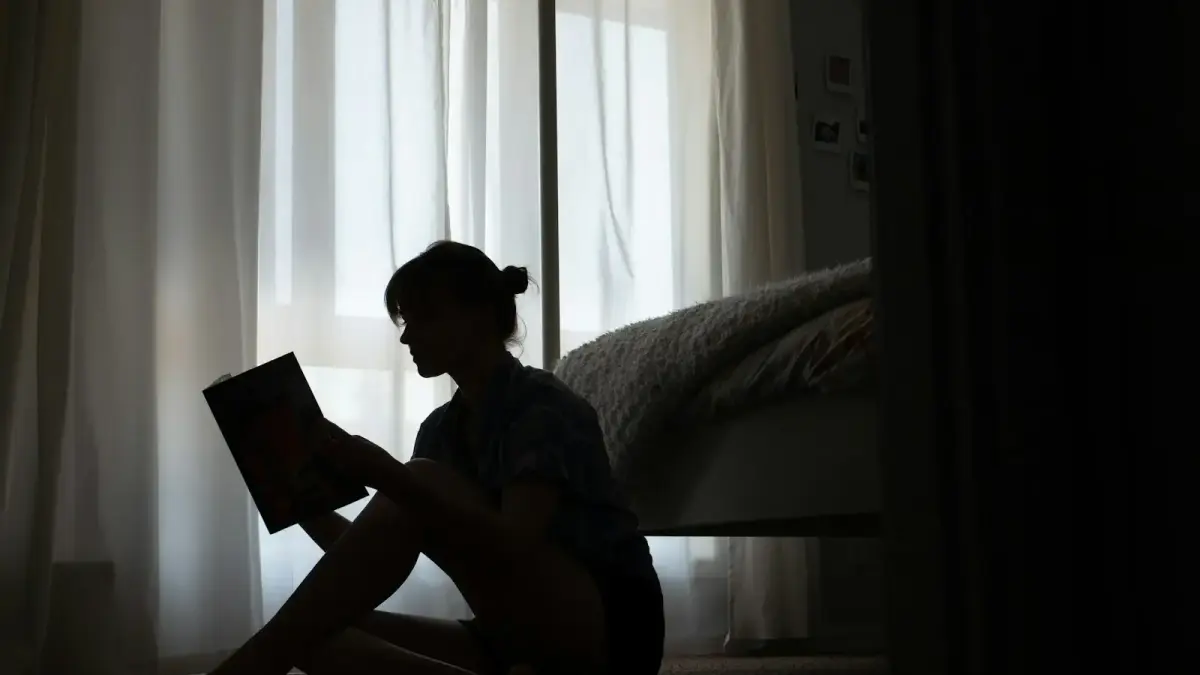
I was nine years old, sitting on the floor of my bedroom closet with a flashlight and a copy of Bridge to Terabithia so worn the spine had split in three places. I had read it maybe forty times by then. I knew every word. I knew exactly when the bad thing was going to happen, and I knew exactly how many pages I had to get through before the story found something soft to land on again.
My mother used to stand in the doorway and ask why I didn’t try something new. The library had thousands of books. There was a whole world of stories I hadn’t touched.
But I didn’t want a world of stories. I wanted this one. The one where I already knew what happened. The one where the grief on page 97 didn’t ambush me, because I could feel it coming from page 80 and brace for it. I wasn’t bored. I was building something - a place inside a story where nothing could surprise me, because surprise had stopped feeling exciting a long time ago and started feeling like a warning.
If you were that child - the one who returned to the same book, the same movie, the same cassette tape until the ribbon wore thin - I want you to know something that might change how you see every “boring” habit you carry today.
You weren’t lacking curiosity. You were keeping yourself safe.
1. The child who re-read the same book becomes the adult who rewatches the same movie every year
You know how the movie ends. That’s not the point. The point is that knowing how it ends is the entire point.
A 2020 study published in the Journal of Consumer Research found that people who experienced high unpredictability in childhood were significantly more likely to engage in what researchers called “reconsumption” - the deliberate choice to return to familiar media rather than seek out new content. The study found this wasn’t driven by laziness or a lack of openness. It was driven by a deep need for emotional predictability.
If you grew up in a home where you never knew what mood would greet you at the dinner table, a movie with a known ending isn’t entertainment. It’s regulation. Your nervous system, still carrying the imprint of a childhood spent scanning for danger, finally gets to exhale for two hours. Because this story, at least, will end the way it’s supposed to.
2. The child who wore out one cassette tape becomes the adult who listens to the same album on repeat for months
There was probably one album - or one song - that you played so many times your family begged you to stop. You couldn’t explain why you needed it. You just knew that those particular notes, in that particular order, made the inside of your chest feel like a room with the door locked. Safe. Contained. Yours.
Dr. Daniel Levitin, a neuroscientist who has studied music and the brain for decades, has written about how familiar music activates the brain’s reward system while simultaneously lowering cortisol. For a child whose cortisol was already running high from environmental stress, a familiar song wasn’t repetition. It was medicine.
The adult version looks like a Spotify history full of the same twenty songs. It looks like your partner gently asking why you never try new music. It looks like you smiling and saying you just like what you like, because the real answer - that new sounds make you feel unmoored in a way you can’t articulate - is harder to say out loud.
3. The child who watched the same VHS tape every day after school becomes the adult who uses TV shows as background noise
You didn’t just watch that tape. You pressed play the moment you walked through the door, before you even set your backpack down. It wasn’t about the show. It was about the ritual. The sound of those opening credits meant you had made it home, and nothing bad was happening right now.
That child becomes the adult who puts on The Office or Friends while cooking dinner, while folding laundry, while falling asleep. Not watching. Listening. Using the sound of voices she already knows to fill the silence that still feels, on some primal level, like a place where bad news lives.
A 2012 study published in the Journal of Experimental Social Psychology found that revisiting familiar fictional worlds - what the researchers called “social surrogates” - reduced feelings of loneliness and rejection. For someone who grew up uncertain about which version of their parent they’d encounter on any given day, a fictional character who behaves the same way every single time is more reliable than most real people ever were.
4. The child who ate the same lunch every day becomes the adult who orders the same thing at every restaurant
This one gets laughed at the most. People call it picky eating. They call it unadventurous. They don’t understand that for a child in an unpredictable home, a peanut butter sandwich that tastes exactly the same today as it did yesterday isn’t boring. It’s the only thing in her entire day that she can count on.
The adult version is ordering the chicken Caesar at every restaurant. Feeling a small pulse of anxiety when someone suggests a new place. Going to the same coffee shop four hundred times and feeling something close to love for the barista who starts making your drink when she sees you walk in.
You’re not unadventurous. You’re someone who learned very early that the world is full of surprises, and almost none of them were good.
5. The child who replayed the same video game level becomes the adult who finds comfort in routines others find tedious
You had already beaten the level. You knew where every obstacle was, where every power-up was hidden, exactly how many jumps it took to reach the end. And you played it again. And again. Not because you couldn’t move forward, but because forward meant unfamiliar territory, and unfamiliar territory meant your stomach would tighten and your hands would clench and your whole body would prepare for something bad.
That child grows into the adult who finds deep satisfaction in routine. The same morning walk. The same Sunday grocery store. The same seat at the same coffee shop. People around you might call it boring or rigid. What they don’t realize is that your routines aren’t restrictions. They’re architecture. You are building a life with as few ambushes in it as possible, because you’ve already survived enough of those to last several lifetimes.
6. The child who memorized entire movies word for word becomes the adult who finds safety in knowing what comes next
You could recite whole scenes. You did the voices. People thought it was a party trick, something cute. It wasn’t. Memorizing the script was your way of proving to yourself that this story couldn’t betray you. You had mapped every twist, every emotional beat, every moment of tension and resolution. Nothing in it could hurt you, because you had already rehearsed every possible hurt and come out the other side.
Psychologist Susan Cain, whose research on temperament and sensitivity has reshaped how we understand introversion, has observed that highly sensitive children often seek predictability not because they lack courage but because their nervous systems process stimuli more deeply. What looks like timidity is actually thoroughness. You aren’t afraid of new experiences. You just metabolize them more completely than other people, and that takes energy that a re-read never demands.
7. The child who returned to the same hiding spot becomes the adult who needs a room of her own
Every child in an unpredictable home has a spot. The closet. The space behind the couch. The branch in the backyard tree that was exactly the right shape to hold her body. Not a hiding place, exactly. More like a place where the world got small enough to manage.
That child becomes the adult who needs alone time the way other people need coffee. She’s the one who closes the bedroom door after a party and sits in the quiet for twenty minutes before she can speak again. She’s the one whose partner has learned not to take it personally when she disappears for an hour on a Saturday afternoon.
A 2018 study in Frontiers in Psychology found that individuals with heightened early-life stress showed stronger activation in the brain’s default mode network during periods of solitude - suggesting that for these individuals, alone time isn’t withdrawal. It’s active self-repair. You aren’t antisocial. Your brain is doing maintenance that it couldn’t do when you were a child because the environment was never quiet enough to let it.
8. The child who kept every stuffed animal long past the “appropriate” age becomes the adult who gets attached to objects others easily discard
You named them. You arranged them in a specific order. You felt a real pang of guilt if one fell off the bed during the night, as though you had abandoned something that trusted you.
That wasn’t immaturity. That was a child practicing loyalty in the only arena where it felt safe - with objects that could never leave, never change their mood, never look at her differently depending on what day it was.
The adult version is the one who still has the same coffee mug from fifteen years ago and would be genuinely upset if it broke. The one who keeps a jacket long past its usefulness because it was there during a hard year. The one whose attachment to objects puzzles people who don’t understand that when the humans in your early life were inconsistent, the things became the anchors. And that kind of bond doesn’t dissolve just because you grew up.
9. The child who asked “and then what happens?” even when she already knew becomes the adult who needs reassurance she’d never ask for
This is the one that might sting the most.
You already knew what happened. You’d heard the story twenty times. But you asked your parent to tell you again, not because you’d forgotten but because the telling was the point. You needed to hear a voice you loved narrate a world that made sense. You needed the proof, delivered one more time, that someone was willing to sit with you and make the chaos into a story with a beginning, a middle, and an end.
The adult version is subtler. It’s the way you replay conversations in your head afterward, checking for tone. It’s the way you read your partner’s face when they come home, scanning for micro-shifts that might mean something has changed. It’s the way you feel a quiet flood of relief when a plan goes exactly the way you were told it would.
You don’t ask for reassurance out loud anymore. But your whole body is still asking the question that child was really asking all along: Is this going to be okay? Is this going to end the way you promised?
If you recognized yourself in any of this, I want to say something clearly.
The re-reading was never a problem. The rewatching was never a weakness. The routines, the familiar restaurants, the same album playing for the hundredth time - none of it means you are broken or boring or small.
It means you survived something that required you to build your own sense of safety, because the environment didn’t provide one. And you did it brilliantly. You found stories that kept their promises. You found songs that never changed their tune. You found corners of the world that stayed exactly where you left them.
That’s not rigidity. That’s the most creative form of self-preservation a child can invent.
And if you’re reading this and wondering whether it’s okay to keep doing it - to keep rewatching, re-reading, returning to the things that feel like home - the answer is yes. Your nervous system is not a project to be optimized. It is a body that learned to protect itself, and it deserves every gentleness you can offer it. Including the gentleness of a story you already know by heart.

