There is a generation of men who learned to say I love you by warming up the car on winter mornings before their wives got in - who scraped the windshield and let the heater run and checked the tire pressure in the dark - and the morning their daughters came home with partners who said the words out loud at the dinner table, something in those fathers both broke and healed at the same time
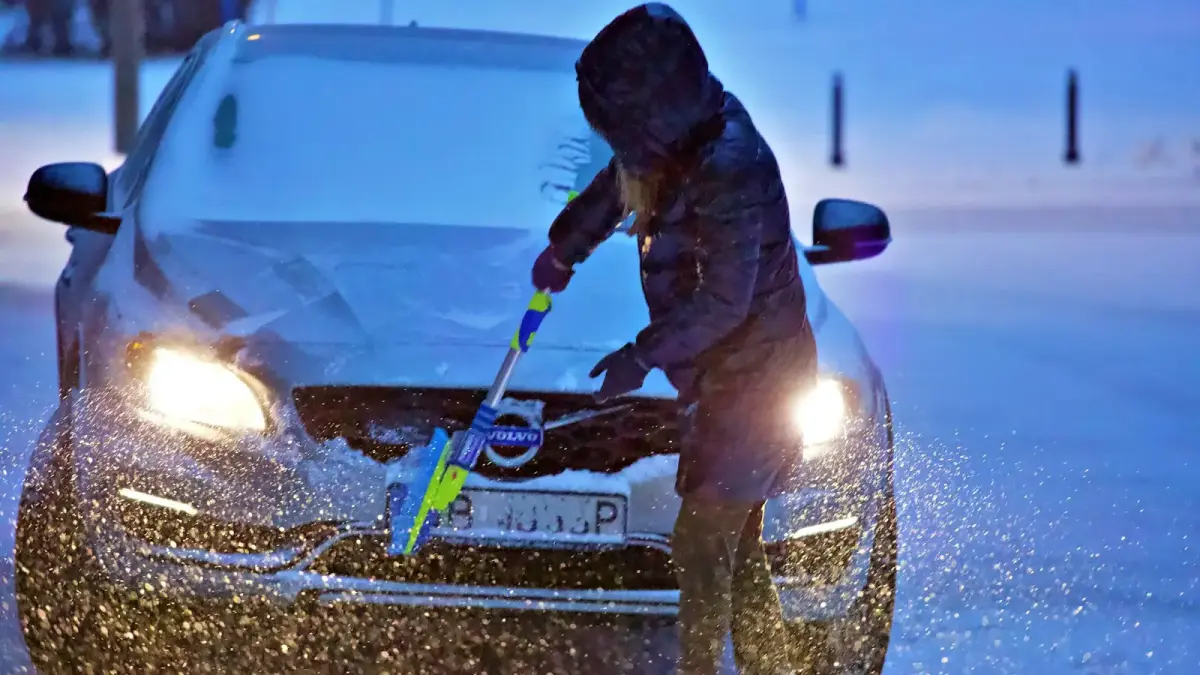
My father was already outside by the time I woke up most winter mornings. I’d hear the back door click shut - never slam, because my mother was still sleeping - and then the scraping sound. Metal on glass. Rhythmic, patient, thorough. By the time my mother poured her first coffee and pulled on her coat, the car would be running, the windshield clear, the seats warm enough that she never once sat down on cold leather.
She never asked him to do it. He never mentioned that he had.
I didn’t think about it at the time. It was just what mornings looked like in our house - my father outside in the dark, his breath a white cloud under the porch light, working a plastic scraper across a frozen windshield while the rest of the neighborhood was still asleep. I thought it was routine. Maintenance. The kind of thing a man just does because someone has to.
I was forty-six years old before I understood that I had been watching a man say I love you every single morning of my childhood in the only language he was ever taught.
The Vocabulary of January
There is an entire generation of men - born roughly between 1945 and 1965 - who built a complete emotional language out of physical tasks performed before anyone else was awake.
They warmed up cars. They shoveled driveways at five-thirty in the morning so their wives wouldn’t have to walk through snow in work shoes. They checked the oil on Saturdays, not because the car needed it, but because care - real care - was the act of preventing a problem your wife would never have to know existed.
They salted the front steps. They replaced the wiper blades two weeks before the first storm, not two days after. They kept a blanket in the trunk and a flashlight in the glove box and jumper cables she never had to ask about.
None of this came with a card. None of it came with words. It came with cold hands and a running engine and a woman who slid into a warm seat without knowing it had been frozen solid twenty minutes ago.
Gary Chapman gave us the phrase “acts of service” as one of the five love languages, and it became a category on a quiz. Something you could score yourself on and compare with your partner over dinner. But for these men, it was never a preference. It was the whole dictionary. Every act of service was a sentence. Every scraped windshield was a paragraph. Every winter was a love letter written in labor and erased by spring, then written again the following year without complaint.
Where the Silence Came From
These men didn’t choose silence. Silence chose them - early, completely, and without any alternative being offered.
Their fathers came home from wars and factories and didn’t talk about either. The houses they grew up in had clear rules, none of which were posted on the wall. You didn’t say you were scared. You didn’t say you were sad. You certainly didn’t say “I love you” to another man, and saying it to a woman felt like standing in the middle of a room with no clothes on.
A 2016 study published in the Journal of Family Psychology found that men born before 1965 were significantly less likely to use explicit verbal affection with their partners and children - not because they experienced less love, but because the social scripts available to them simply did not include that kind of language. The researchers described it as “expressive constraint” - a narrowing of emotional vocabulary so thorough that by adulthood, many of these men had no framework for translating internal feeling into spoken words.
They felt everything. They said almost nothing.
And so they built a parallel system. A way to transmit devotion through the body instead of the voice. Checking the tire pressure in November was a way of saying I worry about you on those dark roads. Changing the furnace filter was a way of saying I think about your comfort even when you’re not in the room. Warming up the car on a January morning was a way of saying you matter to me more than twenty minutes of sleep.
The problem was that this language was invisible. Not because it was small, but because the people receiving it had been taught to listen for words.
The Daughter’s Table
Then something happened that none of these men saw coming.
Their daughters grew up. Went to college, or didn’t. Moved to cities, or stayed. Built lives. And eventually, they came home for Thanksgiving or Christmas and sat at the table with a partner who said “I love you” like it was nothing.
Not like it was nothing - like it was normal. Like saying it was the ordinary Tuesday version of love, not the emergency version. Like the words were oxygen, and you were just supposed to breathe.
The first time it happens, the father doesn’t react. He passes the potatoes. He asks about work. He does the dishes afterward, because that’s what he does after every meal - he gets up and he does something useful with his hands.
But something has shifted. Something he can’t name has entered the room and rearranged the furniture inside his chest.
A 2020 study in Psychological Science found that exposure to emotional expression styles different from one’s own - particularly within family contexts - can trigger a phenomenon researchers called “affective dissonance.” It’s not jealousy. It’s not disapproval. It’s the disorienting experience of watching someone do easily what you spent your whole life finding impossible. Like watching someone pick up an instrument you struggled with for decades and play it on the first try.
That young man at the table said “I love you, babe” to his daughter between bites of sweet potato, and the father felt something crack open in a place he didn’t know was sealed.
The Fracture and the Light
Here is what breaks.
It breaks because the father suddenly sees - not thinks, but sees, in the gut-level way that bypasses all reasoning - that his daughter is being given something he never gave his wife. Not because he didn’t feel it. Because he didn’t have the words. Because no one handed him the words. Because the blueprint he inherited had a hole where that language should have been, and he built an entire life around the hole without ever naming it.
He thinks about all those mornings. The car. The windshield. The heater running in the dark. He thinks about his wife sitting in the warm seat and not knowing - or knowing, but never hearing it confirmed in the way that a human heart sometimes needs to hear it confirmed, in plain English, with no engine running in the background.
He wonders if she knew. He’s almost certain she knew. But the wondering is the wound.
And here is what heals.
It heals because his daughter chose this. This person who says the words, who holds her hand in front of the family, who treats tenderness like weather - just the way things are today. His daughter chose this, which means some part of what he gave her worked. Some part of the warmth made it through. She grew up knowing she deserved to be spoken to with love, even if the man who taught her that lesson used a different dialect entirely.
She learned what love felt like in a warm car seat at six-thirty in the morning. And she grew up to demand that someone say it out loud.
That’s not a failure on his part. That’s his whole life working exactly the way it was supposed to.
The Translation No One Offers
The hard part - the part that sits in these men’s chests like a stone they carry but never set down - is that there is no ceremony for this. No moment where someone sits them down and says: what you did counted. The language you spoke was real. The love was received.
Brene Brown has written extensively about the way vulnerability operates differently for men - how the cultural permission to be emotionally open was revoked for an entire generation so quietly that most of them don’t even register it as a loss. They think their inability to say “I love you” easily is a personal failing. A deficiency. Something wrong with them specifically.
It isn’t. It is an inheritance. A set of instructions they followed perfectly, handed down by men who were following the same instructions, who received them from men who came back from wars with no language for anything softer than “pass the salt.”
A 2018 study in the Journal of Research in Personality found that men over sixty who scored highest on measures of love and attachment toward their partners were also the least likely to use verbal affirmation as their primary mode of expression. The researchers noted the paradox directly: the men who loved the most said it the least.
My father was one of those men. Yours might have been too.
The Car Is Still Running
I watched my daughter’s partner tell her he loved her on an ordinary Wednesday in my kitchen. He was leaning against the counter. She was making coffee. He said it the way you’d say “it’s raining” - as a fact, not an event.
My hands were in the sink. I didn’t turn around. I kept washing the pan I was washing, and I let the water run a little longer than I needed to, and I felt something in my throat that I still don’t have a name for.
It wasn’t sadness. It wasn’t regret, exactly. It was the feeling of watching a door open in a house you built - a door you didn’t know you’d installed, leading to a room you never got to enter yourself.
My father warmed up the car every morning for thirty-one years. He scraped the windshield in the dark. He checked the tires. He made sure the heater was blowing warm before my mother even put on her coat.
He never once said the words.
But my mother sat in that warm seat every single morning, and she married him for sixty-two years, and when he died she said something I will carry with me for the rest of my life. She said, “That man loved me louder than anyone I ever knew.”
She heard him. She heard every frozen morning. Every warm seat. Every silent sentence he ever wrote on a windshield with a plastic scraper in the dark.
The car is still running. The heater is still on. The seats are warm, and the man who warmed them is already back inside, pouring coffee, saying nothing, loving so loudly that his daughters grew up knowing exactly what they deserved.
And the morning they brought it home to his table, he didn’t need to say a word. His whole life had already said it for him.