There are men over sixty who read the obituaries every morning before they read anything else, not because they are morbid or counting down but because they belong to the last generation that understood a community as something you tended to by knowing who left it, and the morning a name you recognized appeared in a small rectangle of newsprint was not a reminder of death but a debt of attention you owed to a life that had been running alongside yours for decades without either of you ever saying so
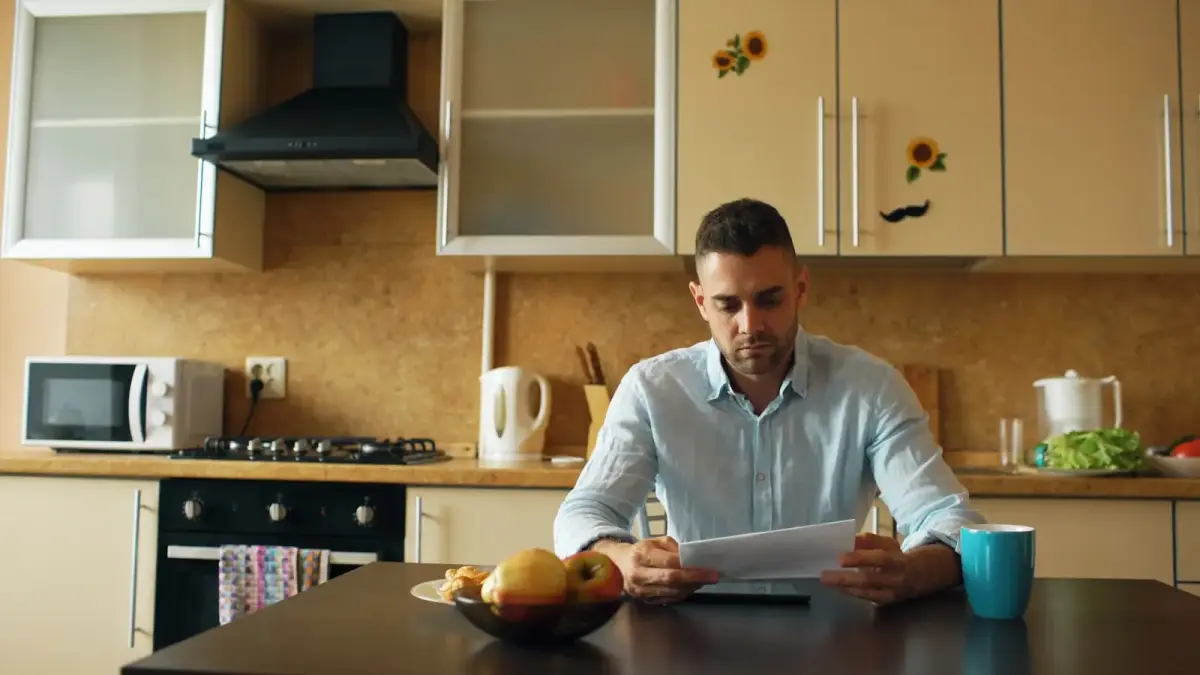
My father folded the newspaper the same way every morning. Not in half, the way you might fold it to read a headline. He folded it in quarters, the obituary page facing up, and set it beside his coffee cup before he had taken a single sip. The coffee could wait. The living could wait. The dead had arrived in the night, and they deserved to be greeted first.
He did this at the kitchen table for as long as I knew him. Six-fifteen in the morning, the overhead light still buzzing because the fluorescent tube was going and he never replaced it, the house silent except for the furnace and the sound of newsprint settling against laminate. He read every entry. Not scanning. Reading. The way you read something you owe your attention to.
I used to think it was morbid. I was sixteen and could not imagine why a man would begin his day with the names of the dead. But I was wrong in the way that all young people are wrong about the rituals of their fathers - completely, and with an arrogance that takes decades to correct.
The town’s attendance record
What I did not understand at sixteen is that my father was not reading about death. He was taking attendance.
There is a difference that matters enormously, and it separates his generation from mine in ways I am only now beginning to feel in my body. For my father, and for every man like him who still opens the paper to the back pages before touching the front, the obituary section was not a catalog of loss. It was a daily register of who remained. It was the town checking in on itself. And your job, as someone who lived there - not just occupied space there, but lived there - was to know when someone had gone.
This was not optional. It was not a personality quirk. In the world my father came from, missing someone’s death was a failure of attention that bordered on disrespect. Not showing up to the visitation was understandable. People have bad knees, night shifts, complicated histories. But not knowing? Not knowing meant you had stopped paying attention to the lives around you, and that was a confession no one wanted to make.
A 2005 study published in the American Sociological Review built on Mark Granovetter’s foundational research on the strength of weak ties - those loose, peripheral connections that bind a community not through intimacy but through recognition. Granovetter argued in 1973 that these ties were not secondary to strong bonds but were actually the architecture that held communities together. The neighbor you waved to. The man you saw at the hardware store every March buying the same grass seed. The woman whose name you knew only because her son played baseball with yours in 1984.
My father knew hundreds of these people. He could not have told you their middle names or their political opinions. But he knew their faces, and he knew when one of those faces stopped appearing, and the obituary page was how he confirmed what his attention had already suspected.
The grammar of recognition
There is a specific feeling that comes when you see a name you recognize in a small rectangle of newsprint. I know this now because I am old enough to have felt it myself, and it is not grief. Grief is reserved for the people who lived close to your center - the ones whose absence rearranges your interior. This is something else. Something quieter and harder to name.
It is the sudden awareness that a life which had been running alongside yours, sometimes for decades, has stopped. Not a life that intersected with yours daily. Not a life you depended on. A life you were simply aware of - the way you are aware of a house on your street, or a tree that has always stood at a particular corner. You did not think about it often. But it was there, and you knew it was there, and its presence contributed to the shape of the world as you understood it.
And now it is not there, and the world is a slightly different shape, and nobody else in your life will feel this particular version of its absence because nobody else shared the exact same map.
My father called it “paying respects,” but the word he meant was attention. Respect was the act. Attention was the material. You paid respects by having paid attention first - by having noticed that Jerry Kowalski coached Little League for eleven years, that Margaret Delaney ran the church rummage sale every October, that Howard Bern always parked his truck at the end of the lot because he said the walk was good for his back.
You noticed, and then you remembered, and then one morning the paper told you they were gone, and the noticing became a small, private ceremony of recognition. Not mourning. Witness.
What community used to cost
I think about cost a lot these days. Not money. Attention.
My generation treats community as something that arrives. You move to a neighborhood. You join an app. You follow a feed. Community is a thing that happens to you, or near you, a current you can step into and out of depending on your schedule and your energy and whether you feel like engaging today.
My father’s generation understood it differently. Community was something you tended. The way you tended a garden - not once, not when it was convenient, but daily, in small acts of maintenance that nobody praised you for and nobody noticed until you stopped. Knowing who moved in. Knowing who moved away. Knowing who was sick, who was struggling, who had just lost a spouse and might need a casserole left on the porch without a note because a note would require a conversation and a conversation would require the bereaved to perform gratitude they did not have the energy for.
The obituary page was the most fundamental of these maintenance tasks. It was the minimum. The floor beneath which you could not fall without ceasing to be a member of the community in any meaningful sense.
A 2011 study published in the Journal of Personality and Social Psychology examined what researchers called “ambient belonging” - the sense of connection people derive not from active relationships but from the simple, repeated awareness that they exist within a web of recognized others. The study found that this ambient awareness - knowing the people around you and being known by them, even superficially - was a significant predictor of life satisfaction in older adults. Not deep friendship. Not family closeness. Just the steady, unremarkable fact of recognition. Of being placed.
My father was placed. He knew where he stood in the web, and the obituary page told him, each morning, what shape the web had taken overnight.
The debt that is never spoken
Here is what I want you to understand, because this is the part that gets lost when people talk about obituary-reading as a generational curiosity or a dark habit.
These men are not counting down. They are not doing arithmetic with their own mortality, checking how many contemporaries remain and calculating where they stand in the queue. Some of them probably do think about that, quietly, in the way that all people over a certain age think about the distance between themselves and the end. But that is not what drives the ritual.
What drives it is obligation. A specific, inherited obligation that has no modern equivalent and no name, because the generation that practiced it never thought to name the things they simply did.
You owed something to the lives that ran alongside yours. Even if you never said it out loud. Even if you never acknowledged their presence while they were alive. You owed them the dignity of being noticed when they left. This was not negotiable. This was not earned. It was automatic, the same way property taxes are automatic - you pay them not because you feel grateful for the roads, but because you live on one.
My father would sometimes mention a death at the dinner table. Not dramatically. Not as conversation. Just a fact, offered to the room the way he might mention the weather. “Ed Pulaski died. Seventy-nine.” And my mother would nod, and one of them would say something about Ed - a detail, a memory, a single sentence that placed Ed in the landscape of their shared life. “He used to bring his dog to the bank.” And that was it. The ceremony was over. Ed had been noticed. The debt had been paid.
The last practitioners
I do not do this. I want to be honest about that. I read the news on a screen, and the news I read is selected by an algorithm that has no interest in who has left my community because my community, in the way my father understood that word, does not exist in the algorithm’s vocabulary.
I could not tell you who died this week within five miles of where I sit. My father could have told you who died within five miles of where he sat, and also who their children were, and also where they went to church, and he would have known all of this not because he was unusually social but because he was usually present. Presence was the whole skill. Not charisma. Not networking. Just the slow, patient accumulation of awareness that comes from living in a place and treating it like a place you live rather than a place you sleep.
Robert Putnam documented this erosion in Bowling Alone - the decades-long decline in civic participation, social trust, and communal knowledge that accelerated through the end of the twentieth century. Putnam measured it in bowling leagues and PTA meetings and voter turnout. But I think the truest measure is simpler than any of that. It is whether you know who died, and whether it matters to you that you know.
These men over sixty who still fold the paper to the obituary page before they touch their coffee - they are not nostalgic. They are not quaint. They are practitioners of something. Something that looks like habit but is actually discipline. Something that looks like morbidity but is actually devotion. Something their fathers did, and their fathers’ fathers did, and that will end - not with a funeral, but with the quiet morning when the last man who reads the obituaries first becomes an obituary himself, and nobody reads it, because nobody reads the paper anymore.
The small rectangle of newsprint
I went home last Thanksgiving and sat at my father’s kitchen table at six in the morning. He is eighty-one now. His hands shake in a way they did not shake five years ago, and the newspaper is harder for him to fold, but he still folds it the same way. Quarters. Obituary page up. Coffee untouched until the names have been read.
He found one that morning. A man named Donald Warrick. Seventy-seven. My father read the entry twice, then set the paper down and said, “I changed his tire once, in the Kmart lot. Nineteen eighty-something. He had a Plymouth.”
That was all. He picked up his coffee. He moved on to the sports section.
But for a moment, Donald Warrick - a man I had never met, a man whose life I knew nothing about, a man who existed in my father’s map of the world as a single remembered act in a parking lot forty years ago - had been noticed. Had been placed. Had been given the only thing the living can give the dead, which is the acknowledgment that they were here and that someone was paying attention.
That is not morbidity. That is not fear. That is the last living expression of something we used to call community - the quiet, daily practice of knowing who is beside you, and honoring the morning when they are not.
My father finished his coffee, folded the paper back together, and set it on the counter for my mother. The fluorescent light still buzzed. The furnace still ran. And somewhere in the town, a family was waking up to the first morning without Donald Warrick, and they did not know it yet, but a man at a kitchen table had already said his name out loud to a room that did not need to hear it.
That was enough. It always had been.