He is 57 and has finally understood why he sits in his car for ten minutes after pulling into his own driveway every evening - not because he dreads what is inside but because a boy who shared a bedroom with two brothers and a bathroom with five people never had a single room that was entirely his, and the car with the engine off and the radio still playing is not avoidance but the only space a man who spent forty years being available to everyone ever built that nobody else has a key to
The parking lot confession nobody told me was universal
I used to think it was just me.
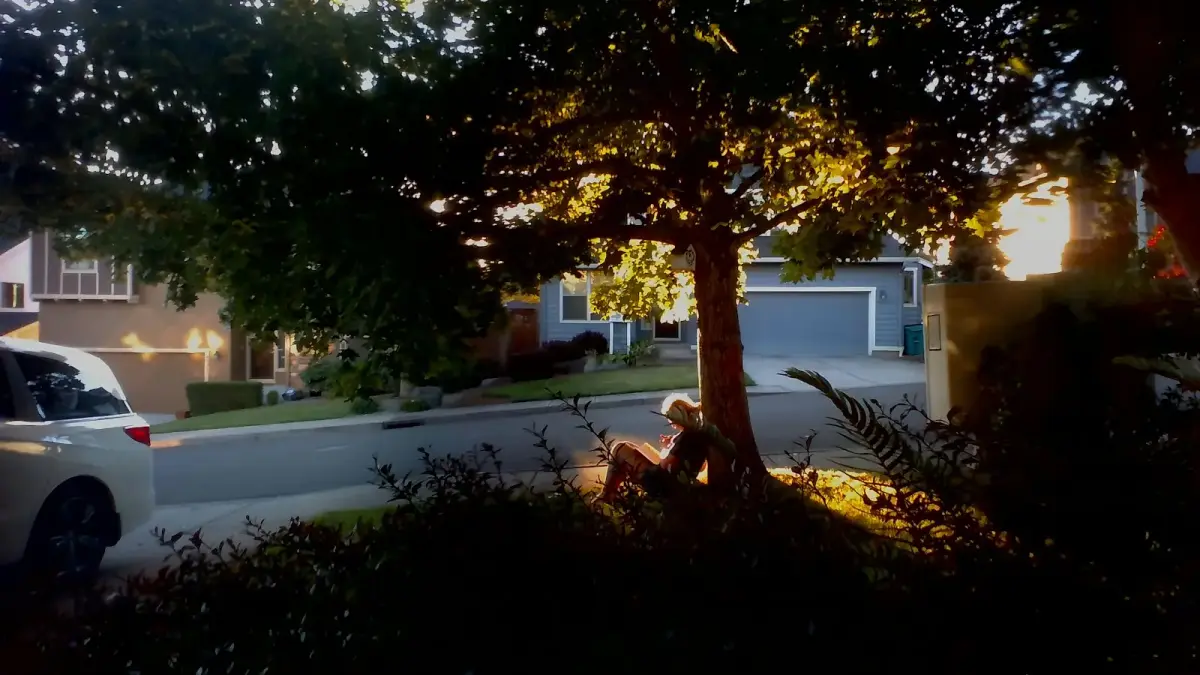
Five-fifteen in the evening. Engine off. Seatbelt still on.
The house right there, maybe forty feet from where I’m sitting - porch light on, kitchen window glowing. I can see the shapes moving inside. I love every single one of them.
And I sit here anyway. Ten minutes. Sometimes twelve.
My wife asked me once if something was wrong. She used that careful voice, the one that means she’s already halfway through a worry she hasn’t said out loud. I told her I was just decompressing.
Which was true. But it wasn’t the whole truth. Because I couldn’t explain the whole truth to her when I didn’t understand it myself.
It took me until fifty-seven to figure out what I was actually doing in that car.
I wasn’t avoiding anything. I wasn’t dreading what was inside. I wasn’t unhappy, distracted, checked out, or pulling away.
I was sitting in the only room I’ve ever had that belongs entirely to me.
That sounds dramatic until you go back and count the rooms.
A boy with no corners
I grew up in a three-bedroom house with five kids, two parents, and a dog who slept wherever she wanted. My brothers and I shared one bedroom. Three beds pushed together so tight you could roll out of yours and land in someone else’s.
Every drawer was negotiated territory. Every surface was contested ground.
The bathroom was a relay race. You knocked, you waited, you got six minutes if you were lucky. Privacy was a door that didn’t lock and a family that didn’t knock.
I’m not complaining. It was a good childhood. There was laughter in that house, warmth in it, all the noise a kid could want.
But there was never quiet that belonged to me.
There was never a corner where I could sit and think without someone asking what I was thinking about.
That question - “what are you thinking about?” - was always well-meaning. But for a kid who processed things slowly and internally, it felt like being asked to hand over something before he’d finished making it.
Like someone opening the oven door every three minutes. The bread never rises that way.
So I learned to think in the spaces between. In the car on the way to school. On the walk home.
In the backyard after dark, sitting on the porch steps, listening to the neighborhood settle into itself.
I became a person who built invisible rooms inside visible ones. And I got so good at it that nobody - including me - noticed I was doing it.
The in-between that became essential
A 2014 study published in the Journal of Environmental Psychology found that transitional spaces - the thresholds between one environment and another - serve a critical psychological function. They allow the brain to shift roles, lower arousal, and prepare for a different kind of engagement.
The researchers called it “cognitive decompression.” I call it sitting in my car listening to the last four minutes of a song I wasn’t even paying attention to.
Here’s what I think most people don’t understand about men like me, men who grew up crowded and stayed crowded. It’s not that we need alone time the way some people need vacations. It’s that we never learned to take up space in the first place.
We learned to be available. To be useful. To fold ourselves into whatever shape the room needed.
The good son, the dependable brother, the steady husband, the reliable coworker. And every one of those roles required the same thing - putting someone else’s need for us ahead of our own need for ourselves.
That’s not bitterness. It’s just math. There are only so many hours in a day, and if every one of them belongs to a role, there’s nothing left over for the person inside the role.
The car is the leftover. The car is the remainder after every division.
What the car actually is
My car is twelve years old. It has coffee stains on the center console and a crack in the dashboard I keep meaning to fix.
The back seat has a blanket my daughter left there two winters ago. It smells like old leather and the pine air freshener my wife hangs from the mirror because she says my car smells like old leather.
It’s not a beautiful room. But it’s mine.
In that car, I am not somebody’s father. I am not somebody’s husband. I am not the guy from accounting, the neighbor who always waves, the friend who always picks up.
I’m just a man in a metal box with the engine cooling and the radio on low, and nobody in the world knows exactly where I am for ten minutes.
That’s not loneliness. That’s the opposite of loneliness. That’s the feeling of being alone without being abandoned - which, if you grew up in a house where solitude was accidental and always interrupted, feels like the greatest luxury a life can offer.
Elaine Aron’s research on sensory processing sensitivity, first published in the Journal of Personality and Social Psychology in 1997, described roughly 15 to 20 percent of the population as having a nervous system that processes stimulation more deeply. These individuals need more downtime after periods of engagement. Not because they’re fragile but because their brains are doing more with the same input.
I don’t know if I’m highly sensitive by clinical standards. But I know that after eight hours of meetings and small talk and being the person other people need me to be, ten minutes of silence in a car feels less like a luxury and more like oxygen.
The partner who sees it wrong
My wife is an extrovert in the truest sense. She recharges around people.
She walks through the front door and immediately wants to tell me about her day, hear about mine, plan dinner, discuss the weekend. She’s not wrong for wanting that. That’s how she connects.
But for years, she interpreted my ten minutes in the car as withdrawal. As a sign that something was off between us. She once said, “You always seem to need a minute before you can be with us,” and she said it the way you’d say someone was late to something important.
She wasn’t wrong, exactly. I did need a minute.
But the minute wasn’t about not wanting to be with them. It was about needing to arrive as myself instead of as the last version of me that someone else required.
A 2019 study in Frontiers in Psychology found that individuals who engage in brief periods of voluntary solitude between social contexts report higher relationship satisfaction and greater emotional availability. The researchers noted that the solitude functioned not as disconnection but as a kind of reset - a way of clearing the cache so the next interaction could start clean.
When I finally told my wife what the car really was - not a retreat from her but the only room I’d ever built for myself - something shifted. She stopped asking if I was okay when I sat there. She started leaving the porch light on and giving me my ten minutes.
That might be the most generous thing anyone has ever done for me.
The rooms we never had
I think about my father sometimes when I’m sitting in that car. He was a driveway sitter too, though he did it differently.
He’d stand by the garage and smoke one cigarette, slowly, looking at nothing in particular. We all knew not to bother him during that cigarette. It was the one boundary he ever set, and he set it without words.
He grew up in a house even more crowded than mine. Six kids. One bathroom.
A father who worked nights and slept days, which meant silence was enforced not as a gift but as a rule - be quiet because Dad is sleeping, not be quiet because quiet is something a person might need for themselves.
So my father never learned to ask for silence. He learned to steal it. One cigarette at a time, standing in a driveway, watching the street do nothing.
I don’t smoke. But I understand the architecture of what he was building.
A tiny room made of minutes. A space with no walls but very clear borders. A place where a man could hear his own thoughts before they got reorganized by someone else’s needs.
We inherit our parents’ coping strategies more faithfully than we inherit their eye color.
The tenderness of small rooms
I’m 57 now, and I’ve stopped feeling guilty about the car.
That took a long time. Decades of feeling like the need for ten minutes alone was some kind of deficiency.
Some failure of love or stamina or masculinity. Real men don’t need to hide, right? Real husbands walk through the front door with energy to spare.
But that’s not how it works. Not for everyone.
Some of us spent our entire childhoods in rooms that belonged to other people, learning to need less space, less noise, less of everything - and we carried that smallness into adulthood like a suitcase we forgot to unpack.
The car isn’t hiding. The car is unpacking.
Daniel Goleman once wrote about the difference between emotional exhaustion and emotional withdrawal. Exhaustion is what happens when you’ve given everything and have nothing left.
Withdrawal is a choice to pull away. The difference matters because one is a wound and the other is a wall.
What happens in the driveway is neither.
It’s a man sitting quietly in a space he made for himself, doing the thing he never learned to do as a child - taking up room. Just enough room. Just ten minutes of it.
The key nobody else has
My daughter is twenty-three now. She called me last week and said something that made me pull over.
“Dad,” she said, “I’ve started sitting in my car for a few minutes after I get home. Is that weird?”
I laughed. Then I almost cried. Then I told her it wasn’t weird at all.
“It’s your room,” I said. “Nobody else has a key.”
She was quiet for a moment. Then she said, “Yeah. That’s exactly what it feels like.”
If you’re someone who sits in the car, who lingers in the driveway, who takes the long way home not because you don’t want to arrive but because you need the in-between - I want you to know something.
You’re not avoiding your life. You’re not failing the people who love you. You’re not broken or distant or difficult.
You are a person who never had a room, building one out of minutes and silence and the low hum of a cooling engine. And that’s not something to fix.
That’s something to honor.