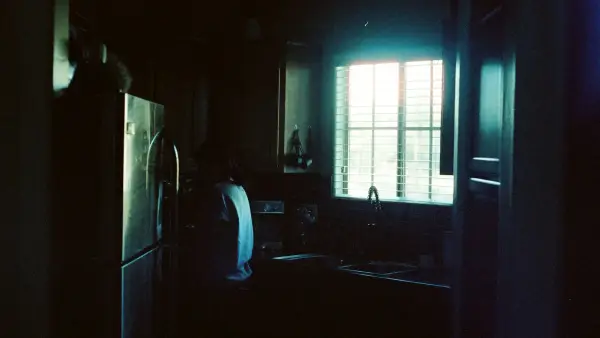
He is 58 and has just realized that the reason he keeps every receipt, every instruction manual, every warranty card filed in a kitchen drawer that nobody else in the family has ever opened is not because he is organized or careful but because a boy who watched his father get turned away at a return counter once - no receipt, no proof, no recourse, just a broken thing and a man who could not afford to replace it standing in a store that would not take his word for it - learned that the distance between a problem that gets resolved and a problem that swallows you whole is always a piece of paper you either kept or you didn't
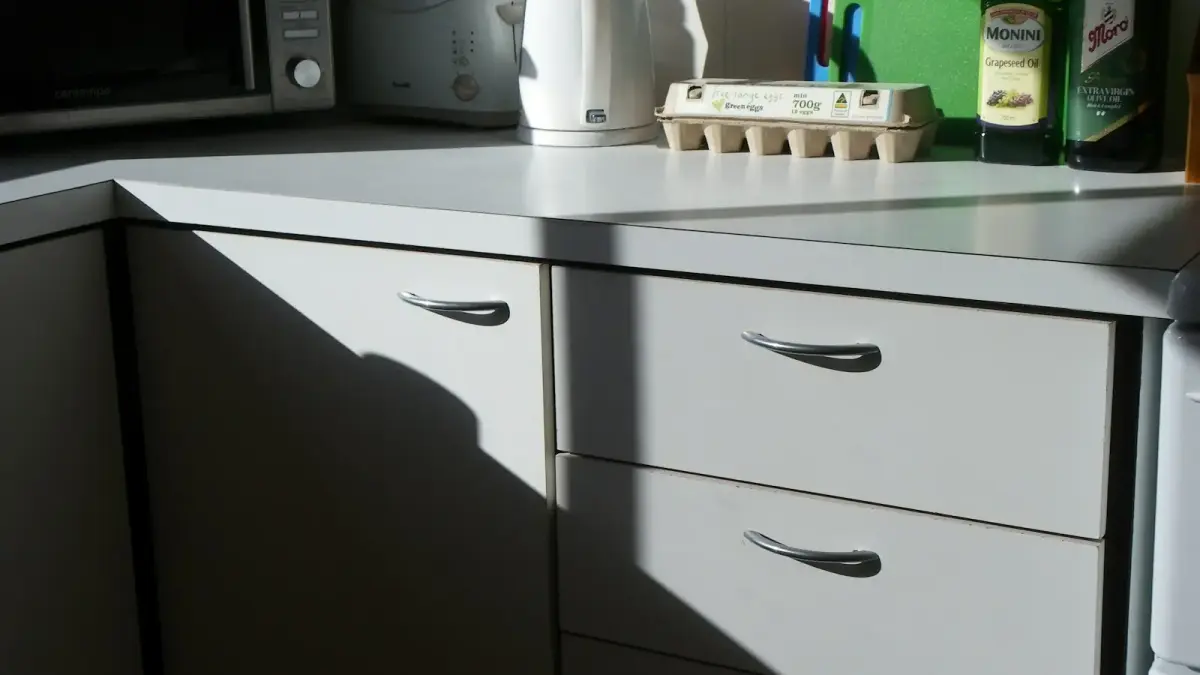
I found a receipt in my kitchen drawer last Tuesday for a lawnmower I bought eight years ago. The lawnmower is gone. I replaced it three summers back with a newer model. The receipt for that one is also in the drawer, folded once, tucked behind the instruction manual for a blender my wife and I received as a wedding gift in 2004.
The blender broke in 2011.
I stood there holding a faded strip of thermal paper for a machine that no longer exists, and something shifted in my chest. Not embarrassment. Something older. Something that had been sitting in that drawer longer than any of the paper.
My wife has asked me about the drawer exactly twice in twenty-six years of marriage. The first time she called it sweet. The second time she called it unnecessary. Both times I said I just liked to keep things organized. Both times I was lying.
I am not organized. I am afraid. And the fear lives in a very specific place - the space between having proof and having nothing.
The Return Counter
I was nine the first time I understood what a receipt meant.
My father bought a radio from a department store - the kind with a dial and an antenna and a wood-grain panel that made it look more expensive than it was. It stopped working after two weeks. Something inside it clicked and went silent, the way cheap electronics do, without ceremony.
He drove back to the store on a Saturday. I sat in the passenger seat. He carried the radio in the box it came in, which he had kept. He walked to the return counter and set it down, and the woman behind the counter asked for the receipt.
He didn’t have it. He searched his wallet, his coat pockets, the glove box. He described the purchase. He named the date. He pointed to the price tag still stuck to the bottom of the box. None of it mattered.
The woman said she couldn’t process the return without proof of purchase. Her voice was not unkind. It was simply final. And my father stood there for a moment with his hands on a broken radio he could not return and could not afford to replace, and he nodded once, and we left.
He didn’t say anything in the car. He didn’t need to. I was nine, and I understood the entire lesson in the time it took him to put the key in the ignition. The world has rules that do not bend for people who cannot prove what they are owed.
A 2020 study published in the Journal of Consumer Research found that individuals who experienced financial instability in childhood were significantly more likely to engage in what researchers termed “documentary hoarding” - the compulsive retention of financial records, warranties, and proof-of-purchase materials - regardless of their current economic status. The behavior persisted even among participants who had achieved considerable financial security. The researchers concluded that the habit was not about the documents themselves but about the psychological function they served: evidence that you are prepared for the moment the world asks you to justify what you have.
That is exactly right. The drawer is not about receipts. It is about readiness.
What the Drawer Actually Holds
If you opened my drawer right now, you would find:
The warranty card for a dishwasher installed in 2018. The instruction manual for a ceiling fan I hung myself. Receipts from Home Depot, Lowe’s, Best Buy, and a small appliance store that closed six years ago. A folded printout of a confirmation email for a mattress we ordered online. The original packaging insert for a pair of noise-canceling headphones my daughter gave me for Christmas.
None of these items are organized by date or category. They are simply kept. Stacked, folded, pressed into the drawer like leaves in a book nobody reads.
My wife sees clutter. I see insurance.
Not insurance in the financial sense. Insurance in the existential sense. Every receipt is a small guarantee that if something breaks, if something fails, if someone behind a counter looks at me and says prove it, I can. I will reach into the drawer and pull out the thing that says I was here, I paid for this, I am owed something.
A 2018 study in Psychological Science examined the relationship between childhood socioeconomic status and adult risk-management behaviors. Researchers found that adults who grew up in lower-income households displayed significantly heightened sensitivity to situations involving potential loss - not because they were more anxious by disposition, but because their early environment had trained their nervous systems to treat every reversible problem as potentially irreversible. The receipt in the drawer is the physical artifact of that training.
I know this about myself now. I know that the drawer is not about the paper. It is about a boy who watched a man he loved stand helpless in a store because he could not prove a fifteen-dollar purchase, and who decided in that moment - without words, without conscious thought - that he would never be the man without the paper.
The Warranty Card Ritual
There is a specific thing I do every time I buy something that costs more than fifty dollars. I open the box, I set the product aside, and I find the warranty card. I fill it out. I note the date of purchase. I paper-clip the receipt to the card. I walk to the kitchen and open the drawer and file it behind whatever is already there.
My hands are steady when I do this. My breathing is even. It takes less than two minutes. And when I close the drawer, something in my chest releases - a tension I didn’t know I was carrying until it was gone.
This is not organization. This is a ritual. It is the adult version of a child checking the lock on the front door three times before bed. It is the body’s way of saying I have done the thing that keeps us safe. The threat has been managed. You can rest now.
I know men like me. Men who keep folders. Men who file taxes in January because waiting until April feels like standing on the edge of something. Men who save the box a television came in for six months, just in case. Men whose wives and children tease them gently about the drawer, the folder, the cabinet, the box in the garage with thirty years of bank statements nobody will ever need.
We laugh when they tease us. We do not open the drawer any less often.
What He Passed Down Without Knowing
My father never told me to save receipts. He never said a word about it. He did not sit me down and explain that the world is divided into people who can afford to lose proof and people who cannot. He didn’t have to.
I learned it the way children learn most of the important things - not from what their parents say but from what their parents’ faces look like in the moment they realize they are powerless.
His face at that return counter taught me more than any conversation could have. It taught me that dignity is conditional. That the system works for people who have documentation and patience, and it does not work for people who have neither. That a man who cannot prove what he paid for something is a man who can be told no by anyone.
A 2022 study published in Frontiers in Psychology examined intergenerational transmission of financial anxiety and found that children who witnessed a parent experience a financially humiliating event - a denied insurance claim, a refused return, a public inability to pay - showed elevated financial vigilance behaviors decades later, even when they had no conscious memory of the specific event. The researchers described this as “economic hypervigilance” - a state of ongoing readiness for financial threat that operates below conscious awareness.
I do not remember the brand of the radio. I do not remember the name of the store. But I remember my father’s hands on the box, and the way his jaw tightened, and the sound of the car door closing when we got back in without the thing we came for.
That sound lives in the drawer. Every receipt I file is a promise that I will never make that sound.
The Drawer at Fifty-Eight
I am fifty-eight years old. I have a retirement account, a paid-off mortgage, and a credit score that would make my father’s eyes go wide. I could buy six broken radios and throw them in the yard and it would not change my life.
And I still keep every receipt.
I keep them because the boy who watched his father get turned away is still standing in that store. He is still nine. He is still watching. And no amount of financial security can convince him that the next return counter won’t ask for proof he doesn’t have.
This is not a disorder. This is not something to fix. This is what happens when a child’s nervous system learns a lesson so early and so completely that it becomes architecture rather than memory. The drawer is not clutter. It is not anxiety. It is a boy keeping his father’s promise in the only way he knows how - by making sure that no one in his family will ever stand in a store holding a broken thing and be told they cannot prove it was theirs.
If you have a drawer like this - if you file things no one asks you to file, if you keep proof of purchases you will never return, if you feel a small click of safety every time you slide a receipt behind the others and close the drawer - I want you to know something.
You are not disorganized. You are not anxious. You are not holding on to paper.
You are holding on to a promise. And the boy who made it is still proud of you for keeping it.