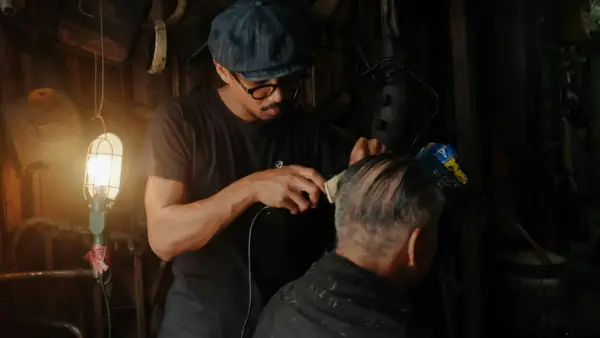
He's 59 and has quietly realized that somewhere in his early forties every friendship he had became transactional - you call when you need something, you meet when there's a reason - and the men who used to sit with him in a garage doing nothing for hours are all still alive but none of them would know what to say if he called at 2am and just said I'm not okay
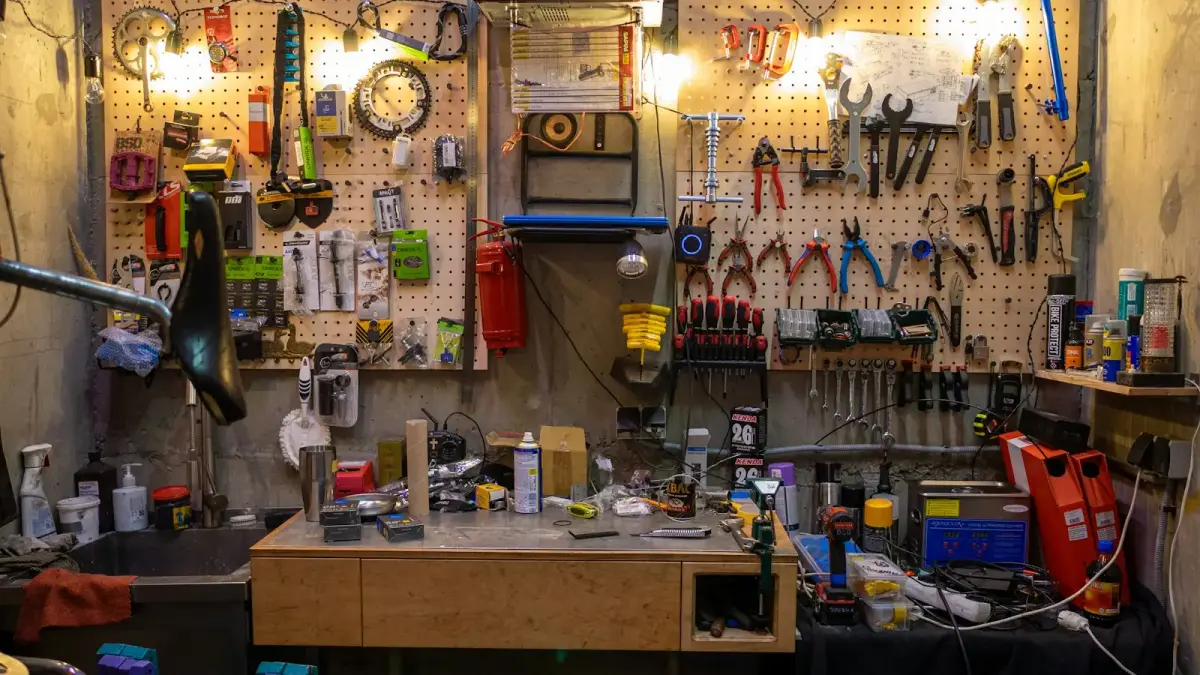
I was standing in my garage last Tuesday - not fixing anything, not looking for anything - just standing there with a beer getting warm in my hand. And I realized I couldn’t remember the last time another man stood in that space with me.
Not for a reason. Not to borrow a drill or help me move a shelf. Just to be there, the way we used to be there together in our thirties, when presence didn’t need a purpose and silence between two men wasn’t awkward. It was the whole point.
I’m 59. And somewhere between then and now, every friendship I have became a transaction. A scheduled thing. An exchange. And the men who used to know me without trying - they’re all still breathing. They’re all still out there. But I’m almost certain that if I called any of them at 2am and said “I’m not okay,” the silence on the other end would last longer than any of us could bear.
The slow exit nobody noticed
It didn’t happen suddenly. That’s the thing that haunts me about it.
There was no fight. No betrayal. No dramatic falling out that you could point to and say - there, that’s where it broke.
It was more like a tide going out. So gradual that you don’t notice the water’s gone until you’re standing on dry sand wondering when everything got so quiet.
In my early forties, life got full. Kids hit the age where every weekend belonged to them. Work got serious - promotions, mortgages, the kind of responsibilities that make you feel important and isolated in equal measure. My wife became my only confidant by default, not because I chose her for that role but because I stopped maintaining anyone else.
And the men around me did the same thing. We all retreated into our families, our careers, our private little kingdoms. We told ourselves it was maturity. It was responsibility. It was what men do.
A 2021 study published in the Journal of Social and Personal Relationships found that men’s friendship networks shrink significantly more than women’s after age 40, and that this decline accelerates with each decade. The researchers noted something devastating - most men don’t register the loss until a crisis arrives and they reach for a connection that’s no longer there.
What friendship used to feel like
I had a friend named Dave. We worked at the same shop in our twenties, then kept meeting up through our thirties even after our lives diverged.
We’d sit in his garage on folding chairs. He’d be sorting fishing lures he was never going to use. I’d be doing nothing. Literally nothing. Just existing in the same space as another person who expected nothing from me.
We didn’t talk about feelings. We barely talked about anything that mattered in the traditional sense. But something was happening in that silence. Something I didn’t have a name for then and barely have one for now.
It was witness. He was witnessing my life just by being next to it. And I was witnessing his.
There’s a concept in psychology called “passive companionship” - the idea that simply being in another person’s presence, without agenda or performance, creates a form of emotional regulation that active conversation can’t replicate. It’s what dogs offer. It’s what long marriages run on. And it’s what men used to give each other before we decided that every interaction needed a justification.
The transactional shift
Somewhere around 42 or 43, I noticed the pattern. Every time I called someone, there was a reason attached.
Hey, do you still know that roofer? Hey, my kid needs a reference for a summer job - can I give them your number? Hey, we should grab a beer sometime - and then we never did, because “sometime” is where male friendships go to die.
The calls that had no purpose - the ones that used to happen weekly - just stopped. Not because anyone decided to stop them. But because without a reason, calling another man felt strange. Almost intimate. Almost needy.
And I think that’s the core of it. Somewhere in our forties, need became shameful. Wanting company became a weakness. We’d built identities around self-sufficiency - the provider, the rock, the man who handles things - and admitting you just wanted someone to sit with you felt like a confession of failure.
Daniel Goleman’s work on emotional intelligence points to something he calls “social brain atrophy” - the idea that relational capacities weaken without regular exercise, the same way muscles do. The men I know didn’t lose the ability to connect. They lost the habit. And after fifteen years of habit loss, the muscles don’t respond the same way when you finally try to use them.
The 2am test
Here’s how I know it’s real. I run what I call the 2am test in my head.
If something happened - if I got a diagnosis, if my marriage cracked, if I just had one of those nights where the ceiling feels like it’s pressing down and you can’t name why - who would I call?
My wife. Obviously. Maybe my brother, though we’d both be uncomfortable.
But a friend? A man who isn’t family?
I have a list of maybe eight guys I’d call “friends.” We text in group chats. We meet for someone’s birthday. We show up to funerals. But if I called any of them at 2am and said nothing but “I’m not okay,” I genuinely don’t know what would happen.
I think most of them would assume something practical was wrong. A crisis with a solution. Because that’s what we’ve trained each other to bring - problems with edges, things you can fix with a phone call or a truck.
The idea that I might just be drowning in a formless, nameless way - that I might need someone to just stay on the line and breathe with me - I don’t think any of us have practiced that with each other in twenty years.
It’s not that we don’t care
I want to be clear about something. These men - Dave, Kevin, Paul, the guys from the old days - they’re not bad people. They’re not cold. If I needed a ride to the hospital, they’d come. If my house flooded, they’d show up with a pump.
They’d do anything for me that has a clear beginning and end.
What they can’t do - what none of us can do for each other anymore - is the formless thing. The sitting. The witnessing. The being present for pain that doesn’t have a task attached to it.
A 2023 study in Psychological Science examined what researchers called “emotional atrophy in male social bonds” and found that men over 50 reported high levels of care for their friends but extremely low confidence in their ability to provide or receive emotional support. The gap between caring and capacity was the largest the researchers had measured in any demographic group.
We care. We just forgot how to show it in any way that doesn’t involve our hands or our wallets.
The garage is still there
Dave moved to another state six years ago. We text maybe three times a year. Happy birthday. Merry Christmas. A photo of a fish he caught.
But his garage is still in my memory like a church I used to attend. A place where I was known without performing. Where silence was a language and showing up was enough.
I don’t blame anyone for what happened. I don’t blame work, or marriage, or kids, or the culture that taught us that men together should be doing something - watching a game, building a deck, solving a problem.
But I grieve it. Quietly, in a way I’ve never said out loud before.
I grieve the ease of it. The way friendship used to be as simple as proximity and time. The way you could know a man deeply without ever having a “deep conversation.” The way presence used to be its own currency, before everything needed an invoice.
What I’m learning at 59
I don’t have a fix for this. I’m not going to pretend I’ve cracked some code that makes it all better.
But I’ve started doing something small. I’ve started calling people without a reason. Just calling. Saying “Hey, I was thinking about you. No reason. Just wanted to hear your voice.”
The first few times, there was confusion. A pause. That slight panic of - is something wrong? Is someone dead?
And then, slowly, something else. A softening. A breath. An “Oh. Yeah. I’ve been thinking about you too.”
It’s not the garage. It’s not the folding chairs and the fishing lures and the hours of nothing that meant everything. But it’s a thread. A thin one, thrown across the distance.
And at 59, I’m learning that throwing the thread is my job. Not because it’s easy, but because the alternative is standing in a garage alone, holding a warm beer, wondering when exactly I became a man who has a full contacts list and no one to call when the ceiling starts pressing down.
The men in your life are probably waiting for the same permission you are. The permission to need something that doesn’t have a name.
You’re not broken for missing what used to be simple. You’re awake. And that’s where it starts.