He's 59 and has quietly realized the reason he volunteers to drive on every family road trip is not generosity - it is that the driver's seat is the only position in a car full of people he loves where silence is not only acceptable but expected, and driving became the last remaining way a man who never learned to say 'I need quiet' could take it without anyone asking what was wrong
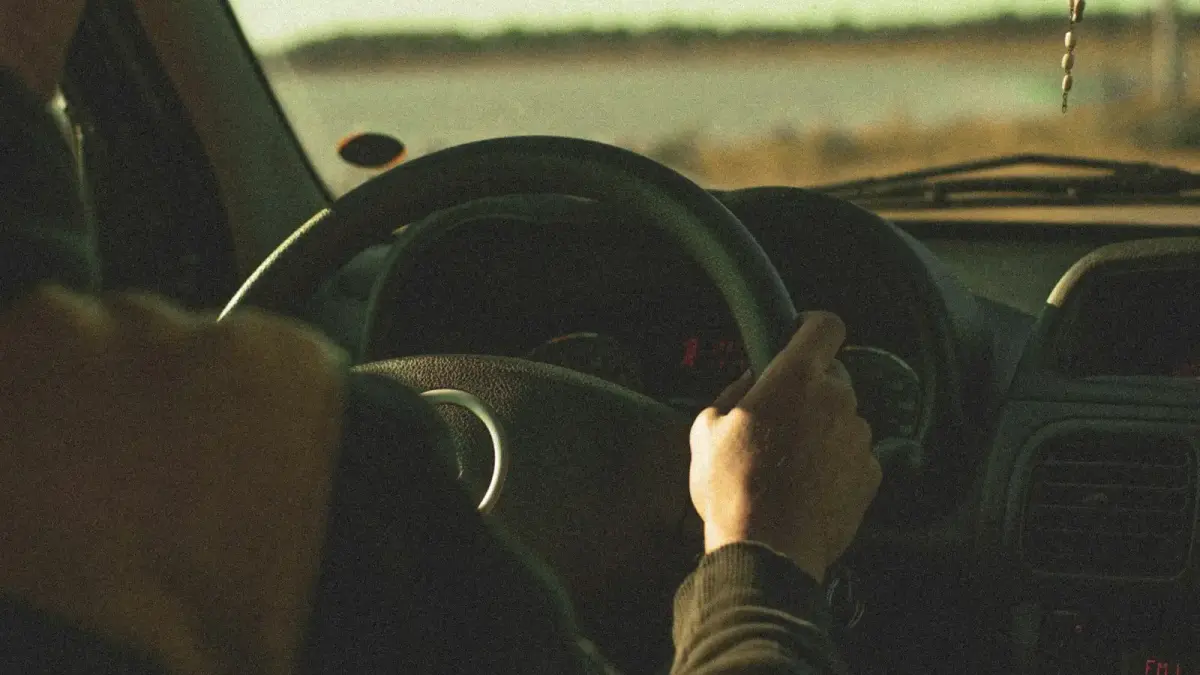
He Always Said He Just Liked Driving
My father would pack the car the night before. Cooler in the trunk, road atlas on the passenger seat even though my mother already had directions printed from MapQuest. He’d be behind the wheel before anyone else had their shoes on.
We thought it was a control thing. My sister used to joke about it. “Dad doesn’t trust anyone else’s driving.” My mother would roll her eyes and climb into the passenger seat with a paperback she’d never finish because she’d fall asleep somewhere around the second hour.
Nobody questioned it. Nobody needed to. A man who drives is a man who contributes. He’s useful. He’s doing the hard part so no one else has to.
It wasn’t until I turned fifty-three - sitting behind my own steering wheel with my wife beside me and our adult kids in the back, the three of them mid-laugh about something I’d already lost the thread of - that I understood what my father was actually doing.
He wasn’t driving because he liked it. He was driving because it was the only seat in the car where no one expected him to talk.
The Quiet That Doesn’t Need Explaining
There’s a particular kind of silence that belongs to the driver. It’s functional. It has a reason.
No one looks at the person behind the wheel and says, “You’re being quiet - is everything okay?” No one reaches over and touches your arm with concern. The driver gets to be still without being questioned, because stillness is part of the job.
For a lot of men - especially men who grew up in the fifties and sixties, in homes where feelings were weather you endured and not conversations you had - this is the only kind of quiet they’ve ever been allowed to take without consequence.
Susan Cain wrote in Quiet that introverts don’t dislike people. They are drained by stimulation. The difference matters. A man can adore his wife, light up when his grandchildren run to the door, and still feel something in his chest start to tighten after ninety minutes of sustained noise and interaction.
That tightness doesn’t mean he loves anyone less. It means his nervous system is doing what it’s always done - asking for a pause it was never given language to request.
A Generation That Never Got the Word “Introvert”
My father’s generation didn’t have a framework for this. They didn’t take personality quizzes. They didn’t read articles about overstimulation or sensory thresholds. They had two categories for men: sociable and difficult.
If you were the man at the barbecue who stood by the grill instead of joining the circle of lawn chairs, you were “not much of a talker.” If you disappeared into the garage after dinner, you were “in one of his moods.” If you drove eight hours without saying more than a handful of sentences, you were “focused on the road.”
The road was always the excuse. And it always worked.
A 2011 study published in the Journal of Research in Personality found that introverts experience significantly greater cognitive fatigue after prolonged social interaction, even with people they feel close to. The fatigue isn’t emotional rejection. It’s a neurological reality - the introvert’s brain processes social stimuli through a longer, more energy-intensive pathway than the extrovert’s.
But try explaining that to a man born in 1967. Try telling him the reason he feels hollowed out after Thanksgiving dinner isn’t because something is wrong with him - it’s because his brain literally works harder to process the laughter, the cross-talk, the overlapping stories, the emotional temperature of every person in the room.
He wouldn’t hear it as science. He’d hear it as weakness. And so he’d do what men like him have always done. He’d find a workaround.
The Workaround That Looks Like Service
Driving is the perfect workaround because it’s generous.
No one resents the driver. No one accuses the driver of being withdrawn. The driver is performing a service. He’s the one who got up early to check the tires. He’s the one who mapped the route, who knows where the rest stops are, who adjusts the mirrors and checks the rearview and handles the merge onto the interstate with a calm that makes everyone else feel safe.
He’s contributing. He’s present. He’s right there in the car with everyone he loves.
And he’s also, quietly, completely alone.
The noise happens behind him. The conversations swirl in the backseat. His wife might talk to him occasionally, and he’ll nod or give a short answer, and she’ll go back to her book or her phone, and the quiet will return - not as absence, but as architecture. The car is built so the driver faces forward, eyes on the road, hands occupied. There’s no expectation of eye contact. No obligation to react to every shift in the emotional current.
It’s the only role in family life that comes with built-in permission to be silent.
And for a man who never learned to say “I need an hour alone” - who was raised to believe that needing space from the people you love is a kind of betrayal - driving became the one door that was always open.
What Sensory Overload Looks Like When You Don’t Know the Name for It
Here’s something no one told men of this generation: you can love a room full of people and still be overwhelmed by it.
A 2019 study published in Frontiers in Psychology examined the relationship between sensory processing sensitivity and social fatigue. The researchers found that roughly 20 to 30 percent of the population qualifies as “highly sensitive” - people whose nervous systems register stimuli more deeply than average. These individuals aren’t fragile. They’re thorough processors. Their brains take in more data from every interaction, every sound, every emotional undercurrent in a conversation.
For a man who falls into this category but has no idea it exists, the experience is confusing. He sits at the dinner table surrounded by people he genuinely loves - his daughter telling a story, his son-in-law laughing, his wife refilling glasses, his grandchild tugging at his sleeve - and somewhere around the forty-minute mark, something inside him starts to close.
Not his heart. His bandwidth.
He can feel himself pulling back, and the pulling back brings guilt, because what kind of man gets tired of his own family? What kind of father needs a break from his grandchildren?
So he doesn’t take a break. He clears the dishes. He takes out the trash. He says, “I’m going to go start the car and let it warm up.” He finds tasks that move him to the edge of the gathering without removing him from it entirely.
And when it’s time for a long drive, he doesn’t just volunteer. He insists.
The Highway as Nervous System Reset
There’s something neurologically specific about highway driving that introverts understand on a body level, even if they’ve never thought about it consciously.
The road demands just enough attention to keep the anxious mind from spiraling, but not so much that it drains the already-depleted social battery. It’s a task that occupies the hands and eyes while leaving the interior life completely free. The hum of the engine. The rhythm of lane markers. The slow scroll of landscape.
Daniel Goleman’s work on attention and emotional regulation suggests that this kind of “soft focus” - a state of alertness that doesn’t require active emotional processing - is deeply restorative for people who’ve spent hours in high-stimulation social environments. The highway gives the nervous system something to do that isn’t reading faces, tracking tones, or calibrating responses.
For a man who just spent three hours at a family gathering performing engagement - smiling at the right moments, laughing when expected, asking follow-up questions he’d already lost the energy for - the highway is medicine.
He doesn’t know it’s medicine. He just knows that somewhere around mile forty, his shoulders drop. His jaw unclenches. His breathing gets deeper and slower, and the tightness in his chest starts to dissolve, and by the time he pulls into the driveway three hours later, he feels like himself again.
His family thinks he just really likes driving.
He doesn’t correct them. Why would he? The system works.
The Cost of a Workaround That Never Gets Named
The problem with elegant workarounds is that they work well enough that no one ever addresses the underlying need.
A man who drives so he can be quiet never has to learn to say, “I need thirty minutes alone after we get home.” A man who volunteers for every errand, every airport pickup, every late-night pharmacy run never has to sit his wife down and say, “I love being with you, and also, sometimes I need to be nowhere.”
And his family never learns that his quietness isn’t distance. It’s not boredom. It’s not that faraway look that means something is wrong. It’s the look of a man whose interior life is rich and full and requires - genuinely requires - periods of low stimulation to function.
A 2022 study in Psychological Science found that people who suppress their need for solitude experience higher levels of chronic stress and emotional exhaustion than those who openly communicate and honor that need. The suppression itself becomes a stressor. The body keeps asking for something the mind refuses to request.
For sixty years, he’s been finding workarounds instead of words. The workshop. The long walk after dinner. The late-night kitchen where he sits alone with the lights low, not doing anything, just breathing in a room where nobody needs him to respond.
And the driving. Always the driving.
It Was Never About the Car
I think about my father’s hands on the steering wheel. How relaxed they were. How different from the way he held himself at family dinners - upright, attentive, performing the role of patriarch with the quiet discipline of a man who understood that being present was a duty.
Behind the wheel, his hands were loose. His face was calm. He’d hum sometimes - not a full song, just a few bars of something, barely audible over the engine.
That was the real him. Not the dinner table version. Not the barbecue version. The man with the windows cracked and the road unspooling and the silence that finally, finally didn’t need to be justified.
He wasn’t avoiding us. He was returning to himself so he could keep showing up for us.
I’m fifty-nine now, and I volunteer to drive every time. My wife knows. She’s known for years, I think, even if neither of us has ever said it out loud. She rides shotgun and reads her book and doesn’t ask me why I’m quiet, and that might be the deepest act of love anyone has ever offered me.
The driver’s seat isn’t an escape. It’s a translation. It’s the way a man who never learned to say “I need quiet” finally found a way to take it - wrapped in usefulness, disguised as generosity, sacred in its silence.
If you’re the man who always drives, I want you to know something. You’re not antisocial. You’re not broken. You’re not failing your family by needing the road.
You’re a man with a rich interior world and a nervous system that asks for rest the only way it was ever allowed to - by putting both hands on the wheel and pointing the car toward the horizon.
That’s not weakness. That’s a man who found a way to stay whole so he could keep loving the people in the backseat.
The road gave you that. And you don’t owe anyone an explanation for taking it.